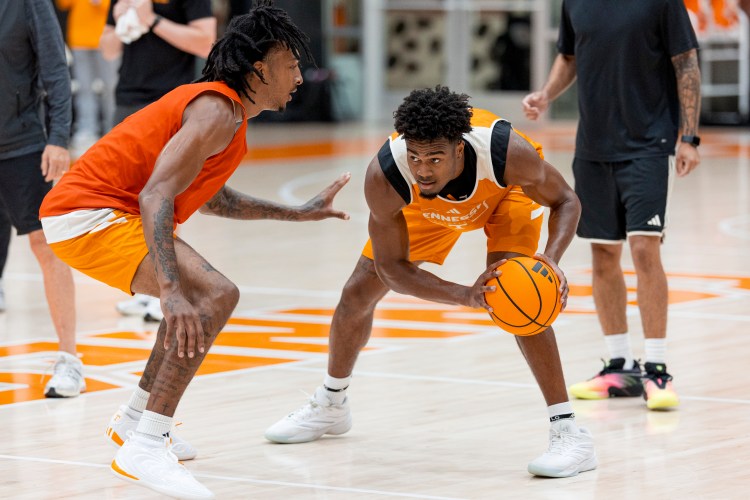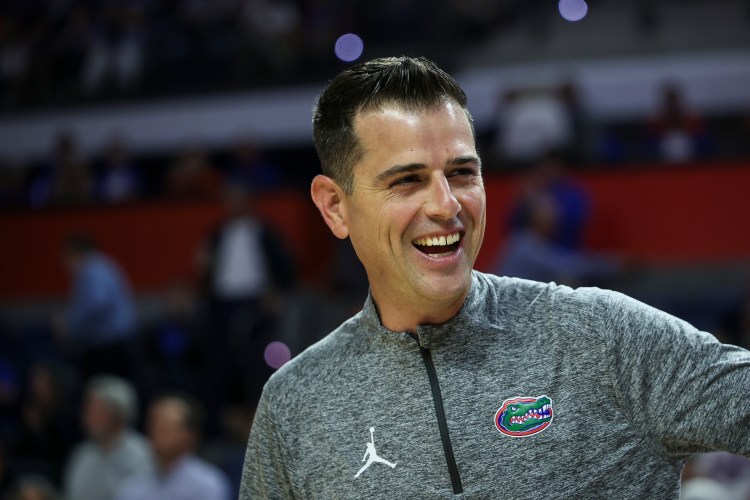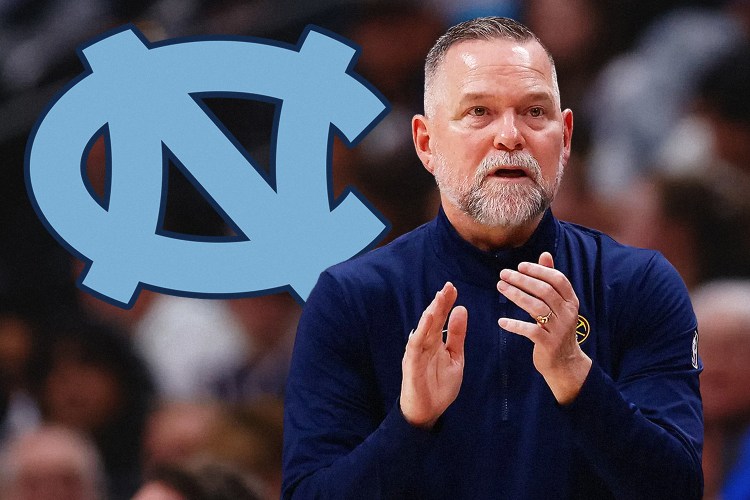

There is a widespread belief in today’s college sports climate that the key to success is a healthy NIL budget. That is often true, but there are also examples of programs falling into what I call the Money Trap. That’s where a coach’s ability to pay large amounts robs him of the necessity to be cagey and cautious. As a result, he doesn’t put enough emphasis on whether he is putting together a team that can win.
The prime example last season was Kansas, which had its worst season under Bill Self due to the disappointing output from two transfers who were also the team’s highest-paid players — A.J. Storr, a junior forward from Wisconsin (and before that played for St. John’s, not to mention three different high schools), and Rylan Griffin, a junior guard from Alabama. This season, there are two teams, Kentucky and St. John’s and Kentucky, that fell into the Money Trap. As a result, both teams have dropped out of the AP Top 25 poll, and according to Hoops HQ Bracketologist Brad Wachtel, St. John’s is in real danger of missing out on the NCAA Tournament. Brad has St. John’s as his first team out, and Kentucky as a No. 9 seed.
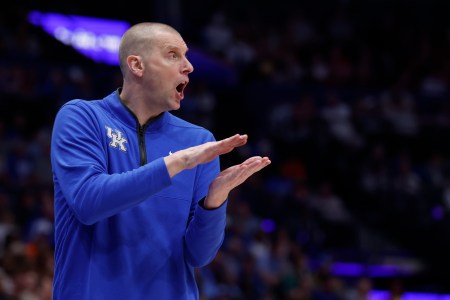
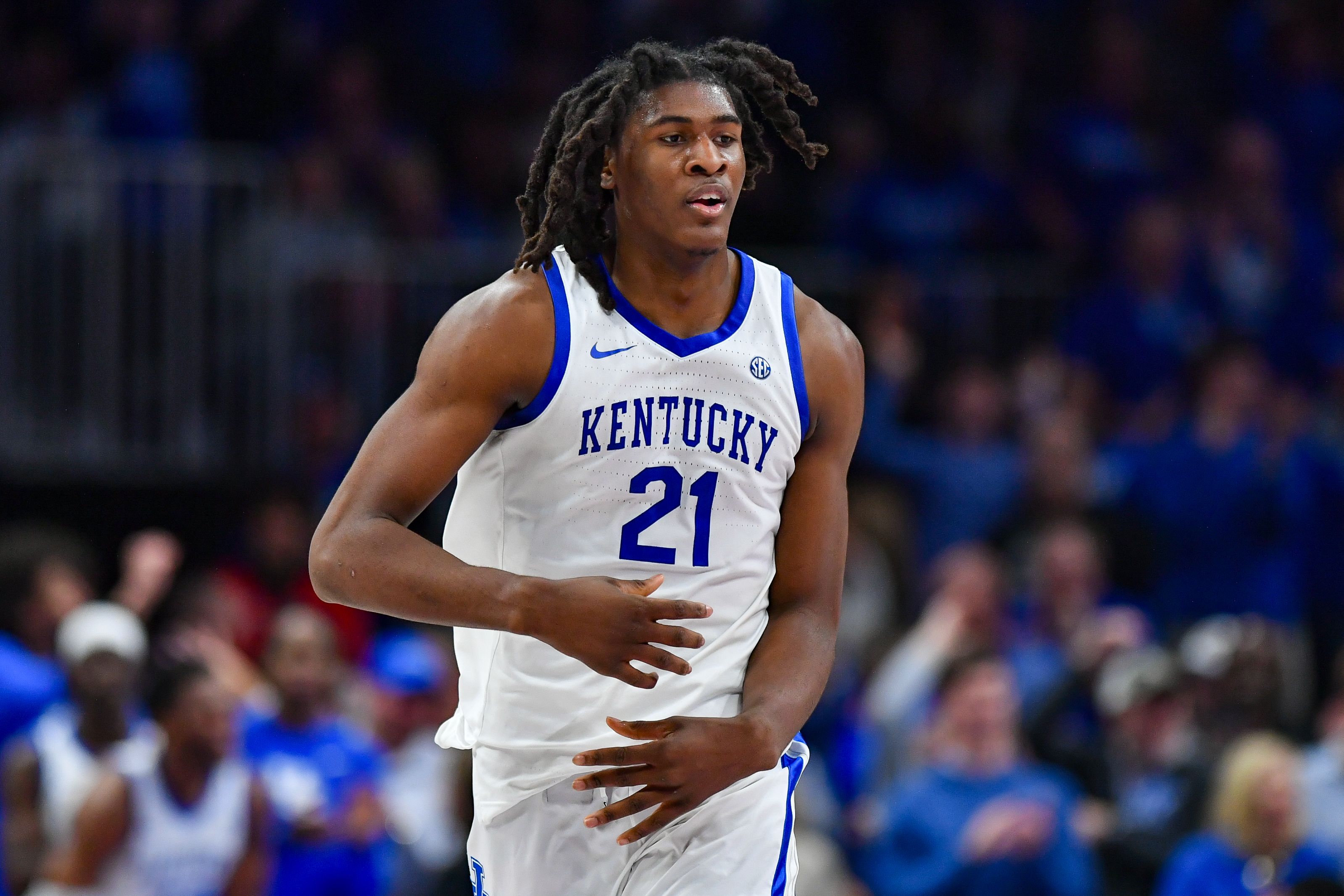
It has been reported that Kentucky coach Mark Pope spent $22 million on its roster. I’m skeptical the real number is actually that high, but whatever it is, it’s as much if not more than any other program is spending. What exactly did Pope get for all that money? According to Hoops HQ’s NBA Draft expert Jonathan Wasserman, the only Wildcat projected to be drafted is sophomore forward Jayden Quaintance, whom Wass has a lottery pick. No one else on Kentucky’s roster is even projected to go to the second round. Which is fine — you can win a lot of games with that type of roster, as long as those players bring the requisite intangibles. It’s also critical that the pieces fit well together. Injuries haven’t helped, but I don’t think anyone who has watched Kentucky play this season would argue this team checks both those boxes.
As for St. John’s, that program is famously bankrolled by Mike Repole, the billionaire alum and entrepreneur who has basically handed Rick Pitino a blank check. Pitino used it to stockpile one of the most expensive rosters in the country, yet he is now mystified that his team is, shall we say, a little on the soft side. Instead of giving a ton of money to Bryce Hopkins, the 6-foot-7 senior forward who missed all but 17 games the last two years at Providence because of a knee injury, Pitino might have been better off splitting the cash between two or three junkyard dogs from mid-major programs who have something to prove. This is, after all, the man who recruited Walter Clayton Jr. and Daniss Jenkins to Iona, both of whom are currently cashing NBA paychecks.
Pitino also made a mistake by bringing in 6-foot-5 sophomore Ian Jackson to be his starting point guard. It turns out there was a reason Jackson lost his starting position at North Carolina in February and never got it back. Clearly, he needs to learn the position to succeed at the next level, but in the meantime the Red Storm is losing games. Pitino acknowledged last week that he and his staff missed out on a few point guard targets, but that’s no surprise because once he signed Jackson, it was hard to bring anyone else in.
All of this is not to say that Pope, Pitino and their staffs didn’t bust their tails to do their due diligence. Sifting out intangibles is the hardest part of the speed-dating process of recruiting the transfer portal. But the reality is, when you have enough money to spend, you don’t have to dig quite as deep, and the players you’re bringing in don’t have the same motivation as guys who believed they’ve been unjustly passed over.
This is a high-class problem, but make no mistake, it is a problem. It’s important for coaches to build the strongest NIL budgets they possibly can. But they should also be careful about falling into the Money Trap. Once it catches you, there’s no escaping until next season.

Is The NCAA’s Legal Tide Starting to Turn?
The NCAA suffered a string of losses in state courts, but recent wins plus strong actions by conferences are putting college sports on firmer ground
Is UCLA suffering from Mick Cronin’s no-freshman policy?
There has been much chatter this season about Shaka Smart’s strategy of staying out of the transfer portal. Marquette is the only high-major program that has not signed a transfer the last four years. That has worked in the past, but now that the Golden Eagles are having their worst season in years, it’s fair to say that Smart dug in his heels a little too deeply on this front.
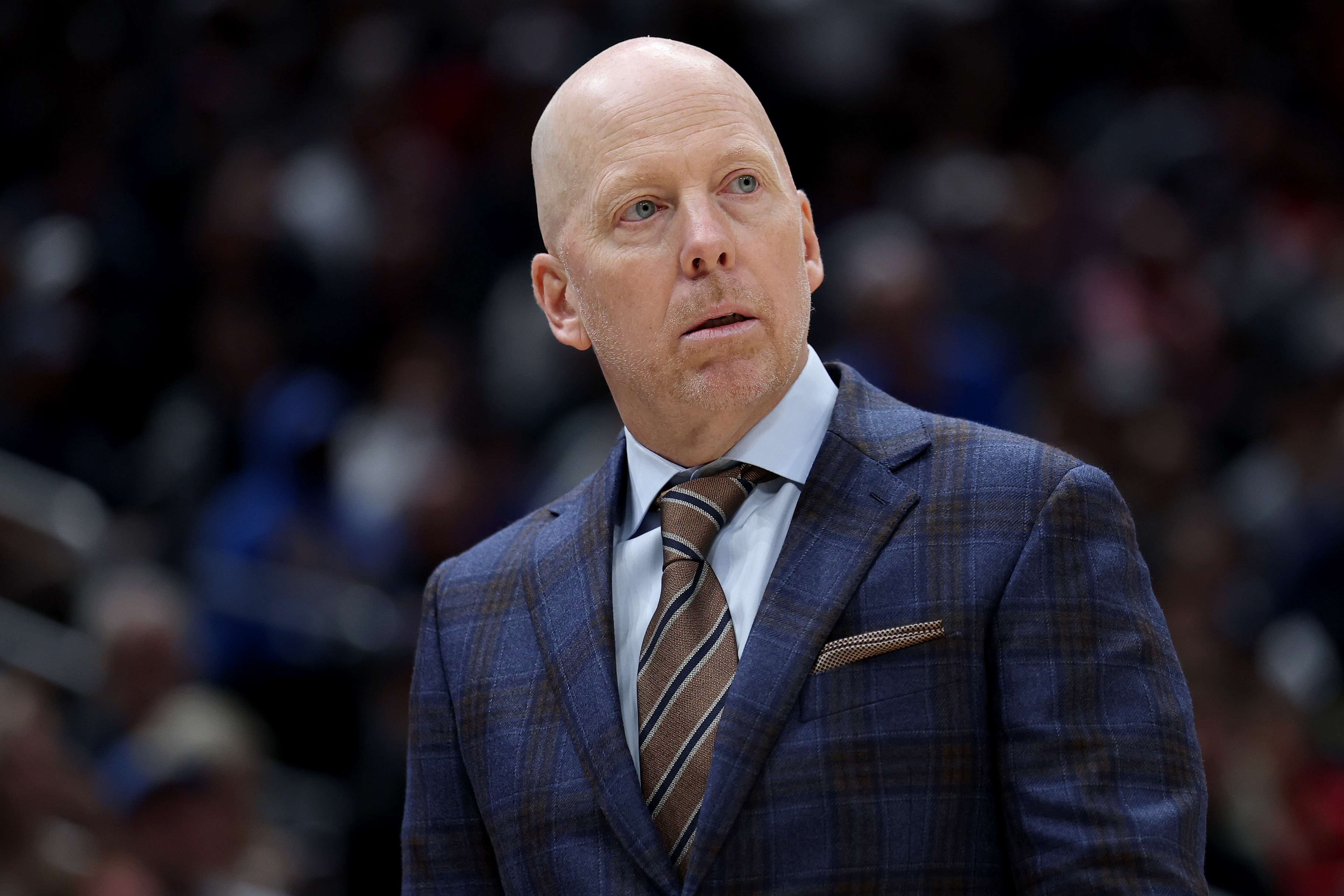
The same could be said for UCLA coach Mick Cronin, but for the opposite reason: Cronin has basically sworn off recruiting high school players. This is a risky strategy considering a) the current freshman class is arguably the deepest the sport has ever seen and b) there is a huge bumper crop of high school seniors currently balling out in southern California. Three of the top 10 players in the 247Sports Composite are from the Los Angeles area. Yet, the only commitment Cronin has secured so far is Javonte Floyd, a three-star center from Georgia. There are zero true freshmen on UCLA’s current roster.
When I asked Cronin in November why this is the case, he replied, “The way I look at freshmen is they’ve got to be able to play as freshmen. Because if they don’t, they’re going to leave. I don’t see the point in bringing in a guy who’s going to leave. Because now you waste money and time coaching them.” This is sound logic, as long as it works. But like Marquette with no transfers, this isn’t working. The Bruins are 10-4 with zero Top-25 KenPom wins, and they are on Brad Wachtel’s First Four Out list.
In these uncertain times, it’s too risky for a coach to have any certitude when it comes to the delicate art of roster building. Instead of having predetermined policies, coaches should treat the exercise like one of those expansive menus from The Cheesecake Factory. High school players, retention, transfers, internationals, former professionals — all of them are options to be consumed. If you close off any of them, you risk having to dine off scraps.
Other hoop thoughts
· For all the attention paid to Darryn Peterson’s tender hammy at Kansas, there is an equally concerning situation developing around Louisville Mikel Brown Jr. The sensational freshman point guard has now missed five consecutive games, including Tuesday night’s 84-73 home loss to Duke. Cardinals coach Pat Kelsey has said that he is hoping to have Brown back soon, perhaps by this weekend’s home game against Boston College. Hopefully he’s right, because unlike the Jayhawks, Louisville does not have enough inside presence to overcome Brown’s absence. And the Cards really depend on his ability to fuel an offense which is more dependent on the three-pointer than any other in the country. Louisville is only saying that Brown will be back “soon,” which could mean Saturday at home against Boston College.
· It has been a tough century for the Brad Brownell Can’t Coach crowd. There was a time when the Clemson coach was a perennial presence on all the “hot seat” lists. But he is now in his 16th season at Clemson, making him the longest-tenured coach in the ACC. Brownell took the Tigers to the Elite Eight two years ago, went 18-2 in the league last season, and despite having to replace 10 players he has the Tigers at 12-3 (their three losses came by a combined 13 points) and No. 33 in the NET. Brad Wachtel projects them as a No. 6 seed in the NCAA Tournament. Clemson isn’t going to “out-talent” anyone, but this team plays hard, smart and tough. And that’s a reflection of its coach.
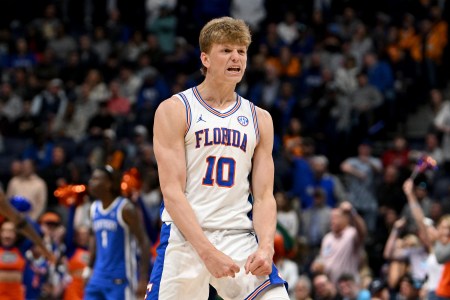
· You’d be hard-pressed to find a pair of wins that were more needed than Providence’s 77-71 win at St. John’s and Missouri’s 76-74 squeaker over Florida. Both wins took place on Saturday. Kim English is only in his third season as the head coach at Providence, but he was starting to feel the heat after the Friars lost their first two Big East games. The Red Storm might be worse than expected, but the fact that the win took place at Madison Square Garden should give Providence a huge confidence boost. That will be especially true if 6-foot-6 freshman guard Jamier Jones extends his midseason surge. Jones, who has started the last two games, had 15 points and 10 rebounds in the win and is averaging 14.2 points and 5.4 rebounds over his last five games.
Missouri, meanwhile, was coming off its humiliating 91-48 loss to Illinois in the annual Braggin’ Rights game. The Tigers have only lost three games but they only had one top-100 KenPom win, and that was over No. 95 Minnesota. Missouri had 12 long days between those games, and apparently Dennis Gates acted like a “total a——” to his players. Whatever he did, it paid off, and as a result the Tigers have new life.
· Georgetown got a welcome and surprising boost Tuesday night when 7-foot-1 senior center Vincent Iwuchukwu returned to the lineup after missing the last 10 games with a medical issue. Iwuchukwu was a heralded high school recruit who went into a cardiac arrest during the summer of 2022 when he was a sophomore at USC. He worked his way back for the Trojans, played sparingly off the bench for St. John’s last season and appeared to be off to a stellar senior season with the Hoyas, helping them to win their four four games, including over Maryland and Clemson. On Nov. 18, however, Georgetown announced that Iwuchukwu was being sidelined due to an unnamed medical issue. The Hoyas went 4-6 without him, and although he had just 2 points, 4 blocks and 3 rebounds in Tuesday’s 56-50 loss to DePaul, if Iwuchukwu can stay healthy and effective, he has the potential to change Georgetown’s season.
Here’s something else to consider: If Iwuchukwu does play the rest of the season, and if Georgetown is a considerably better team with him than without him, than the selection committee will take that into account. If Georgetown is on the bubble, that could push them into the dance.
· You gotta love that just two days after our own Andy Katz wondered if Michigan was ready to draw comparisons to the peak UNLV teams of the Tark era, the Wolverines barely escaped with a 74-72 victory at Penn State, which came in winless in the Big Ten, ranked No. 121 on KenPom and had lost four of its previous five games. Andy was right to draw the comparison based on how the Wolverines had been playing, but the near-disaster was a reminder of why it’s so hard to go undefeated in college basketball. KenPom gives Michigan a 3.4 percent chance to run the table. If and when the Wolverines suffer their first loss, it’s far more likely to come against a far inferior team than one whom the players will hyped up to play. Coaches often say their biggest opponent isn’t the other team, it’s human nature.
· Duke came into the season with the consensus No. 1 recruiting class, but lost in all the Cameron Boozer hype is the fact that the other freshmen have been rather underwhelming thus far. Nikolas Khamenia, Cayden Boozer and Dame Sarr are all projected NBA first-round draft picks, but they combined for six points in 48 minutes during the Blue Devils’ 84-73 win at Louisville Tuesday night. This could be intepreted as a glaring weakness, but I actually see it as demonstrating huge potential for growth. Those guys don’t have to perform at the level that Kon Knueppel and Khaman Maluach did last season, but if they can improve their efficiency and confidence over the next two months, Duke has a chance to go next level.
· This has to be a painful season for Maryland fans. Not only are the Terps having a historically awful season while new coach Buzz Williams starts his rebuild, but the enemy who deserted them, Kevin Willard, has instantly revitalized Villanova. The Wildcats are 12-2 (3-0 Big East) and have the second-highest NET ranking in the league.
· Finally, Christmas came twice for college hoops nerds when the O.G. of analytics, Ken Pomeroy, added a brand new stat to his site. And just like Beyonce, Pomeroy dropped the gift with no prior announcement or promotion. The new stat is average two-point attempt distance, which is neatly tailored to the analytics-driven gospel that the worst shot in basketball is the long two-point attempt.
Pomeroy is a fascinating character in his own right, a former meteorologist who retreated into his Salt Lake City home and transformed himself into the Beyonce of analytics. (I prefer to call Beyonce the KenPom of music.) Pomeroy is a brilliant mathematician and web designer, but by his own admission he’s no marketing genius. When I spoke with him on Tuesday night, Pomeroy told me he had only had the idea to add the category two days before it popped up on the site. He was able to link up with the play-play-data for shot attempts that the NCAA provides for each game through its partnership with Genius Sports. He tinkered, he tested, and presto — a new stat.
“Ten years ago, we didn’t have access to this kind of data,” Pomeroy told me. “I thought it would be a pretty insightful stat. I finally had some time to play around with it, did some quick testing, and decided it was pretty reliable.”Pomeroy was amused by the eager reception from his loyal audience of college basketball geeks. (That’s a compliment in this space, by the way.) He further explained the stat and how it applies in a Substack post. Pomeroy said he doesn’t have any new wrinkles planned for the near future, but when he does, I doubt he’ll spend much effort promoting it.
Meet your guide