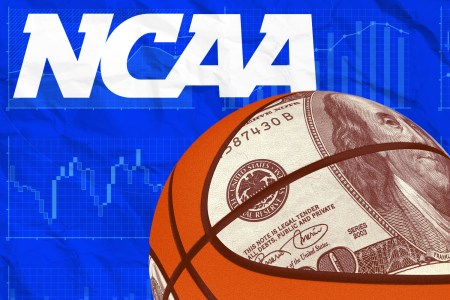

The turbulent, ever-evolving world of college sports was hit with another bombshell last week. According to a 70-page federal indictment unsealed on Thursday, 26 individuals, four of whom were playing college basketball this season, have been charged in a widespread manipulation scheme in the Eastern District of Pennsylvania.
The indictment states that at least 39 players from mostly low- and mid-major schools took part in fixing more than 29 games. Fifteen of the defendants played in the 2023-24 and 2024-25 seasons. A group of alleged “fixers” offered bribes ranging from $10,000 to $30,000 to players so they would intentionally underperform. The fixers then placed bets on the manipulated games and won millions of dollars. If these charges are proven to be true, it could amount to one of the largest gambling scandals in the history of American sports.
The controversy has intensified the discourse surrounding the sports gambling industry, which has exploded since the 2018 Supreme Court decision (Murphy v. NCAA) that struck down the Professional and Amateur Sports Protection Act (PASPA), a federal law that placed a moratorium on sports gambling outside of Nevada and limited parlay wagering in Oregon, Delaware and Montana. Less than a decade after the decision, 40 U.S. jurisdictions now offer legal sports wagering, with 32 allowing for mobile wagering on popular apps like DraftKings and FanDuel.
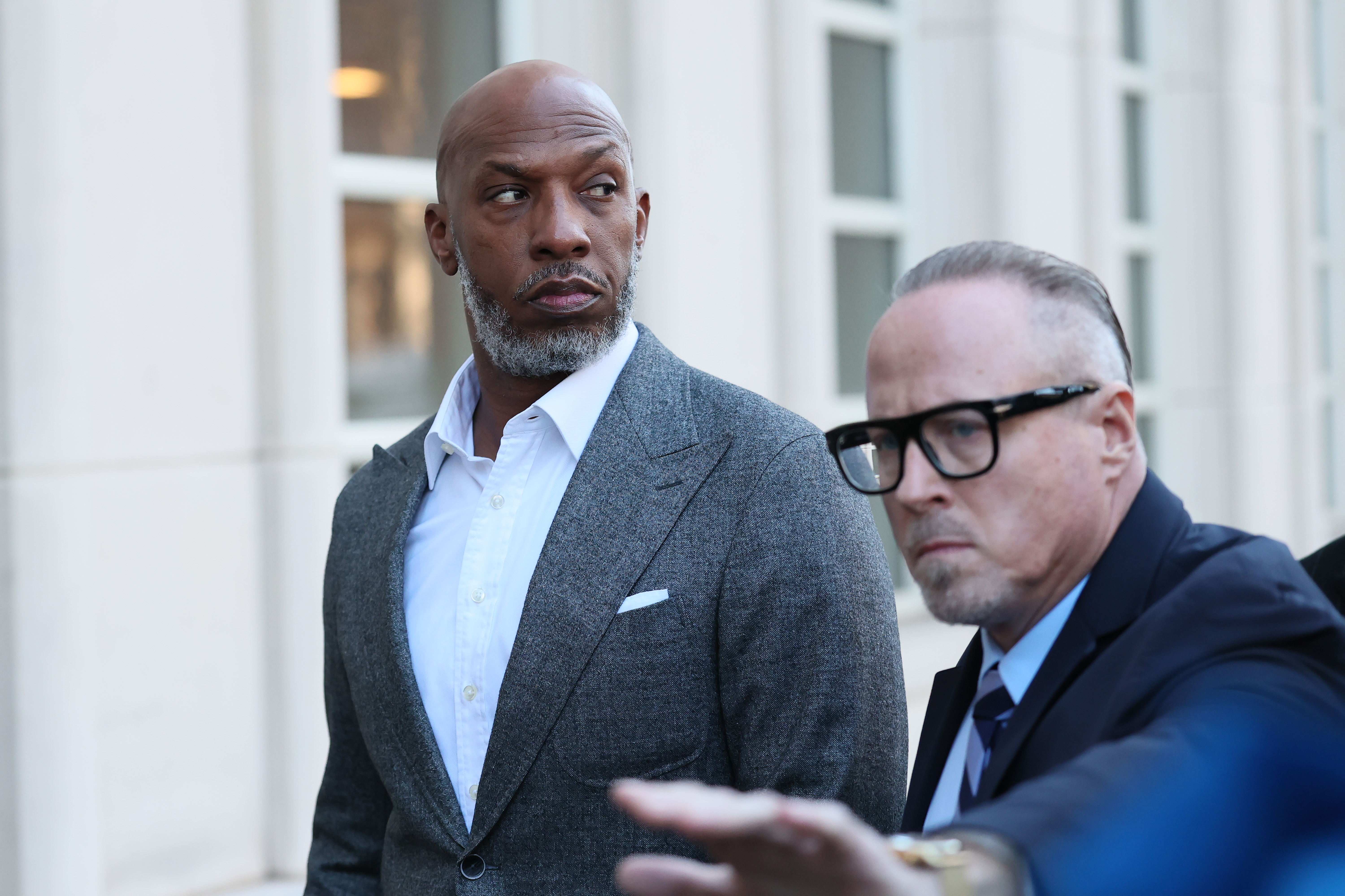
There has long been concern in college athletics that it was only a matter of time before something like this rocked the sport. That concern grew in October when 34 people, including Portland Trail Blazers coach Chauncey Billups and Miami Heat guard Terry Rozier, were indicted in connection with two separate federal gambling investigations. Last week’s indictments revealed just how critical it is that college sports is able to address the broader questions regarding the impact that legalized sports betting is having on college athletics and society at large.
With so much happening and so much more unknown, we offer this primer to break down the major facts at hand and offer a look at possible remedies.
What, exactly, are the defendants accused of doing?
The alleged gambling ring described in the indictment that was unsealed last week began targeting college basketball during the 2023-24 season, building a network of players from across the country. As the indictment laid out, the fixers targeted low- and mid-major athletes “for whom the bribe payments would meaningfully supplement or exceed legitimate NIL opportunities.”
The comprehensive scheme focused on match-fixing (as opposed to prop-fixing), which typically draws less suspicion because it requires a much more coordinated effort. In this case, players were offered bribes to deliberately underperform to help the fixers win bets on first-half and full-game spreads. Here are some examples listed in the indictment:
Tulane at East Carolina (Feb. 18, 2024): The fixers offered Tulane’s leading scorer Kevin Cross around $30,000 to ensure the Green Wave did not cover the approximate 2.5-point spread (Tulane was the underdog). One of the fixers, Marves Fairley, allegedly had $220,000 in wagers on the game. Tulane lost, 81-67, and Cross scored a season-low four points on 0 of 2 shooting from the field.
Butler at DePaul (March 2, 2024): DePaul was the only high-major team included in the indictment. In this game, multiple players were offered payments to ensure that the Blue Demons did not cover the 6.5-point first-half spread. The fixers are accused of placing wagers totaling at least $123,789. DePaul trailed 45-27 at the break.
The defendants have been charged under the Sports and Bribery Act, which applies when an athlete, coach or official accepts money or benefits to influence the outcome of a sporting event. They have also been charged with conspiracy to commit wire fraud, which is applied when two or more individuals plan to execute a scheme involving gambling or inside information. The bribery charges carry a penalty of up to five years in federal prison and heavy fines, while the fraud charges carry a maximum sentence of 20 years.
POINT-SHAVING SCANDAL

Twenty Individuals Charged in NCAA Basketball Point-Shaving Scheme
At least 39 college players on more than 17 Division I teams were accused of fixing games. Affected matches involved St. John’s, DePaul, Tulane and others. Additional indictments span across the NBA and Chinese Basketball Association.
How did the defendants get caught?
Increased regulation and oversight has made it significantly harder to get away with these types of schemes. Companies such as Integrity Compliance 360 (IC360), which works with the NCAA, use advanced technology to monitor the betting market for any irregularities. When integrity firms detect something suspicious (i.e. more than $200,000 in wagers on a game between Tulane and East Carolina), they alert their partners, including the leagues, sportsbooks and regulators. If there is no legitimate reason for the irregularity, an investigation is opened.
In his official statement regarding the indictment, NCAA President Charlie Baker referenced the Association’s “layered integrity monitoring program” which “covers over 22,000 contests.”
Of course, when sports gambling was mostly underground, this sort of surveillance did not exist. There was no easy way to uncover large-scale schemes — which, to be clear, were prevalent long before sports betting was widely legalized. There were more than a dozen prominent college sports gambling scandals between 1945 and 2018. It could well be that other point shaving schemes were taking place that went undetected. Thanks to this advanced technology, that is far less likely to be the case today.
What is the NCAA doing about this?
The NCAA has worked closely with law enforcement agencies and integrity firms. It has also conducted its own investigations into sports gambling controversies and held perpetrators accountable for their actions. “(Eleven) student-athletes from seven schools were recently found to have bet on their own performances, shared information with known bettors, and/or engaged in game manipulation to collect on bets they — or others — placed,” Baker said. “This behavior resulted in a permanent loss of NCAA eligibility for all of them.”
The Association has been calling for new betting regulations, particularly when it comes to prop bets. “We still need the remaining states, regulators and gaming companies to eliminate threats to integrity — such as collegiate prop bets — to better protect athletes and leagues from integrity risks and predatory bettors,” Baker said.
Let’s talk about prop bets …
Player props, which are available in numerous states, don’t just invite possible fixing. They lead to harassment of players, especially on social media. In recent years, college and professional athletes have opened up about the hateful messages and threats they’ve received from disgruntled gamblers. Data collected from the 2024 NCAA Tournament revealed that one in three high-profile athletes received abusive messages from someone with a betting interest.
Harassment can be a bigger issue at the collegiate level, considering athletes share residence halls, cafeterias and classrooms with the general student public. That proximity is a major concern considering players can be directly responsible for the financial losses of their peers, compounded by the fact that college-age students are a part of the main demographic of sports bettors — and sometimes bet more than they can afford to lose. Such proximity also carries the risk of insider information being exchanged between college athletes and students.
For the integrity of the game and the protection of student-athletes, the sensible solution is for each state to ban player props for college athletes, as the NCAA has been pushing for and many states have already done.
Can there be a maximum amount legally wagered on college games?
It would be possible for states to regulate how much could be wagered on specific types of events, like low-major and mid-major college basketball games. According to the indictment, one of the fixers, Jalen Smith, attempted to place a $50,000 bet at a Kentucky casino and was rejected. Smith was only allowed to gamble $860. In general, placing a cap on wagers would limit the amount that fixers are willing to pay players, minimizing the incentive for them to participate in schemes. This change does, however, leave the door open for fixers with extensive networks to place a number of smaller bets in different locations.
Are there specific rules for betting on college sports?
Yes, but they are not governed by federal law, but rather overseen by each individual state. Restrictions vary greatly. For example, in Michigan, there are no restrictions — meaning player props are also legal — while Oregon does not allow any online wagering on college sports whatsoever. (Tribal casinos have different policies.)
Several states have more intricate limits. New York does not permit betting on player props or on games involving in-state schools (i.e. you can’t bet on St. John’s if you live in Queens). In Connecticut, there is no gambling on in-state schools but exceptions apply if those teams are participating in tournaments such as March Madness.
Do we need federal legislation to fix this? Is that realistic?
Federal standards could bring consistency and heightened control over sports betting, but any federal law would face constitutional limits and likely legal challenges. Under the Tenth Amendment, powers not specifically given to the federal government are generally left to the states, and gambling regulation has historically been a state responsibility.
Due to this legal uncertainty, a more surefire way to change how legalized sportsbooks offer wagers on college sports is through action at the state level. Getting all those states to regulate sports betting the same way would be a difficult task, to say the least, but the NCAA needs to make the strongest possible argument as to why they should.

What are sports prediction markets and how are they regulated?
This burgeoning industry is opening up a whole new set of problems. These platforms function as online exchanges that allow users to wager on the outcomes of future events by trading “yes” or “no” contracts (i.e. “Will Arizona win the NCAA men’s basketball national championship?”). The price of those contracts are constantly changing based on market demand, but for an individual basketball game the “price” is virtually always within the range of odds set by bookmakers.
Unlike sportsbooks, prediction markets allow users to bet against each other rather than against a bookmaker. Companies that dominate the space, such as Kalshi and Polymarket, don’t have any stake in the outcome themselves, but rather make money through transaction fees.
While prediction markets closely resemble sportsbooks, businesses like Kalshi argue that they are “financial exchanges” and therefore fall under federal — not state — jurisdiction. That distinction allows prediction markets to sometimes offer wagers that state-regulated sportsbooks cannot. For example, while residents of New York can’t gamble on in-state teams like St. John’s on FanDuel or DraftKings, they can place wagers on the outcomes of those contests through Kalshi or Polymarket.
As a result, there have been several disputes between state regulators and prediction market platforms. In a cease-and-desist letter written to Kalshi in April 2025, the Maryland Lottery and Gaming Control Commission wrote, “The purchase of the contract is indistinguishable from the act of placing a sports wager.”
Because prediction markets operate outside traditional state sports-betting regulation, they create additional challenges for lawmakers seeking to enforce integrity controls. Prediction markets allow participation at age 18, which expands access for college-age users compared to the 21-year minimum that applies for most states on their regulated sportsbooks.
What needs to happen next?
While federal action is legally uncertain, states have the authority to introduce more stringent regulation to promote integrity. Sports betting schemes typically deal with player props or, as with the latest scandal, target lower-profile games and athletes to avoid suspicion (plus, athletes that earn less in contracts or NIL are more willing to participate). States can move quickly to eliminate prop betting on college sports, limit the amount that can be wagered on college games, and restrict more manipulatable wagers such as first-half and live bets.
The NCAA has devoted considerable resources towards educating its athletes on the perils of doing this kind of business. It needs to double down to make sure the message gets through: If you fix games — if you fix anything — it is a near certainty that you will get caught.
The punishment of those involved in sports-betting scandals may deter some from pursuing similar schemes, but the best way to minimize the possibility of more controversies is through updated regulation. If there was any doubt that this is a growing problem, last week’s news should have erased it. If those in authority don’t act boldly and quickly, things could get worse before they get better.
Noah Henderson is the Director of the Sport Management Program at Loyola University Chicago’s Quinlan School of Business and the founder of The College Front Office, a publication focused on the professionalization of college sports. A leading national voice on NIL and athlete labor, his work has appeared in ESPN, NPR, CNN, PBS, Sportico, and the Chicago Tribune. He has advised athletic departments, general managers, and coaches on athlete compensation, contract structuring, and revenue-sharing strategy in the post-amateurism era. Henderson holds a Juris Doctor from the University of Illinois College of Law and a degree in economics from Saint Joseph’s University.
Meet your guides