Duncan Powell’s foul on Bryce Hopkins of St. John’s was not a basketball play. The head-knocking clothesline was an egregious action that had no business happening for a number of reasons.
It happened about 10 feet from where I was sitting under the basket as the sideline reporter for TNT Sports.
A shot to the head where the head is snapped back and the player may not land in a safe manner cannot simply be brushed off as a hard foul. A tough, hard foul can be a hack to the arm or body, but not to the head.
The timing of the play made no sense. Providence was up 40-39 with 15 minutes left and had swung the momentum in its favor.
The foul led to a brawl, which led to seven ejections, ultimately resulting in the Friars losing the lead and the game.
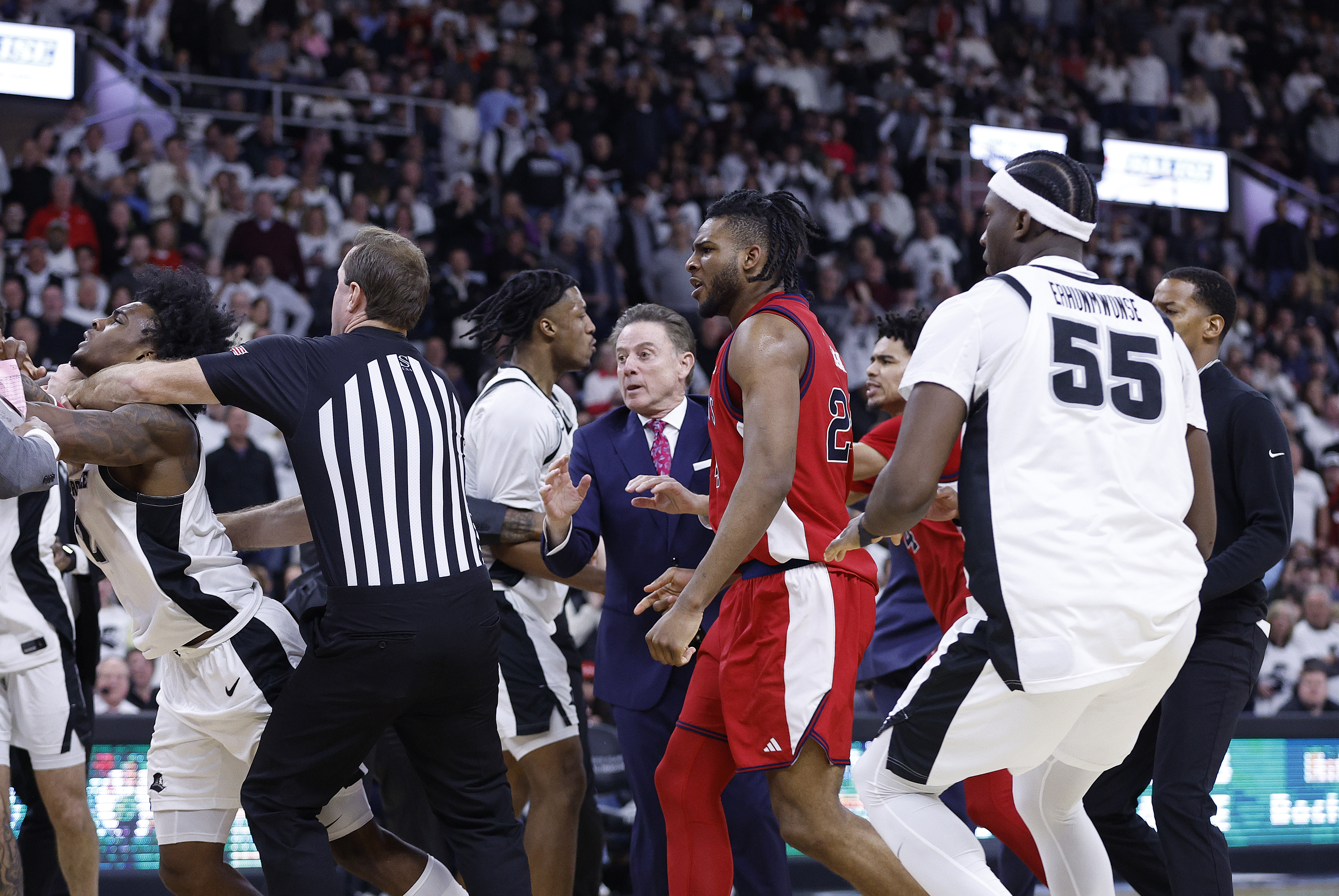
Powell didn’t play with Hopkins last season. Powell was at Georgia Tech. So, trying to understand if there was any beef or past issue also is mystifying.
Powell also stayed on the court for the full 20 minutes while the officials mitigated who left the bench. He should have been immediately escorted to the locker room.
As a result of his actions in Saturday’s game, Powell has been suspended for three games. Providence athletic director Steve Napolillo issued a statement agreeing with the punishment.
“Providence College holds its student-athletes and coaches to the highest standards,” Napolillo said. “We fully support the suspension that the Big East has issued to Duncan Powell. His actions were unacceptable and do not reflect the values, discipline, or sportsmanship expected of anyone representing Providence College.”
Look, tensions were high with Hopkins’ return. He played one year at Kentucky, transferred to Providence and was an All-Big East performer for Ed Cooley. He didn’t follow Cooley to Georgetown and instead stayed to play for Kim English. He played 14 games before a torn ACL. He then played three games last season before shutting it down.
Yes, he was a paid player, like all top players are in leagues like the Big East. And yes, players get hurt and still collect their money. And yes, the portal can be cruel when a player decides to leave and transfer, especially within the same league.
But these are the rules of engagement now in college basketball. Coaches leave their rosters and schools and most often have to pay a buyout. Players are leaving all the time after one season for another destination or more money. We’re not living in another decade when there were penalties or real prevention for transferring within a league.
There is free player movement within all of Division I. No one has to sit out a year. There are countless examples of players leaving one rival for another. Washington recruited Desmond Claude and Wesley Yates III in the portal from USC — in the same Big Ten. Ohio State’s Roddy Gayle is now in his second season at Michigan. The list is endless.
So boo all you want. That’s your choice. But the temperature has to be dialed back a bit upon these return games, which is going to happen more often than not.
Overall, the game is as healthy on the court as it’s ever been. Paying players has led to more players staying longer in college basketball. That’s going to continue. But the nastiness needs to stop. The use of a religion (Mormon or officially the Church of Latter Day Saints) in a negative cheer was uncalled for by some Oklahoma State fans toward an official when the Cowboys played BYU. The Big 12 was so outraged that it fined Oklahoma State $50,000 for the action.
Hopkins graduated from Providence. He didn’t finish his career there. He is ending it at St. John’s. So be it. That doesn’t mean he should be fouled the way he was on Saturday.
Hopefully this will be the last time one of these return situations turns nasty, but it probably won’t. Still, fans, players and coaches are going to have to get used to the idea that a player may be in your program one year and not the next.
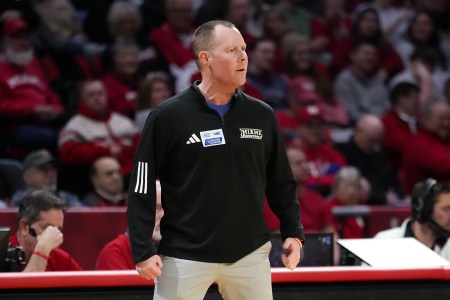
Hoop Thoughts: Assessing At-Large Chances for Miami (OH), Jerome Tang’s Buyout Mess
The Big East did the right thing in suspending Providence’s Duncan Powell, injury bug hit BYU, UConn’s quiet tumble and more inside info from around college hoops
I’ve talked to a number of athletic directors and coaches who are hoping for collective bargaining to occur, or for congress to step in and legislate these deals. That could be wishful thinking. The new world should include real incentives to receive the money; that could include a game clause, performance-based and/or necessary appearances for the school.
Something like that has to occur sooner than later so that players aren’t shutting it down for whatever reason. It’s hard to question these actions when injuries or illness are used for a reason to sit.
But the contracts must have more strength than they do now.
Illinois coach Brad Underwood told me that he would love to see rosters universally constructed with a top tier of players, a mid-tier and an allotment for developmental prospects. We shall see if that’s doable with or without collective bargaining. Underwood would also like to see a set 15-person roster that begins the first day of class and can’t be altered during the academic school year. That would mean no midseason additions.
These are all great ideas — if they can be mutually agreed upon. The big question is if.
Shoutouts
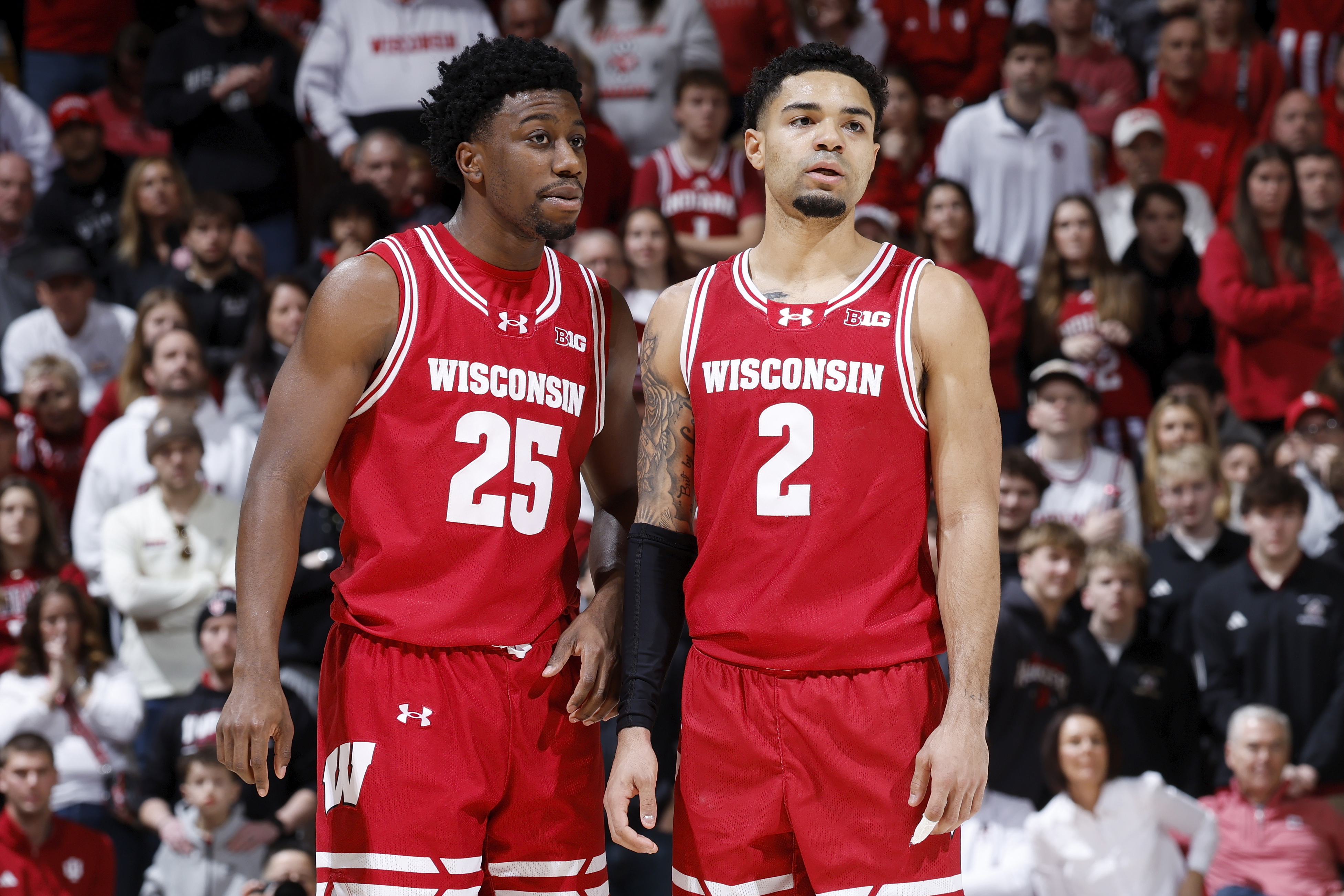
Wisconsin’s Greg Gard: The Badgers have adapted to their personnel and are rolling. Wisconsin scored 92 points in wins over Illinois and Michigan State. That’s right — 92! Nick Boyd and John Blackwell have the freedom to shoot and score. Wisconsin can win this way and is doing so. That should be a strong message to recruits that the old stereotypes about how the Badgers play should be left in a time capsule.
Michigan’s staff: I witnessed how the Wolverines manage a game last week and it’s marvelous to see. The staff manages the game and continues to give their starting nine plenty of opportunities. The Wolverines can go with the hot hand, the player who isn’t turning the ball over or committing fouls and just get the next man up mentality. It’s working exceptionally well. We haven’t see a roster constructed like this in quite some time. I’m convinced the Wolverines will enter the NCAA Tournament as the No. 1 overall seed and the favorite to win in Indy.
Florida: The Gators just needed time to incorporate their new backcourt to an existing frontcourt that was already one of the best in the country. Xaivian Lee has found his footing and been a double-figure scorer and a high assist/low turnover guard. The Gators have won five in a row and now own the top spot in the SEC by a game over Arkansas.
Bracketology 2026: Men’s NCAA Tournament Projections
Feb 16: Hoops HQ’s lead bracketologist builds his field of 68. Michigan snatches the No. 1 overall seed, while TCU makes its season debut.
TCU: Jamie Dixon has had a rollercoaster season but the Horned Frogs have risen at the right time. The Frogs have won five of seven, which includes a home win over Iowa State and road wins at Oklahoma State and Baylor. This is a team that lost four in a row in the rugged Big 12, lost to New Orleans to start the season and nearly clipped Michigan before losing by four at home. And yet, at 16-9 overall and 6-6 in the Big 12, the Frogs are right there to potentially get a bid.
Virginia: Ryan Odom has done a tremendous job transforming the Cavaliers in one season to an ACC challenger. The non-conference win over Ohio State in Nashville was the latest example why the Cavaliers are going to be a top four-line seed when the top 16 is announced on Feb. 21.
UNLV: Josh Pastner has the Runnin’ Rebels at 8-6 in the Mountain West, thus far, in his first season. UNLV has a season sweep of Boise State, a high-level road win at Utah State and a home win over Grand Canyon.
🏀 THE BEST OF COLLEGE BASKETBALL, STRAIGHT TO YOUR INBOX. 🏀
MEMBERSHIP IS NOW 25% OFF. JOIN TODAY!
Meet your guide