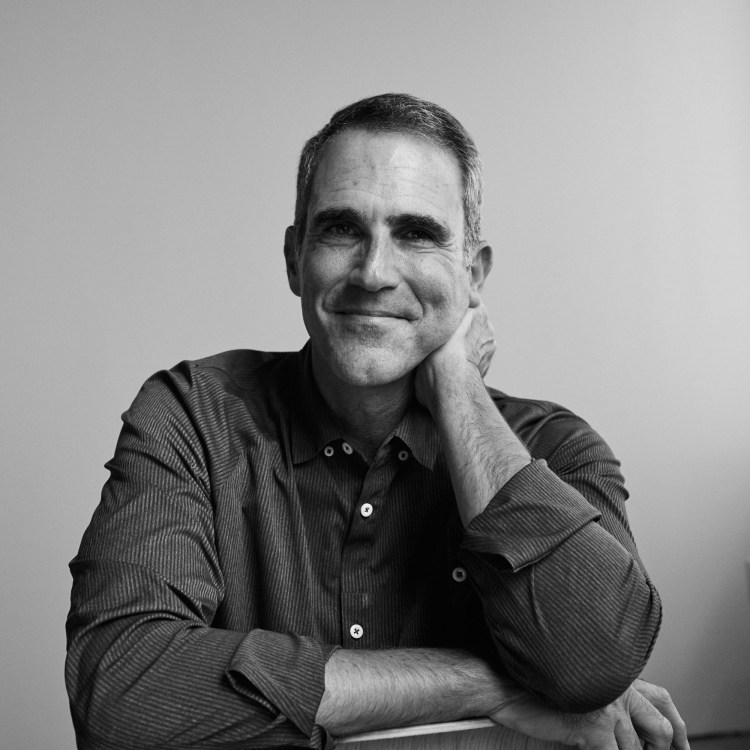

ESPN Analyst Jay Bilas joined Seth Davis and Andy Katz on The Hoops HQ Show Tuesday morning to talk about top title contenders, NCAA Tournament expansion, Cameron Boozer’s remarkable season with Duke and more top stories as March Madness approaches.
Stream full episodes of the podcast on Hoops HQ’s YouTube channel, @hhqsports, or live on the Fubo Sports Network.
SETH DAVIS: We are so pleased to be joined by the great Jay Bilas. Jay is kind enough to come on the show during a very busy time of year — in return for that kindness, I will not roll video of me and Jay on Cable 13 at Duke, circa 1991.
Let’s start big picture. We’re in March. The NCAA Tournament is approaching. I think narratives are real tricky when you’re talking about the tournament because it is so unpredictable. But last year we did have a tournament that was devoid of upsets and devoid of Cinderellas. There was a lot of connecting of the dots to the NIL era and the widening chasm between the haves and the have nots.
I know it’s impossible to predict the NCAA Tournament, but do you foresee another tournament where we see that distinction between the teams at the top and the potential Cinderellas? Do you see a connection between this new era of quasi-professionalism and revenue sharing that’s driving that narrative?
JAY BILAS: Yeah, it’s an interesting question because I think there are a lot of people out there who like to take one data point and turn it into a trend. Last year, the narrative was NIL has made it where the big shots are going to win. Cinderella’s dead. Whereas a few years ago, when you saw San Diego State and Florida Atlantic in the Final Four, the narrative was the world is flat — there’s complete parity.
Again, one data point doesn’t make a trend. Last year we had four number ones make the Final Four, but that happened in 2008. So what do we say about 2008 — everything was screwed up then?
Well, I do think there are some really good teams at the top that we can say are prohibitive favorites to reach a Final Four and maybe win it. I don’t think the field is nearly as strong at the top relative to the field now as it was last year, just like the SEC is really good this year, but it’s not as good as it was last year. Last year was historic. And so things change year to year. I think we’ll see more volatility. But it doesn’t mean that all of a sudden Miami is going to win the national championship. That’s never been the case. We’ve never had that happen. So I think it’d be kind of ludicrous to expect something like that to happen this year. But if it did, you couldn’t take too much from it. It would be just one year.
ANDY KATZ: Jay, you’ve had the pleasure of seeing a lot of the top contenders over the last couple of weeks. We can talk about UConn in a moment, but I just want to deal first with Duke, Michigan, Arizona and Florida, and the way in which those coaches were able to put these rosters together. What’s your view of the way each one of those teams have been assembled to be title contenders?
Bilas: Well, Duke isn’t doing a whole lot different than they’ve done in years past. They’re sort of in the one-and-done business. So they’ve got young superstars and then they put experienced role players around them that are willing to make a sacrifice.
Michigan is a little bit different, but they’ve taken some high profile transfers like Yaxel Lendeborg and Elliott Cadeau, and then they’ve got some returnees. But they’ve got more experienced players.
Florida’s got players back that played for the national championship, and then they had to replace the best backcourt in the country last year, maybe the best backcourt the SEC’s ever seen with those four guards that they had. So they had to bring in a couple transfers to round that out and went from being a backcourt team now to a frontcourt team.
Teams do it differently, so there’s no one way to do it. I haven’t seen anything where I’m going, all right, well, this guy’s put his roster together the right way and this guy’s done it the wrong way. I don’t think it’s any different with regard to rosters than it’s ever been and everybody’s dealing with the same variables. Some coaches say, it’s so hard to put a team together because you don’t have closeness, and then another coach has a team full of transfers that have never played together and makes them close. So they’re all dealing with the same thing. It’s just who does it the best.
“There’s one immutable fact about the NCAA Tournament: It is idiot proof.”
-Jay Bilas
Seth: We love that variability. That’s what makes college basketball so interesting. You mentioned Miami (OH), which could turn out to be one of the most fascinating at-large conversations I can remember. First of all, a lot of people are saying well, they’re undefeated, they should be in. If they’re undefeated, they’re going to be in because they’ll be an automatic qualifier. But at this point in the season, they’re down to the last two regular season games. In your view, how many losses can they take between now and selection Sunday and still get an at-large bid? And maybe if it’s a different question, how many should they be able to take?
I want to add that when people talk about their poor schedule, they have not played a single Quad 1 game. They’ve only played one Quad 2 game. A lot of people say, well, it’s not fair because they’re trying to make a good schedule and nobody wants to play them. I don’t know if the selection committee can play that game. So where are you with Miami?
Bilas: I’m all good with whatever any coach says. Whatever they have to sell to their people and try to sell to the public, I’m fine. But I don’t buy that they can’t get better games than they have. They’re going to get in. If they lose, they’re going to get in. The committee is not going to let a 29-0 — there’s never been a team with 29 wins to not make the tournament. So they’re going to get in. And they should. There’s space for it. It’s not that big of a deal.
The only problem I have with it is the old school notion that somehow, the mid-major kids deserve it. First of all, none of them are kids. They call it men’s college basketball. It’s not boys’ college basketball. None of them are kids. But some people say, these kids deserve it. Whereas the Big Ten team or ACC team or SEC team that took eight losses doesn’t deserve it.
I don’t buy that argument either. I believe that the NCAA Tournament is as fair as you can get as far as inclusion goes. And by that, I mean, you’ve got automatic bids in every conference and each conference gets to decide how they hand out their automatic bid. They can give it to their regular season champion. They can give it to their tournament champion. They can arm wrestle. They can play tiddlywinks. They can do whatever they want to give out the bid. And you’re going for that bid with your peers, schools you’ve decided you want to compete against in a league. So nobody has any excuse. Everybody has the same way to get in.
If you don’t win your automatic bid, then you have to go in the pool with everybody else. They take the best teams out first. And how much fairer could somebody want it? Do I think that Miami is better than — pick any bubble team — do I think they’re better than UCLA? No, I don’t. But they’re going to get in. And the committee is not leaving them out. I’m really confident of that. I’m not positive because they haven’t had the meetings yet. But I’m pretty confident that they’re going to make it. And given the size of the tournament, I’m cool with it. Now, if I were on a major college team that’s better and gets left out, I’d have another thing to say. But the global view, I think they’re going to make it.
Purdue Legend: NIL and the Transfer Portal Are Depriving Today's Players
The former Boilermakers captain and current Big Ten Network analyst discusses program loyalty and life after college basketball
Andy: Jay, for years, you’ve advocated, rightfully, for change and then change happened. It’s still a little clunky, obviously, but the product has been great for a number of different reasons. Part of it is the retention of players that aren’t chasing potential money elsewhere when they can earn it now, to some extent, in college basketball. What are some other factors that you think have pushed the quality of play and the competition to a higher level over the last two seasons?
Bilas: I think competition across the board is better. I think a big part of it is that players now have choice. So you’re seeing — even though they’re not compensated for the level of their value, because they’re still limited to whatever rev share money the school is willing to pay them plus NIL, and that’s not their real value — now they can have the opportunity to seek out better opportunity for themselves — and it’s not always about money — but money is now a variable and so what that’s done is it’s spread talent out more. Most of the coaches that I talk to feel like they can only go to an eight-man rotation because that’s what they can afford, and then everyone outside that rotation is basically filling out the roster, but it’s not going to cost them anything.
But this is infinitely better than it used to be. One, because it’s closer to fairness. We don’t have fairness yet, but it’s closer to it. And two, more players than ever are getting scholarships. And that includes players, athletes in other sports. There used to be scholarship restrictions in a lot of sports. And the schools benefited from that because the rosters were mostly paying their own way. Now they can get scholarships. So even though they may not be making a NIL money in a non-revenue sport, they’re getting scholarships now. So they’re way better off than they used to be.
Whatever clunkiness there is to it, that’s the NCAA’s issue. They’ve chosen not to address any of these issues because they want Congress to come in and bail them out. And they want an antitrust exemption. Whether they get it, we’ll see. I don’t really know. My sense is that congress has a few bigger things on its plate than doing this, and it’s probably not going to happen. But if I were talking to anybody in congress — and I’ve spoken to congressional staffers — my first question would be, rather than an antitrust exemption, why not just clear a path with federal legislation for collective bargaining and exempt the athletes from the Fair Labor Standards Act and the National Labor Relations Act? That way, they can sign multi-year contracts with the schools and then the schools don’t have to worry about them being employees, which seems to be some sort of kryptonite to the system, for administrators. If they want to feel that way, at least that would alleviate that perceived problem on their part.
Seth: That would be a great way to thread the needle. So these things are very difficult to predict. If I had to guess, I would say more likely than not, this will be the last time the NCAA Tournament has 68 teams in the field. I sense momentum towards expansion. It’s far from a done deal. We know they’re not going to even address it or study it until after this tournament is over.
The most likely model would be going to 76 which means six games Tuesday, six games Wednesday and then you start with 64 on Thursday. Are you in favor of this? Are you against this? And perhaps more importantly, how strongly do you feel about your opinion?
Bilas: I don’t care because they’re going to do whatever they want anyway. So I’ve given up on caring. One of the reasons I don’t care is because there’s one immutable fact about the NCAA Tournament: It is idiot proof. And with all the idiots we’ve had trying to change it over the years, they haven’t been able to screw it up. So I’m not worried about it.
I would love to get all the administrators and presidents in a room, when they say that more student athletes deserve to experience the joys of the tournament, and then say, well, don’t more students deserve to enjoy Phi Beta Kappa and deserve to be Rhodes Scholars and all that? Because why don’t we do it that way? Let’s just give more to everybody.
When I was a kid, the Tournament was 32 teams. They were all the automatic qualifiers from the different conferences that got in. Then when I was, I think a sophomore in college, my first NCAA Tournament was Coach K’s first, too, in 1984. We had a bye in the first round because there were not 64 teams. I played in the first 64-team bracket in 1985. And it fit great. So it’s always expanded, but it never expanded because more players deserved the experience. It expanded because there were too many good teams that demanded that it get bigger. I’m not sure we have that yet. I don’t believe we do.
Seth: It sounds like you’re opposed to it, but not you’re not dying on the hill. But if it was up to you, there would be no expansion.
Bilas: If it was up to me, we wouldn’t have gone past 64. But you guys know the reason for that. It’s because of conference realignment, and somebody was going to be left without a chair. So they had to expand it. Then, typical of the NCAA, they call Dayton the First Four, and it’s eight teams.
And then they have the Final Four, and it’s four teams and none of it ever makes any sense. They don’t want to make anybody feel bad. So they called it the opening round or whatever.
Seth: Remember when they tried to call that the First Round and then the round of 64 was the Second Round? That was the worst.
Bilas: Yes, that’s what it was. Good call. They called it the First Round, which made it seem like everybody that played after that got a bye. It was about trying to make everybody feel good about stuff. And look, my view is, this is the national championship. It’s not a postseason banquet where everybody waits in line to get something to eat and we all praise each other. It’s a national championship event — it’s supposed to be hard to get into.
If whoever the media partner is at any given time can clear the inventory, great. But every bracket that people fill out, none of what happens before the first Thursday of the 64 team bracket matters. So the public doesn’t care. And so, I don’t think this is worthwhile. But if they’re going to do it anyway, it will not ruin it. That’s impossible. So I don’t think it’s worth sweating over.
Andy: For the record, maybe I’m naive, but I’m not convinced expansion is a done deal.
Seth: No, it’s definitely not a done deal. You’d agree it’s more likely than not though, right?
Bilas: Oh, they’re going to do it. They’re going to do it because it’s like they keep talking about with football: Look at all the teams that go to bowl games. All those bowl games are exhibition games. They’re not going to take the college football playoff to 32 teams. We’ve still got the NIT and all these other tournaments that are the same thing as bowl games.
Why do we have to expand the NCAA Tournament when all these other opportunities to play exist if you want to play? To me, it doesn’t make any sense but a lot of things that don’t make sense in the NCAA’s decision-making.
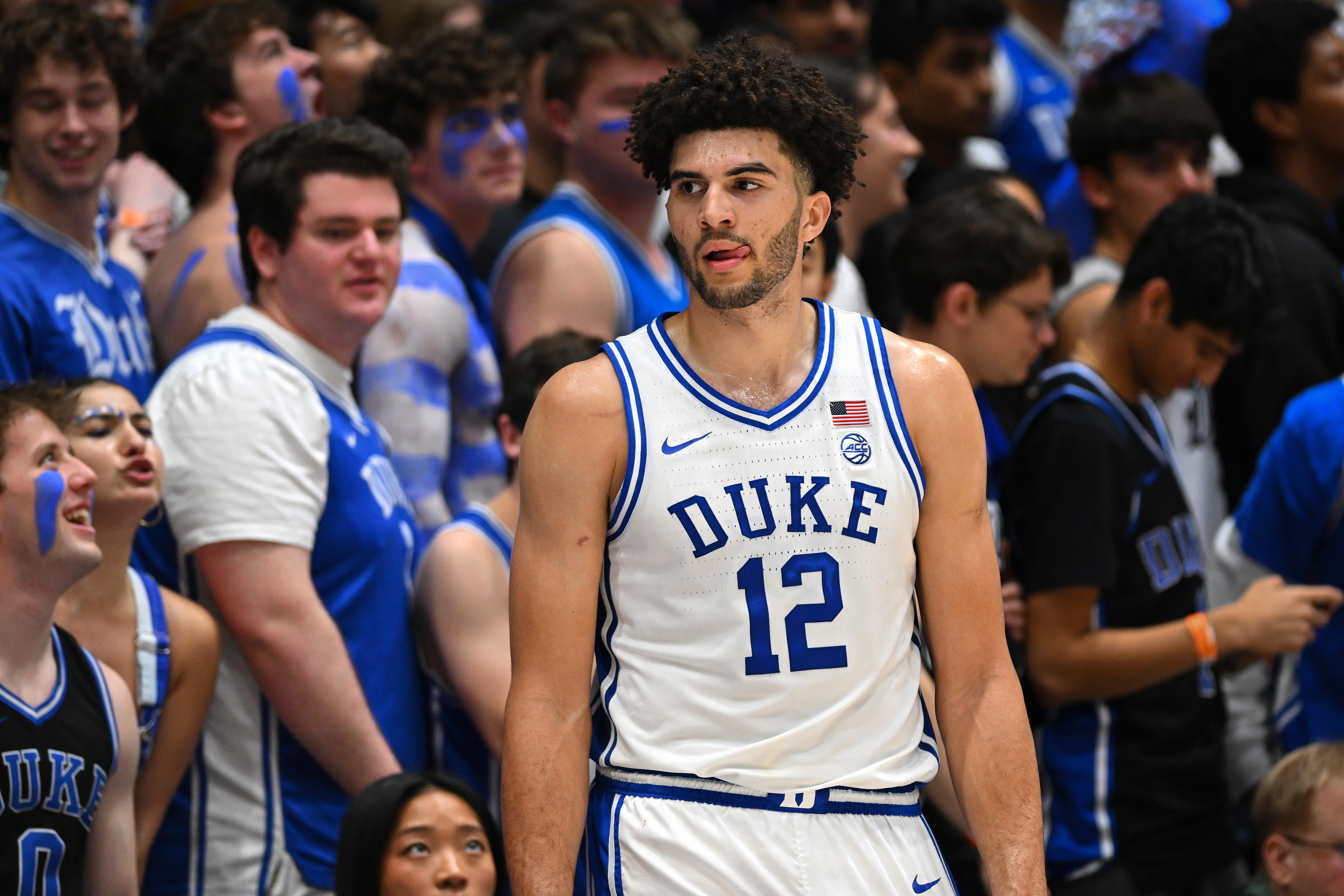
Andy: Back on the court, Cameron Boozer is the favorite now for National Player of the Year. You’ve seen so many great players come through Duke. What has elevated Boozer to the level where he more than likely will win the award?
Bilas: He’s going to win it. His high-level consistency is hard to wrap your head around. I was thinking about this a week ago or so, and I went back and looked at it. I go, what was his worst game? His worst game is 14 points, 5 rebounds, 2 assists. Every game he’s played, he’s had more than that in every category mentioned.
You’d have to go back 30 years to find anybody that’s done that. Not any freshman, any player that’s done that — not one bad game. And it’s remarkable. Look, I’m not sitting here saying the ACC is the same as it was in 1986 or 1992 or whatever, 2001. It’s not as good of a league as it’s been, but it’s still good. And look at the nonconferencee games that he’s played in.
He does it every game and he plays with a maturity and a level of productivity that you just don’t see very often. But he’s in a year where I’ve never seen a freshman class like this. We’ve had other freshmen classes that you could compare to the top five, and maybe they’re as good or better, but there’s never been one 20, 25 deep like this.
I couldn’t stop laughing that weekend when the entire nation was clutching their pearls over Charles Bediako playing for Alabama, and he scored like 12 or 13 points. Three freshmen went for over 40 on the same day. I mean, I’ve lost count of all the 40-point games by freshmen this year, and by other players. The level of play has been remarkable, but Boozer has been the best player.
It doesn’t mean he’ll be the No. 1 draft pick, because AJ Dybantsa has been great and Darryn Peterson’s incredibly talented and Kingston Flemings and Darius Acuff Jr. and all that stuff. But just for this season, nobody’s been as consistent at a high level and as productive in all the important categories as Boozer has been.
As for John Scheyer, I don’t know what he sold to the devil to have Cooper Flagg and Cameron Boozer back-to-back. I hope Duke fans aren’t thinking that this happens every year, because it’s been an extraordinary couple of years for them.
🏀 MARCH MADNESS SALE! A 1-year subscription to HOOPS HQ is now a sweet $16/year — that’s 75% off. 🏀
Meet your guides