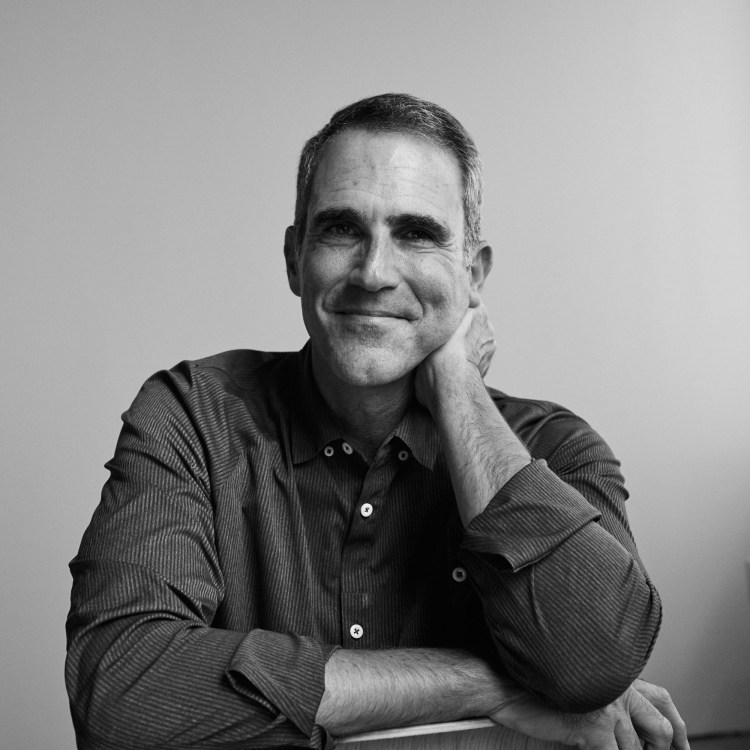
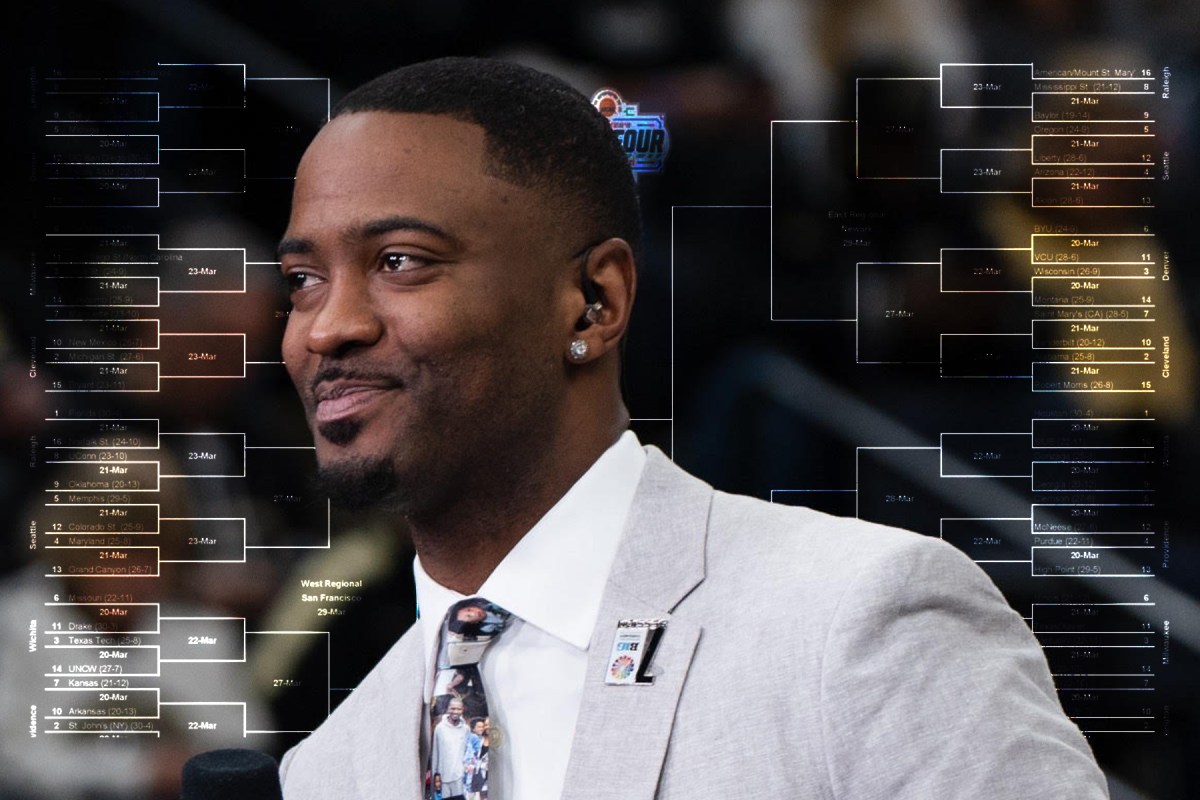
Rapheal Davis joined Seth and Andy on The Hoops HQ Show Friday morning. Stream the full episode on YouTube, Spotify or Apple Podcasts.
Seth Davis: Lots to cover today with our very special guest, Rapheal Davis. He is an analyst and color commentator for Big Ten Network. Of course, one of the great college basketball players and a very proud Purdue Boilermaker. We are kinfolk and I’m sure he spends way too much time with me, from his perspective, on the air at Big Ten Network.
Rapheal, why don’t we start there? You played in this league and I don’t know if you felt — you’re always kind of a chip on your shoulder kind of guy anyway — but I don’t know if you felt that the Big Ten was put down put upon when you were at Purdue compared to other leagues across the country.
Where do you feel the Big Ten is now compared to what it was like when you played?
Rapheal Davis: I think that the league right now is going back to what it was when I came into the Big Ten. Because when I came into the Big Ten, I felt like it was really, really rolling. You think about my freshman year, that’s when Indiana had two top-three draft picks. You had Trey Burke in the top 10, Tim Hardaway and those guys. Michigan had six, seven draft picks on one team.
So that’s what I was used to. Michigan State, that 2013-14 team is the team that should have done it. You know what I mean? Adreian Payne, Gary Harris, Keith Appling, those dudes. Ohio State had Deshaun Thomas and Aaron Craft. Every team had a guy. Even when you went out to Penn State, you had DJ Newbill and those boys. So I think now, the league is back talent-wise to what it was.
I think there was a period where you weren’t seeing draft picks come out of the Big Ten and you weren’t seeing big time winning come out of the Big Ten. I just mentioned my freshman year, but you go to our junior season, that’s when Wisconsin gets to the national championship and you have two Final Four squads and Frank Kaminsky and Sam Decker going in the first round. That’s, to me, what it takes to get you a top conference in the country: You need pros. You could have the greatest coaches and you could have the greatest execs, but if you don’t got the pros coming through the door, it don’t matter.
I think the Big Ten now, for the recruits and in the AAU scene, it’s back. It’s looked at as a sexy league compared to a few years ago, where it was a grind-it-out, rugged league and it wasn’t sexy. I think it’s back. Even now, being in Atlanta, I see it. I had a kid the other day, and this is cool to me obviously, but he didn’t know me at all. And he was just talking ball. He said, man, I’d love to go to Purdue. They score a hundred. And I’m like, that’s not what it once was so I think it’s really cool to be a part of it.
Andy Katz: Well, think about this: Maryland was on the doorstep a couple of years ago. I mentioned Michigan, Illinois, two Final Four teams, but you had Iowa in the Elite Eight, Nebraska in the Sweet Sixteen — they faced off against each other. Purdue in the Elite Eight. Wisconsin gets upset early, but they had a team that was scoring over 90 — they’re the one team that beat Michigan in the Big Ten. We know next season what USC has. There are some newbies: You know UCLA is gonna always be there. Indiana, obviously, is gonna be more talented. There’s been a major depth refill, in terms of the bottom coming up.
How do you feel the depth of the Big Ten has changed, especially since it expanded to 18 teams in 2024?
Rapheal: Yeah, I think last year (2024-25) the depth was really, really good. It was one of the true top-to-bottom conferences in the country. That was my thing last season: The SEC was so top-heavy to me. You look at the Big Ten, three could lose to 16 and that’s what made the conference special. Last year, Nebraska didn’t make the Big Ten Tournament, but they won the Crown and that was cool.
I don’t know if the depth was there this season. There’s some injuries at the bottom. Some guys didn’t pan out, Pharrel Payne going out early, Jackson Shelstad and those dudes, those teams maybe are higher if those guys don’t get hurt. So I think this season, you will be back to that type of depth in the conference.
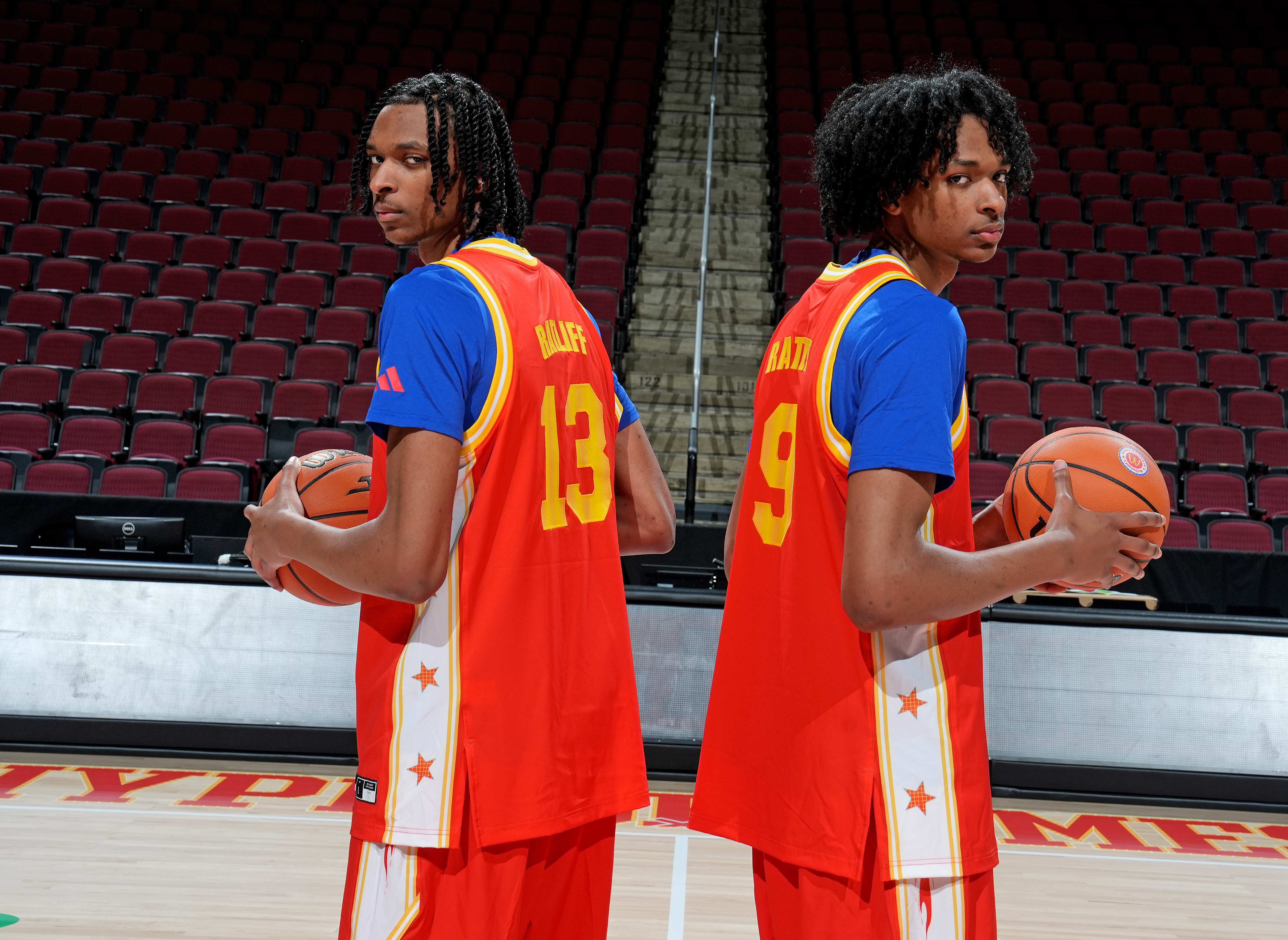
You look at like USC, they’re bringing in the Ratliff twins — those dudes are pros, Alijah Arenas is coming back. I love what Maryland did, I don’t know if it’s being talked about enough, like Andre Mills turned into a player towards the end of the season. You get Pharrel Payne back, and now you got a bunch of athletes that can guard and defend. Michigan gave a really good template for playing without having to make a bunch of threes. You can guard and shut dudes down and just get up and down. So I like what Maryland has. And then Coach (Mike) Rhoades seems like he’s going more of the international route. Got a bunch of older dudes that’s played for a long time. So I think this season, the Big Ten will be right back there. You’ll have the top teams, but then those bottom teams will still have a few pros on them.
Seth: Let’s talk about your Boilermakers. Obviously they had an unbelievable run with the senior class that’s now leaving in Braden Smith, Trey Kaufman-Renn and Fletcher Loyer. I’m always interested in your opinions and your conversation about the transfer portal. On the one hand, I know that you like it, the fact that players have the ability to transfer every year — players should be empowered to do that. Certainly to be able to monetize their abilities. We’re all in agreement on that.
But I’ve also seen you kind of take coaches to task, probably for the doublespeak, right? They say, well, these players are transferring, there’s no loyalty, but then when their own player doesn’t pan out, they bring a guy in.
What I’m getting at is Purdue losing these seniors. Your coach, Matt Painter, has only brought in one transfer and he already had that player in his program in Caden Pierce. He brought in a really good freshman class. He’s retaining a decent number of players. But I’m almost thinking about what Shaka Smart has gone through at Marquette. I know Matt Painter has brought in transfers, but I’m wondering if he’s leaning too far into the continuity piece. Sometimes you can get stuck in that philosophy as opposed to saying what’s best for our program and using the portal more.
What do you think about all that? Would Purdue benefit from Coach Painter setting aside his continuity-first philosophy?
Raphael: Yeah, and before I say this, Coach Paint, don’t be mad at me. I haven’t talked to coach about this, he didn’t tell me this, but coach isn’t taking a guy that doesn’t have the degree. If you don’t have your degree, you’re not transferring into Purdue. It goes all the way back to, I think it was 2013, when the rule was changed where grad transfers didn’t have to sit. And then you saw a plethora of guys come through: Jon Octeus, Errick Peck, Sterling Carter and those guys.
So he’s always taking grad seniors, he’s just not taking portal guys. And that’s just what he stuck with. Now I’m with it. He stayed strong with that because he hasn’t changed and I don’t know if a lot of people have noticed that. Lance Jones was a grad transfer. So I think he’s going to stick with it. I think the guys get better as they come through Purdue. Coach Painter once looked at our locker room and told us he’d rather lose with the school of the blind and do it his way than lose it our way. So I think he’s one of those dudes that he’s going to do it his way.
He has a system. The guys that come to Purdue, they come to Purdue to finish at Purdue. They don’t just come to hoop. You come to Purdue because you really want a Purdue degree. So coach isn’t going to go get a guy and recruit. That’s my thing. Coaches complain about the portal, but they cut guys. I’ve seen guys get cut and the coach bring a guy in.
I’ve talked to parents this offseason, where they had an exit meeting where the coach says, you may want to think about going in a different direction. Coach Paint, he’s just not one of those guys. He’d rather quit coaching than be one of those guys. And that’s something I respect about him.
Andy: I know no one loves to hear all this, but I’m gonna say it. He knows how I feel about him. This man we are interviewing is an incredible son, father, husband, community organizer, player. I think the world of Rapheal. In his sort of adult, professional life everything’s great. And you know what else? He’s loyal. We’ve talked about this in green rooms, in Chicago. And so dovetailing off of this portal issue, Purdue means something to you. And these guys that bounce around, I always wonder where is their home? You’re an adult now, you’re married, you have children. You go back, your kids see Purdue.
What’s your opinion on the guys that keep bouncing around in the portal? Where is their home?
Rapheal: Yeah, I went to lunch with my family this morning. My daughter’s getting dressed, she grabs her Purdue bow, clips it on top of her head. My kids go back to Purdue and it’s almost as if I averaged 35 points. They think I’m big dog because the fans love you, the alumni love you.
I was talking to one of the Purdue alums this week, because they reach out to the guys. And NIL to me, whether you stay at your school, whether you leave your school, it’s taking away the relationships that you have with certain alum, because it’s a financial amount now.
There was a certain alum around our program that reached out to some guys to come and do something. They were gonna get a little bit of something. They turned it down because it wasn’t enough. And to me, this certain gentleman, 20 years from now, you run into a rut, he’ll take care of you. You know what I mean? So I think that piece is missing, but I say it all the time.
I think that’s why I love the transfer portal, because some of these guys won’t have a home and it just is what it is. To me, the transfer portal is the best teacher in college basketball because some guys stay and it works out. Some guys leave and it works out. Some guys leave and it doesn’t work out and they have nowhere to go and they have to sit with that. So to me, some of these guys, they won’t have a place to take their kids 15, 20 years from now.
If you don’t go and transfer and be Lance Jones and go to a Final Four, get to a national championship, be a part of winning, they’re not going to remember you. They’re not going to care. So I think some of these guys, they’re jumping the ship and they’re chasing it and you gotta live with your decisions. That’s one thing I do like about the transfer portal. When you’re in those locker rooms and there’s guys that wanna transfer but they just don’t wanna sit out, they suck to play with. That’s all they do and then 10 years later, they blame their college coach. So to me, some of these dudes won’t have a home and that’s just up to them.
Seth: Can you imagine if the portal existed when you played? Say this was back in 2013 to 2016. You were a great defensive player, a quintessential Glue Guy, but you were not a featured offensive player. Let’s even set the money aside, although maybe that would have been a factor.
The Case for Cameron Boozer at No. 1
Jonathan Wasserman talks combine risers and fallers, the case for Cameron Boozer at No. 1 and which prospects should return to college
Do you think maybe a year or two into your tenure, it may have been tempting for you to look at the portal?
Rapheal: For sure. ‘Cause we had — honestly, we finished last place in the Big Ten, Seth, and everybody jumped ship. Everybody left. I think we returned four or five scholarship guys. So we did a reshuffle then. We brought in what, five freshmen, and then Jon Octeus transferred in in October. So we had a complete rehaul then.
I remember our point guard looked at the locker room and was like, I’m going to Memphis, I’m leaving. Y’all can handle this. They left us for dead. So we all could have jumped ship then. I was one of those dudes where — I committed to Purdue at 15. I was a freshman in high school. So it meant a little more than just the hoop side of it. ‘Cause I had knew, I’d been around E’Twaun (Moore) and Lewis Jackson and those guys. So for me, I probably wouldn’t have.
Maybe I don’t have a clear vision, ‘cause I got to see what — we were last place in the Big Ten. Like my freshman season, we lost in the CBI in Mackey. And then we followed that up with last place in the Big Ten. And then that junior season, we finished tied for third. We got back to the tournament. So to see what that meant to Purdue, I’m still eating off of that. I didn’t get NIL, but I’m still getting NIL off of that, know what I mean? Being a part of a turnaround or a part of something like that is able to get our kids in our neighborhood free summer leagues.
Both my parents are army parents. I’m from a loyal family. I probably wouldn’t jump ship, but I understand when dudes do.
Andy: So first of all, on that loyalty piece, I was with Matt Painter in Chicago and Bruce Weber, who’s also a colleague, former Purdue assistant. We were talking about Coach Keady, Gene Keady. And this is a great example of who Matt Painter is, who Bruce Weber is, that in that era, Gene Keady would make a lot of money. And he’s been married multiple times, and so he doesn’t have a lot of money. He’s elderly now and they take care of him — literally take care of him. Financially, they help him. There’s always someone watching out for him. Matt Painter was named the John Wooden Legend Award winner this past April. Got to that Final Four, got to that title game against UConn, but it’s those things that we don’t see that I think make him such a good coach, mentor, leader. All these stories I hear about how he treats others.
You’re there, you’re very close with him. Who is Matt Painter?
Rapheal: I lost my job, my first job out of college. I had a great job, it was great. I ended up losing it during COVID, reshuffles, layoffs — it was pharmaceutical sales and all that stuff. My first call was to my mom and dad. My second call was to Coach Painter. Talked with Coach Painter, told him what I had in mind, what I wanted to do, what my goals were, what I could move into next. I had a brand new baby at the time, all of this stuff. Coach Painter sends me to Tennessee to stay a couple of days with one of his cousins. From there blooms Crew Life.
It’s a thing where — I needed Coach Painter to do our first fundraiser. When and where? I mean I’m giving a lot of examples now. I was driving down the freeway on Memorial Day weekend. You guys understand that during the live period of AAU season, it’s a big deal. EYBL all that stuff. Coach Paint calls me: ‘You getting married this weekend? I heard you getting married.’ Yeah, coach. I didn’t want to bother. You got recruiting all that stuff. Coach Paint: ‘Okay, I’ll be there.’ Flies down to New Orleans, hangs out at the wedding, hangs out after the wedding. And people, had people asking me, that really Purdue’s coach? Cause he’s just a normal guy.
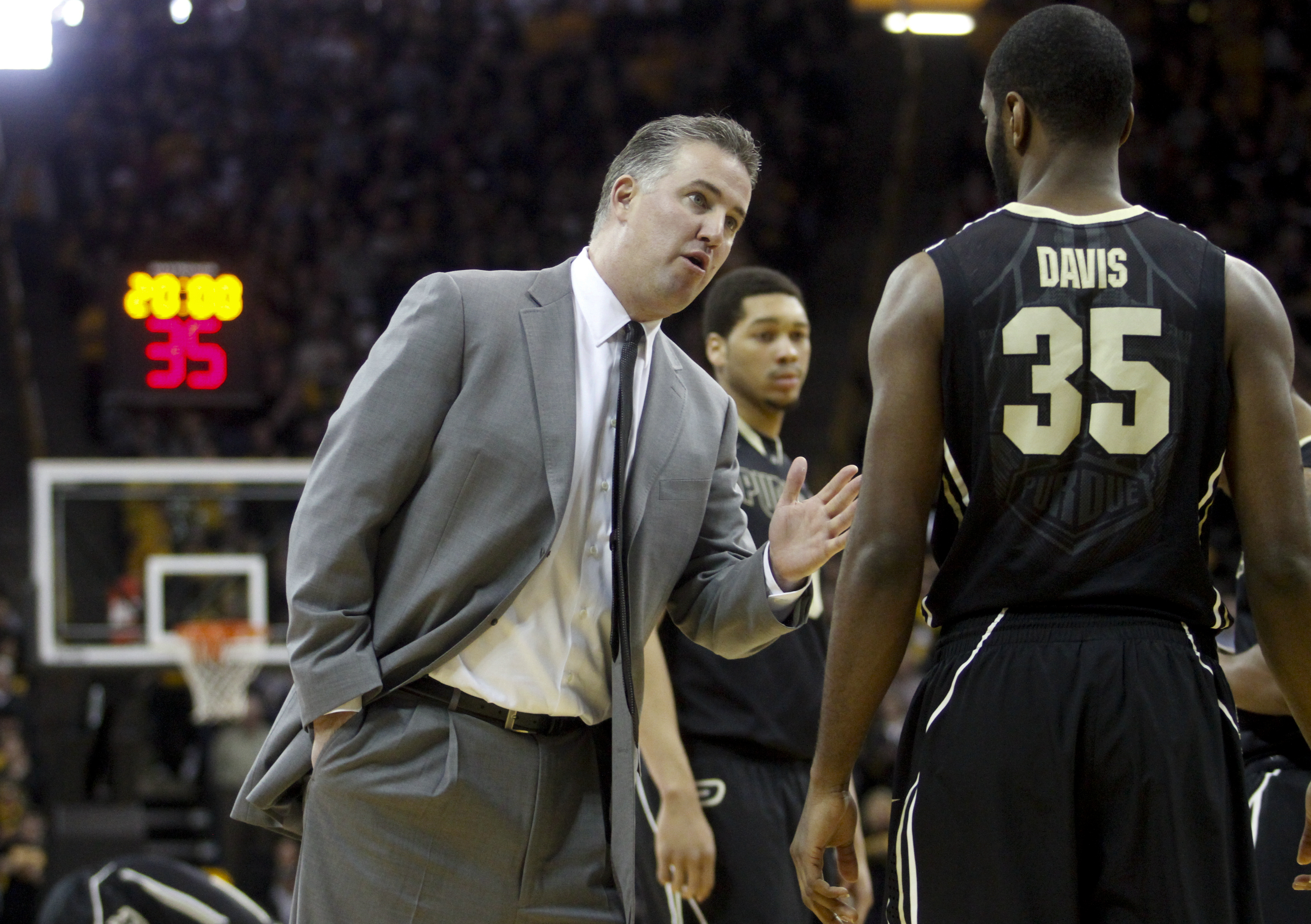
So for me, Coach Paint is just one of those dudes where you’re surprised he’s a basketball coach sometimes. ‘Cause he cares about you as a person. He doesn’t really — make the NBA or don’t make the NBA. Who are you at 40? He would always tell us, 90 percent of the NBA guys get a job. Who are you, who are you going to be? So I look at Coach Paint as more than a coach at this point. I always call him Uncle Paint, because it means that much to me, because of what he’s done for not just me.
One of our former guys was done playing overseas. He needed to come back home. Coach Paint was calling guys every night to make sure they could help this guy when he got home and now he’s in pharmaceutical sales doing extremely well. So Coach Paint is one of the good guys left and at least once a week when I’m talking to assistant coaches or I’m calling people around the country, I say to myself, damn, I had a good coach. I’m lucky to have played for Paint because not a lot of guys can call their coach. I can call mine and that says a lot about him.
Seth: Yeah, I would draw a direct line between all of that and winning, by the way. I mean, his job is to win basketball games. Guess what? He wins a lot of basketball games. So this idea that you have to choose one or the other, I’ve never bought into that either.
Rapheal: Yeah. He just won’t lie to you. A lot of these guys are jumping in the portal to jump ship because they’re being lied to, they’re being sold something — I’ve heard some of these recruiting calls and the coaches don’t know I hear them on speaker phone. They’re just lying to them. Paint will tell you in recruiting, like you hear Braden Smith say it, you hear Lewis Jackson say it, you come here, you get a degree, you work hard, you might play. It’s never promised and I think that’s cool.
Seth: We’re talking about Crew Life, CREW standing for community, responsibility, education and will. This is your foundation and you’re very, very active. We see it all over social media with your camps in your hometown of Fort Wayne, Indiana.
Explain to us the camp program and what’s going on with Crew Life.
Rapheal: Oh, it’s a lot. I appreciate you asking. It stems from a childhood gang that I was a part of. We used to be called The Crew, it was a bunch of the guys that I grew up with. I have this basketball right here and this is my high school, my thousand-point basketball. On this basketball there are 12 guys. Eight of them are dead or incarcerated for the rest of their lives.
A lot of those guys are good dudes, great dudes. It’s a thing where basketball just didn’t work out and they chose something else. But for me, Thad Matta came to South Fort Wayne, Southside when I was in ninth grade. I committed to Purdue at 14. So I got to see what playing sports got you. But also got to see what the kids that didn’t play sports got to. So for me, it’s about that.
The third aspect is that basketball is just overly-priced, camps are overly-priced, training’s overly priced, everybody’s trying to play AAU so the rec aspect has left basketball. Everybody’s trying to make money off of it. So a lot of kids that use sports as a tool to work on teams, to learn how to listen, to learn how to handle losing at an early age, they lost that because now you got to pay to play. So we tried to tackle all of that in one, if that makes sense.
But then also, not just give kids a place to come play basketball for free. We have a summer league coming up in June. So every summer is four weeks. We’re outside at the park Tuesdays and Thursdays. We play basketball. The lights come on. It’s at night, in the worst neighborhood of the city, but it has never had an issue the last six years. But then on Wednesdays, we have a mandatory financial literacy workshop. If you can’t come Wednesdays, you can’t come play basketball. So throughout the program, we’re bringing in pharmaceutical salesmen, bringing in — Brad Miller came back last summer. We brought in a sports agent. Tae Tae Johnson, who’s now at Notre Dame, this big-time safety, he came and spoke to the kids when he was just coming out of high school.
We try to bring back examples to show them different career paths and whatnot. So they can not only want to be a player. In the fall, we take them all to the Big Ten Network and they all get to see jobs like Andy and Seth, they get to see Q and Mark and they get to learn about careers within sports, but not having to play the sport. So for me, it’s about giving kids different career paths.
We take 150 kids to Purdue every year to do an engineering trip, keeping kids out of trouble. Because for me, I had a great life. I’m doing great. My brother’s in federal prison and a lot of people don’t know that. It’s a thing where two parent household, one parent household, it doesn’t matter. You’re going to choose a mentor. So for us, we just try to be that first mentor for the kids.
Seth: That’s great shit. I love it. And I love what you’re doing. All of this is connected: Your family, your upbringing, the good and the bad that’s happened in your life. You went to a place like Purdue that works because of what you’re able to do for other people, whether it’s your teammates, your coaching staff, the fans. We saw how much it meant to the fans when Purdue finally broke through and made the Final Four. And now it’s going full circle, back to your community.
Today, you’ve done a great favor for your friends Seth and Andy because we’ve wanted to have you on the show for a while and we’re glad that you took the time out to join us. I look forward to seeing you soon, if not over the summer, then definitely in the studio in Chicago.
Rapheal: I appreciate you guys. You two don’t know it, but I said you two were some of my heroes growing up.
Meet your guides