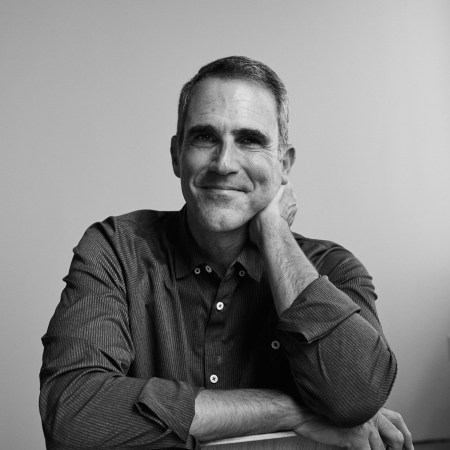

Jake Diebler joined Seth and Andy on The Hoops HQ Show Tuesday morning. Stream the full episode on YouTube, Spotify or Apple Podcasts.
Seth Davis: We are joined on the Hoops HQ show by Jake Diebler, head coach of the Ohio State University. He’s heading into full year three. Wow. It adds up. And then of course the interim a little bit beforehand.
Jake, we want to thank you for joining us. We should let our viewers know Jake is not able to comment specifically on transfers who we all know have committed. Andy and I might make reference to these guys, but there are three pretty good players who have committed. I know he’s maybe working on some more.
Jake, take us into what life has been like since the portal opened on April 7.
I know like every other staff, you’ve done your communication, your homework leading up to that. The fact that that’s the first time anyone’s talking to transfers or about transfers, I don’t think any of us are naive to really think that, but we keep hearing about how frenetic, how busy, how, frankly, unpleasant life is this time of year for head coaches. What’s it been like for you?
Jake Diebler: Yeah, it’s challenging, there’s no question, because you’re making decisions in a really tight window that impact you for the entire season. And there’s no trade deadlines. There’s no free agency period beyond this to adjust. So I think just the urgency around this time of year elevates things.
There are some positives that have happened, I would say. The portal window being moved back was really good because it impacted retention conversations in a different way this year. It allowed — like we had multiple conversations with guys and we were able to have really thorough dialogue. Because for us, we always start with retention. That’s how we build our roster. And I liked — I wasn’t sure going into it how the timing would be, but I really liked the timing of the portal window opening. And then obviously once it opens, I mean, I don’t know what the max number of Zoom calls is that you could do in one day, but I think we certainly were flirting with that multiple days since the portal opened.
Andy Katz: So Jake, let me go right after that loss to TCU. I was talking to Phil Martelli Jr. from VCU and he was saying that literally on the bus, after losing Illinois, the retention conversation started right then and there.
How long after that loss to TCU did you have to dive into retention conversations?
Diebler: Well, to be honest with you, we had started some of those conversations even before then. And so I think there were — you know, there’s levels, right? And priorities in retention. And so we had initiated conversations well before the NCAA Tournament. And so when we lost that game, absolutely conversations before we got on the plane to go back to Columbus, conversations had kind of either restarted or I’d begun with some other guys.
So that’s the hard part. I think one of my complaints with the structure of the calendar right now is you don’t have time to reflect on the season yet. That’s almost something you have to wait until middle of May, end of May, beginning of June. There hasn’t been time to go back and rewatch games, outside of obviously our game in the NCAA Tournament.
But going back even to Big Ten play — because you want to rewatch all those games and get a feel for what you did well, areas you got to improve on, not just when you look at analytics and stats, but really watching the film. That’s my one complaint. I haven’t had time to reflect on the season. It’s been all focused on building our roster for next year, but conversations started before the end of the season and then picked up before we got back to Columbus, certainly.
Seth: Jake, the subject of money and salary and compensation — it’s everywhere and nowhere. I know people like yourself, coaches, don’t like to really get into specific numbers, at least not publicly, but give us a sense of how you manage that. For example on, let’s call it March 1: Do you know exactly or pretty close to exactly what your full payroll is going to be?
You have two components to explain to our viewers: The revenue sharing that’s coming straight from Ohio State, which is capped at $20.5 million across all athletics. I think you may have some other athletics programs at Ohio State, I don’t follow them that closely, but I’ve heard inklings of that. So that’s kind of a priority. And then you have your own NIL money that you need to raise, which was supposed to be a lot less than it’s been in the past. It doesn’t sound like it’s been a lot less.
So you have to spend, maybe time with donors and other means of raising that money.
Give us a sense of how the money works heading into this process and how you get to a point where you know how much money you have to spend on your players.
Diebler: Yeah, it’s multiple buckets, right? And you just hit on them. A big part of my job is fundraising. We’re fortunate that Ohio State is such a big brand. We certainly, when it comes to revenue share, we got some other really, really good, good sports on our campus that that rev share money is divided up with. So we have to utilize other avenues.
I think you’re seeing because of the brand of Ohio State that there’s real, organic NIL compensation happening at a high, high level here. And that’s important because without that, it’d be a big time struggle. One of the benefits of this season is we have a much clearer picture of what our total NIL situation is gonna look like for next season while we’re building the roster.
Last year, at this time, we didn’t necessarily have that. And so that presented a lot of complications as we were putting the roster together. We were making some decisions based on one projection. Then we had to adjust with a new projection and then another projection. And when you’re moving that kind of target as less players become available, it impacts your ability to build a roster.
I love where we were at heading into the portal this year with a more clear picture and understanding of what the overall NIL picture looked like for Ohio State. But I also think every year you’re guessing as a program as to how the market is going to increase, at what rate. Because I don’t know if anybody could have fully predicted the way that’s changed this year from last year. I think we all assumed it was going to go up. But it’s gone up in a major way based on conversations with agents and other coaches. So that presents the challenge in itself, but we’re in a better place this year than we were last year. And that’s exciting for us.
We were able to retain really good players. That’s how we built our roster here these last couple of seasons. And it’s gonna be how we build our roster every year moving forward.
Seth: Just to follow up on that, Jake, is that because you’ve now been through it a couple of times? This is now the third, fourth year of this paradigm with the portal and NIL, and guys are kind of getting into a rhythm. Everyone says, well, we just want to know what the rules are. I’m not sure we’re quite there, but I think people are getting into that rhythm. Is that reflective of what you just described?
Diebler: It helps. I think so. I think experience certainly helps. We’re all, even though I’m not as experienced as some other head coaches, we’re all experiencing this in real time at the same time. I think it’s an advantage for me to some degree, because I don’t know how it was before as a head coach. And this is all I know as a head coach.
The one thing I don’t know that I fully anticipated was the amount of fundraising that I would have to do at Ohio State and the time commitment that that takes, but I enjoy it because it gives us a chance to build relationships with people who not only are helping us right now, but who are going to be able to help these guys long after their time at Ohio State. And I think that’s something that’s special about this place.
So it’s different. I do think there’s a little more of an understanding of, you know, this year versus last year as to how things are supposed to work. We got to clean some things up. I think there’s no question about that. But I’m not one of those guys that thinks it’s all bad. I think there’s a lot of good going on right now. I think we’re moving in a really good direction. And I’m excited to see where college basketball continues to go over the next two, three years.
Purdue Legend: NIL and the Transfer Portal Are Depriving Today's Players
The former Boilermakers captain and current Big Ten Network analyst discusses program loyalty and life after college basketball
Andy: All right, Jake, I’m gonna go back and I’m gonna reflect. I will tell you, and I’m sure you saw this: We were on Big Ten Network, openly cheering to get Bruce Thornton to the NCAA Tournament. We just wanted to see it because he’d been such a great ambassador for the Ohio State, for college basketball, for the Big Ten, and then it happened.
How do you put a value on what Bruce Thornton meant to the program during his career?
Diebler: Well, I think when you’re a first time head coach and you get a job, especially at this level, a dream job, you’re looking around the room to say, OK, who can help me establish and help take this program to another level? Because we needed to raise our level as a program. That’s why I was brought in. And he was the first guy turned to, Andy.
He and I have a special relationship. I’ve known him since before his junior year of high school. I recruited him to Ohio State. I’ll never forget that conversation of us sitting in my office and saying like, hey, let’s do this together.
We were close in year one. That was some major adversity and we just fell one game short. He could have went anywhere in the country. I mean, I think that’s well documented. He decided to stay here. One, because we had some unfinished business. And two, he saw the value of getting a degree from Ohio State, you know, an opportunity to cement a legacy and establish a place that he could always call home. But he’s such a special young man. He works hard every single rep. He’s in the gym. He’s an every day guy and every rep guy. I’ve said that multiple times before.
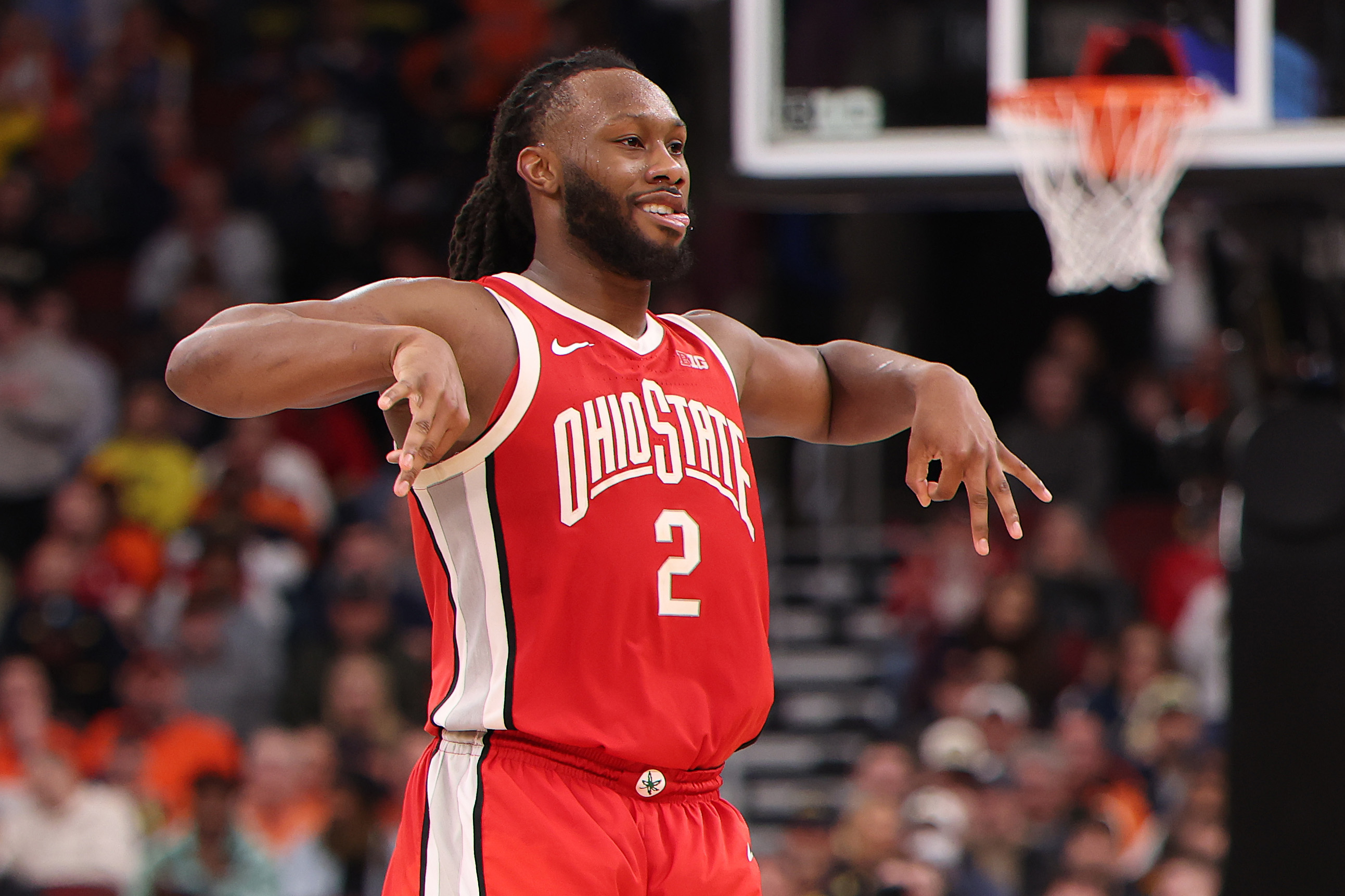
But he’ll forever be a part of our family and he’ll forever be a Buckeye. And so I think that lesson for young people when they have to make decisions — and hey, the decision, the best decision isn’t always to stay — but for him it was, and I think that validation of playing in the NCAA Tournament for him was pretty special.
Seth: And I think Ohio State is still the biggest alumni base in the country, maybe the world.
Diebler: Yeah, it is and we’re everywhere. We’re everywhere. We have the largest fan base in all college sports. And to be honest, it’s not very close. And that is a network even outside of the alumni network in itself. And we’ve seen former players, they have benefited from that for decades. And it’s a great thing for our guys to remember: When you come here, you treat people well, you work really hard, this place will take care of you for the rest of your life.
Seth: Let’s pivot to next season. You have been a fixture in my never too early preseason top 25 ranking. So now we can set high expectations to add to your stress. I want to ask in particular about Anthony Thompson, who’s a big time recruit coming in as a freshman, highest rated recruit at Ohio State since Jared Sullinger. In-state kid from Lebanon, Ohio, went to Western Reserve Academy in Hudson.
How big was it for you to land an in-state prospect like that? And what can Buckeye fans look forward to with Anthony Thompson?
Diebler: I think there’s no denying the importance of it, right? And it’s been a long time since that caliber of player has stayed and gone to Ohio State. I think it speaks to his belief in what we’re building and the relationship that he and I have been able to establish and that he’s been able to establish with our staff.
I’m really excited about who he’s gonna be for us next season. I think he’s got through-the-roof potential that will be realized over the years to come. But I think he’s gonna be a really, really important player for us. He’s got an ability that — I don’t think it mattered who was on the court with him, at what level — if he stepped into a gym, he can really shoot the ball, guys. He can really shoot it. He plays with a high basketball IQ and he’s got versatility. He’s got positional size and versatility. So we’re excited about him, what he’s gonna be able to do for this team, the role that he’s gonna play and what it says about our program and our ability to recruit and hopefully continue to recruit at a high level.
The best teams at Ohio State, when you look at the history of his program, there’s a strong Ohio presence. And so it was certainly important to win that recruiting battle and we’re excited to work with him.
Andy: Jake, one other aspect of Bruce was that he set the identity. It wasn’t always about his ball dominance and getting to the rim and all that, but that never quit, that intensity, the hustle, the 50-50 balls, all that. I think back to the two Michigan games — I mean, there were few teams that played them better than you guys did — at Chrisler, in the Big Ten Tournament.
How do you ensure that the identity of last year’s team will translate to next season with some different personnel?
Diebler: Yeah, I think the identity of your team is never just one person. But I think Bruce embodied the toughness and the fight and really the — we have a saying in our program, Andy: winning over everything mentality. And so he wasn’t the only one. When you look at the end of the season, there were a lot of teams who were trending downward. We were one of the few who were trending upward. I think culture has a lot to do with that. Chemistry has a lot to do with that.
That’s why retention was important for us this year. And so Bruce certainly helped set the tone, but John Mobley, Amare Bynum, those guys helped set the tone too. And that’s a big reason — they’re certainly really talented players — but that was also a reason why we wanted to make sure that we built upon the retention, because they can help carry over those cultural qualities that I think are so important.
And then we evaluate as we bring guys in: Do they have those qualities? Do they have enough of a foundation of those qualities? We could certainly help them get better when they get here, but you gotta have a competitiveness to play in this program. You gotta have a level of toughness to play in this program. Bruce embodied that certainly, but so did a lot of our other guys from last season.
Seth: We should point out that Mobley and Bynum are coming back. You know how I feel about Bynum. I was texting you all season. You could really see it in the second half: Bigger guys as freshmen kind of take a minute to get their bodies right and get used to playing against guys their size. He’s going to have a huge sophomore season.
Where are you at with your schedule?
I’m curious as to what you have lined up, what you still need to plug in. And then also if you could explain to us philosophically how you put together your schedule, how you balance out the tough games versus the bye games.
And of course, why you’re avoiding all the tough mid-majors that apparently no power conference coach wants to play. How do you do the mid-major math of putting together your schedule?
Diebler: Yeah, I’m gonna push back a little bit on that because we were building this schedule and listen — did we try to schedule all NCAA Tournament or teams projected to finish top of their league? And in mid major conferences, did we try to schedule all of those in our buy games? No. But we did target a handful. And it’s hard. It’s hard to project where teams are going to end up.
Andy: Well yeah, there were a couple ACC schools that did not have good seasons that you played that you wouldn’t have been able to predict.
Diebler: Exactly. And even some of the mid-major teams, some of the buy games we had that we anticipated, maybe even being higher NET rankings than where they ended up.
I think that’s what we’re trying to do when we put our schedule together. We’re trying to build a resume that is going to move our NET ranking up as high as it possibly can. Now, the bulk of our schedule is, in my opinion, the deepest league in the country, and that’s the Big Ten. That’s 20 games that you have to bring your absolute best to have a chance to win, doesn’t matter where you’re playing.
So we know that, and then going into this next season, we’re evaluating and doing some consulting with people to figure out — for example, with this additional game, do we need to add an additional high-major game or not? There’s certainly scheduling components for a number of home games that come into the equation as you build out your schedule.
The last couple of years, we’ve played 25 high-major games out of our 31 and a lot of those have been neutral. We’ve also tried to do home and home, you know, trying to get a true road game, trying to get a true home game against another power conference team. That’s become harder to do than it was in the past, but we’re still pursuing that.
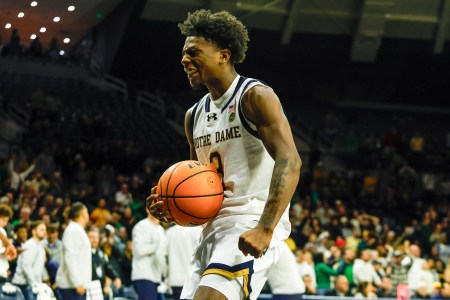
We have a return game to Notre Dame this year. That’s going to be a really tough game. And we’ve got the CBS Sports Classic, which is guaranteed to be a high level game every single year. And then we’re going to kick off the season in Salt Lake City against BYU. So we’ve already begun putting our schedule together. And it’s going to be a really tough schedule. I think Ohio State belongs on that level of stage.
And we want to prepare ourselves for Big Ten play. So we’re going to schedule hard, and that includes making sure some of our buy games are challenging too.
Seth: I appreciate that. I was only half kidding with the mid-major comment. We talked to Jim Boeheim last week — he was famous for never leaving the state of New York until the start of conference play. The old school coaches really tried to keep things as easy as possible in November and December, because they knew things were getting difficult in January. That was maybe good for them, not good for the sport.
You look at November and December right now in college basketball, every single week, almost every night, there’s a big-time game — high-majors, ranked on ranked — so I don’t doubt the validity of your intent on delivering those for your program.
You delivered great stuff to your old, and I do mean old, friends Seth and Andy in the midst of portal madness, portal combat as they say — so Jake, thanks for being on the Hoops HQ Show and best of luck putting everything together.
Meet your guides