
EVANSTON, Ill. – There are quite a few empty frames on the wall outside Chris Collins’ office, frames that would normally have the photos of Northwestern’s many returning players in them. Only three are filled with faces, those of the two rising sophomores and one rising junior that chose to come back after last season. Everyone else left.
Under normal circumstances at Northwestern, that would be nothing short of catastrophic. Collins has produced NBA Draft picks the past two years as well as two historic NCAA Tournament seasons during his tenure, each at the culmination of a careful, multi-year building process. Last year’s team, with a highly regarded five-man freshman class, was supposed to be the beginning of another cycle. Instead, after an exodus of players following a 15-19 season, it became the beginning of an entire new paradigm.
“I woke up one day in the spring, I had three guys on my team,” Collins said. “Two weeks later I had 13.”
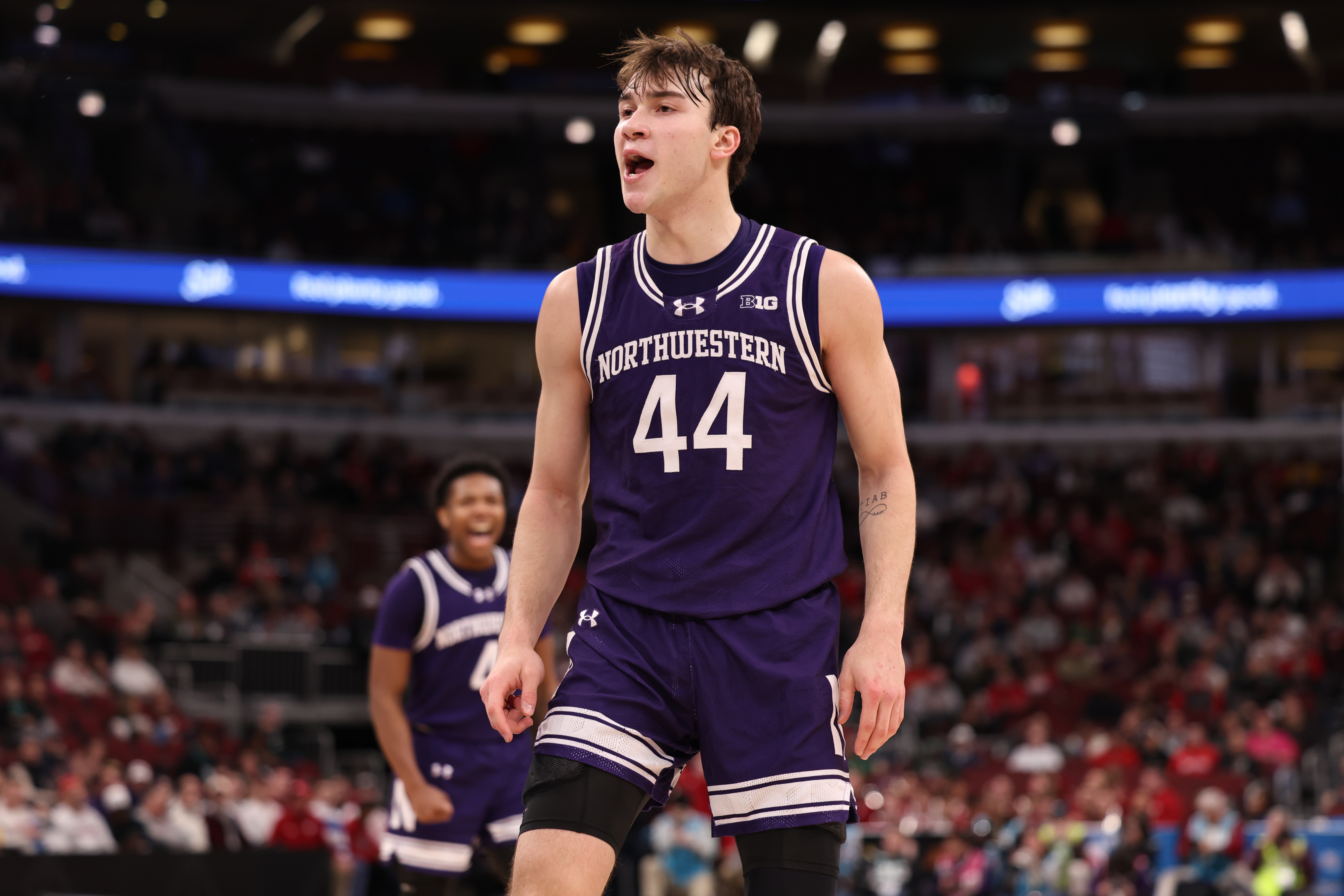
Northwestern is now having to fill the empty frames on the wall the same way as everyone else, with eight incoming transfers — while doing it in the same conference as the national champions and some of college sports’ financial powerhouses, yet without the same NIL infrastructure or resources and with more stringent academic requirements.
The trick for Collins, the existential question, is whether he can navigate the new system the same way he successfully navigated the old one, looking for the same kind of players as transfers that he sought out as recruits because they tended to thrive at Northwestern: overlooked, chip on shoulder, desperate to prove themselves. Not unlike how their coach has approached his job.
“It’s like a fresh start and a fresh approach to see if, competitively, we can do this,” Collins said. “I’ve always been wired by those challenges. I mean, at the end of the day, that’s why I came to Northwestern. Everybody told me not to come here because of all the things that were said you couldn’t do and we were able to change that whole narrative.
“They said you couldn’t go to the tournament and we’ve been multiple times. They said you couldn’t be in the upper echelon in the Big Ten. We came in second, we came in third. They said you couldn’t have NBA players, we just had two years in a row we had guys drafted. There’s a lot of things we’re really proud of. But now the next challenge is, can we do it in a place like this in this landscape?”
Big Ten Roster Reshuffle Part 1: The Current State of Every Team’s Lineup
Can the Big Ten claim back-to-back national titles? Here’s a detailed breakdown of where each program stands after another chaotic offseason.
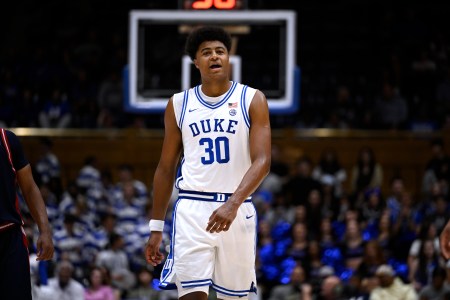
This is not how Collins would prefer to do it. It’s not what he envisioned when he arrived at Northwestern 13 years ago. But if he learned anything from Mike Krzyzewski after playing for him and coaching under him at Duke, it was to be willing to adapt as the sport of college basketball changed. Over the course of his career, Krzyzewski made sweeping changes, pivoting his recruiting to go after one-and-dones and incorporating international basketball precepts into his old-school systems. Collins was a big part of both. It’s just that the structural changes of the past few years, especially for a program like Northwestern, are as big as any in the history of the sport.
Collins is open about the challenge Northwestern faces in the Big Ten. Faced with the financial might of Michigan and Ohio State, perennial contenders like Michigan State and Purdue and the United Nations of Illinois, let alone the rest of the Big Ten, it seems like an insurmountable task just to keep up, even more difficult than when he took the job. Then again, he saw Nebraska and Iowa playing each other in the Sweet Sixteen and thought: Why not us?
“I was jealous watching those teams last year, because at our best, that’s what we’ve been,” Collins said. “How do we recreate that in our system? Hard-working guys, veteran guys, older guys. Those were two teams that I watched and said, ‘They found a way.’ But is it harder? Yes. Absolutely. When someone has a $20 million roster and other teams are under $10 million, it is. But guess what? You can cry or you have a choice to make: Try to figure it out with what you have or get out. But yes, I do think the gap with some of that has gotten harder.”
So Collins is looking to what once worked in the hope it will work again. He still has to find the next Boo Buie (who chose Northwestern over Vermont and Albany) or Nick Martinelli (who had been committed to Elon), just maybe not coming right out of high school. If you were recruiting freshmen with mid-major offers, can you now recruit them as mid-major portal players instead?
That was the crux of his postseason postmortem. Not only what went wrong with a team that turned out to be too young for the Big Ten — Collins blames himself for the way the roster was built — but looking deeply into what successful Northwestern players have had in common, and how to identify players like that in the portal. “Every system is not for every guy,” Collins said. “Every program is not for every kid. So we did the deep dive into fits here, and more importantly, guys that excel for me. How they’re wired. What kind of player. Those kinds of things, I tried to really dig into.”
This was a new discussion, because Northwestern had been mostly immune from what is now typical roster turnover until this spring, maintaining commendable continuity for a power-conference team. After losing nine transfers and returning only three players from last season, the Wildcats no longer had a choice. Their eight transfers come from places like Bellarmine, UC Santa Barbara, Northeastern, Mount St. Mary’s, Drake and BYU.
Six of the players on the roster are from overseas, an area where Collins thinks Northwestern’s brand has value. Five of the incoming transfers will have eligibility remaining after this year, along with two incoming freshmen, so there is at least the potential to build for the future – to the extent anyone in college basketball can plan ahead in 2026.
This is a test case, a no-parachute trial run to see whether Collins’ theory works in practice: Can you build a team of the kind of players you know can win for you in a few weeks of one offseason, instead of two or three summers?
“For us, because we’re in a league with these sexy big names, the model that’s really been good for us are the guys that believe in themselves, that we see something in, that have a little bit of a chip on their shoulder, that really want to compete against those programs,” Collins said. “Even in this portal cycle you saw everyone kind of knocking us, that a lot of the guys that we got are quote-unquote mid-major players. Well, to me, those are guys that are good enough to be high-major guys that can play in this league. The jury’s out. We’ll see.”
Collins does know there’s more experience and more positional size and more perimeter shooting than there was last year, all goals when the Wildcats started to rebuild their roster. The rest of it, he’ll find out along with everyone else, hoping there’s a way to make what has worked at Northwestern continue to work, even when everything around Northwestern has changed.
Meet your guide