
Are NIL contracts enforceable? That remains a billion dollar question
Last week, the world of college football was jolted by a sequence of events that struck at the heart of a central question in this highly portalized, NIL era: How binding are the contracts that are struck between players and their schools?
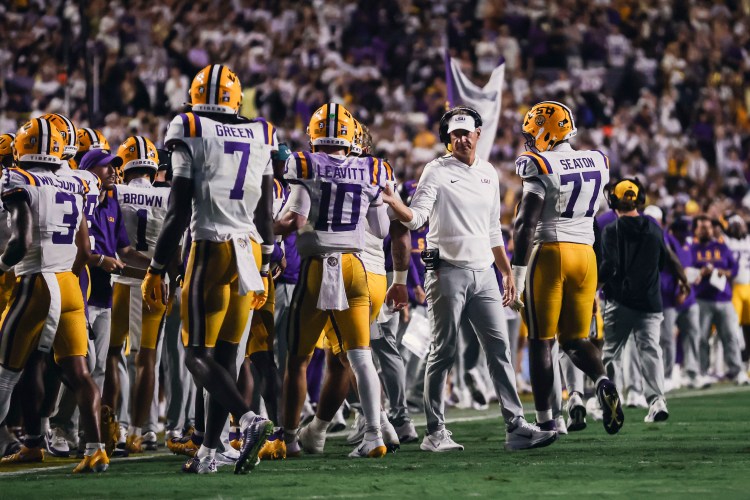
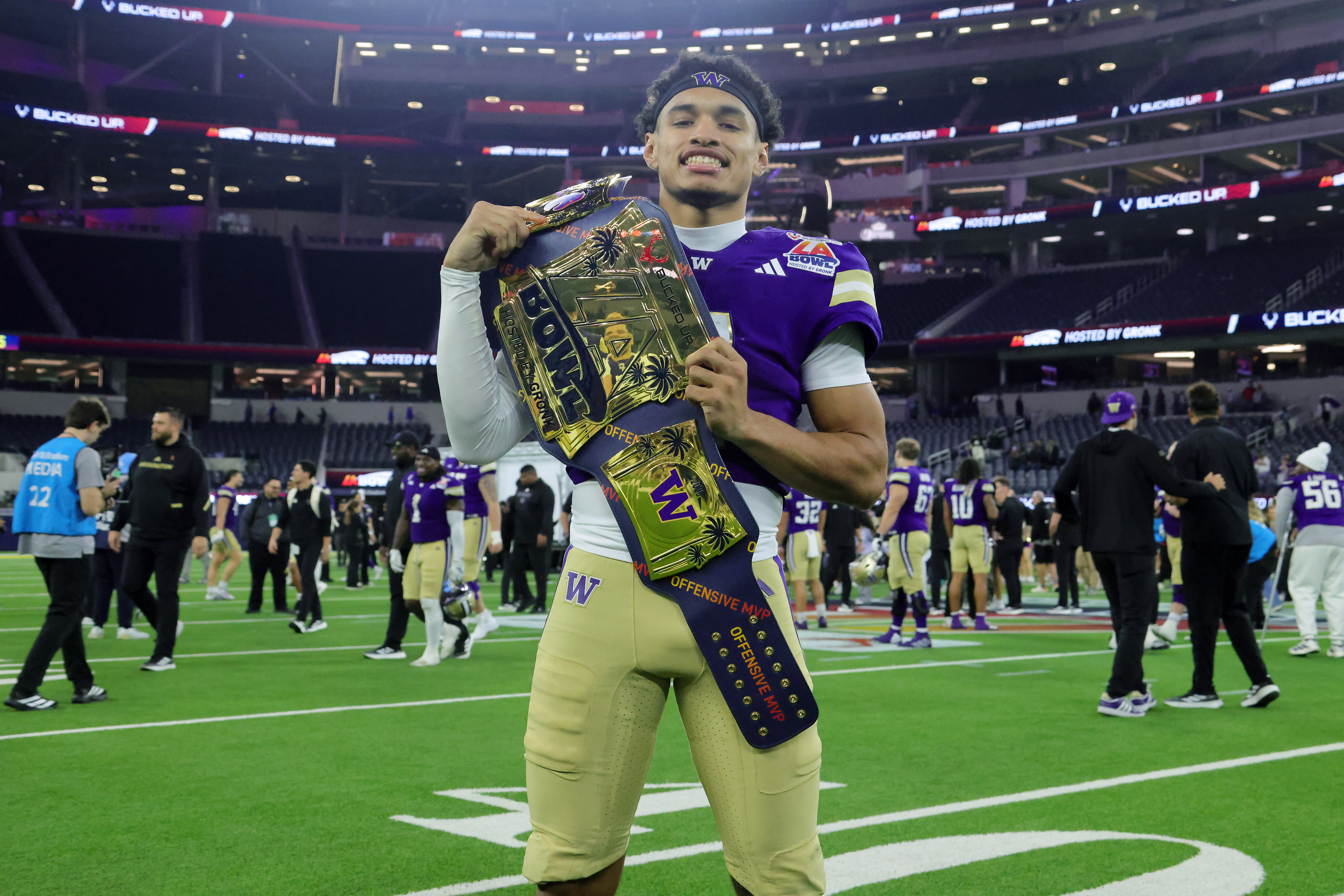
That question was tested by the University of Washington’s star quarterback, Demond Williams Jr. A day after Williams signed what was reported to be a revenue-sharing and NIL agreement worth more than $4 million to remain with the Huskies, Williams declared his intent to enter the transfer portal. After the school threatened to take legal action, Williams reversed course the next day and declared his intention to remain a Husky. Many saw the reversal as a win for programs’ ability to maintain control over the contracts their athletes sign. But the saga highlights what could be a weakness in the NCAA’s ability to enforce contracts. And that, in turn, could have enormous ramifications for college basketball and every other sport where athletes sign contracts with schools.
It has been reported that the language in Williams’ deal would have made him responsible for paying the full value of the contract if he decided to terminate it. While that provision exists in many revenue-share agreements, other college athletes have effectively put the burden on their former institutions to enforce it. For example, Georgia is suing former defensive end Damon Williams to compel arbitration in hopes of recovering the $390,000 buyout for his decision to leave the team for Missouri last season.
No professional sports system operates in this way. Why? Because professional athletes in America are unionized employees who, through their collective bargaining agreements (CBAs), have given their respective leagues the authority not only to oversee contract disputes but also to regulate their eligibility. Even if a professional player holds out, as we see every offseason, they cannot sign with a new team and compete immediately; their rights remain with their respective team. That is not the case in the NCAA.
During the last transfer portal cycle, we saw this play out with Xavier Lucas, a football player who broke a revenue-sharing agreement with Wisconsin to leave for Miami. When Wisconsin refused to enter Lucas’ name into the transfer portal, he unenrolled from Wisconsin and enrolled at Miami. An NCAA statement made it clear that this was permissible: “NCAA rules do not prevent a student-athlete from unenrolling from an institution, enrolling at a new institution, and competing immediately.”
Needless to say, the ability to break a contract and immediately play would give athletes tremendous leverage. Buyouts, like the reported $4 million Williams would have owed Washington if he flipped, disincentivize athletes from chasing huge paydays in the portal market after they have signed the dotted line. If they’re legally binding, that is.
MORE ON NIL + ELIGIBILITY

Football Players Are Cashing in on NIL. What Can Basketball Players Learn From That?
The rules governing Name, Image and Likeness have changed, but if a player can create moments and win, there is still a lot of money to be made.
Special Report: Pros in College? A Players Union? A Fix From Congress? Sorting Out the Eligibility Chaos in College Sports
Baylor’s decision to sign James Nnaji, a former NBA Draft pick, produced complaints and confusion. Here are answers to the most-pressing questions facing college athletics.
One challenge with buyouts is that there is very little precedent on what an enforceable buyout would look like. Once again, either an arbitrator or a judge will oversee these disputes, not the NCAA. Since professional athletics operates within its CBA, this question has not arisen within American professional sports.
There is some legal precedent that bolsters the position of the schools. In Vanderbilt University v. DiNardo (6th Cir. 1999), Vanderbilt head football coach Gerry DiNardo contested the legality of a roughly $280,000 buyout for his early exit to become the head coach at LSU. The Sixth Circuit Court of Appeals sided with Vanderbilt, stating that the buyout provision was not a punitive measure.
A school that poaches an athlete is also likely taking on the expensive endeavor of paying out their buyout. In theory, this would reduce the number of interested suitors. A severely underdiscussed wrinkle in new NCAA guidance is that teams that acquire a player with a buyout must take a cap hit to the benefits pool they can pay their athletes. This means nothing to Big East schools, which operate well under the NCAA rev-share cap, but for Power 4 programs with football, this decision could significantly impact their overall resources.
The rev-share cap this year has been a complete farce, as the majority of well-resourced schools front-loaded contracts before the cap was put into place, allowing them to spend far beyond this season’s $20.5 million cap. Any semblance of spending parity won’t come until next season — if at all.
It remains disputed whether the NCAA can actually implement this new system. We have seen top programs repeatedly finance large coaching buyouts, so finding big money to pay an elite player’s salary and buyout is feasible. A cap hit could hedge against the blank check some schools appear to have.
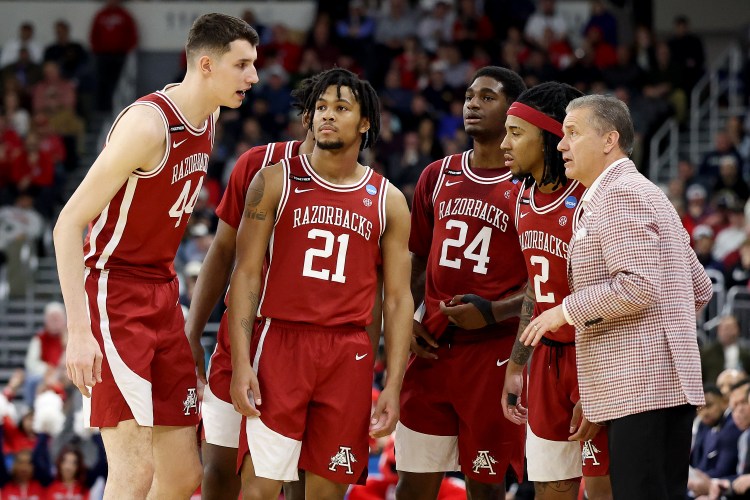
What does all of this uncertainty mean in the world of college hoops? Well, for starters, the majority of college basketball GMs I have spoken to were incredibly wary of handing out multi-year contracts to athletes this season, with many mid-major programs shrugging off the practice altogether. Athletes under contract can hold out, or, as we have seen, enroll at a new institution. This exposes lower-resourced schools to extreme risk and the potential costs of enforcing buyout provisions.
By enforcing a buyout, schools open themselves up to negative publicity, potentially alienating agents who have other talented clients. Litigation is certainly not cheap. Relying on athletes to honor their multi-year agreements can also put teams behind in scouting and recruitment if the player chooses to leave.
The way to hedge against this system is to avoid multi-year deals and make every negotiation a year-to-year endeavor. At the end of the day, athletes can renegotiate the terms of their deals every offseason, regardless of their contract.
How this ultimately gets resolved is the billion-dollar question. One path would involve Congress granting the NCAA limited antitrust protection so it can actually enforce its cap and penalize poaching. Another would require formal employment of athletes and a collective bargaining agreement, whether under the NCAA or a breakaway league. Both options would bring real structure to the market, but each faces enormous hurdles and potential drawbacks.
Demond Williams’ brief dip into the transfer portal did not prove that contracts suddenly matter again in college sports. Schools are still spending big money without the authority to enforce these contracts. Until buyouts are consistently enforceable, cap penalties are real, or the NCAA is given the ability to oversee player contracts, every deal an athlete signs will remain nothing more than a promise.
Meet your guide