
For a while there, the NCAA’s won-loss record resembled that of the Washington Generals. In state after state, local judges granted temporary restraining orders or preliminary injunctions for players who wanted to come back to college in the wake of the so-called five-in-five eligibility rule that was passed last summer. The defeats were so numerous and resounding that many fans, media members and legal analysts said the NCAA had been foolish not to grandfather in last year’s senior class. It was not, they said, a smart hill to die on.
The NCAA looked destined to die on that hill anyway. Now it’s finally showing signs of life. The latest came on Wednesday when the NCAA won an order from the Tennessee Court of Appeals staying an injunction that a lower court had granted to 19 basketball players. This is only a stay, not a ruling on the appeal, but given that the court justified its decision on the basis of “the NCAA’s likelihood of success on the merits,” it does not appear that the next round will turn out differently. In the meantime, those 19 players are back to being ineligible.
The NCAA is now three for three on appeals. The others came in Ohio and Colorado. That last one was especially huge because it halted a decision that offered blanket eligibility to the entire high school Class of 2022 regardless of whether those athletes were part of a case. Now the case heads for a full appeal which will also be heard by the Tenth Circuit. Most legal analysts expect the NCAA to prevail there as well.
There’s no guarantee that any of these rulings will impact appeals in other states. It’s not hard to imagine a scenario where some players are able to play the entire season, while others will have the proverbial rug pulled out from them along the way. This is college sports, after all. Chaos is the new normal. But each time the NCAA wins a round, it makes it less likely that the coming football and basketball seasons will be disrupted.
The injunctions-and-appeals carousel has been the dominant storyline in college sports ever since the five-in-five rule was passed in late June. Now, however, another front has been opened on the question of whether professional players should be allowed to return to college. The fight was sparked last week when a judge in Louisiana granted some 30 athletes injunctive relief not only against the five-in-five timeline, but also against the NCAA’s rule prohibiting former college athletes who signed pro contracts from returning to college. That allowed tight end Dae’Quan Wright and defensive tackle Zxavian Harris to commit to LSU even though they had signed contracts with the Browns and Saints, respectively. LSU won a similar victory in basketball when a different district court judge in Louisiana granted a preliminary injunction to former St. John’s forward R.J. Luis, who signed an NBA contract with the Jazz (who later traded him to the Celtics) but did not participate in any Summer League games.
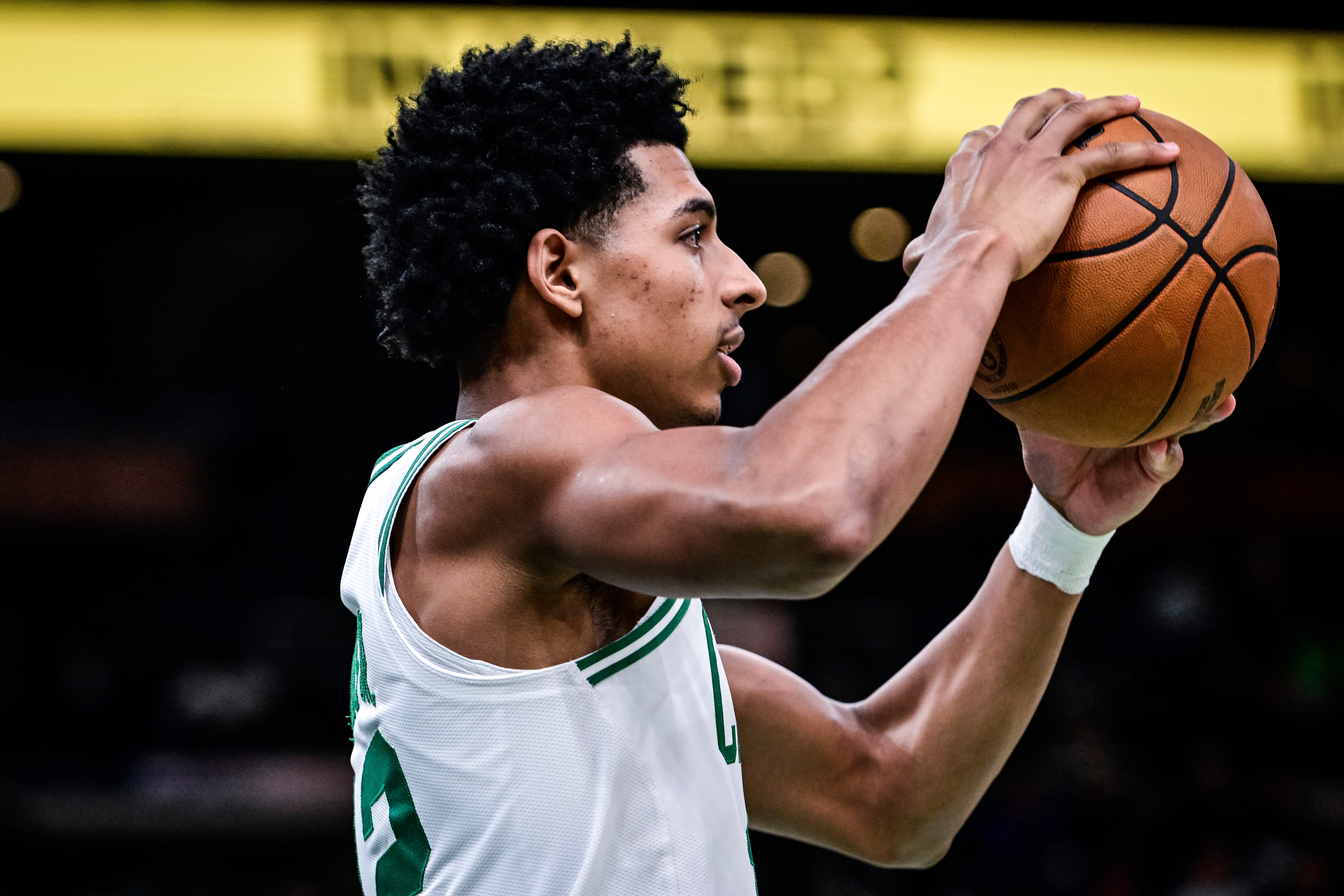
The argument behind those decisions held that if those guys knew they could play a fifth year in college, they wouldn’t have turned pro. Perhaps the NCAA will also win that case on appeal, but it looks like it won’t even have to. That’s because in response to those developments, the Big Ten, Big 12 and SEC passed rules forbidding their schools from giving roster spots to pros who started out in college. Those rules carry heavy penalties. The ACC is expected to follow suit soon.
But aren’t those rules vulnerable to the same legal challenges that have tripped up the NCAA? Perhaps not. That’s because the individual leagues don’t have a long history of making rules, so it’s theoretically harder to argue that these policies are arbitrary. “One of the advantages of a conference is they can walk into a courtroom without a pre-existing record. So they get to build the record,” said Scott Schneider, an education and employment attorney based in Austin, Texas. “It’s not litigation proof, but it’s a lot more difficult case to make.”
As Andy Katz wrote earlier this week, many coaches are adding to the chaos through their willingness to do whatever is necessary to gain the slightest competitive edge. Will Wade and Lane Kifin may be the most egregious violators, but they are far from alone. Even so, it’s possible that their aggressive tactics might have helped forge a potential path out of this wilderness — namely, that the conferences will govern themselves. That maneuver was previously executed by the Big 12 in response to Texas Tech quarterback Brendan Sorsby obtaining a court order to allow him to play after violating the NCAA’s prohibitions against gambling. Texas Tech decided that fighting its own conference was a fool’s errand, and it stopped backing Sorsby, and he dropped his suit against the NCAA. It’s likely LSU will do the same with Wright, Harris and Luis.
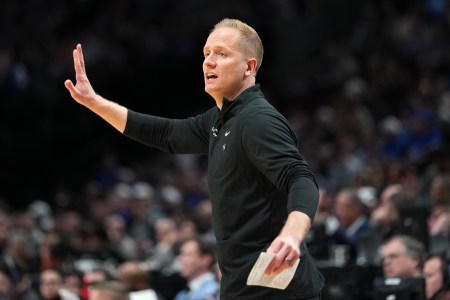
BYU’s Kevin Young Taking It One Day at a Time
In this volatile era of college sports, BYU head coach Kevin Young is learning to focus only on the things he can control
The conference governance model is a far cry from the apocalyptic breakaway/superleague scenario that so many fear. It could eventually be a mechanism through which the people who run college sports can bring some order to all this chaos. That has become even more necessary given that it’s quite clear that Congress is not coming to the rescue. (Who could have predicted that?)
All of this is happening because the high school Class of 2022 is the only one of recent vintage which is not getting the chance to play a fifth year. The previous five were able to do so because of the extra season the NCAA granted to all athletes due to the Covid-19 pandemic. Every class moving forward will get a fifth year thanks to the new rule.
That line feels arbitary — a very important legal concept — but it’s also worth noting that the reason the previous classes got the extra year was because they lost all or part of a season (and had another badly disrupted) by the pandemic. So they didn’t really get five full seasons. Plus, it’s not like the Class of ’26 was promised a fifth year and had it taken away. They just graduated a year too early.
Even with the recent victories, it’s fair to argue that the NCAA could have saved everyone a lot of trouble — and hefty legal fees — by simply including the Class of 2022 in their new rule. Then again, the NCAA can’t declare what time it is these days without someone challenging them in court. “Every major decision in college sports now carries litigation risk and at no point during the deliberations over the aged-based eligibility rule and its application did anyone believe a risk-free choice was available,” NCAA Senior Vice President of External Affairs Tim Buckley told Hoops HQ. “The alternatives were considered far more disruptive and would have disadvantaged the incoming class significantly.”
Indeed, those arguing that the the NCAA should have granted blanket eligibilty to last year’s seniors discount the chaos that that would have caused. Thousands of athletes who had presumably used up their eligibility would have suddenly been allowed to come back. That tsunami would have taken place after schools had refashioned their rosters through the transfer portal. And how would that have been fair to the incoming freshmen? Would they have had a case for irreparable harm?
From a basketball perspective, the good news is that these cases apply to a realtively small corner of the sport. There are now approximately 100 players who are eligible to play via court orders. That’s a drop in the bucket compared to the 5,000-plus who will suit up for Division I teams this season. The folks running college athletics who have made so many misjudgements over the decade are finally getting their act together and scoring a few wins. We’ll see if the streak will continue, but it definitely feels like the game has changed.
Meet your guide