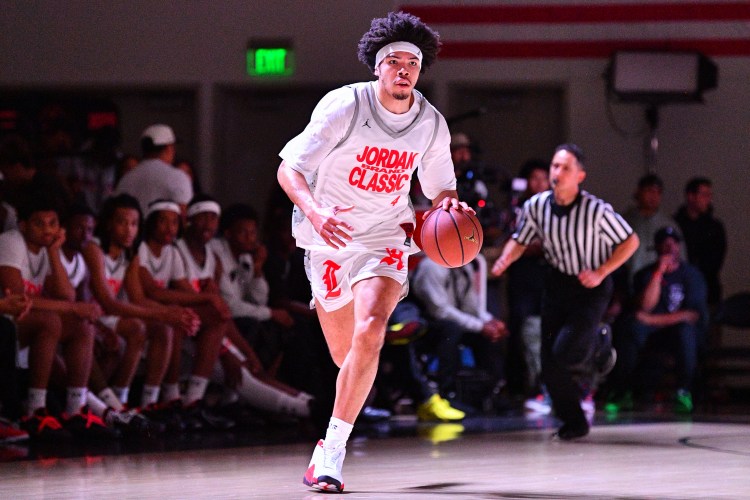
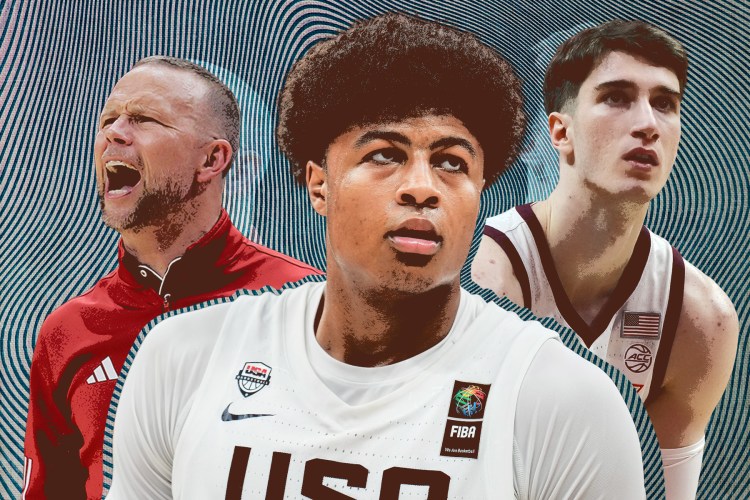
Last season, when he arrived at Notre Dame as one of highest-rated freshmen in program history, Jalen Haralson told the media his goal was to “come in here and not be crazy ball dominant.”
That was an admirable aim for the 6-foot-7 five-star recruit, but last December, after starting point guard Markus Burton suffered a broken ankle and was lost for the season, Haralson’s plan was abruptly altered. Haralson had to take over the point, and not being “crazy ball dominant” turned into tying BYU’s A.J. Dybantsa with the highest usage rate (33.6 percent) for a Power Five freshman since Oklahoma’s Trae Young (38.5) in the 2017-18 season.
“Coming into my freshman year, a 33-percent usage rate wasn’t on my bucket list,” Haralson tells HoopsHQ. “But you’ve got to adjust when a guy like Markus goes down. Playing point guard was challenging, but it was a blessing in disguise because my development and maturity level were sped up 10 times. Not a lot of freshmen have the ball in their hands every single play.”
Despite the added responsibility, Haralson put together a good season. Only eight freshmen in the country averaged at least 16.0 points, 4.0 rebounds and 2.5 assists. Haralson was among them, joining eventual NBA Draft lottery picks Cameron Boozer of Duke, Dybantsa, Kingston Flemings of Houston and Illinois’ Keaton Wagler. But last April, when the NCAA transfer portal opened, he dove in, not to duck a challenge like unexpectedly being forced to play point guard but looking for a different kind of challenge. He didn’t have to search long to find it.
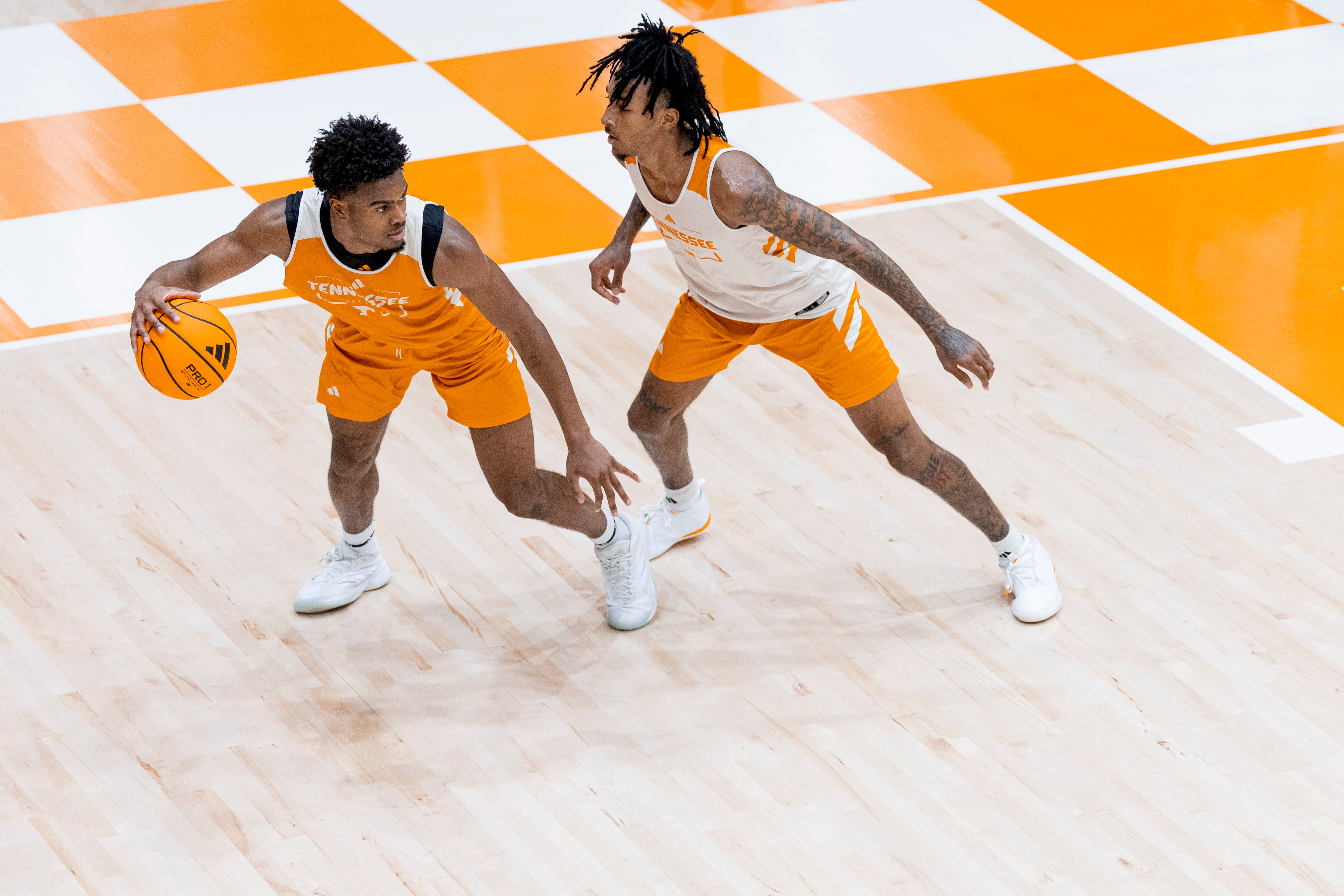
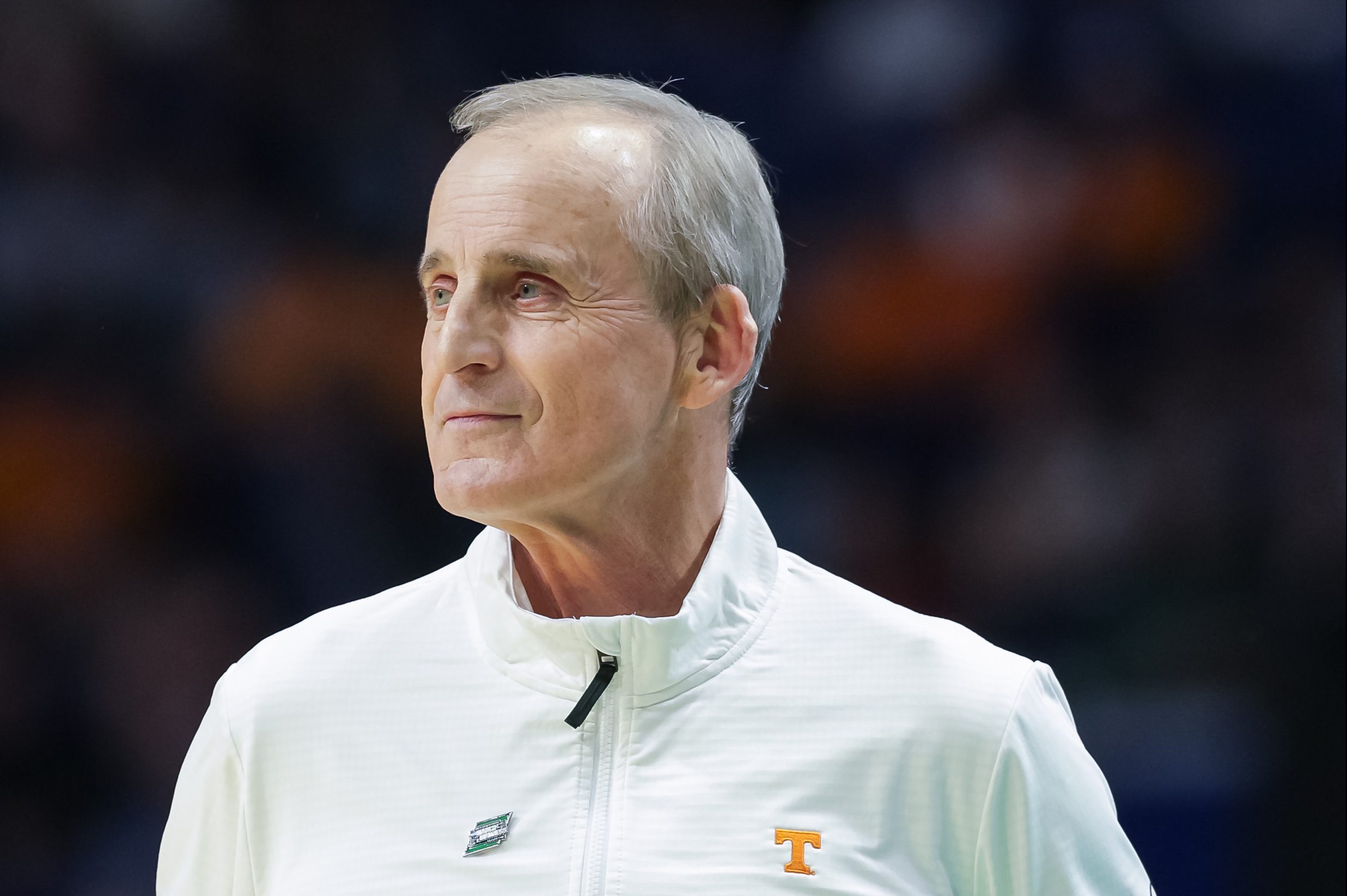
Tennessee offered an acceptable amount of NIL compensation, but that’s not the primary reason Haralson decided to sign with the Vols. “Coach (Rick Barnes) is really demanding,” Haralson says. “I felt like that’s what I needed at this point in my career. Coach Barnes is an everyday guy, and it’s hard not to be an everyday guy being around him.”
That was a diplomatic way of describing the 72-year-old Barnes’ coaching style. He’s tough, direct, and daily challenges all his players, sometimes at high volume. But in recruiting, Barnes and his assistants don’t try to hide any of that. They view it as a selling point. If you want to play for Tennessee, you’re going to get pushed harder than you’ve ever been pushed in your life. But that’s only because Barnes wants to extract the best from every player he coaches.
Haralson learned that during his recruiting visit.
“Coming into the portal, everybody tells you when you meet with them how good you are, that you’re going to start, and everything else you want to hear,” Haralson says. “Coach Barnes does it a different way. We sat down to watch my film (from Notre Dame) and he was getting after me in the film session. ‘Why didn’t you shoot this? Why didn’t you shoot that?’”
Barnes didn’t need film to know Haralson had been a reluctant three-point shooter. Last season he took just 25 shots from behind the arc and made only five. That low number of three-balls was in part because, with his size, Haralson could bully his way to the rim any time he wanted. But part of it was because he didn’t have confidence in his stroke. Barnes has a long history of improving his players’ shooting mechanics. Haralson was willing to do whatever it took.
Over the summer, he sometimes launched more than 1,000 shots a day, using the high release Barnes loves to teach.
“I led the team in shots every week,” Haralson says. “And sometimes coach Barnes was in there with me at 10:30 or 11 at night. The main thing we were trying to do is get me to stretch the floor. I don’t have to be a 40-percent three-point shooter. I just have to be able to hit shots when I’m open.”
Barnes also convinced Haralson there was no reason he couldn’t be an elite midrange shooter. He used that shot effectively in high school and while playing for Team USA’s gold medal-winning team in the 2024 FIBA U17 World Cup, but at Notre Dame, he drifted away from it.
“He’s got way more to him than what he showed in high school and even what he showed at Notre Dame,” Tennessee assistant coach Steve McClain says. “At Notre Dame he got to the rim and got fouled a lot and did a lot of great things. Now the challenge has been to become a shooter and still get to the rim and get fouled. It hasn’t been easy. But Jalen has embraced a whole different level of being challenged to grow. Coach Barnes demands it.”
Ask Barnes where he’s going to play Haralson this season and he can’t say. But that’s a good thing.
“His versatility is his strength,” Barnes says. “I’m not sure where his best position is right now. But he’ll find a spot.”
Some coaches like to say they have players who can handle four positions. But not many can. Barnes and McClain think Haralson can play the point for a few possessions, become a plus-sized wing in a conference where such players abound, take a turn or two every game at shooting guard, and play power forward in a small-ball lineup.
“Jalen has the ability to play one through four,” McClain says. “It could be something different every game, based on what the other team is giving us and how we’re going to attack it. But what really determines whether a player can be that versatile is can he guard one through four? Jalen can.”
Barnes wants to see Haralson — who has gained 17 pounds of muscle in the four months he’s been at Tennessee and is now a solid 227 — become a more prolific defensive rebounder, because then he’ll have the green light to bring the ball up in transition and facilitate offense. “He’s a very sharp young man,” McClain says. “He can see things others might not.”
However Haralson winds up helping a team that last spring was built into a potential offensive juggernaut through some astute portal acquisitions, he won’t be typecast. The Vols have three other players who can play point guard, and more depth at the two and three positions than Barnes has coached in his 12 years at Tennessee. The Vols also have a four-man post rotation. Haralson is likely to become a freelancer — in the best sense of the word.
“No knock on Notre Dame,” Haralson says. “But it’s hard to show your versatility when you have the ball in your hands that much of the game. Now, I can be on the ball for a couple of possessions, knock down a three, guard (Vanderbilt’s preseason All-American point guard) Tyler Tanner or guard a big man. That’s value. I want to be a versatile guy that can do everything. That’s what Tennessee saw in me when I was in the portal. That’s what they were intrigued by.”
Meet your guide