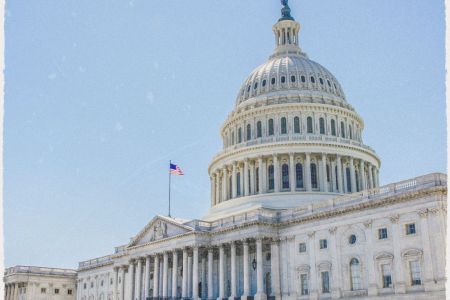

It has been a long and winding road for the Protect College Sports Act, but the bipartisan bill took a major step forward on Monday, passing in the Senate with resounding support.
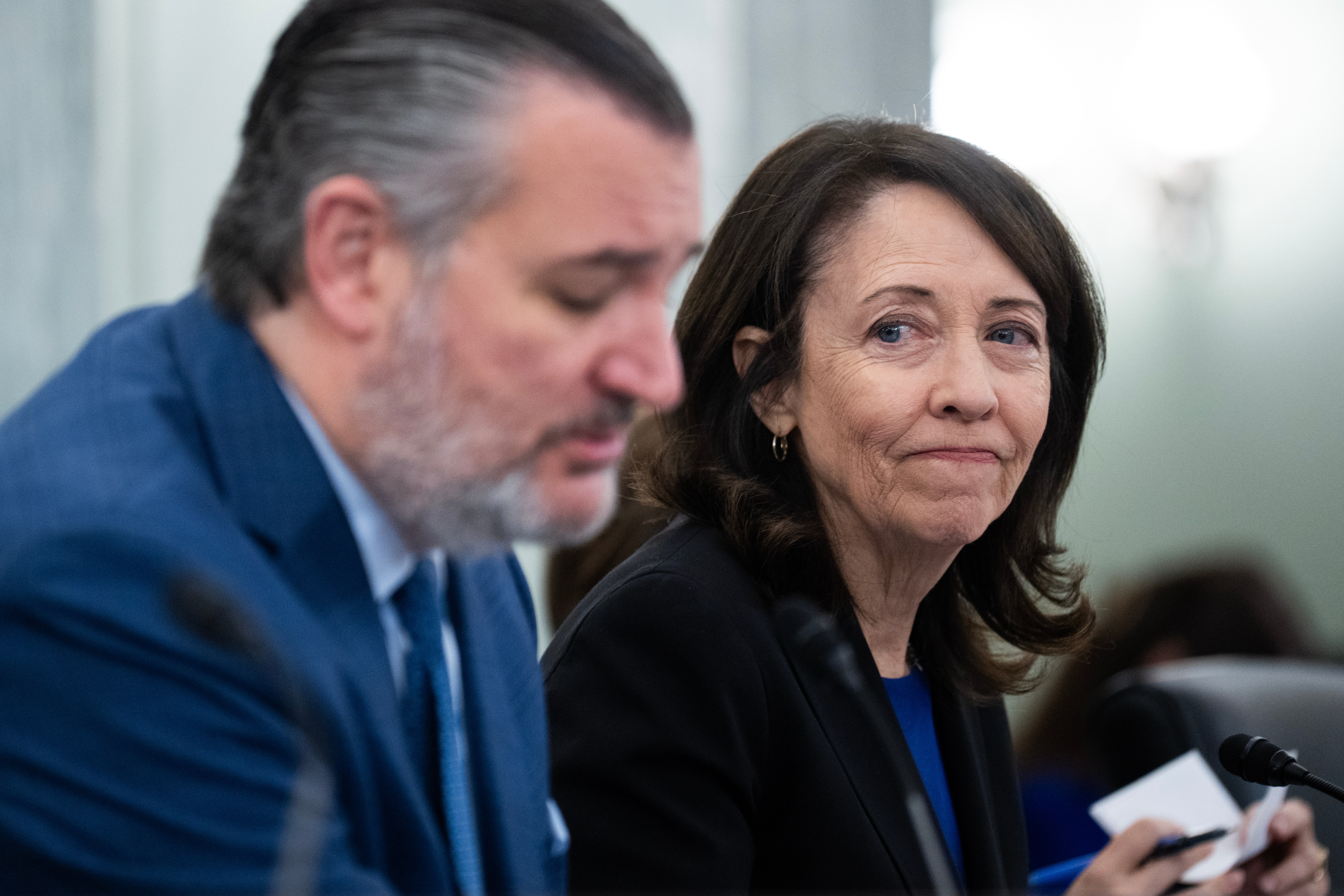
The expansive piece of legislation — co-authored by Senators Ted Cruz (R-Texas), Maria Cantwell (D-Washington) and Eric Schmitt (R-Missouri) and aimed at bringing stability to the chaotic world of college athletics — received 77 votes, far exceeding the 51 necessary to pass.
“Student-athletes from across the country and all three NCAA Divisions worked hard to get on this legislation moving and thanks to their advocacy, the bill just received a massive, bipartisan vote in the Senate,” NCAA president Charlie Baker said in a statement. “The NCAA thanks the many senators who sponsored this bill — including Senators Cruz, Cantwell, Schmitt and Coons — as well as the many other senators who voted for the bill, for their bipartisan effort to protect this uniquely American tradition of college sports in the decades to come. Now the bill moves to the U.S. House of Representatives and there is much work left to do to ensure student-athlete benefits are codified into federal law and future generations of young people can access those benefits and use college sports as the launching point for their careers.”
The final vote on the bill (originally scheduled for 5:30 p.m. ET) was delayed several hours to vote on seven amendments, one of which — Senator Ashley Moody’s amendment to move the power conference cap from 19 to 20 schools — was adapted.
Over the past several weeks, proponents of the PCSA have been pushing to get it through the Senate before Congress breaks in early October for the midterm elections. It has been formally backed by all of the major conferences, prominent college coaches, Senate leadership and President Donald Trump. Arkansas coach John Calipari and Gonzaga coach Mark Few were among the high-profile college basketball figures who visited Capitol Hill in September to advocate for the bill. “We need guardrails,” Calipari told Hoops HQ’s Andy Katz earlier this month. “The bill isn’t perfect. It may not be great for us and me but it’s great for basketball.”
Opponents of the bill have argued that it exploits athletes while shielding the NCAA and universities from being sued when athletes are harmed.
In late July, the PCSA appeared to be teetering on the brink of collapse. It had yet to win the favor of the SEC and Big Ten, and the Senate committee was frantically negotiating with league officials. After multiple revisions, the nation’s two biggest conferences eventually pledged their support. But the bill did not make it to the Senate floor prior to the summer recess.
Thus, the wait continued until late Monday night, when the PCSA finally made it through the first of many legislative hurdles. It is a historic milestone — more than 40 college sports bills have been introduced in Congress since 2020 and none have advanced this far.
The landmark bill grants the NCAA a limited antitrust exemption, enabling it to enforce new transfer and eligibility rules without legal challenges. Under the PCSA, players are entitled to one “free” transfer without having to sit out (with a second transfer requiring a one-year loss of eligibility), and the five-in-five eligibility model becomes law.
Other key components of the bill include increasing the revenue-sharing cap from around $20 million to nearly $50 million (encompassing a $22.5 million retention pool and an additional $5 million earmarked for non-revenue sports), limiting NIL agent fees to a maximum of five percent of a player’s endorsement contract, closing the private equity loophole for forming a super league, preventing Power Four conferences from exceeding 20 members, and requiring any school that jumps from one Power Four conference to another to operate as an independent for three years (provided that move happens within the next six years).
Notably, the PCSA does not address two of the biggest issues in college sports: whether student-athletes should be considered employees, and whether they can form a union to collectively bargain with the schools.
While it has cleared the Senate, the PCSA still faces an uphill climb. It needs to pass in the House of Representatives, which is out of session until after the Nov. 3 midterms and will have a different makeup come January. If Democrats gain seats and take control of the House as expected, then the bill will face even more resistance moving forward.
Meet your guide