John Calipari has reached a point in his career where he wants to have a say on the future of the game, for the sake of his son Brad’s coaching career and the younger coaches who will follow.
And he’s hoping to simplify the complicated rules that are being fought more in the judicial arena than on the basketball courts.
“We need guardrails,” said Calipari, the 67-year-old Hall of Fame coach, now at Arkansas.
Calipari said he supports five years to play five, no waivers and a one-time transfer.
“Your clock should start at 19 at the latest,” Calipari said. “We need foreign kids to be the same as American kids. They can’t have an advantage, nor should they have a disadvantage. So if they put their name in the draft and stay in, they can’t come here (to college). If you get drafted you can’t come here.”
Calipari said the NCAA needs to get out of the case-by-case situations. He said there are issues in the bipartisan Protect College Sports Act, co-sponsored by Senators Ted Cruz (R-Texas) and Maria Cantwell (D-Washington), but he can live with it as long as it passes.
“The bill isn’t perfect,” said Calipari. “It may not be great for us and me but it’s great for basketball…..What the league is doing right now, the SEC, I’m ecstatic about.”
A few of the main PCSA points are: codifying NIL rights and requiring reporting of any compensation greater than $600; capping agent endorsement fees at 5% (many charge at least 10-20%); allowing players to transfer one time without penalty with a second transfer requiring a one-year loss of eligibility.
Calipari singled out the SEC’s decision to prohibit taking professional athletes who signed contracts or were on rosters in the NFL, NBA or WNBA. The Big Ten, Big 12 and ACC have followed, taking similar stances. The SEC put teeth in the new league-wide legislation that would fine a school 50 percent of its sports annual budget, plus a half-season suspension for the head coach if he or she played a former pro.
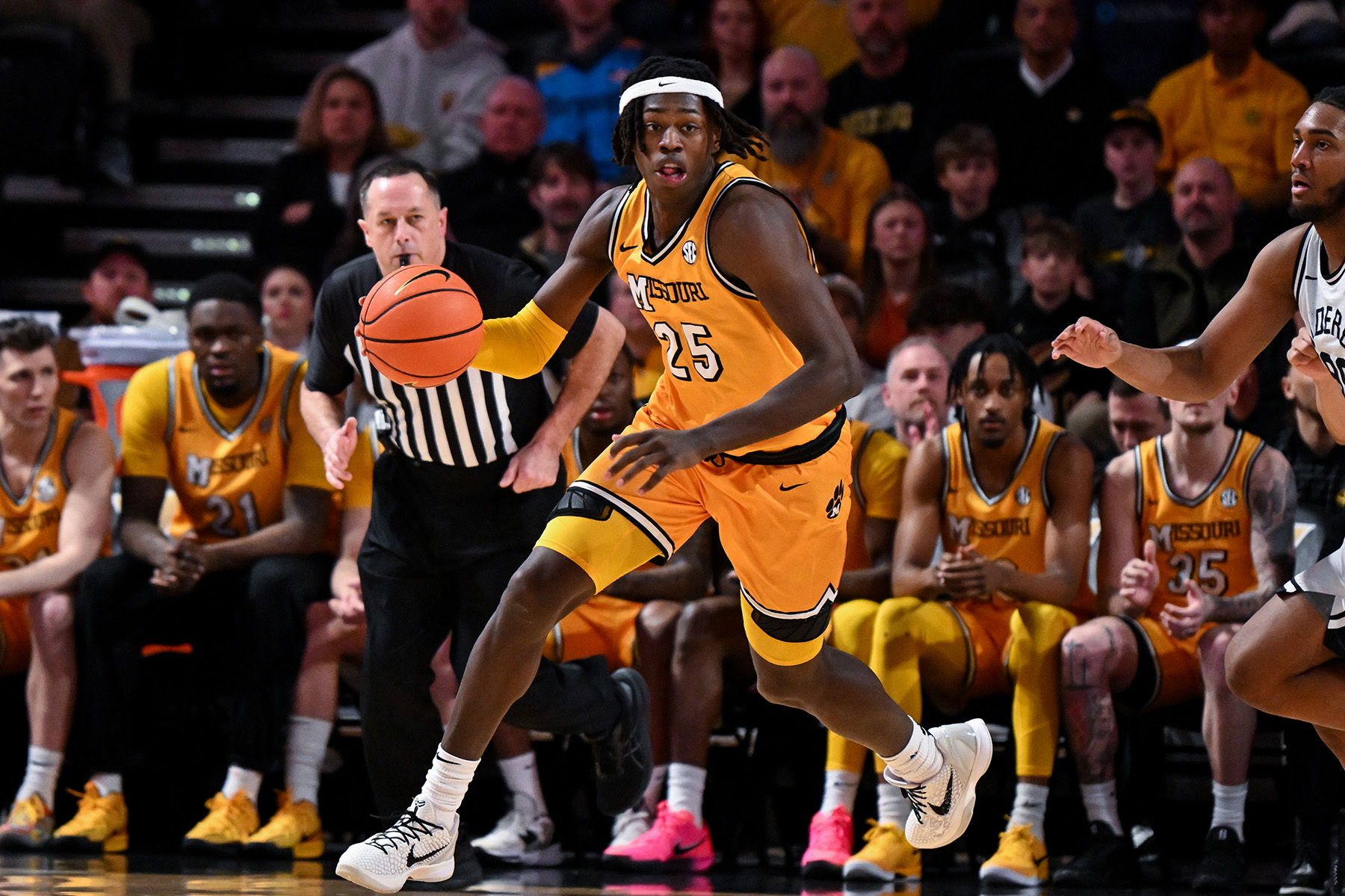
The SEC also is preventing athletes from transferring within the conference if they weren’t in the portal during the official dates. This affected the transfer of Mark Mitchell, who was trying to go from Missouri to Kentucky despite not being in the portal anymore. His eligibility for a fifth year is now in question as well, but only to return to Missouri, not to transfer to Kentucky within the SEC.
Calipari said a number of coaches aren’t recruiting freshmen anymore, instead opting to get players in their 20s rather than 18 or 19 years old.
But not Calipari. He’s still looking to go with the elite younger player. His eight-player incoming recruiting class was a consensus top two for 2026, led by Jordan Smith Jr., JJ Andrews, Miikka Muurinen and Abdou Toure.
Calipari only took two transfers — guard Jeremiah Wilkinson (Georgia) and big man Cooper Bowser (Furman) — with one critical returnee in Billy Richmond III.
“I think that’s what you’re supposed to do: Prepare young people,” said Calipari. “Our average age is 18 and nine months. My AD said, ‘Can we win with that?’ I don’t know, but we’re going to see.
“I don’t begrudge any coach trying to do something to help his team win,” Calipari continued. “I don’t begrudge any basketball player trying to get a fifth year and make a lot of money. If he were a pro he’d be in the NBA or in Europe and making a lot of money. So this could give him a chance, maybe for the last time, to make a lot of money.
“The issue is what is it doing to our recruiting young kids, and right now we’ve got a lot of coaches making decisions to bring kids in in late August and early September,” Calipari said.
Calipari echoed a point that I have advocated as well: What does that do to the players in your program? What does that do to the players you recruited? How does that change the trust you’ve built with those players?
You are essentially telling those players they have to wait now after you had promised them a spot/playing time.
Calipari would also like to see presidents and chancellors sign off on all NIL deals with their legal counsel.
Now, of course, presidents and chancellors probably don’t want to get into the weeds of hundreds of college athletes’ specific deals. But the point is clear: There needs to be more transparency at all levels.
“Players are getting money and some are making more than NFL or NBA players, but it has to be legitimate. And if it’s not then they have to put their foot down and say we’re not doing that here (at whatever school),” said Calipari.
Calipari would also like to see collectives only used for retention of current players.
“It can’t be involved in recruiting,” said Calipari. “We’ve got issues we have to deal with. We can’t keep kicking the can down the road anymore.”
Calipari said he is fully supportive of SEC commissioner Greg Sankey and fully against waivers.
“We’ve got rules,” said Calipari. “If a rule can have waivers then it’s a bad rule. You put in a bad rule. Five years. No waivers. One-time transfer. If you’re 19 years or younger then you’re an amateur. This would take the case-by-case waiver BS out of this. If a rule has waivers, it’s a bad rule.”
Calipari, who was a former NBA head coach and is well aware of player union negotiations, isn’t convinced a union approach can work in college sports. He’s not against collective bargaining but doesn’t want to wait for something like that in the years ahead.
“We can’t go two or three more years like it is,” said Calipari. “There is a tipping point. I wouldn’t be surprised if the donors finally say, ‘I’m done. I’m not doing this anymore.’ Well they won’t. A guy is a billionaire or worth a half a billion because he makes good decisions. That’s why he’s that. And you know what? He’s probably got grandkids, great grandkids and he’s like, ‘I’m just giving this for what? What is this? And then the kid got hurt and then transferred. I paid him all this money. He got hurt, did not play and then left and left with the money.’
“We’re getting to that point and that’s why I’m saying I’m all for this bill,” said Calipari. “I like what the SEC is doing. And if the player doesn’t like what the SEC is doing, then go to another league.”
Meet your guide