
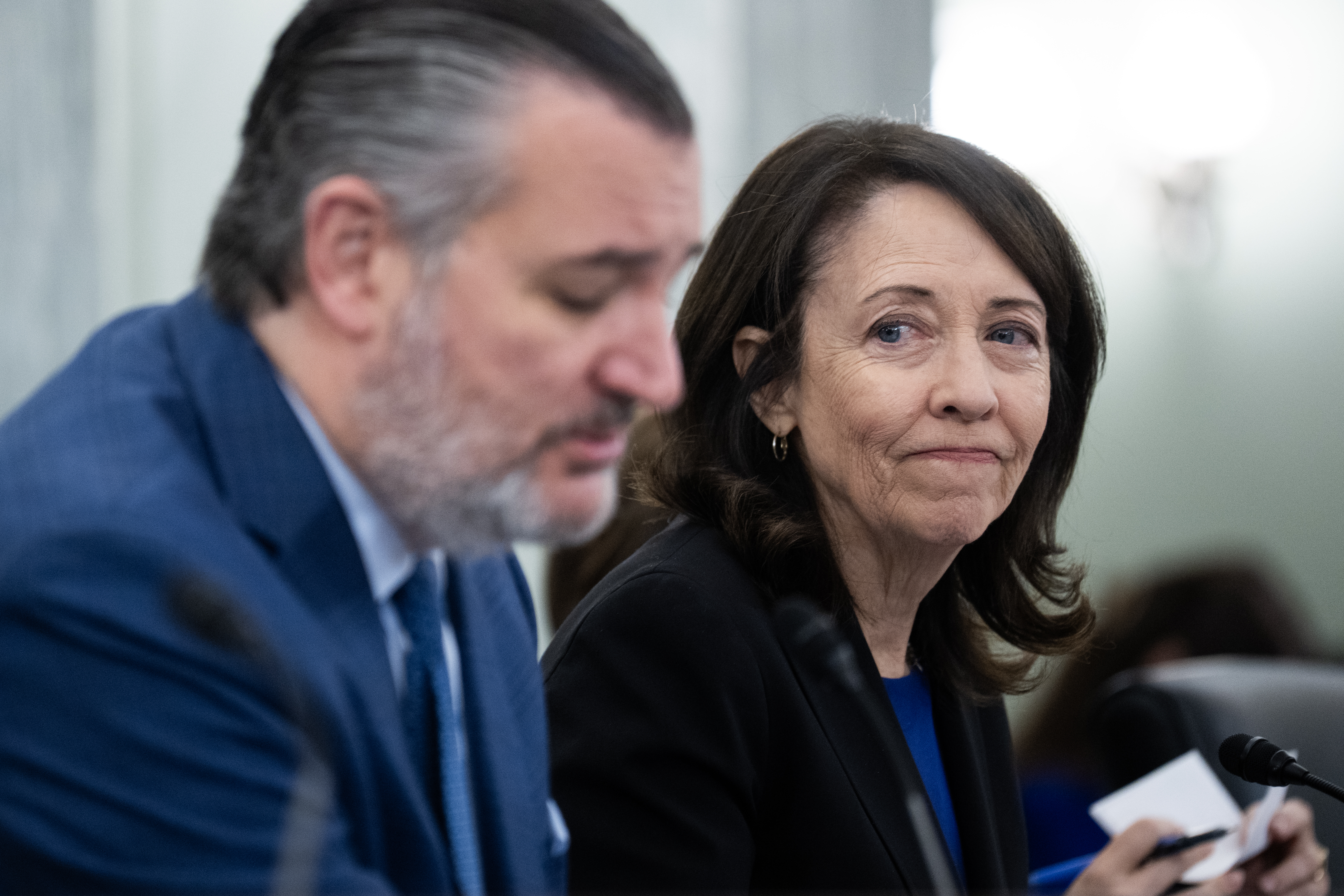
When Ted Cruz (R-TX) and Maria Cantwell (D-WA) introduced the Protect College Sports Act last week, it provided a rare moment of hope that Congress could come up with a way to help bring some badly-needed stability to college sports.
That’s the good news. The bad news is, the timing could hardly have been worse.
The Protect College Sports Act is a repackaged version of the bipartisan but Republican-centered SCORE Act that recently met its demise in the House of Representatives. The Senate version offers greater protections for student-athletes, which should make it more politically palatable. But the bill faces similar headwinds on its path from the Congressional calendar toward becoming law. There’s a lot of work to do, and not much time to do it.
To broaden its appeal among Democratic lawmakers, the Protect College Sports Act builds upon the SCORE Act by incorporating enhanced athlete welfare protections, including educational retention benefits, enhanced agent regulation, and healthcare provisions. Most notably, however, the bill appears to soften one of the most contentious aspects of prior NCAA-backed federal proposals by expressly leaving open the possibility of future athlete employee status and, by extension, the right of athletes to unionize.
Another significant departure from its predecessor is the proposed amendment to the Sports Broadcasting Act of 1961, which would permit FBS institutions to pool media rights in a manner similar to professional sports leagues. Such an agreement would require the participation of at least 75 percent of FBS programs. That would potentially lessen the economic advantages currently enjoyed by the Big Ten and SEC, two conferences that have increasingly separated themselves financially from the rest of the Power Four through massive media rights deals.
The Senate bill could generate significant public support by promising government intervention aimed at curbing many of the developments that have frustrated fans in recent years: runaway athlete spending favoring well-resourced programs, the erosion of traditional rivalries, mid-season coaching departures, expanded athlete eligibility, and effectively limitless transfer freedom that has produced extreme roster churn.
The Five-For-Five Fight Leads To More Chaos In College Sports
A federal judge in Colorado issued an order granting eligibility to last year’s senior class. Will it hold up under appeal?
Yet Congress does not, or at least should not, legislate based solely on fan frustration. At the core of the bill is a broader struggle over how college athletics should balance the protection of athletes and their economic freedom against the preservation of the traditional collegiate sports ecosystem.
That tension becomes especially pronounced given that football and men’s basketball programs subsidize all the other sports. Those athletes helped build a multi-billion dollar industry while, until very recently, seeing their compensation effectively capped at the value of a scholarship. The Senate bill does not seek to walk back athletes’ ability to earn NIL compensation or receive newly implemented revenue-sharing payments. Instead, it attempts to give the NCAA greater enforcement authority to police its version of a salary cap, one that many programs have thus far openly circumvented or ignored.
What ultimately dealt the final blow to the SCORE Act was the unified opposition of the Congressional Black Caucus, which objected to providing favorable federal legislation to major Southern athletic institutions that remained publicly silent amidst ongoing southern redistricting battles and allegations of Black vote dilution. Many of the southern institutions positioned to benefit most from the bill maintain donor bases and political constituencies that make public engagement on contentious voting-rights disputes politically difficult. Although the Protect College Sports Act is more athlete-centric in certain respects than the SCORE Act, it remains materially aligned with the same institutional interests previously criticized by the Congressional Black Caucus. Why should anyone believe the CBC will change its position now?
In addition, the calendar has two looming deadlines. The first is the August 1 implementation date tied to Trump’s executive order, which could spur federal agency involvement in college sports governance, as well as the August recess. Then there’s the upcoming midterm elections. Congress typically does not get much work done in the weeks leading up to Election Day because the members are so busy campaigning. If Democrats retake the chamber, not only would the bill face a less favorable voting environment, but incoming committee leadership may prioritize entirely different legislative objectives, potentially preventing the bill from ever meaningfully advancing. Democrats are also currently favored to regain control of the House of Representatives, which could further embolden the Congressional Black Caucus to maintain its opposition.
While the Senate bill attempts to address many of the frustrations fans have with the growing professionalization of college sports, they should remain skeptical about its ultimate viability. The Protect College Sports Act is racing against both the political calendar and a series of structural headwinds that may ultimately prevent it from ever becoming law. It’s a step forward, but only a small one, and there is a long way to go.
Meet your guide