
Crisis! Chaos! Madness! Insanity! Those words have been used ad infinitum over the last several years as college athletics moved at warp speed from decades of top-down-imposed amateurism (or “shamateurism,” as it was more accurately described) to a bona fide professionalized model. As college basketball works its way through yet another transfer portal cycle this spring, another word has been increasingly used to describe the dramatically rising players salaries:
Unsustainable!
If I had a dollar for every time I heard that word, I’d be as wealthy as Flory Bidunga. But to borrow the famous line from “The Princess Bride,” the people who keep using this word — I don’t think it means what they think it means.
Not only is the current system sustainable, it is actually working, sort of. The seismic shift has been messy, chaotic and confusing, but flawed as it is, it is far superior to the system it replaced.
The “U” word comes up most frequently when a player proposes a very high number for compensation. And salaries are indeed going up, by some estimates as much as 65 percent over last year. When coaches first see these price tags, they understandably experience sticker shock. They complain to the agents, complain to their colleagues, complain to the media thru anonymous quotes and text messages.
And then you know that they do? They scan the market, crunch their numbers, and decide whether the player is worth it. If he is, they pay up. If not, they move on to the next target. That’s the way a free market is supposed to work.
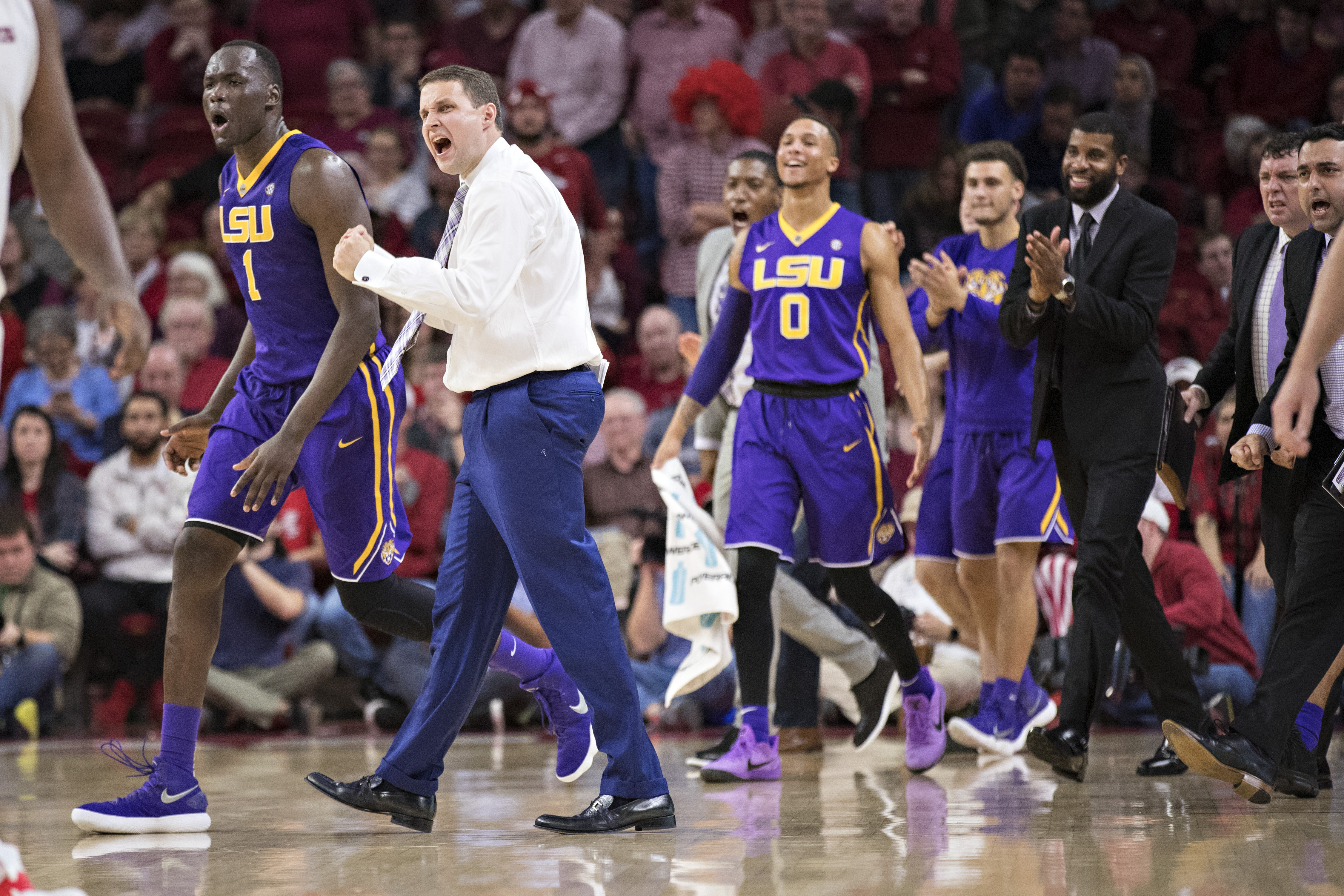
When LSU pays two former football coaches $71 million in buyouts, hires Lane Kiffin for $91 million, buys out the basketball coach’s contract for $8 million and signs Will Wade for another $30 million, that’s not unsustainable. When schools build stadiums and practice facilities for hundreds of millions of dollars, that’s not unsustainable. When top basketball coaches make $7 million in salary and top football coaches make $13 million, that’s not sustainable. But a power forward gets $5 million, and that’s going to break the bank?
It’s worth remembering how we got here. For many decades, the NCAA operated outside the law — specifically, U.S. antitrust law, as articulated in the 1890 Sherman Antitrust Act. When the NCAA lost its landmark 1984 Supreme Court Case to the University of Oklahoma, schools and conferences were suddenly able to negotiate their own TV deals. That opened the floodgates for huge amounts of money to pour in. The schools’ profits multiplied, but the players’ compensation remained flat.
It took about four decades, but the house of cards finally came crashing down. In 2015, the NCAA lost the O’Bannon case, which established that its compensation limits violated antitrust law. In 2021, the Supreme Court unanimously ruled against the NCAA in the Alston case, which opened up the door for NIL payouts — which in turn quickly morphed into straight-up pay-for-play. Last year, the NCAA settled the House case, which forced the schools to share revenue with athletes but allowed them to cap the amount at $20.5 million per school. The settlement also set up a system to govern the difference between legitimate NIL deals (legal) and booster payouts (illegal).
The House settlement finally established some semblance of order. Then the very people who claimed to want that went back to doing business as if it never happened. It’s no wonder the salaries have continued to rise. Whose fault is that? Certainly not the athletes who are asking for top dollar.
The U-word is also being directed at the transfer portal – or more specifically, the rule that allows players to transfer as often as they like without having to sit out for a season. That was not always the case. Up until 2021, there were four sports where players had to sit out for a year after every transfer – football, men’s basketball, women’s basketball and men’s ice hockey. The remaining sports allowed a onetime exception for the first transfer only.
That changed in 2023 after the NCAA denied a waiver to a basketball player who had transferred to West Virginia. That state’s attorney general sued the NCAA on the school’s behalf. A federal judge issued a temporary restraining order to allow the player to compete. When several other states and the U.S. Department of Justice joined the effort to challenge the transfer rules, the NCAA had no choice but to scrap them.
This is why I am not entirely sympathetic to the argument that the rampant transferring is unstainable. In the first place, whether we like it or not, the NCAA still has to follow the law. Second, the very people who are complaining the loudest that the NCAA has no rules are the ones who sue the NCAA when it tries to enforce the few rules it has left.

Many coaches, fans and members would prefer to go back to a time when players stayed at the same school for multiple seasons. They say unfettered free agency is a bad thing. To which I reply: For whom? Because it’s working great for the players. They don’t think it’s the least bit unsustainable. And for all the complaining, broadcast rights fees and ratings remain sky high. People may not like what’s happening, but it is not impacting anyone’s bottom line.
Contrasting all of this with the way other professional sports leagues do business is also a misguided endeavor. This is not the 30-team NBA or 32-team NFL. The NCAA has more than 1,100 schools and close to 100 conferences across three divisions. Each campus has a couple of dozen programs, only two of which have a chance to be profitable. There’s no players’ union, and I seriously doubt there ever will be one. This may be a professional enterprise (finally!), but it is not a pro sports league in any sense of the word. Saying otherwise is the ultimate apples-to-oranges misfire.
For all the hand wringing and pearl clutching, the product on the court is better than it has been in a long time. Last year, there were 106 early entrants to the NBA Draft. This year, there are 71. Several players who were projected as first-round picks, including a few potential lottery picks, are returning to college. Dozens of really good international players have come to the States as well. It wasn’t that long ago that the top American high school players were looking to go overseas or play in the NBA G League’s Ignite program instead of spending the required one year in college. Now the Ignite program has been shuttered and the talent is crossing oceans to come here. As a result, the game has flourished.
From a marketing standpoint, the new system is great for business. Interest in college basketball used to plummet as soon as the NCAA Tournament ended. Now, it’s through the roof. As is the case with the NBA each summer, college basketball fans are craving every morsel of information about all the free agency. For media companies like Hoops HQ, Portal Madness has been ratings gold. That is true for any organization that covers this sport.
If the NCAA, conference commissioners and university presidents had conceded that all this change was coming whether they liked it or not, they could have managed it properly. Instead, they dug in. As a result, what should have been a transition became a disruption. There remains a huge gulf between the NCAA’s need to follow current law and its efforts to get Congress to change it. It will take some time, perhaps several more years, for the dust to settle. But settle it will.
For example, while the NCAA can’t legally change its transfer rule, its schools can change the way they conduct business. That’s why more and more of them are adding buyout clauses to players’ contracts. This gives them some level of protection against players who bolt to the highest bidders. It’s one more small but welcome step towards fairness and common sense.
The current effort to implement a rule limiting eligibility to a five-year window starting at the age of 19 is another sign of progress. If it passes, it would go into effect starting next fall, giving everyone time to prepare and adjust. The rule will no doubt be challenged in court, but eligibility is the one area where the NCAA has had a string of legal wins lately. If this lands on the books for good, it will make things a little more sensible and a little more orderly.
For all the upheaval of the last few years, college athletics is actually in a pretty good place. If the stakeholders can manage the next few years better than they managed the last few decades, then it has a chance to come out of all this healthier and more prosperous than ever. The new system is not only sustainable; in many ways, it is preferable. Here’s hoping the ball continues to bounce in the right direction.
Meet your guide