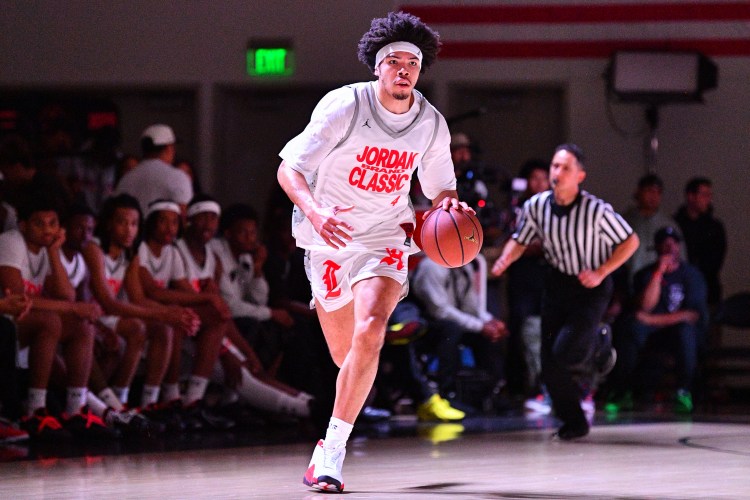
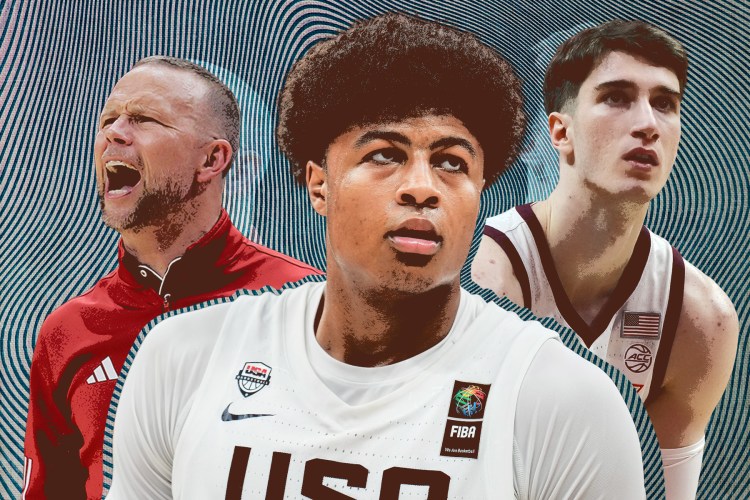
Beyond the big names at the top of NBA Draft boards (Darryn Peterson, AJ Dybantsa, Cameron Boozer, etc.), the upcoming class is loaded with intriguing prospects. Through the first two months of the season, several under-the-radar players have improved their stock considerably, including a National Player of the Year candidate at Iowa State and a rising freshman star at Arizona.
There has been a lot of movement in mock drafts since our last stock report in early December. With conference play in full swing, here’s a rundown of the major risers, fallers and sleepers in the 2026 class:
Risers
Keaton Wagler (Illinois, 6-foot-6 freshman combo guard)
Wagler’s breakout is becoming old news, but scouts’ belief in it continues to rise.
At 6-foot-, there is perceived translatability tied to his skill set, which has yielded 40.6-percent three-point shooting and 53 assists to just 19 turnovers. Stats aside, there’s a very persuasive smoothness to his game, particularly with the creativity and shooting. He’s able to put significant space between himself and defenders into step-backs using crafty dribbles and tricky footwork. He’s had multiple 10-assist games recently that show such obvious passing IQ, almost to the point where he looks more like a tall point guard than a wing.
Scouts’ lack of familiarity coming into the season has meant the need to see a larger sample size of effectiveness at Illinois. We’re now 14 games in and he’s still executing, though he did struggle against noteworthy opponents like Texas Tech, Alabama and UConn earlier in the year.
Still, scouts love his game, pro fit and intangibles, and it sounds like consistency throughout conference play should put Wagler in the lottery discussion.
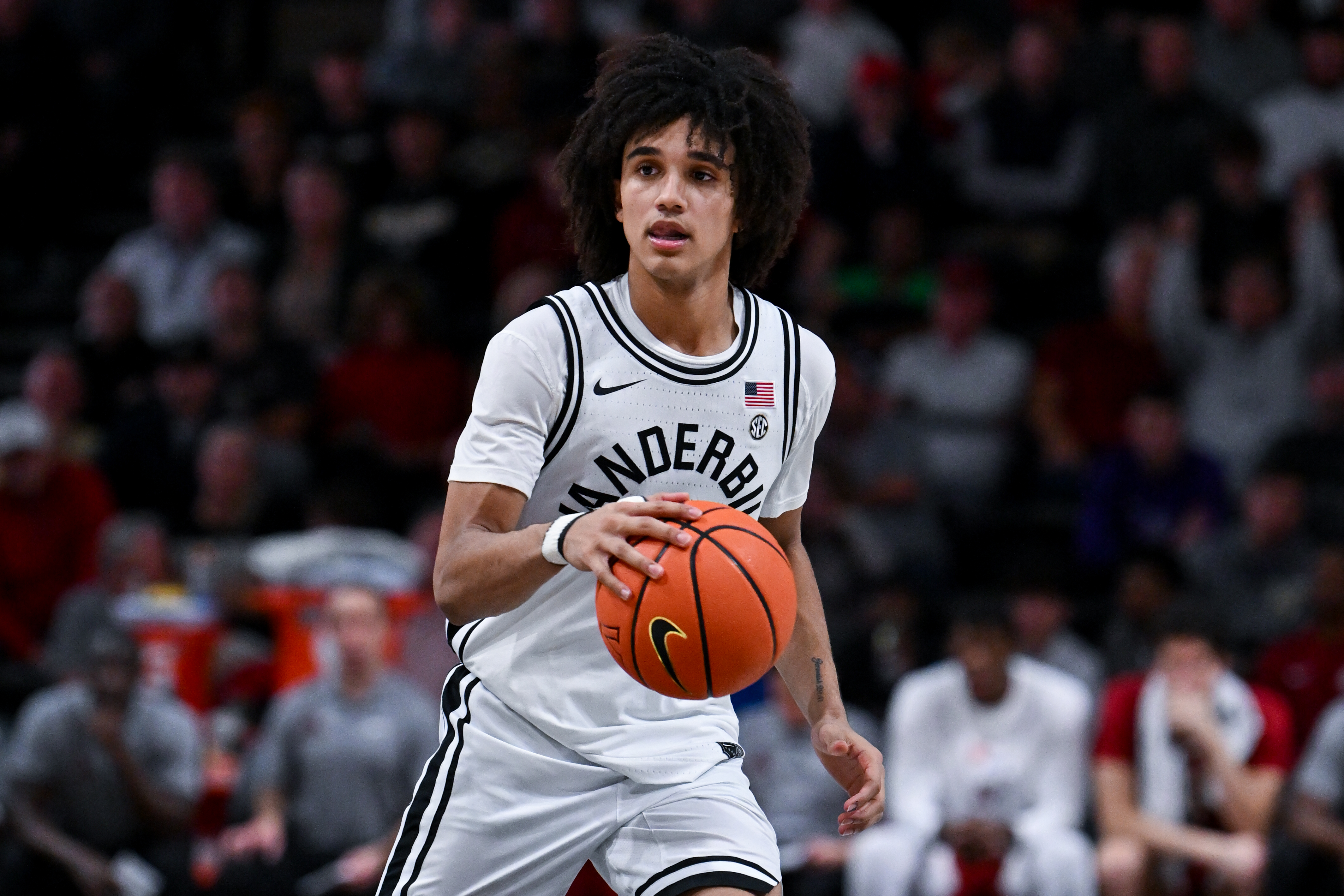
Tyler Tanner (Vanderbilt, 6-foot sophomore point guard)
Even before Wednesday’s 29-point, 7-assist game vs. Alabama, Tanner had scouts talking and starting to really consider the possibility that they’ve identified an outlier. The NBA hasn’t been very willing to give 6-foot guards a long leash lately, but Tanner looks different with 13 dunks and 9 blocks through 15 games.
Offensively, he’s able to consistently create advantages with his combination of ball-handling quickness and speed, both in the open floor and turning the corner. He uses that elusiveness to open up shots for teammates, and he demonstrates high passing IQ when delivering the ball.
Tanner has shot it well from three, and he’ll need to sustain this type of shooting to keep the hype from fading. Tanner won’t have much margin for error at 6-foot, 173 pounds, but between the production, the way he moves, the 2.6 steals per game and the obvious impact he’s had on winning (ranked third in NCAA in box plus-minus), scouts have become open to picturing a useful NBA player.
Joshua Jefferson (Iowa State, 6-foot-9 senior forward)
Jefferson’s breakout season has unsurprisingly grabbed scouts’ attention. At 6-foot-9, 240 pounds, he’s a skilled post player and roll man who has evolved into a three-point threat, excellent spot-up driver and playmaking hub.
His 38.5 three-point percentage and 5.2 assists per game are the real kickers behind the NBA’s spike in interest. More attention has shined more light on Jefferson’s defensive effectiveness using strength, quickness and IQ.
As a breakout senior, Jefferson will have to keep everything rolling through conference play, particularly his shooting. But all signs point to this improvement looking real and selling scouts on Jefferson as a well-rounded rotational forward.
Brayden Burries (Arizona, 6-foot-4 freshman two-guard)
Burries finished with single digits in four of his first five games. Now he’s averaging 15.1 points on the season, looking far more confident and decisive finding his spots and making shots.
He’s shooting 64.2 percent inside the arc, efficiency that highlights his physicality and touch driving downhill. Scouts are still trying to get a better feel for his shooting, but the eye test on his shotmaking right now seems to outweigh the small sample size.
A 6-foot-4 scorer and limited playmaker doesn’t make for the most exciting NBA archetype. But Burries looks like he can mirror a Quentin Grimes type with a three-ball, slashing and defensive playmaking.
Amari Allen (Alabama, 6-foot-8 freshman combo forward)
Allen’s 25 points against Vanderbilt validated his efficient production on low usage. He has a very adaptable game that allows him to be used in a variety of ways — as a transition ball-handler, spot-up shooter, ball mover, roll man and physical finisher. The NBA loves big wings, and at 6-foot-8, Allen has flashed perimeter skill, passing and interior finishing and rebounding.
Still, with Labaron Philon healthy, Allen will play mostly a complementary role, which limits his ability to experiment with creation. He should garner one-and-done interest, though the combination of NIL money, a larger sophomore role and weaker 2027 draft could make returning to Alabama a more desirable path.
Final NBA Mock Draft: Top Targets Ahead of Round Two
UPDATED: June 22…With the 2026 NBA Draft just a few days away, our Hoops HQ NBA Draft expert submits their final mock draft
Fallers
Nate Ament (Tennessee, 6-foot-10 freshman power forward)
Ament is losing the crowd. Long-term potential and upside aren’t enough anymore, with concerns growing around his lack of burst, strength and length. He’s 6-foot-10 and shooting just 45.0 percent on layups. He’s also struggling to turn the corner or finish in crowds. Being tall helps with some shot creation, but he’s 30 of 90 on total jump shots. His turnover rate is high as well.
Ament’s highlights are enticing — who isn’t drawn to a gigantic wing with three-point range, mid-range scoring touch, some passing ability and versatile defensive tools? But the execution hasn’t been there, and now scouts are wondering if he’s skilled and athletic enough to play in the NBA.
Miles Byrd (San Diego State, 6-foot-6 junior wing)
Byrd had momentum entering the season after a strong 2025 NBA combine. But scouts are jumping off the wagon right now, with the junior wing showing no signs of improved shooting or finishing. His archetype remains interesting — the NBA loves three-and-D wings, and even more if they can make plays in ball-screen situations. In this particular draft, however, if you’re not rising, you’re falling, and Byrd hasn’t looked any different from last year.
Tahaad Pettiford (Auburn, 6-foot-1 sophomore point guard)
Pettiford’s occasional scoring outbursts aren’t outweighing the frustrating streakiness. Expectations were big after last year’s strong freshman season and standout NBA combine, but he’s shooting just 37.9 percent with only 44 assists to 37 turnovers.
As of now, Pettiford has fallen outside the first-round discussion with too many concerns over his size/athleticism for finishing, his reliance on tough shots and overall erratic play. He’ll need to turn everything around during conference play in order for entering the 2026 draft to make any sense.
Sleepers to monitor
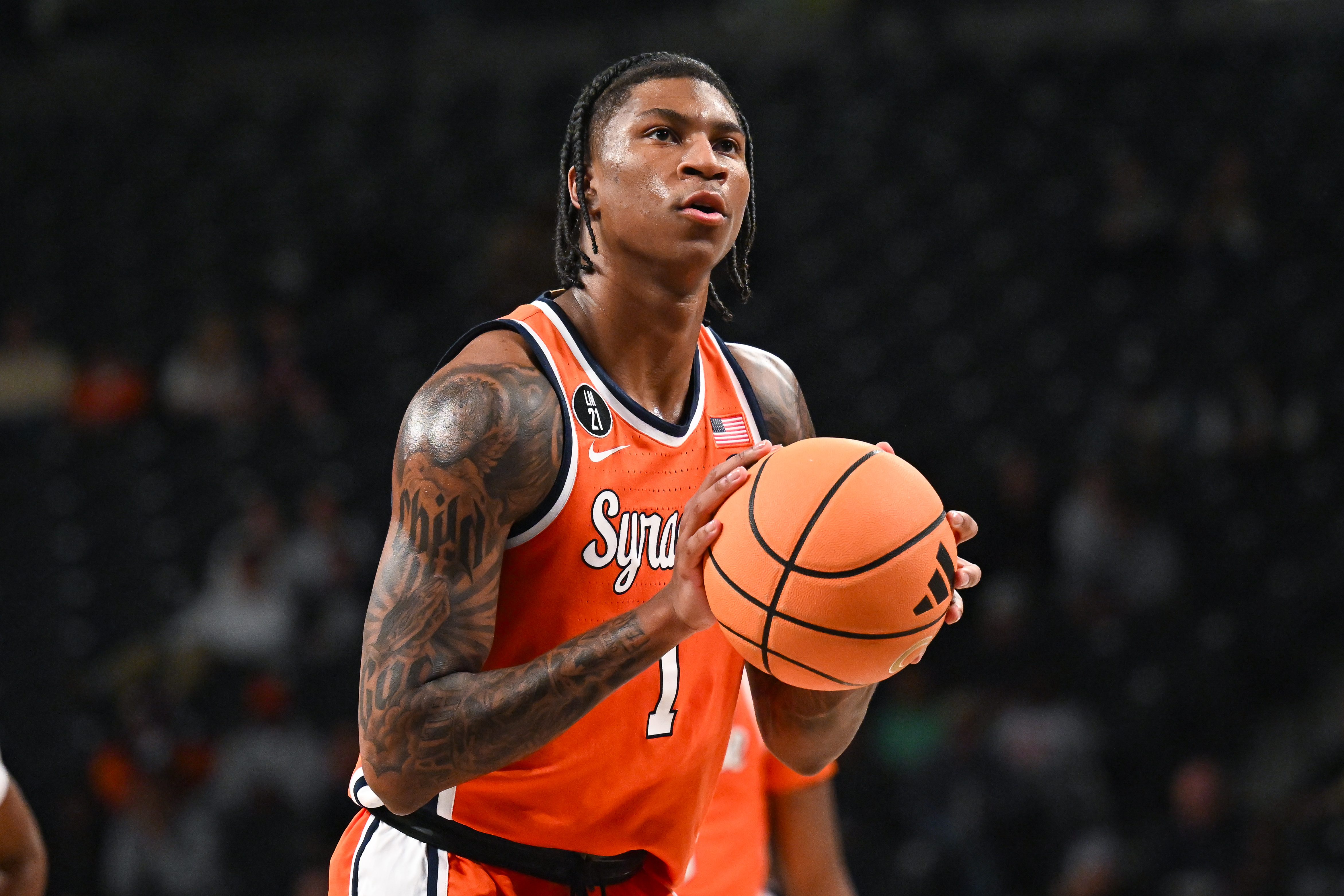
Donnie Freeman (Syracuse, 6-foot-9 sophomore power forward)
Injuries have kept Freeman from building any draft momentum since arriving at Syracuse. He’s been very effective this year when healthy, most recently going for 27 points, 9 boards and 3 blocks against Georgia Tech.
Scouts will need to see a bigger sample size of shooting and impact, but so far this year, we’re seeing a 6-foot-9 forward score from three levels with a more confident three-point stroke, midrange game and tougher interior play. Freeman has an attention-grabbing package of physical tools, budding perimeter skills and defensive range.
Juke Harris (Wake Forest, 6-foot-7 sophomore wing)
It feels like a 6-foot-7 sophomore wing averaging 19.9 points in the ACC should be getting more love. It’s an unexpected breakout, but midway through the season Harris has been consistent with NBA tools, perimeter shotmaking, slashing and good rebounding activity.
The NBA does like versatility, and Harris doesn’t offer advanced creation or playmaking. He does have the right frame and an interesting skill set for off-ball scoring at the next level.
Malik Reneau (Miami, 6-foot-9 senior forward)
Reneau’s 20.7 points per game haven’t made national headlines or created much draft buzz. It should at least earn him a spot on NBA watch lists entering conference play. He’s looked far more like a modernized prospect this year, showing improvement with his shooting (12 of 34 from three-point range) and attacking off the dribble (11 of 19 on spot-up drives).
Dating back to Montverde Academy, he’s always been more of a back-to-basket player and older-school fit. But his game has evolved, and he’s still highly effective working around the basket using his strength and instincts.
Meet your guide