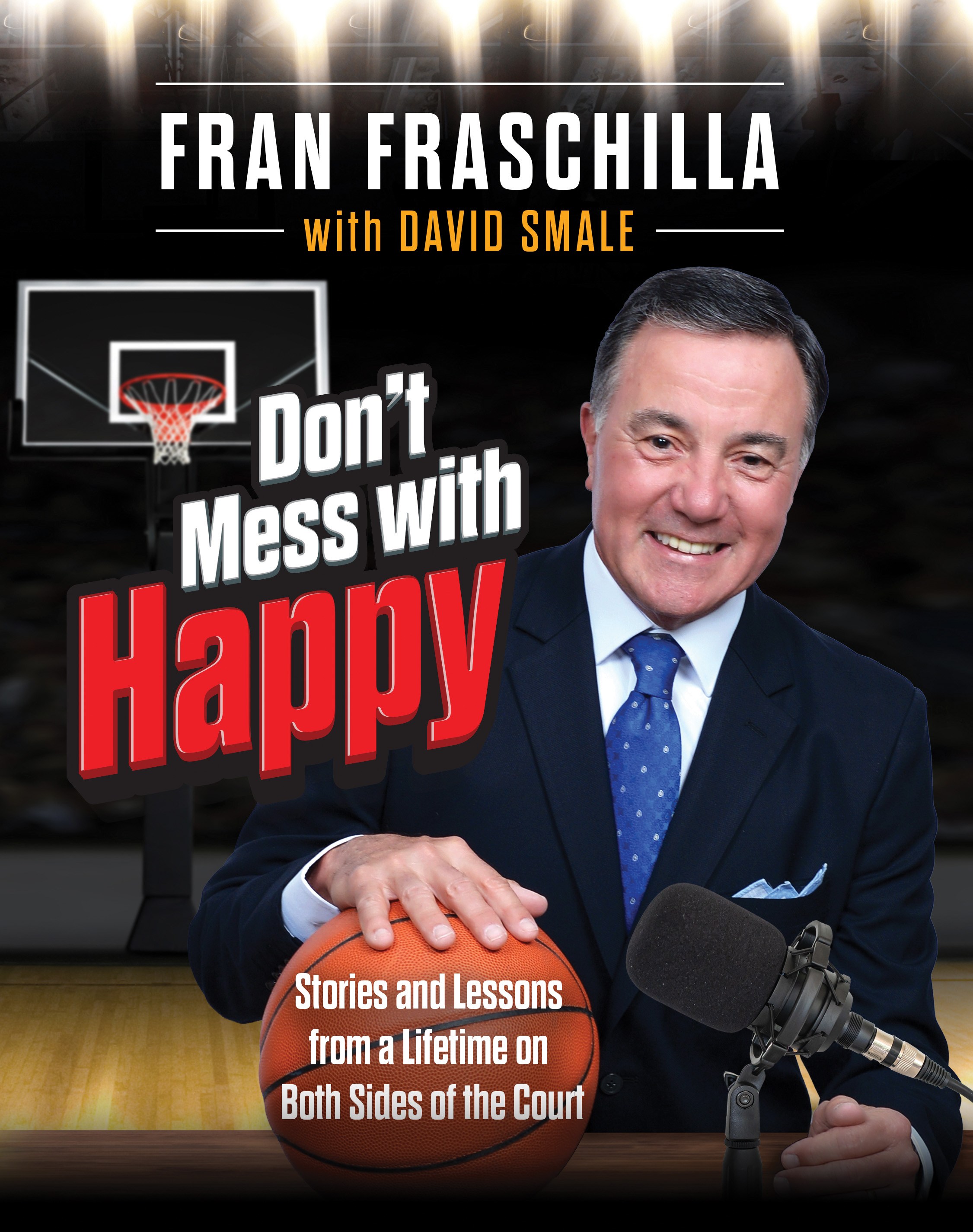
Ed note: This article is excerpted from Fran Fraschilla’s newly published memoir. You can purchase it here.
I first became close friends with Rick Barnes because of a Maryland basketball connection. My mentor, Billy Hahn, a former Terrapin guard, convinced head coach Danny Nee to hire me at Ohio University.
Later, another former Maryland guard, future hall of famer, Gary Williams hired Rick Barnes at Ohio State and our long friendship was born. Eventually, I replaced Barnes as an assistant coach at Ohio State.
In 1989, Rick was going into his second season as the head coach at Providence, and he asked if I wanted to join his staff as an assistant. That was an easy decision for me. I was heading back home to the East Coast.
People around the Big East Conference gave Rick Barnes the nickname “Hickory Rick” because he was from the small town of Hickory, North Carolina: population 21,000. He also attended and played at the non-basketball power, Lenoir-Rhyne College, an NAIA school in the state roughly 15 miles from home.
Barnes was the third of the three highly competitive coaches that I learned from. Danny Nee was the ex-Marine at Ohio University, and Gary Williams had his maniacal intensity at Ohio State. All three taught me that having good talent wasn’t enough; playing hard was equally important.
For a young coach like Barnes in the Big East, every night felt like career life-and-death. Every player and coach at Providence felt it. And it seemed like every player and coach in the league felt the same way. It was a great testing ground for competitiveness.
We had a terrific coaching staff for these battles. Mark Anderson had played at Drake and was an excellent recruiter. Larry Shyatt, who later coached at Jo Clemson and Wyoming and orchestrated Billy Donovan’s Florida defense during the Gators’ back-to-back NCAA Title teams, was our voice of reason.
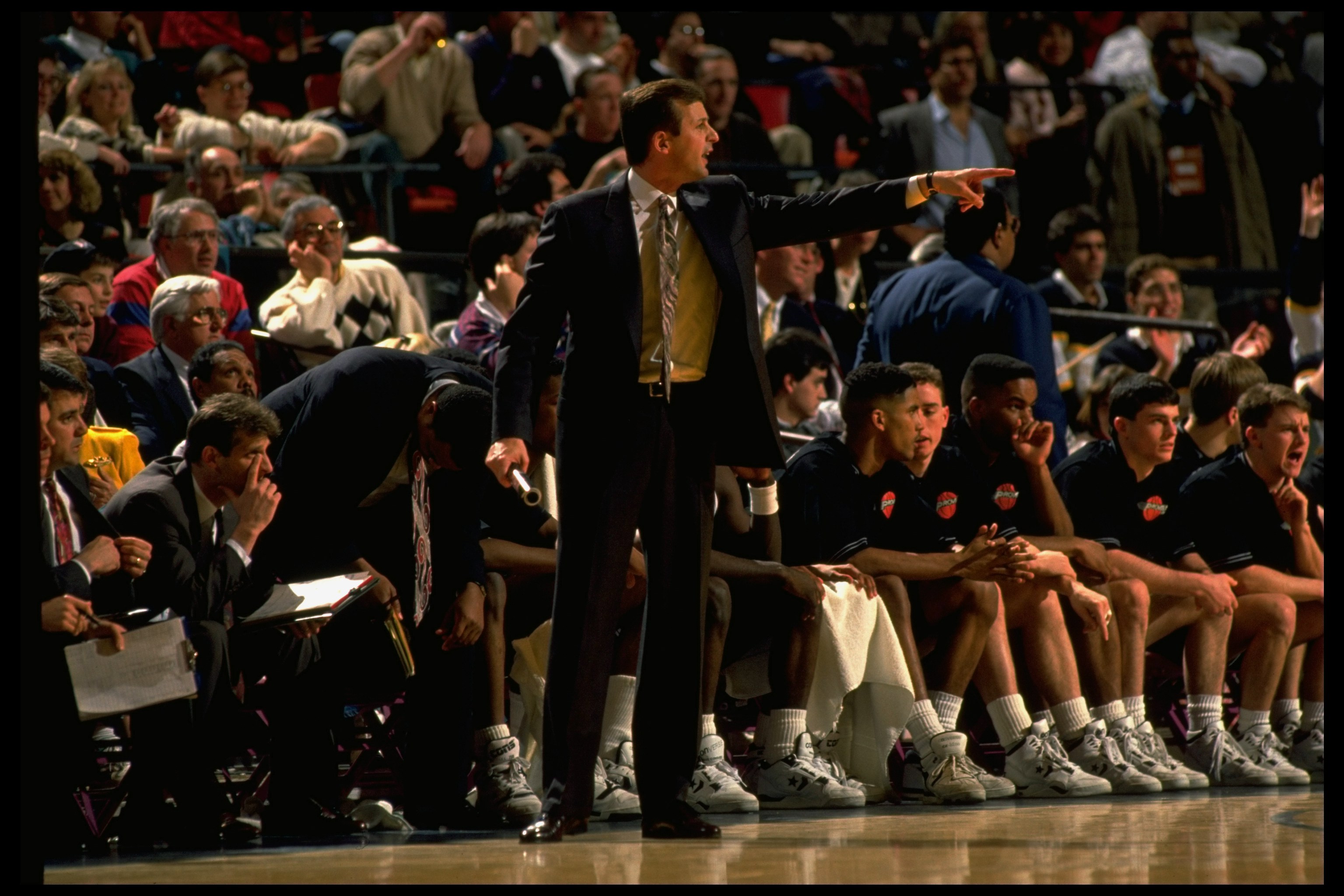
Our graduate assistant coach was Dave Gavitt’s son, Dan, who was smart enough, ultimately, not to make coaching his career.
I learned from Rick Barnes that when you are in a neighborhood of bullies like the Big East Conference, you never, ever backed down. Barnes never backed down. And neither did I.
One time, during a heated recruiting battle with the UConn Huskies (they were just becoming a national power), I called one of their assistant coaches and accused him of bending the rules. He and I went back and forth when I unfurled a string of expletives at him before ending the conversation.
I walked down to Barnes’ office and told him, “You’re going to get a call from Jim Calhoun in five minutes.”
Like clockwork, Barnes came down to my office five minutes later with a huge grin on his face and said, “He called.”
“What did you tell him?” I asked.
He replied, “I told him that Fran was a little crazy, but he probably had a good reason to go off.”
Then, in typical Barnes fashion, he said, “Calhoun got a little heated, and I told him that we could settle this at the Connecticut-Rhode Island border right now.”
We loved playing Georgetown because we tested our toughness against them. The Hoyas had a powerhouse team coached by the legendary John Thompson. In the 1980s and early 1990s, the Hoyas played two games at the same time—basketball and intimidation.
We always seemed to play well against the Hoyas because Barnes made sure we fought fire with fire. We never backed down from them, and I think Thompson secretly liked us and our young head coach because of that. As a former Friars center who later backed up Bill Russell for the Boston Celtics, Thompson was very close to Dave Gavitt, and, in a strange way, we felt like he was one of us.
I will never forget playing Georgetown one night at the Providence Civic Center when they had the twin towers of Dikembe Mutombo and Alonzo Mourning. Our center was 6-foot-7 Marques Bragg, a tough, hard-nosed kid from East Orange, New Jersey, who later played for the Utah Jazz.
When the Hoyas had the ball in the second half at the far end of the court away from our bench, the two future NBA stars literally made Marques disappear from our sight. We knew he was in the lane somewhere defending them, but we literally couldn’t see him. However, his toughness was palpable, and he was perfect for any interaction with the Hoyas.
For purposes of clarity, it’s important to understand that, in the Big East in the 1980s and 1990s, altercations on and off the court were common. After losing a 21-point half-time lead at Villanova’s Dupont Pavilion, which people around the Big East called a “ski lodge” because of its design on the outside, we had to fight our way off the court after losing in overtime.
At the end of regulation, our big man, Marty Conlon, hit a shot at the buzzer, seemingly pulling the game out of the fire for the Friars. However, after consultation, the officials waved the basket off. The building was already a madhouse because of the Wildcats’ furious comeback.
We ended up losing the game, and the Villanova fans rushed the floor. As we were literally fighting our way to the visitors’ locker room, someone reached over and punched our point guard, Trent Forbes. Barnes saw it happen five feet away from him and instinctively reached over Forbes and clocked the guy.
Luckily, few ever knew about the incident. But Dave Gavitt did.
Dave Gavitt, who was the head coach at Providence for 10 years and athletic director for 11, was such a great influence on Rick Barnes and treated him like one of his sons. He had seen something special in Barnes and felt responsible for Barnes’ growth as a coach. Barnes hung on every word of Gavitt’s advice.
After we got back from Philadelphia and the debacle at the ski lodge, Gavitt called to tell Barnes that he was picking him up to take him to lunch.
During the two-hour lunch, Gavitt told Barnes that he’d done as good a job with his team as any coach in the country the preceding year. However, this year, he felt Barnes and his staff (meaning me and the other assistant coaches) were, among other things, too distracted by the officials and weren’t focused on making the team better. Barnes told us later that it was a blistering diatribe by the commissioner.
By the time Gavitt drove Barnes back to campus, he had not even mentioned the incident at Villanova. When Barnes got out of the car, Gavitt rolled down his window and said, “Hey, young coach, one more thing. You can’t be hitting students on your way to the locker room.” And he drove away.
It wasn’t the only time he saved Barnes’ career.
In the late 1980s, Gavitt and ACC commissioner Gene Corrigan came up with the idea of the Big East-ACC Challenge to create some interesting games for their television partner, ESPN. The experiment lasted from 1989 to 1991 before the Big East coaches voted to eliminate the series.

That Time When I Covered the Fast Times in the SEC
From Dale Brown to Charles Barkley to Shaquille O’Neal, the SEC was once filled with college basketball’s most colorful, and quotable, characters
In December 1989, Providence played Clemson in a doubleheader in Greensboro, North Carolina, in my first season as a Friar. Mike Gorman and Bill Raftery were on the call for ESPN, and John Saunders was in the studio. A good Tigers team had future NBA players Elden Campbell and Dale Davis in the lineup that night. We also had a couple of future NBA players in our starting lineup in guard Eric Murdock and forward Marty Conlon.
We held the lead late into the second half before losing, and Barnes was not happy with the officiating, with one ACC official on the split crew.
On the final play of the game, a Clemson player ran over our point guard, Carlton Screen, near halfcourt. It clearly looked like a charge, but there was no call. Barnes was certain that the official cost us the game and wanted to chase him to the officials’ locker room. Fortunately, our staff intercepted him and got him to our locker room.
Barnes was still furious when Dave Gavitt came into the locker room and told him to settle down. Dave said, “Yes, you got screwed, but you are going into that press conference and not saying a word about the officials.” Barnes answered, “No, Dave, that’s not right. That guy screwed us. You know that.”
When Barnes headed down to the post-game press conference, we were all concerned that he would lose his temper again. Obviously, the first question was about the officiating and he said, “The officiating had nothing to do with the outcome of the game. Give Clemson a lot of credit.” He proceeded to compliment the Tigers and take the blame for letting the game slip away from the Friars.
During the 1993-94 season, Providence was rolling and on the way to its first Big East Tournament title. Late in the season Barnes got a call from Clemson Athletic Director Bobby Robinson. The Tigers’ head coach, Cliff Ellis, had resigned in the middle of the season, and Robinson was in the market for a new coach.
Robinson told Barnes that he would be Clemson’s first choice as the replacement for Ellis. He mentioned that he was so impressed with the poise and class Barnes showed after our tough loss to the Tigers four years earlier in the Big East-ACC Challenge.
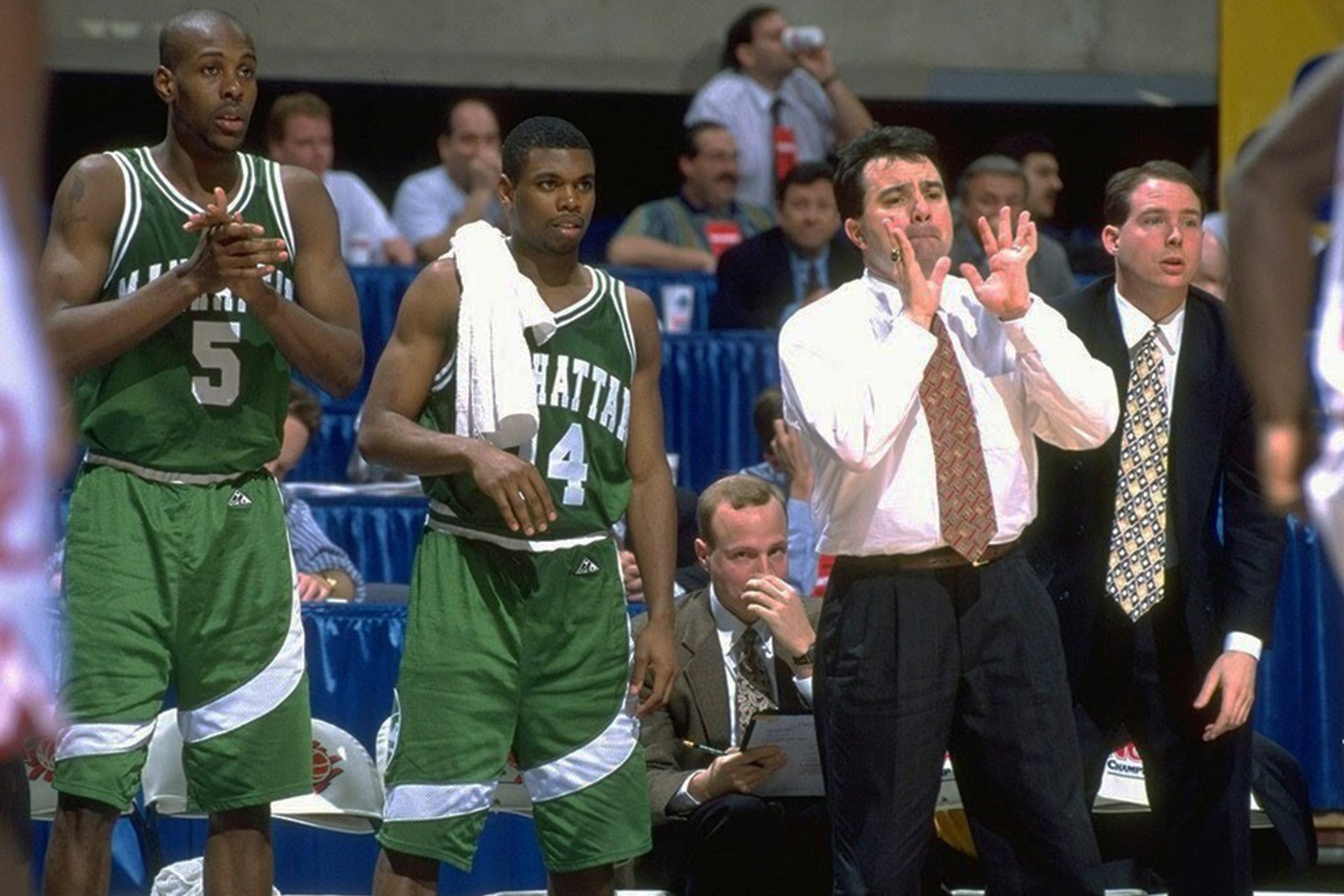
If only Bobby Robinson had known the real story. It took everything Dave Gavitt could muster that night in Greensboro to keep Barnes from going after the officiating. Luckily, the “young coach,” as Gavitt had often called him, listened to his mentor.
A few weeks after the season, Clemson hired Rick Barnes. I had left Providence and Barnes after the 1991-92 season to take the head coaching job at Manhattan College, having helped recruit much of the team that won that 1994 Big East Tournament title. However, I stayed in close touch with Barnes and the Friars’ program.
I have continued to live vicariously through Barnes and his success at Clemson, Texas and, most recently, Tennessee. I spent a lot of time with my mentor when he was at the University of Texas in the Big 12. I’d seen the growth in his career and the impact he’s had on so many players and assistant coaches.
In the near future, he will be in the Naismith Basketball Hall of Fame as he is likely to end up with 900 wins. He certainly was a great “big brother” and mentor to me.
Meet your guide