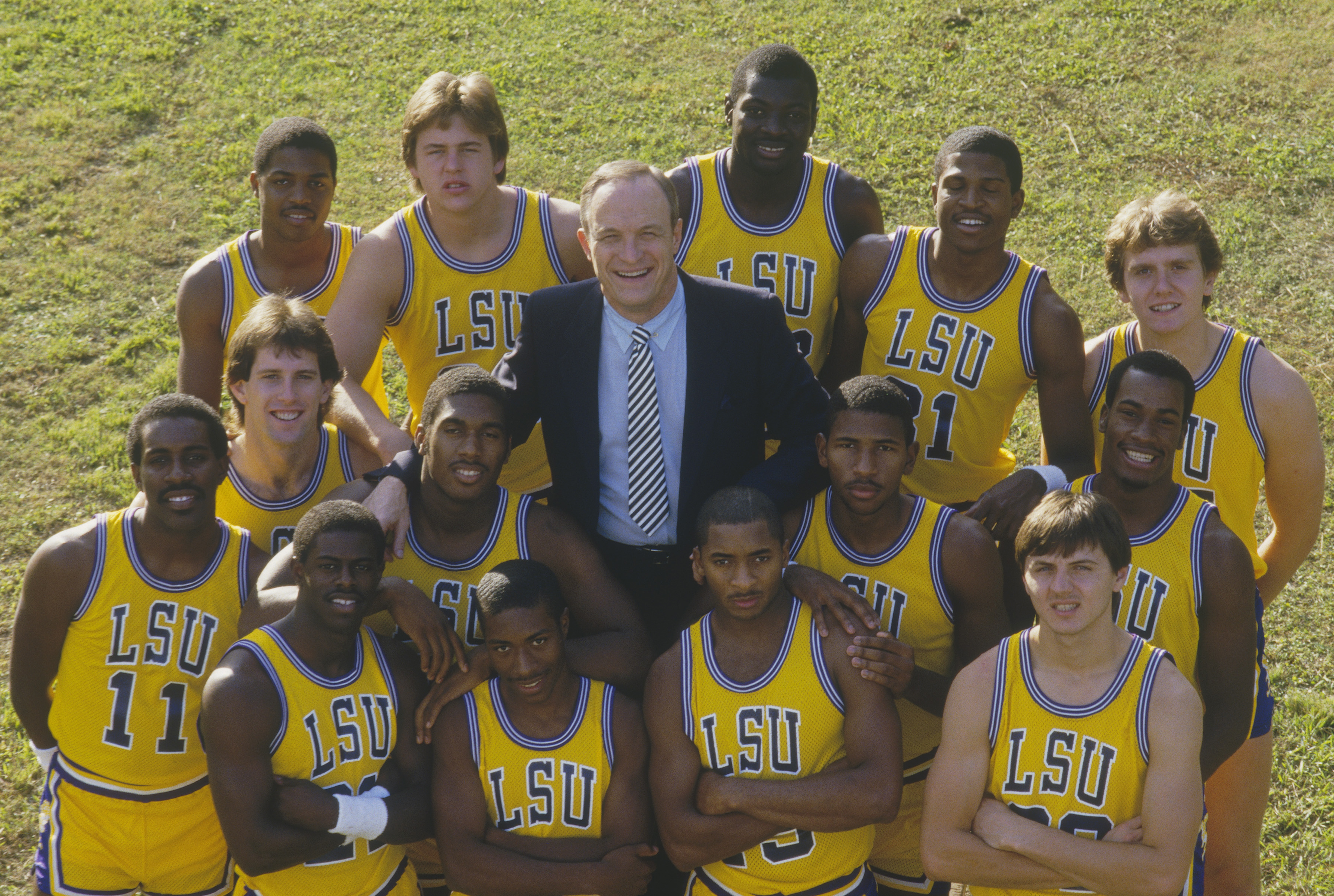
It’s not clear exactly why LSU coach Dale Brown vowed to go without sleep during the 1987 Southeastern Conference tournament until his Tigers were eliminated or crowned, whichever came first.
Brown didn’t do this to enjoy the after-hours delights of downtown Atlanta. Or because he so distrusted his players that he wanted to stake out the hotel lobby, to make sure they didn’t break curfew. Or because a team that included such veterans as Ricky Blanton and Anthony Wilson, who a year earlier had been members of the lowest-seeded team ever to reach a Final Four, needed some gimmick as motivation.
Brown simply did and said things that left players, fans, rivals and reporters scratching their heads. When my Sports Illustrated colleague Gary Smith wrote a lengthy profile of him in 1985, Gary began it with a four-word quote from his subject: “I am a molecule.”
Sometimes it indeed felt as if you needed a Ph.D. in Nuclear Physics to make sense of the man.
One wag described Brown as “AM radio on search.” His press conference monologues might touch on Tito’s Yugoslavia, or his father’s work as “a gandy dancer on the railroad,” or the shoes in Imelda Marcos’ closet, along with a random barb intended for his villain of the moment, be it some NCAA investigator or Indiana coach Bob Knight. He could recount every slight suffered by the single mother who raised him in poverty in Minot, N.D., as if they’d happened yesterday.
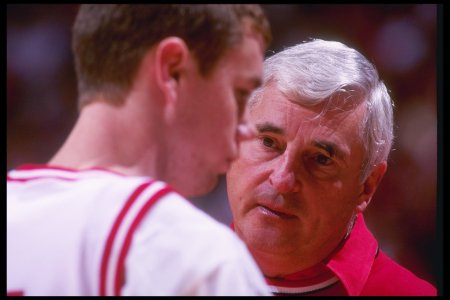
That Time When Bob Knight Choked Me
Many years before The General was caught on tape grabbing Neil Reed’s neck in practice, he committed a similar offense to a smaller audience with a young reporter from Sports Illustrated
During that sleepless jag, which wound up extending through the final that his Tigers lost to Alabama, Brown regularly telephoned sportswriters during the wee hours to prove he was good as his word.
Such was basketball in the SEC during the Eighties — a jubilee of characters, a circus of spontaneity, a Ninth Circle of Hell of a Good Time. If that carnival was staged more in the shadows than the spotlight, well, that was part of the magic of what was essentially college basketball’s own ABA.
Players in the SEC had extravagant freedom to showcase their abundant talent, even if relatively few people actually got, or chose, to watch them. And the most yawningly wide-open secret in the game — good players get paid, great players get paid more! — went refreshingly without saying.
Much of the SEC’s showmanship back then was calculated to address that abiding truism about the South — that its two reigning sports will forever be football and spring football. A decade earlier, then-Tennessee coach Ray Mears had gone full impresario with his Ernie and Bernie Show, putting Ernie Grunfeld, Bernard King and their teammates through choreographed warmup routines to entice fans to wait out the winter in Stokely Athletic Center.
Coaches on other SEC campuses would learn Mears’ lesson well, and Dale Brown became the loudest carny barker beneath the league’s big top.
Hugh Durham of Georgia and Norm Sloan of Florida, world-weary survivors both, each wore the garland of having once taken another school to a Final Four (Florida State and North Carolina State, respectively), and bore the scars of having done battle with the NCAA. When they spoke, you listened.
Auburn’s Sonny Smith, carefree and laconic, had a Mojave dry wit and the serenity to accept that his boss, athletic director Pat Dye, was also the football coach—so a little self-deprecating ingratiation played well with the press.
Smith’s closest friend in the business, Crimson Tide coach Winfrey (Wimp) Sanderson, seemed the least likely person to keep War Eagle company, given those bumper stickers around Alabama urging people to AVOID THE RUSH/HATE AUBURN EARLY. Sanderson was nicknamed after a distant relative, he told anyone who asked, “who blocked a punt and died shortly thereafter.”
Tennessee’s Don DeVoe was the exception who proved the rule, a man as colorless as his offense — but Coach Monochrome helped make the characters everywhere else pop.
Even Kentucky would supply entertainments from time to time, notwithstanding the corporate CEO instincts of coach Joe B. Hall. As seven-footer Melvin (Big Dipper) Turpin struggled with his weight, Hall dispatched a student manager to the Wildcat Lodge, the basketball dorm, to babysit his starting center. That Turpin was sincerely trying to abide by his diet became clear when a UK co-ed swung by the Lodge with a plate of freshly baked chocolate chip cookies, and he indignantly refused delivery. “How many times do people need to be told?” he said. “You don’t feed the Dipper!”
With the exception of those playing for Big Blue, the program that practically invented media training, SEC players were refreshingly available and unguarded. Yet even the occasional Wildcat was known to put a verbal foot endearingly wrong now and then. Much was made of UK recruiting prize forward Winston Bennett out of Louisville, from under the nose of Denny Crum and the Cardinals, so Bennett regularly fielded questions about his decision to attend Kentucky, once declaring it “a limestone in my life.”
The malapropism made more sense given that Limestone Street is a major street that runs through the Lexington campus.
The players from that era, back before the mid-range game got legislated out of college ball, had an eye-pleasing versatility. LSU point guard Ethan Martin, equal parts bobble-head and bumper car, could dominate a game off the dribble. Alabama’s Derrick McKey flashed the frontcourt skills that would allow him to spend 15 seasons in the NBA. Dale Ellis of Tennessee, Robert Horry of Alabama and Chuck Person of Auburn all had jump-shot form that could have been ripped from the hood of a car.
Watching Person’s teammate Charles Barkley tangle with Turpin in the post, always getting the better of it despite giving up almost eight inches, proved the physics axiom about the virtues of a low center of gravity. Yet Barkley was every bit as likely to lead a fast break after tearing down a rebound, and when he did you could not look away. “A cartoon character,” Turpin called Barkley after one of their matchups, not without admiration.
And the nicknames they carried: Florida featured Eugene (The Dunking Machine) McDowell; Kentucky, the inevitable Kenny (Sky) Walker. Georgia screened Dominique Wilkins, the Human Highlight Film, while LSU’s Nikita Francisco Wilson, to the Atlanta Journal-Constitution’s Mark Bradley, was the Trilateral Summit Conference. By the end of the decade the conference had welcomed the most formidable Tiger of them all, Shaquille O’Neal, a.k.a. The Big Aristotle.
Barkley cycled through a half-dozen handles before the world settled on the Round Mound of Rebound — Bread Truck, Boy Gorge, the Crisco Kid, The Wide Load from Leeds.
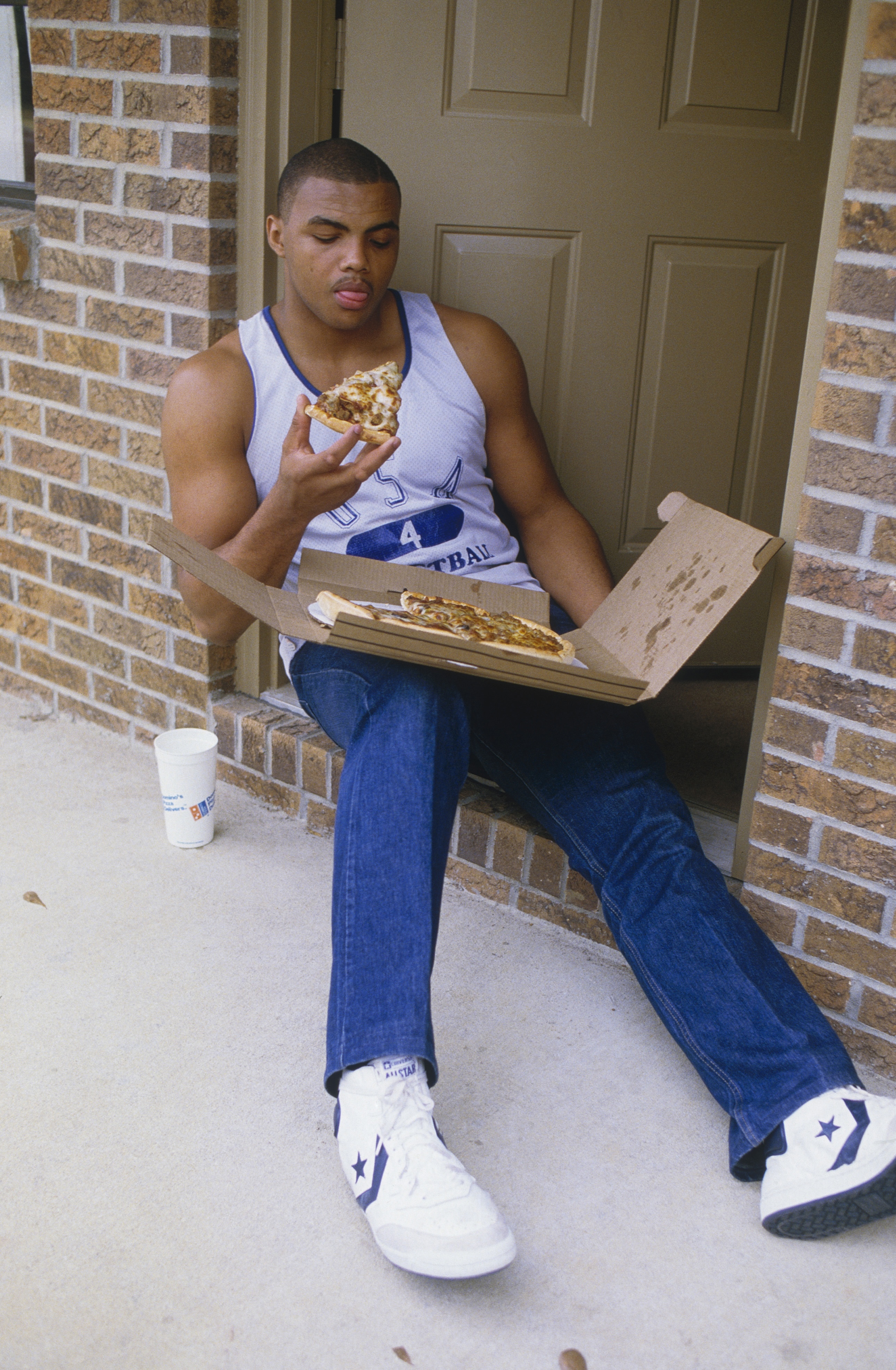
I lit out for Auburn in early 1984, when Barkley was making a name for himself as a sophomore and not long for college ball. The big-budget magazine had come to town, ready to spring for the pizza tab at a photo shoot.
“Does that mean we can get Godfather’s instead of Domino’s?” Barkley asked, excitedly.
Word of Barkley’s favorite food reached Stokely, where regulars in the Tennessee student section made clear that, DeVoe notwithstanding, they still had a hangover from drinking in the spirit of Ray Mears. They arranged to have a pizza delivered to Barkley in the pregame layup line.
Later that season I turned up to watch Auburn host Alabama. Sonny and Wimp did their frenemies act in the pregame run-up, then reprised it at the press conference following a comfortable Tigers victory. John Glenn, the former astronaut then serving as a U.S. Senator from Ohio, turned up as part of his campaign for the Democratic presidential nomination. He and Barkley met afterward, just off a tunnel leading from the court. The two engaged in handshakes, smiles and small talk, all of which came much easier to Barkley than this professional politician.
Swaddled in a spacesuit and launched in a capsule, Glenn had once looked out awestruck at outer space. And here he was, astronaut all over again, gawking anew at a celestial body, Barkley — a star of course but, in the pulverizing way he played the game, a kind of asteroid too.
I left the Loveliest Village on the Plains the next day knowing three things: Charles Barkley had a future in any endeavor with an audience. John Glenn was going absolutely nowhere in presidential politics. And basketball in the SEC had never been — nor likely ever would be — any more compulsively worth following.
Meet your guide