
In the first 24 hours after the transfer portal opened on Tuesday, April 7, newly hired Kansas State head coach Casey Alexander and his staff conducted a whopping 10 Zoom calls with recruits, each lasting roughly 45 minutes. With just one returning player, Alexander had his work cut out for him.
“It was a long day,” he tells Hoops HQ with a chuckle.”There are basically 10 of us on staff. Not everybody sat in on every Zoom, but there were on average four or five of us. And in the meantime, the rest of the guys were preparing for the next one, trying to get video together or streamline presentations.”
The days that followed were just as grueling, packed with more calls and strategy sessions. But the grind paid off. Before Friday, April 10, when transfers were allowed to start taking visits, the Wildcats had already earned commitments from four players. By the end of the weekend, they had added three more to the mix, giving Alexander a strong foundation to build around. “The most surprising part about the whole thing was just how fast we got everything done,” he says. “And I don’t think we sacrificed quality in any way, shape or form.”
In the wake of a tumultuous 2025-26 season, K-State has rapidly restored hope in Manhattan. That process began with the hiring of Alexander, who, in seven seasons at his alma mater Belmont, went 166-60 and claimed four conference championships. Last year, he guided the mid-major powerhouse to a 26-6 record, its fourth-highest winning percentage ever.
Working with a much deeper NIL budget at K-State, Alexander had an incredibly efficient debut offseason, landing many of his top targets without drama. He has brought a new roster-building approach to the program, one that has sparked tremendous success throughout his career even when his teams have been significantly under-resourced. With Alexander running the show, the struggling Wildcats, who have gone 44-84 in Big 12 play and made just one NCAA Tournament appearance since 2019, appear back on track and primed for a dramatic turnaround. “I obviously recognize that there’s a long historic tradition at Kansas State with great resources and support,” Alexander says. “I don’t think you take a job at this level if you don’t think you can win games and be successful. So it was an easy no-brainer.”
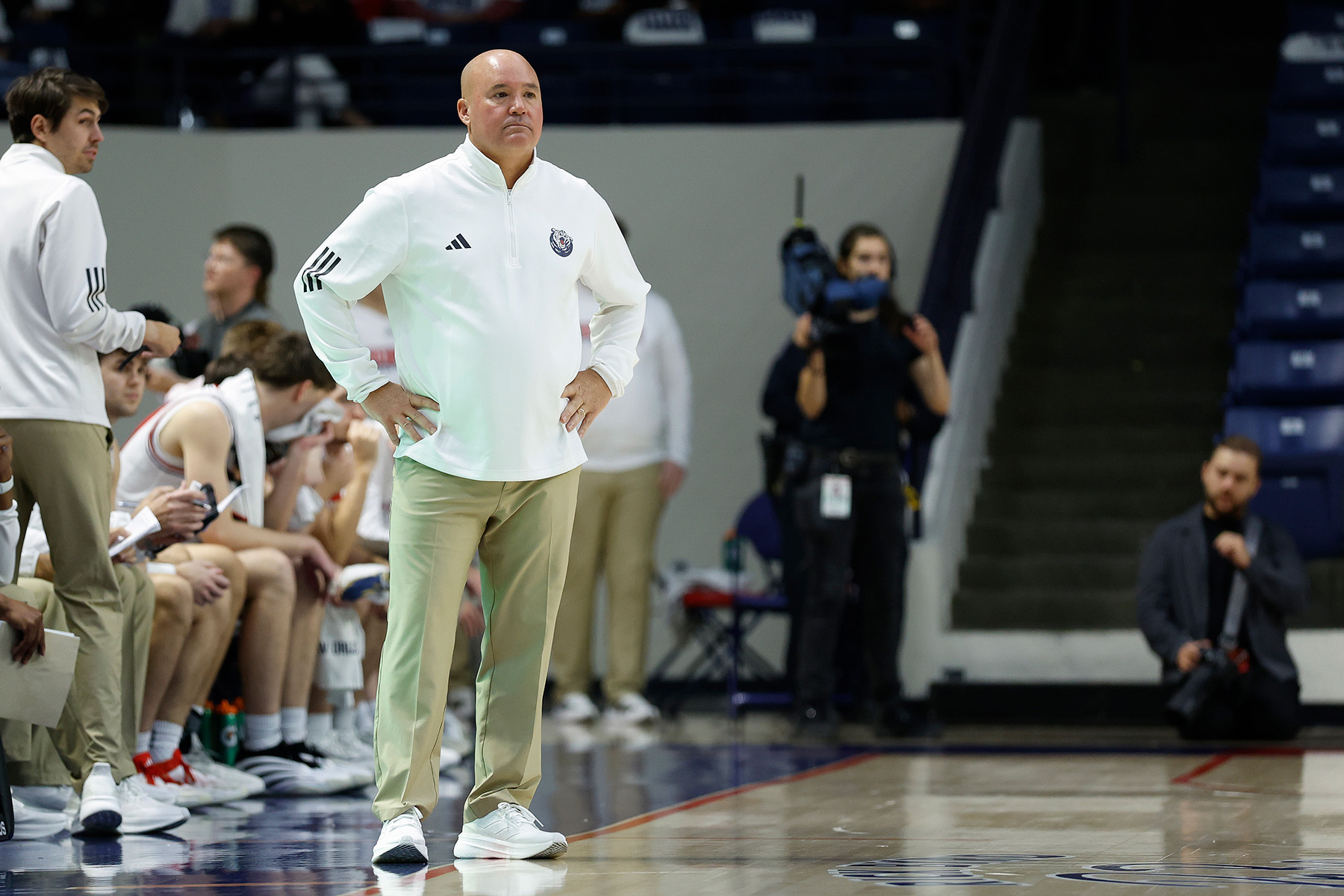
Unlike most new hires, Alexander had a lot of time to prepare for the chaos of transfer portal season. K-State dismissed Jerome Tang in mid-February following a viral postgame press conference in which he ridiculed his players. Associate head coach Matthew Driscoll assumed the lead chair for the remainder of the season, as the school began its national search for Tang’s replacement. Alexander was introduced on March 13, just 10 days after Belmont’s season concluded with a loss in the MVC Tournament. That gave him more than three weeks before the portal opened to assess his roster and start strategizing.
When he first arrived, Alexander had no intention of cleaning house. “I wanted to give everybody the opportunity to stay if they were inclined,” he says. “I also wasn’t going to talk anybody into staying. I wanted to make sure that anybody who did stay was completely committed for the right reasons and there was some symmetry between me and them. When all was said and done, that was just a really small list.”
In fact, the list consisted of just one player: 6-foot-6 freshman forward Andrej Kostic, a promising Serbian prospect who appeared in 23 games and averaged 5.2 points last season. There was a world in which the Alexander era began with several returnees and a few of his former players from Belmont. Instead, K-State had close to a blank slate heading into Portal Mania.
“There was no sense of panic,” Alexander says. “We were really lucky that we did have ample time to gather and prepare and have lists ready. We also knew very clearly going into the portal what our needs were going to be, as opposed to being hired late and it all hits you at once.”
Rather than having to scramble, Alexander was able to stick to his roster-building philosophy, which prioritizes fit as much as talent. He targets players who can be seamlessly integrated into his offense, a fast-paced system that’s predicated on spacing the floor, sharing the ball and hunting efficient shots. All seven of his Belmont teams averaged at least 76.5 points and several ranked in the top 20 nationally in three-pointers per game.
“We’re not just trying to find good players,” Alexander says. “We’re trying to find good players who we think will be great in our system but also great culturally and everything else. And that’s as cliche as it could sound, but it’s a commitment for us that I’m really diligent about in making sure that we do everything we can to get those things right.”
With nearly an entire roster to fill, Alexander also prioritized depth, spreading out his budget rather than using a massive chunk of it on one or two star transfers. That approach represented a shift for the program. K-State has made headlines in recent years for signing big names such as P.J. Haggerty (2025) and Coleman Hawkins (2024) to seven-figure NIL deals. Despite lofty expectations, both of their teams struggled, finishing with losing records.
While the Wildcats didn’t garner any spotlight this offseason — all 10 of their commits have three-star ratings, per 247Sports, and none were featured in Hoops HQ’s ranking of the top 50 transfers — they quietly executed their game plan. “Because we had so many guys that we needed to get, our focus was a lot more on quality across the board,” Alexander says. “I was not interested in leveraging the roster for one or two ‘A players’ or high-dollar players and then hoping we could fill in with everybody else.”
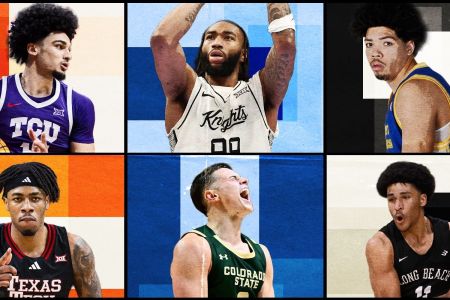
UPDATED: Ranking the Top 50 Players in the NCAA Men’s Transfer Portal
May 3 update: Over 2,000 players have declared their intent to change schools. We rank the top 50.
The staff hit the ground running as soon as the floodgates opened in early April, chasing unselfish, highly skilled, high IQ players. Alexander’s pitch — beyond NIL negotiations — centered in large part on his system and the success it led to at Belmont. In 2025-26, the Bruins ranked first in the country in three-point accuracy (40.4 percent), sixth in two-point shooting (60.8 percent), sixth in assists per game (18.6) and 22nd in points per game (83.9). Among mid-majors, they had the nation’s fourth highest offensive rating, per KenPom’s efficiency metrics.
“There’s not one player that we talked to in almost 30 Zooms that we ended up having that really wanted to do a deep dive into defense,” Alexander says. “It doesn’t matter how good a defender you are, nobody is coming to Kansas State or anywhere because the defense is great. So it’s an advantage for us, because we have a lot of credentials to share, and it’s intriguing and enticing for guys who not just have that skill set themselves, but want to play in a system and with teammates who play that way.”
K-State signed 10 transfers in a three-week span, the second most of any Big 12 school. The class has a promising blend of size, versatility and shooting. Alexander landed a pair of seven-footers in sophomore center J.T. Rock from New Mexico (6.2 points and 3.5 rebounds per game), who’s comfortable stepping out to the perimeter, and sophomore forward Pape N’Diaye from Xavier (2.0 points and 2.3 rebounds per game). In addition to returnee Andrej Kostic, the Wildcats have two more proven sharpshooters entering the mix in 6-foot-5 junior guard Jaden Schutt from Virginia Tech (7.7 points per game) and 6-foot-1 junior guard Brandon Rechsteiner from Colorado State (12.0 points per game).
High-major transfers like 6-foot-8 freshman forward Timotej Malovec from Miami (4.2 points per game), 6-foot-7 sophomore forward Isaiah Abraham from Georgetown (4.8 points per game) and 6-foot-6 senior forward Dezdrick Lindsay from Oregon (5.3 points per game) have solid experience and intriguing potential. Malovec, a native of Slovakia, played professionally for Mega Superbet in the ABA League First Division from 2023-25; Abraham was a top-75 high school recruit who began his college career at UConn; and Lindsay was a JUCO star at Florida Southwestern before transferring up to Oregon, where he made eight starts and averaged 20.5 minutes.
Past K-State teams have generated tremendous buzz but failed to live up to the hype. Alexander is hoping for the opposite next season. While his first roster lacks household names, it’s an ideal fit for the new direction of the program — one that has quickly changed the mood in Manhattan from bleak to optimistic.
“We’ve got a lot of guys who can spread the floor, who have really good offensive skills, who won’t mind sharing the ball and playing as a team,” Alexander says. “I think those characteristics are pretty unique in a lot of ways these days, even though it’s a team that’s going to be brand new and we don’t have that kind of history together. There’s always a place for a team that just cares more about winning and each other than they do numbers and money and everything else.”
Meet your guide