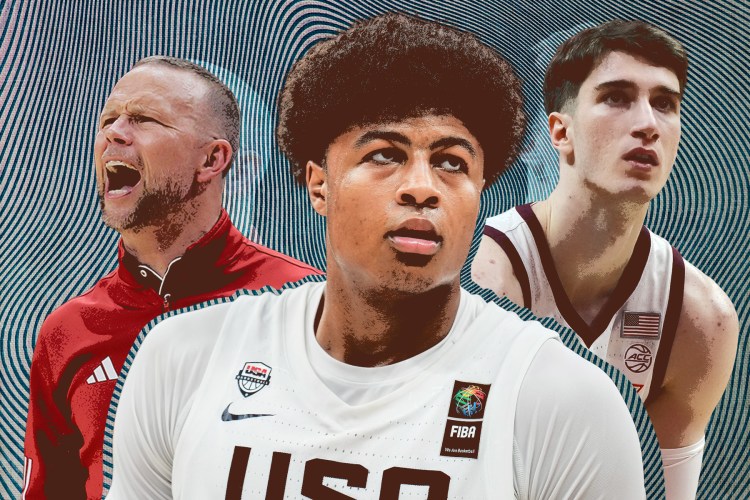
CHICAGO — While spending the week interviewing the 2026 NBA Draft class at the leagues’ draft combine, it occurred to me that this group of prospects is more polished and professional than any other class I’ve been around. They arrive on the doorstep of the NBA after essentially being professionals with a paid contract, social media engagements and, in a number of cases, doing paid advertisements.
The downside of this professionalization is the loss of the “Wow” factor. In the past, players came to the combine wide-eyed and excited for a fresh new experience. Now it feels like just just another stop on their path to the league. There were a few exceptions — and I will get to those below — who truly appreciated being in this position.
Here are my main observations from the combine:
- There’s nothing wrong with going through the draft process and playing the game of getting workouts. They should. But the number of schools that will have money available for players who decide to return will continue to dwindle in the coming years. Of course, schools that are hoping their player returns (like Vanderbilt’s Tyler Tanner and Michigan State’s Jeremy Fears) will hold the financial spot. Scholarships will be available, with most schools not filling all 15. But there will be very few high-level schools that have a significant salary spot left for a transfer portal player who is uncommitted and then withdraws from the draft.
- The one thing that stood out the most throughout the week was how connected the Michigan staff and frontcourt remains a month after winning the national title. Head coach Dusty May and assistant Mike Boynton were with either Yaxel Lendeborg, Morez Johnson Jr. or Aday Mara in the stands at all times. If one of them was going through the workouts on the floor, the other two were cheering him on from the stands.
- The Final Four coaches’ lobby used to be one of the best networking spots for coaches and, to some extent, the media. But the lobby of Marriott Marquis at the combine has become a hot spot every May. College head coaches and assistant coaches with players competing at the combine, some former players, NBA personnel and agents all gather to connect. It’s one of the rare times when men’s college basketball and the NBA are all in the same spot.
Earlier in the week I sat down for Sirius XM NBA Radio with a dozen of the top players in the draft. Four of the more interesting conversations were with Kansas’ Darryn Peterson, Michigan’s Yaxel Lendeborg, Illinois’ Keaton Wagler and Houston’s Kingston Flemings.
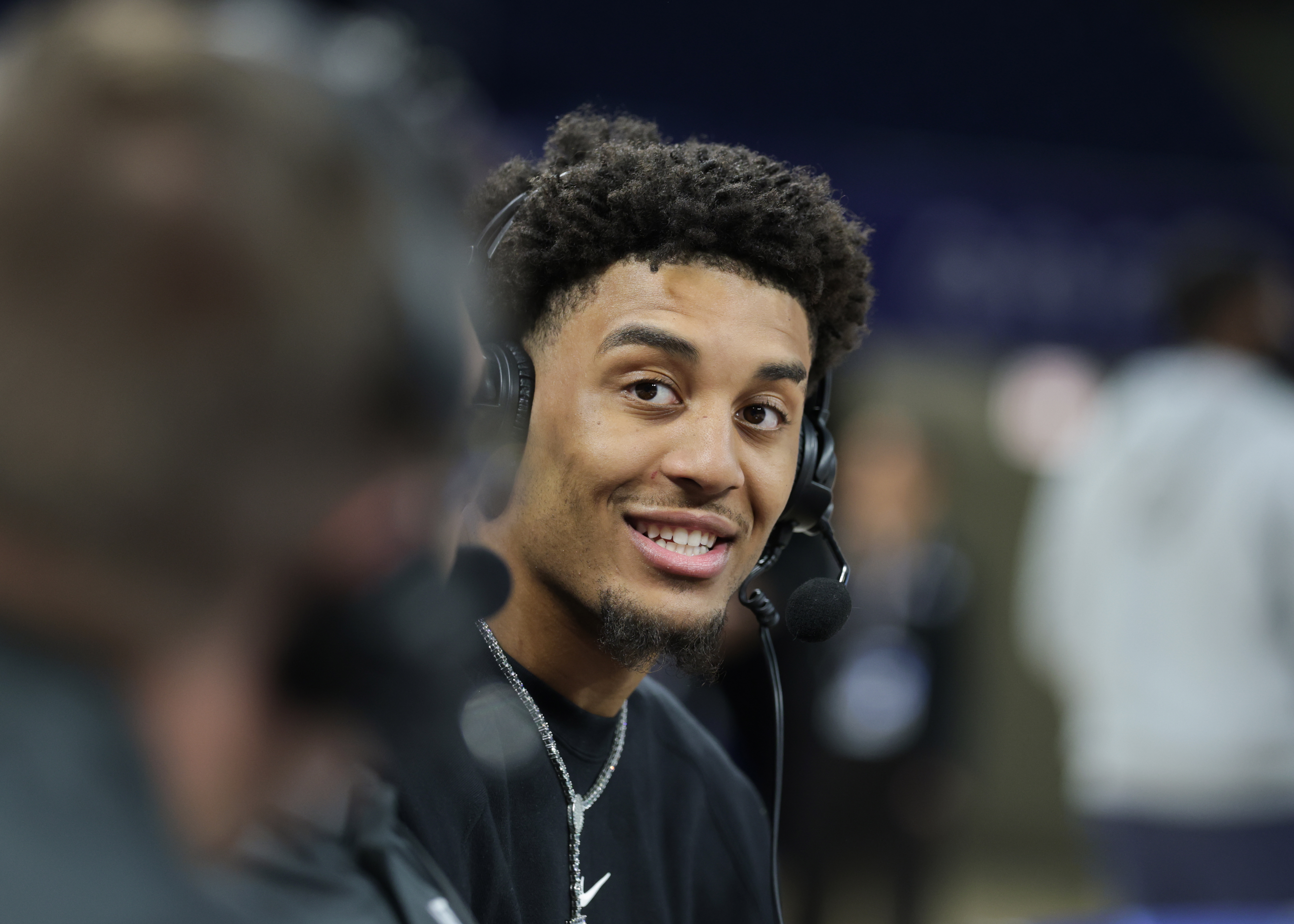
Peterson had to deal with a hamstring injury, illness and a cramping issue that he said was related to too much creatine. I asked him what he did well during his one and only season at Kansas. “I think just being the best teammate was the biggest thing for me, because I was in and out of games so much,’’ he replied. “So it could have been easy for my guys to kind of get away from playing with me, but they helped me stay confident. I just tried to keep the chemistry as good as possible, because I wasn’t in there so much.’’
Peterson played in 24 out of a possible 35 contests, but still led the Jayhawks with 20.2 points a game. He’s projected to be one of the top two picks in the June 23 NBA Draft.
Yaxel Lendeborg is a great example of a player who bet on himself. He had to go to junior college, UAB and then to Michigan after a year ago deciding to withdraw from the NBA Draft. Now that bet is about to pay off, but that doesn’t mean he has forgotten where he came from. “I appreciate this journey way, way more,’’ said Lendeborg. “A lot of the guys were pretty much born into this. I always have had a little bit of extra appreciation for the guys that got out of the mud, the guys who didn’t believe in themselves, and those guys that were getting doubted all around..”
Lendeborg was the Big Ten Player of the Year. He won a national championship. He should be a late lottery pick. He’s incredibly unselfish, engaging and will be an instant hit in the locker room. “I’ve never been a guy who has been demanding the ball,’’ Lendeborg said. “I’ve never demanded plays be run for me so I can go and score the ball. I’m a guy that doesn’t really care much about points. Whenever I get on the court, I just want to do whatever to win a game. I hate losing, so I’m going to do whatever I have to to win that game. So whether that’s me scoring two points in the game or 30 points in the game, I’m willing to make that sacrifice no matter what it is and just do the best I can to bring life into the game.’’
The Case for Cameron Boozer at No. 1
Jonathan Wasserman talks combine risers and fallers, the case for Cameron Boozer at No. 1 and which prospects should return to college
Keaton Wagler wasn’t a top 100 player out of high school. He was nowhere near any of the NBA Draft mocks a year ago. He wasn’t projected to be an Illinois starter, let alone an all-Big Ten player and Freshman of the Year in the league. But here he is, fresh off leading the Illini to a Final Four and having a signature game when he dropped 46 at Mackey Arena at Purdue.
“It was definitely crazy from the start to the finish,’’ said Wagler. “I didn’t think that I was going to have the season that I did, and I don’t think anyone thought that, but it just goes to show how much hard work I put in and the work ethic that I had throughout the whole year. I just continued to get better and better throughout each game and team wise we were able to get to the Final Four, which was a great experience for all of us.’’
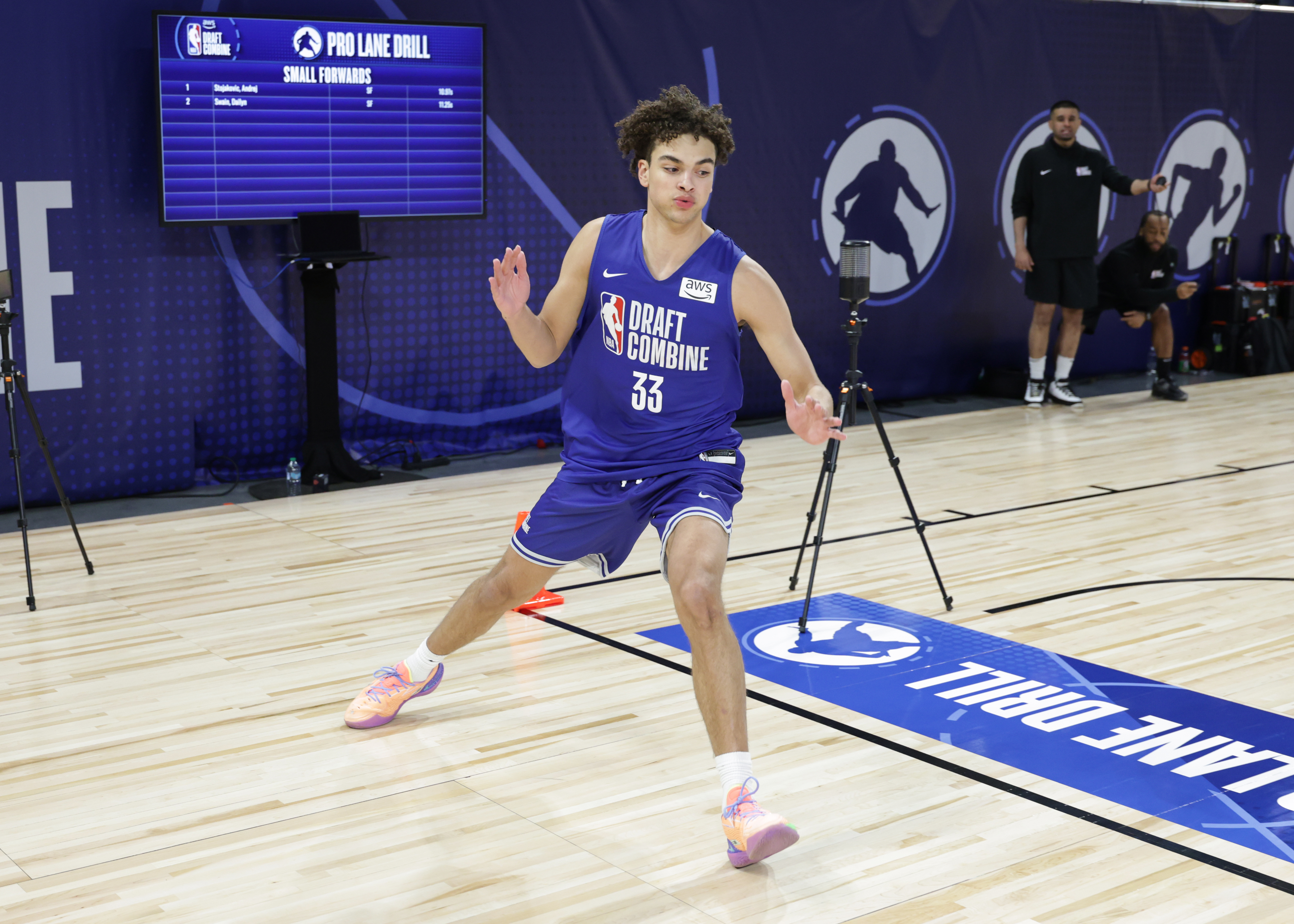
Flemings may have been the player who impressed me the most. He just completed a phenomenal freshman season with the Cougars, leading them to the Sweet Sixteen. But he was so appreciative of his time playing under Kelvin Sampson. “I’ve always wanted to play with a coach who pushed me,’’ Flemings said. “Every single day, it doesn’t matter if I wasn’t bringing it, he was going to be on me. He just saw the way I could hoop and saw what I did with the team and he trusted me with the ball in my hands. It’s great when you have a coach who trusts you like that.’’
Playing for Sampson is not easy. You’ve got to get through the summer grind and the preseason practices where defense rules, a bubble could be on the rim to work on rebounding and a demand to push you to your max. “Playing hard is a mental thing,’’ said Flemings. “It sounds easy but it’s really not. At the end of the day, no one wants to dive on every loose ball. No one wants to pick up full court one-on-one. No one wants to get that loose-ball rebound. No one really wants to do it, but the people that do want to do it, that’s how they separate themselves.
“A lot of people are talented, but when you don’t put the work in, and you aren’t consistently a hard worker on the court, some of the talent doesn’t really work. I’d rather get a guy that works super hard and isn’t as talented as someone that’s super talented.’’
Love that basketball analysis and from a player who just completed his freshman season!
All four will have an impact on whatever team drafts them.
Meet your guide