
CHICAGO – At one point between shooting drills Monday afternoon, Koa Peat looked up at the scoreboard over his head at DePaul’s Wintrust Arena to check out the stats from the first few groups at the NBA Draft Combine.
Peat watched the board cycle through several of the physical tests — where Peat performed well — before turning his attention back to the court. It was probably for the best, because the shooting stats came up next.
One of the most polarizing prospects in the draft, projected to go anywhere from the late lottery to the back of the first round, the Arizona forward’s performance shooting Monday may not have punched his ticket back to Tucson, but it didn’t help his cause. He finished eighth out of the eight forwards in his group in three shooting drills and seventh in the other. (UConn’s Alex Karaban was far and away the top performer, ahead of even some veteran college guards in later groups.)
Nevertheless, Peat refused to entertain any discussion of returning to Arizona, although he also refused to rule it out.
“Right now, I’m fully focused on the NBA Draft,” Peat said repeatedly Wednesday.
After taking only 20 three-pointers during his freshman year with the Wildcats, making seven, Peat shot about 25 percent from long range Monday. As concerning, his numbers weren’t any better in the midrange or off the dribble, where he’ll have to be capable of keeping defenders honest if his driving ability is going to be effective.
Hoops HQ spoke to NBA executives who said Peat’s shooting struggles were not at all unexpected, although he missed a chance to impress. Which leaves the biggest question about Peat, whose physical strength allowed him to bully college players and should serve him well in the NBA, unanswered: Can he shoot well enough to be a multiple threat at the next level right away?
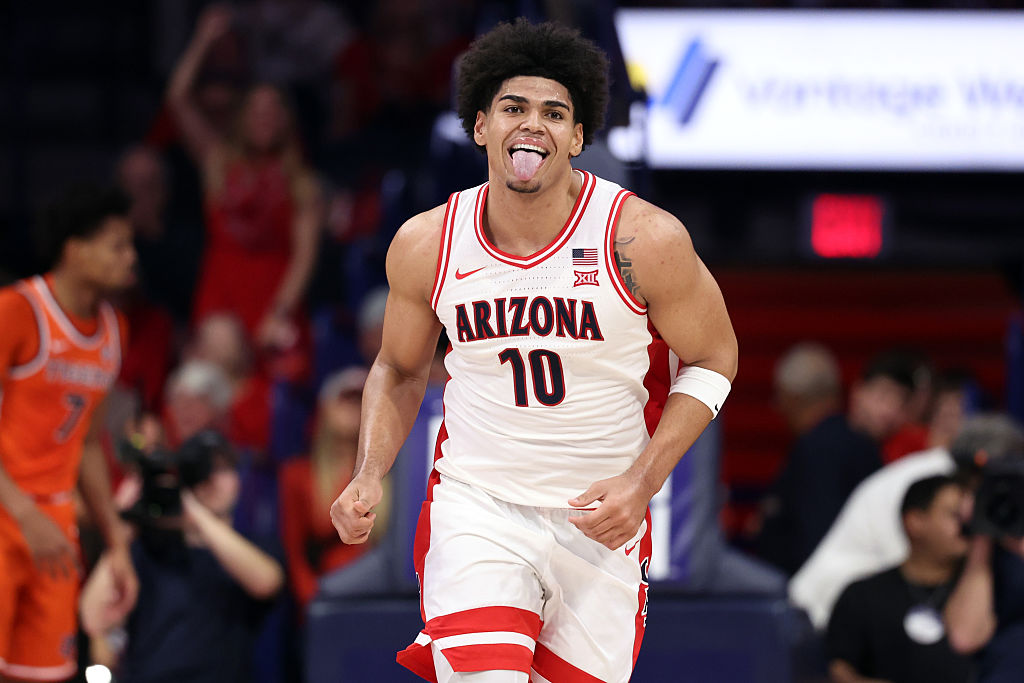
“I’m trying to get better at my strengths as well as my weaknesses,” Peat said. “Really working on my strengths like my midrange and my ballhandling, working on my conditioning as well. And working on my shot, my three-point shot, and just trying to get better at that.”
The postseason changes to his shooting form appear awkward at this point, with a hitch in his motion at chin height, a low release point and flat arc that will make it difficult to shoot over taller, athletic defenders. NBA teams are often willing to overlook bad mechanics when they produce good results — just as they’ll take a chance on good mechanics without the results to back them up from a young player — but Peat did little to allay concerns at the combine.
Hot Takes: Summer Recruiting, Dusty May, Eligibility and the 2027 NBA Draft
Seth Davis and Andy Katz discuss Dusty May’s jump to the NBA, the proposed 5-in-5 rule, the future of high school recruiting and more
In other respects, things went well for Peat on Monday. At 6-foot-7 barefoot and 245 pounds with a 6-11.25 wingspan and 8-foot-8 reach, his measurements were in line with what scouts were expecting. No surprises there. And he was the top performer among multiple groups in the standing vertical jump and three-quarter-court sprint, reflective of his raw strength and elite athleticism for his size. That may be attractive enough for a team in the first half to make the kind of guarantee that would keep him in the draft, regardless of what kind of NIL package Arizona can procure for him.
“I haven’t really thought about that that much,” Peat said. “Right now I’m just focused on getting better every day and focusing on my interviews with these teams and trying to have good workouts when I go out to them. I’m just trying to go as high as I can, work to show these teams that I’m capable of (being) a lottery pick. As a competitor, you feel like you’re in the same conversation as a lot of these guys. I’ve played against a lot of these guys. Any team that drafts me is going to get a gem.”
Still, Peat’s shooting performance may have been bad news for Peat but good news for Tommy Lloyd and Arizona. Should Peat return, he would be expected to improve on the 14.1 points and 5.6 rebounds he averaged as an impact freshman last season. Another year in college, where he can power his way to the rim seemingly at will, should give him the practice time to refine his shot, whether by improving his mechanics or getting the reps to make his current form more effective.
With Peat, Arizona would be a no-doubt title contender if not outright favorite, with Mo Krivas and Ivan Karchenkov returning up front to go with explosive freshman Caleb Holt, North Carolina transfer Derek Dixon and Washington transfer J.J. Mandequit at guard. If the stakes for the Wildcats are stratospheric, those for the landscape of college basketball only less so.
“He hasn’t given me any clues,” NBA-bound Arizona teammate Brayden Burries said Wednesday. “I can see him going to the league, where he belongs.”
Peat wasn’t the only player whose combine performance could impact next year’s top 25. Milan Momcilovic shot well Monday but perhaps not well enough to gamble on the draft; the former Iowa State stretch-four is currently in the transfer portal, the kind of potential late addition who could dramatically change a contender’s prognosis.
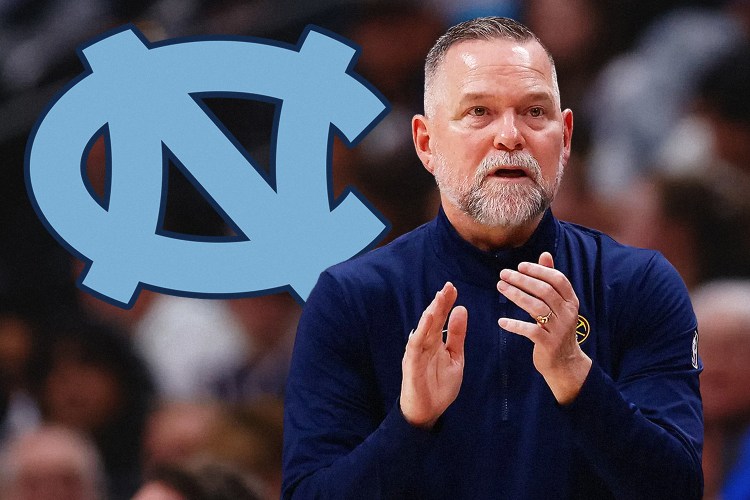
Dusty May watched Michigan’s Morez Johnson Jr. perform well, which could push him toward the draft. Alabama’s Amari Allen measured only 6-foot-5.5, which could push him back toward college. And new North Carolina coach Michael Malone desperately needs guard Matt Able to follow through on his transfer from NC State despite playing well in the five-on-five scrimmages, among others with decisions to make.
Of all the potential returns, though, no one has a higher profile than Peat and no one has more riding on their decision. In an era when a top college player can make more in NIL deals than he can at the back of the first round, Peat might be more likely to follow the money back to Arizona than he was entering the week. The Wildcats certainly hope so.
Meet your guide