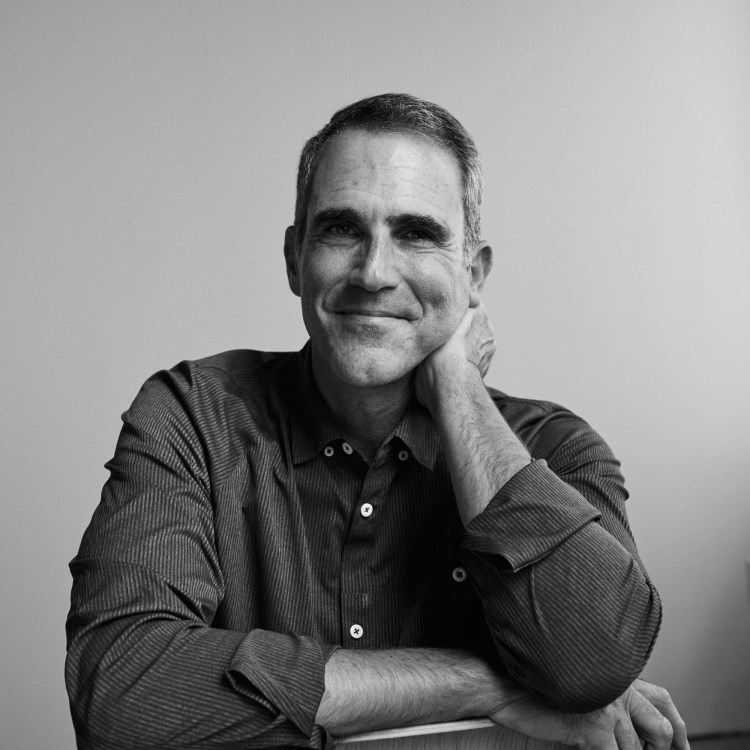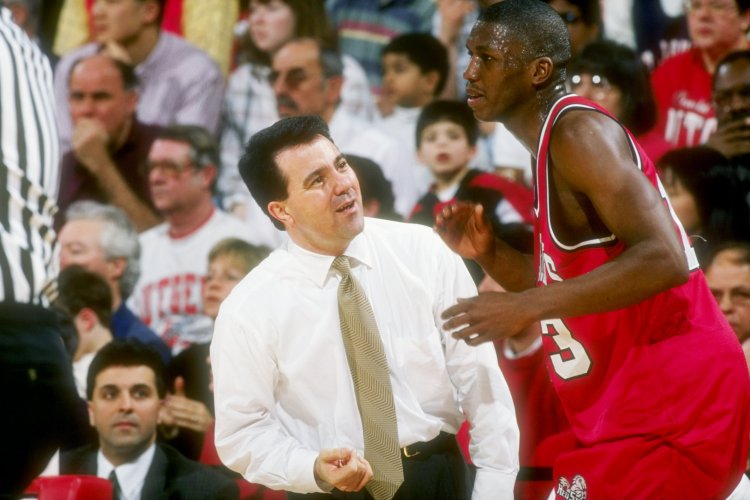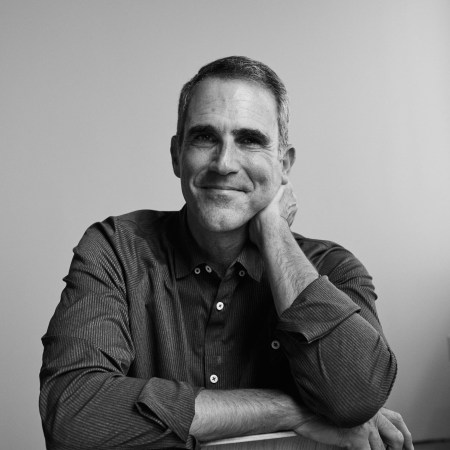

Vanderbilt head coach Mark Byington joined Seth and Andy on The Hoops HQ Show. Stream the full episode on YouTube or live on the Fubo Sports Network.
Seth Davis: Hello, everybody, and welcome to the Hoops HQ Show. Very pleased to be joined today by the head coach of the Vanderbilt Commodores, Mr. Mark Byington. Mark, thanks for taking some time to join us today. You’re off to a terrific 4-0 start, which includes really dominant wins over Wake Forest and Memphis — and that’s a Memphis team that beat a really good Iowa State team. So you guys are not only undefeated, you’re looking mighty impressive.
Give us a sense of just how good this Vanderbilt team really is.
Mark Byington: We’re a work in progress. I don’t sit here and say we’re doing everything great. We’re one of the youngest teams in the country. And this is funny: I talked to (John Calipari) last week — I was at Arkansas, and we were talking about something else — and I said, “You know, we’re the second-youngest Power Five team in the country, behind you.” He said, “Are you really?” And I said, “Yeah, your average age is 19.42. We’re 19.48.” And he goes, “You’re way older than us.” And I was like, “Cal, you know — math. How’s that work?”
But with that being said, we’re going to get good. We’re not there right now. We’re going to keep growing and keep getting better. We’ve got some growing pains, but we’ve been going through them and winning. Hopefully we keep doing it that way.
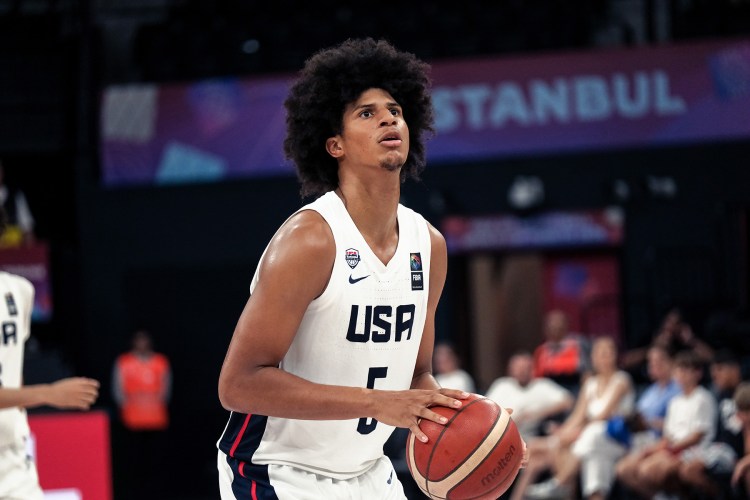
Andy Katz: So, Mark, I was at the Maui Invitational last year, and I remember when Ace Glass dropped 40 (for Washington State), and David Riley was walking off, and we were chatting. He was like, “Yeah, I don’t know if I can hold on to him.” Sure enough, gone. And he lands with you, and now he’s leading you in scoring. He’s like a perfect fit next to Tyler Tanner. Then I think about Berke Büyüktuncel — how’s my pronunciation?
Byington: You’re doing it way better than I could. I just call him BK.
Andy: Pretty impressive what he did for Nebraska. You had a great run last year, losing to them, so you saw him firsthand at the buzzer there. It’s early, but it clearly looks like that roster move is working.
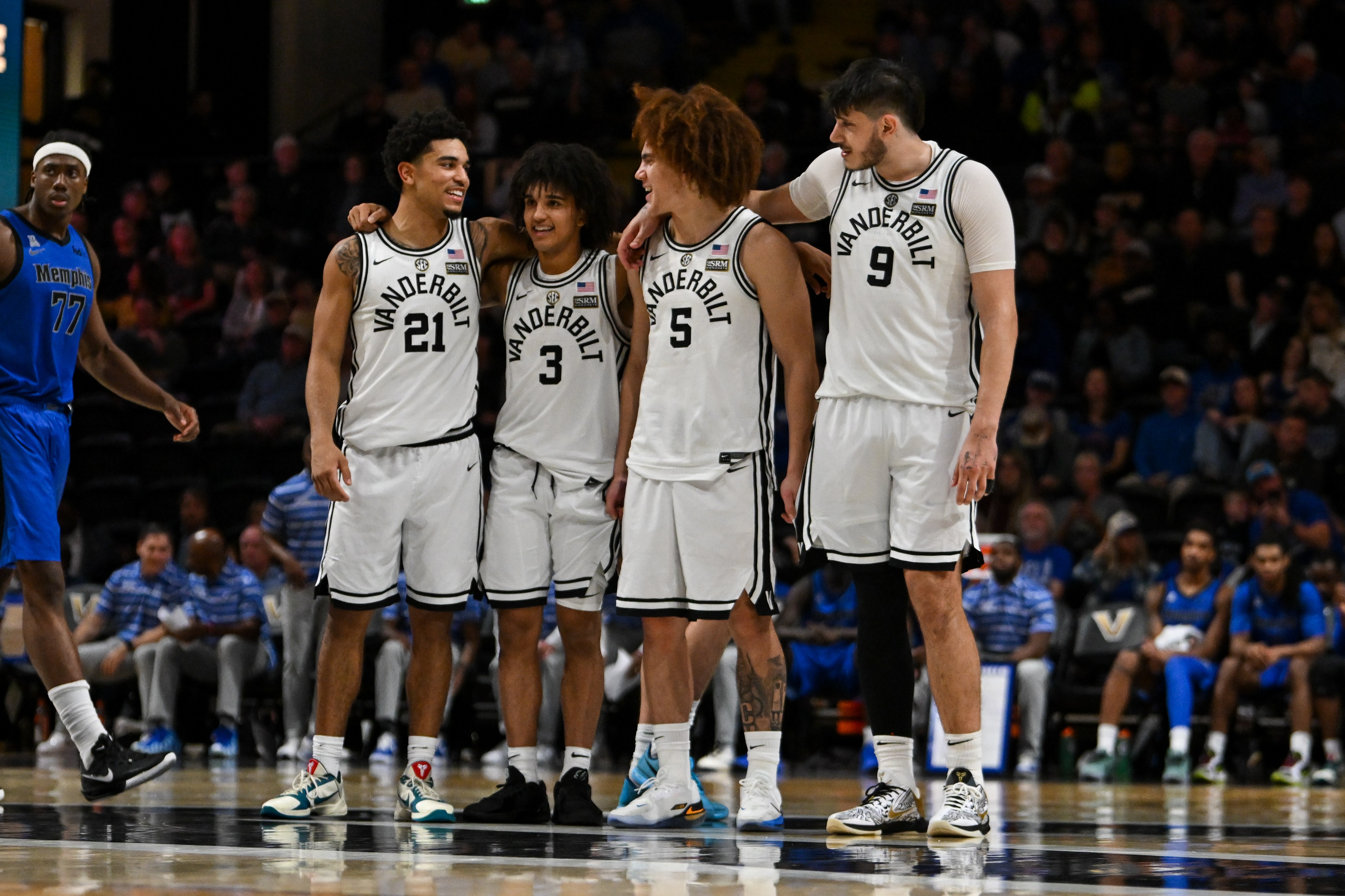
How do you guys work the portal to find the right guys and the right fit? What were you trying to do this offseason?
Byington: Well, what you don’t want is a complete overhaul. But it just happened. We had a bunch of fifth-year or fourth-year guys that we thought were done, so we thought those guys were out the door. You want more retention because it just makes everything easier — your practices, your culture, everything. But we didn’t think we had that option.
We try to find guys that fit. I remember my staff and I were watching video of Ace Glass on Synergy, and I was like, “Oh, he’s my type of guard.” And then I was like, “We’ve got a chance.” And they said everybody in his corner — whether it was his agent, the Washington State coaches or everybody else around him — thought this was the best fit for him: “I watch Vanderbilt. This is the way you fit the way they play.” So he kind of recruited himself.
Then there were other guys we picked up along the way. T.O. Barrett is coming back from a hamstring injury. We saw him firsthand. We knew he was good.
Then Sebastian Williams-Adams was at Auburn. We tried like crazy to get him out of high school. I thought we had him, and then we missed him. And Bruce Pearl is obviously pretty good at recruiting, so he convinced him to go to Auburn and we got him on the rebound. There have been a couple of other guys like that. Sometimes you miss the first time and get him the second time.
But I still swear retention is the best way to do it. Now we’re hoping some of these guys will be with us in year two, year three, because I always see guys have a surge in their second or third year in our program. You don’t want it to be one-and-done, and then they’re going somewhere else.
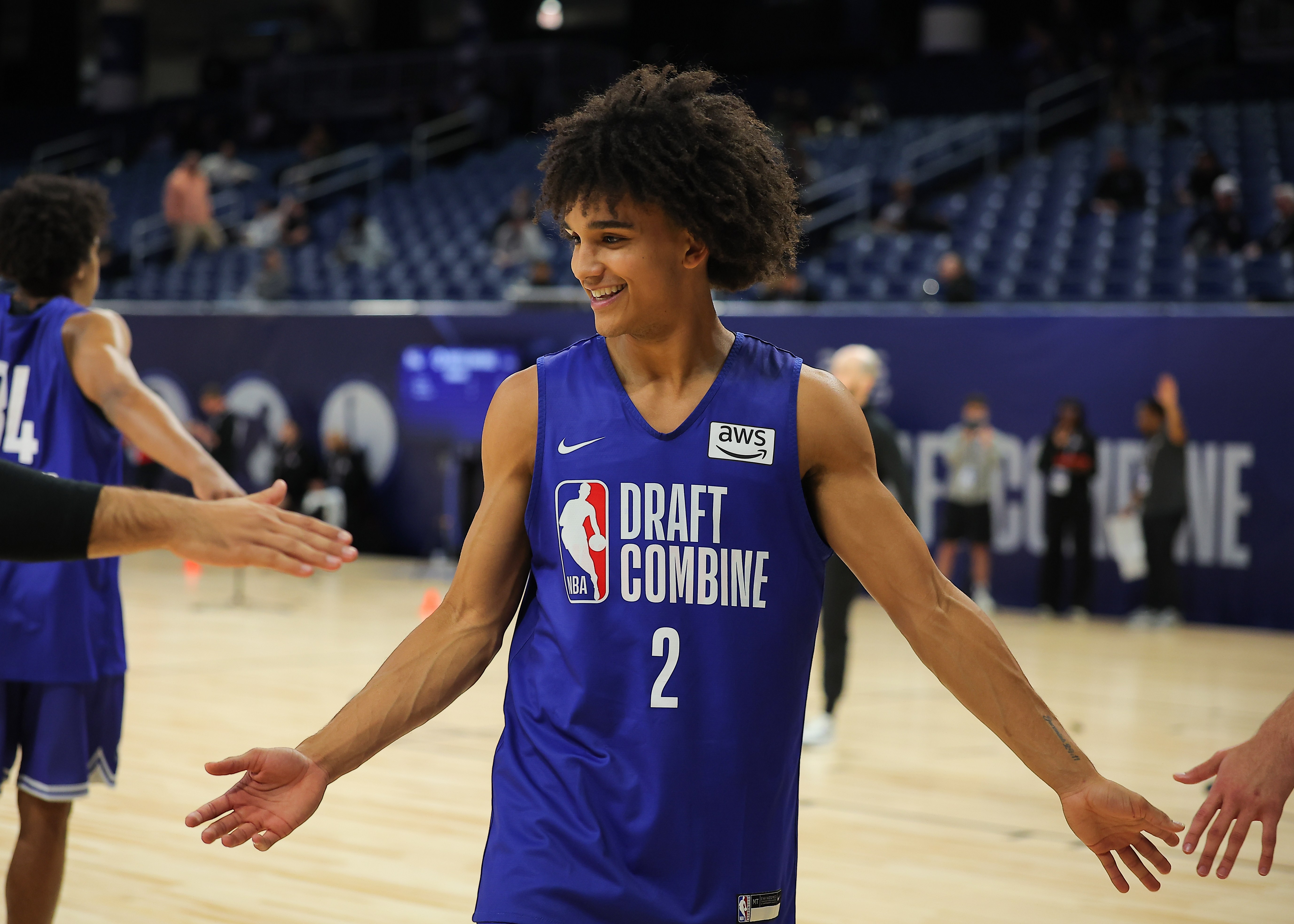
Andy: Can I follow up real quick? I was with Tyler Tanner in Chicago during the NBA Draft Combine, and I remember talking to him about going back or staying in. Usually if you’re there, you want to stay in. And I know there’s good money in college now, better than you’d make in the second round or overseas. But he clearly wanted to be in the NBA.
Once he made that decision, how did you know he was two feet in, back at Vandy?
Byington: Because he’s that way in every part of his life — whether he’s with his family, with his team, or whatever he’s doing. He got good feedback, and he was all-in on going to the NBA. By the time he got the feedback, there were a couple of teams that said, “Hey, we’re thinking about taking you. We’re close to taking you.” There were just no guarantees. And he’s young. He’s not one of these older guys who reclassed in high school a bunch of times. He just had a great year for us as a sophomore.
He knew what it was going to look like coming back. He was involved in our recruiting of the guys we were bringing in. We were asking him, “What do you think of him? Give us what you think.” But that was never him guaranteeing he was coming back. He’s meant so much to us that he deserves to give feedback and have input. At the same time, we’re still trying to push more on him right now as a junior, whether it’s leadership or everything else, because that’s part of his evolution and the next step in him getting better.
Seth: Well, I’d actually go further back with you, Mark, to when you took the job. Tyler Tanner had committed to Jerry Stackhouse. In those situations, if he wants to open up his recruitment or you want him to open up his recruitment, he could. As the story goes, you were not convinced he could be an SEC player — an SEC point guard — much less what he is now, which is arguably the best point guard in the country.
What did you not see in Tyler Tanner initially that you know now?
Byington: Well, you can’t see his competitive nature. And you can’t really see his instincts and how he sees the game. You look at him when you first meet him, and you’re like, “There’s no way this guy’s a good player.” He’s too well-mannered, too nice, too thoughtful, too genuine. You can’t be that and then be a killer on the court. And he is.
So I really didn’t know what we had. All the things you said, Seth, were true. If he had walked in and said, “Listen, I’m going somewhere else,” we wouldn’t have been worried about it, because we were trying to turn the whole thing around at Vanderbilt, and we didn’t know if he could play or not. Even my staff was like, “Hey, we think he’s good,” but nobody was banging on the door saying this guy is going to be an all-conference player.
But I’ll tell you, we knew pretty quick. We were in the summer sessions his freshman year, and he was going up against fifth-year point guards. He was going up against AJ Hoggard, who came from Michigan State, and there were a lot of days he was outplaying him — a young freshman against a fifth-year guy. So we knew he had something there.
The other thing is, he’s hungry to get better. Sometimes you don’t know that when you meet somebody. Some guys are happy; they’re content. He’s got a drive to get better, every single day. And I just think — first-team all-conference, preseason All-American — that’s not even going to stop him.
Andy: Duke is on its own level in terms of being consistently good as a high-academic school in a power league. Northwestern obviously had some moments recently with Chris Collins. Stanford with Mike Montgomery — it’s been hard to sustain. Vanderbilt had a little blip with Eddie Fogler and Kevin Stallings — hard to sustain. You had a team last year that certainly could have gone to the Final Four, and you’ve got another one that could go to the Final Four.
What has you believing that Vanderbilt, as one of the best academic schools in the country, can be one of those schools that matches high academics with high-achieving men’s basketball?
Byington: You know, it’s funny. When you’re a coach at a mid-major — when I was at Georgia Southern or JMU — you’re sitting there saying, “Hey, we could be the next Gonzaga.” I bet every coach in the country has said that. Or even the AD says, “We’re going to be the next Gonzaga,” and then they’ll try to fire you if you’re not. But they don’t understand everything that goes into making something great.
There’s something that makes these schools great, like Duke and their consistency. They’ve obviously got tradition. They didn’t have tradition before Mike (Krzyzewski), but they had to start somewhere. They had a culture. They had a belief. There was a commitment. And we have that here. Chancellor Diermeier is all in on athletics. He understands the importance of it. And our athletics director, Candice Storey Lee, is phenomenal. She’s a visionary. She supports it, and she understands it.
When I was looking at different jobs coming from JMU, I had to believe in where I was going. I didn’t want to go to a place that couldn’t win. I know I wouldn’t be happy. I want to be in a place where we have a chance to win and be successful. And within minutes of talking to her, I was like, “All right, she is all in. She wants to win.” And she actually had a plan to win. A lot of people can talk about that, but they have no idea what to do next. So it went step by step, and now we’re here, and we’re building it.
We’ve got to build tradition, like you said. Fogler had some good teams. Kevin Stallings had some great teams. There have been some pros here. Even Bryce Drew had pros, and some injuries and things like that. There have been some glitches. But here’s what I say to anybody who says that being at a great academic place is going to hinder your basketball success: “Why?” I’m going to find people who want to be great at everything. I want you to be great off the court. I want you to be great academically. I want you to be great professionally. I want you to be a great boss. I think those things transfer from one side to another.
So there are men out there — and women, if you look at a women’s team — who fit this niche. And with all the chaos going on in college sports right now, if you’ve got commitment from your administration, you’ve got a chance to win right now. You’ve just got to do it right and do everything right. And I have that on my side, big-time.
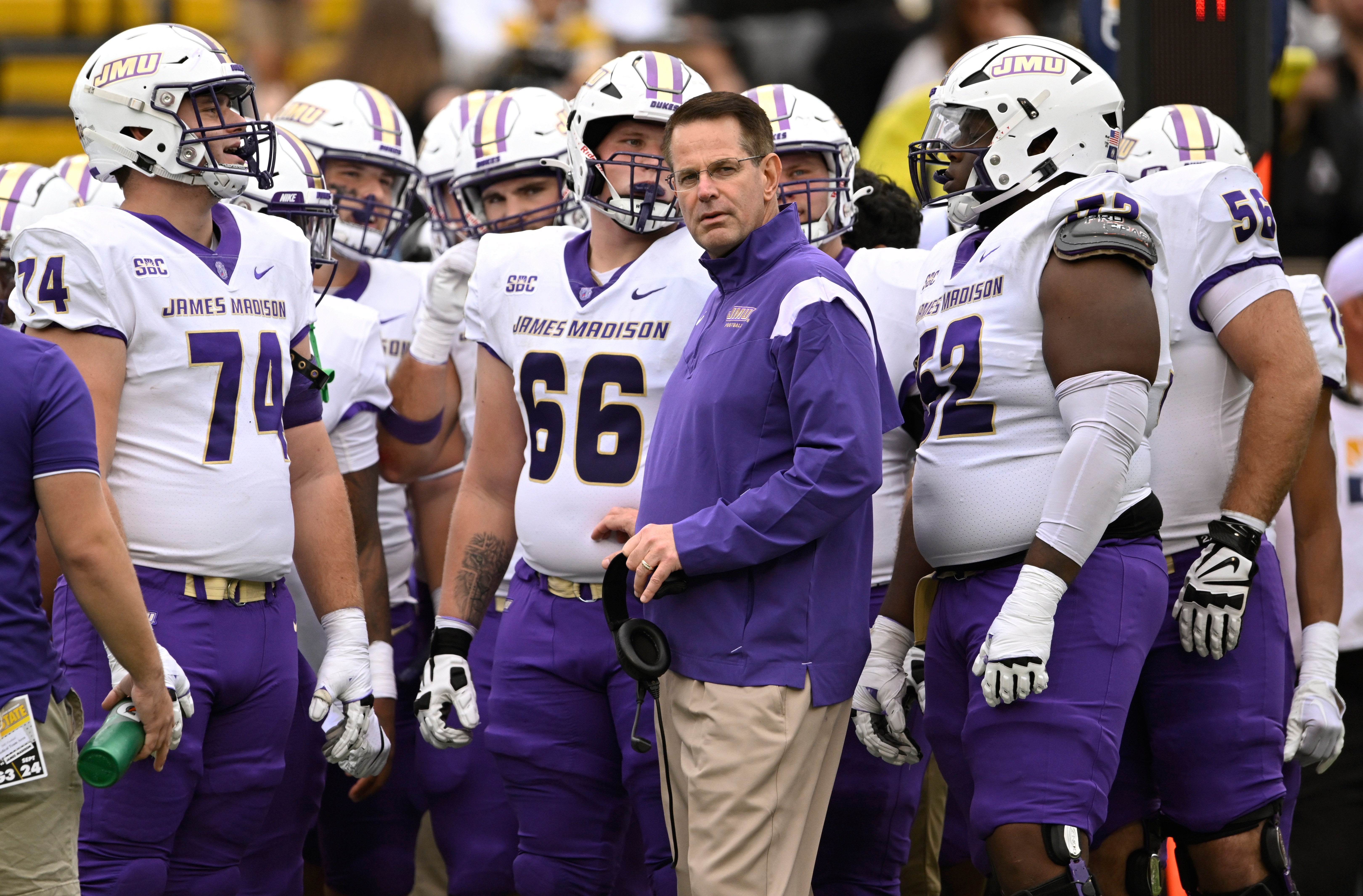
Seth: I think maybe the key to hiring a successful coach in big-time athletics is hiring someone who was at James Madison — particularly someone who was hired by Jeff Bourne at James Madison. There’s yourself, of course. You were there at the same time as Curt Cignetti. And then Bob Chesney, who’s now at UCLA.
Tell me about Curt Cignetti. How much did you see in him at JMU? Give us some insight into what makes him great.
Byington: Well, in modern athletics, when you’re a head coach, you’ve got to be a CEO and run an entire company. And if you’re around Curt Cignetti, that’s what he does best. He runs the assistant coaches, he runs the program, he runs recruiting, he runs all of it. He’s hands-on when he needs to be hands-on, and he also has good people around him.
We had to do these speaking tours when we were at JMU. We’d get in the back of a Sprinter van and go somewhere for two weeks — Virginia Beach, Richmond, D.C., running all around. We’d sit in the back of the Sprinter van and talk and bounce things off each other. The better communication came when we finished the speaking engagement, had some beers afterward and had some really good talks.
But to do what he’s done — nobody would have predicted that except Curt Cignetti. He actually predicted it. He knew what was going to happen. All the signs were there. He’s phenomenal at running a program. He has a vision. He has a belief in what he’s doing. I learned a lot from him. We bounced ideas off him, and just the way he did everything — it was really cool. At one point at JMU, we were both in the Top 25 as a Sun Belt school. College GameDay was there. We beat Michigan State. There were all these cool things going on, a good surge of synergy there.
Seth: You brought in a very important new recruit this year and that’s your son, Chase. Obviously, you had to convince Mom to let him come. I’m always interested in the father-son dynamic. First of all, his decision to come to Vanderbilt frankly speaks very well of you and his love for you. But it can get complicated. He’s kind of at the end of the bench, so in some ways that makes it easier. I don’t know if his mom is trying to convince you he needs to play more.
But what I’m especially interested in is watching him, because you’ve talked about how nervous you were when he was in high school. And yet, as a sports dad, you sat in the bleachers and didn’t say a word. I’m a sports dad, too, and I don’t hear a lot of silence from my fellow dads. And you actually know what you’re talking about. Yet you took the attitude that you wanted to stay silent during Chase’s games.
You took the attitude that you wanted to stay silent during Chase’s games. How hard was that for you, and why did you take that position?
Byington: Well, I kind of understand what it’s like being a coach, when there are people barking behind you. He was in high school in Virginia before this, and he goes, “Man, when you’re at the games, I’m nervous.” And I was like, “Well, I don’t want it to be that way.” I’m there to support my son. I’m there to be a father. I’m there to guide him. My job is not to coach the coach or second-guess him. My job is to be a father, and I always want to be part of his journey.
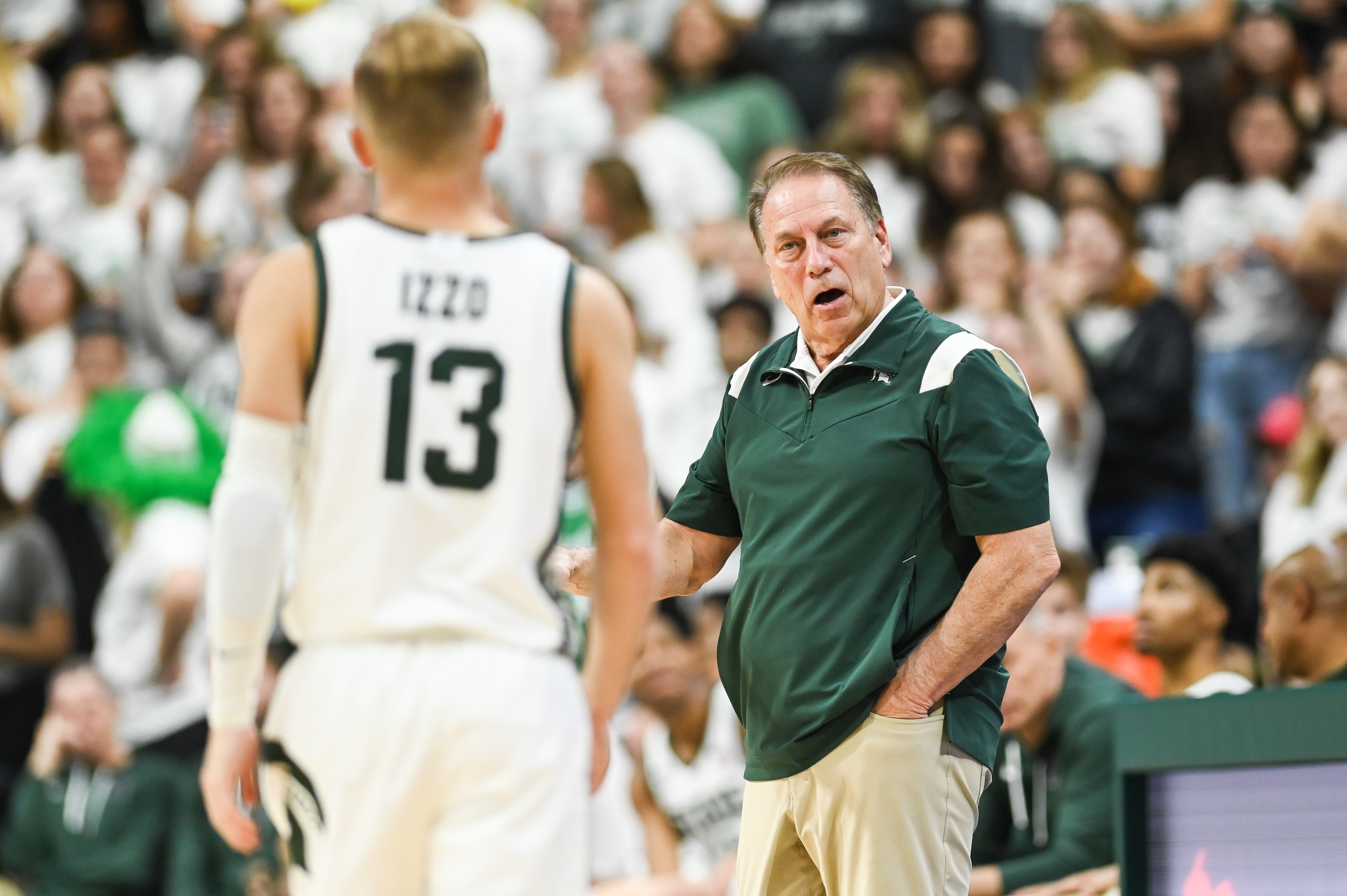
I talked to other head coaches about coaching their sons before we talked about this opportunity. Tom Izzo, I thought, was great. We were at a recruiting event together, and I said, “What was it like coaching your son?” I could see his eyes watering up, and he goes, “It was one of the best experiences of my life.” And I got another piece of advice from another coach, who said it’s easier to coach your son if he’s one of two things: He’s either the best player, or he’s clearly not taking anybody else’s playing time.
So my son’s on the other side of that. He’s not taking anybody’s playing time. But my son gets this. He’s been traveling with me. He’s been in all these different states. He moved around. He’s never had stability as far as being in one place. So I need him as much as he needs me. At the same time, he gets his role. He understands: “I’m making everybody else better. It’s not about me.” So he’s got a selfless role, and it’s not easy. We had practice two days ago and he was on defense for two straight hours. He had to guard Chandler Bing, who bench-presses 320 pounds. That’s not an easy task every day. But he embraces it. He gets up and loves doing it. And I love having him around.
Andy: Who are your mentors?
Byington: There are guys I’ve always just watched from afar, and then I meet them. But Bobby Cremins was big — being around him and watching the way he treats people. It’s not the same as every head coach. And he gave me so much room to grow. I would not be here without him. Jerry Wainwright, my college coach — I still talk to him once a week or maybe more. He was like a second father to me, and very influential in my life.
And then I’ve always watched guys and thought, “I want to be like him.” I remember before I was a head coach, I would watch Brad Stevens and think, “I want to be like that. Look how cool and calm and confident he is.” To do what he did at Butler — one of the great runs, getting them there and almost winning a national championship — I was sitting around going, “Wow, that guy’s good.” And then you meet Brad and talk to him, and you probably like him even more than when you were just watching him as a coach.
But there are a number of them. I’m a big stealer — not the Pittsburgh Steelers. I’m a Dallas Cowboys fan. I steal information. I steal stuff from everybody I can and I’ll ask questions. I’ve got a group of people around me that I’m always going to. Today I wrote down something we’re struggling with, and I was like, “Call this person and call this person.” So tonight when I get on the phone, I’m going to call them and say, “Help me with this, help me with that.” Because I realize I don’t know everything. I love to learn. And if you ask questions, a lot of people will help you.
Andy: Hey, one quick thing — our audience may not know this as well as we do. I always thought Cremins was someone who thoroughly enjoyed his job. Maybe he was stressed behind the scenes, but I had some dealings with him, and more from watching him, he always seemed like he was just enjoying it.
Pull back the curtain a little. For those who didn’t know Bobby Cremins at Georgia Tech or Charleston, what are they missing?
Byington: Well, he’s the best to be around every single day, because it’s always comedy — sometimes unintentional, sometimes intentional. I’ve always told him, if you would let everybody else tell stories about you and put them in a book, I guarantee you’d be a New York Times bestseller. It would be an incredible book.
And then it’s the connections he puts you through. He just treats people the right way. A lot of coaches need to intimidate players to get them to play hard for them. He had a style I haven’t seen many times: He cared about the players so much, and they knew it, that they didn’t want to disappoint him. He wasn’t yelling at them. He wasn’t cussing at them. He wasn’t doing that. They didn’t want to let him down, and they played really hard for him. He’s very underrated. What he did at Georgia Tech was phenomenal, building it from where it was with the players he had. He’s one of the best coaches and recruiters I think we’ve had in college basketball.
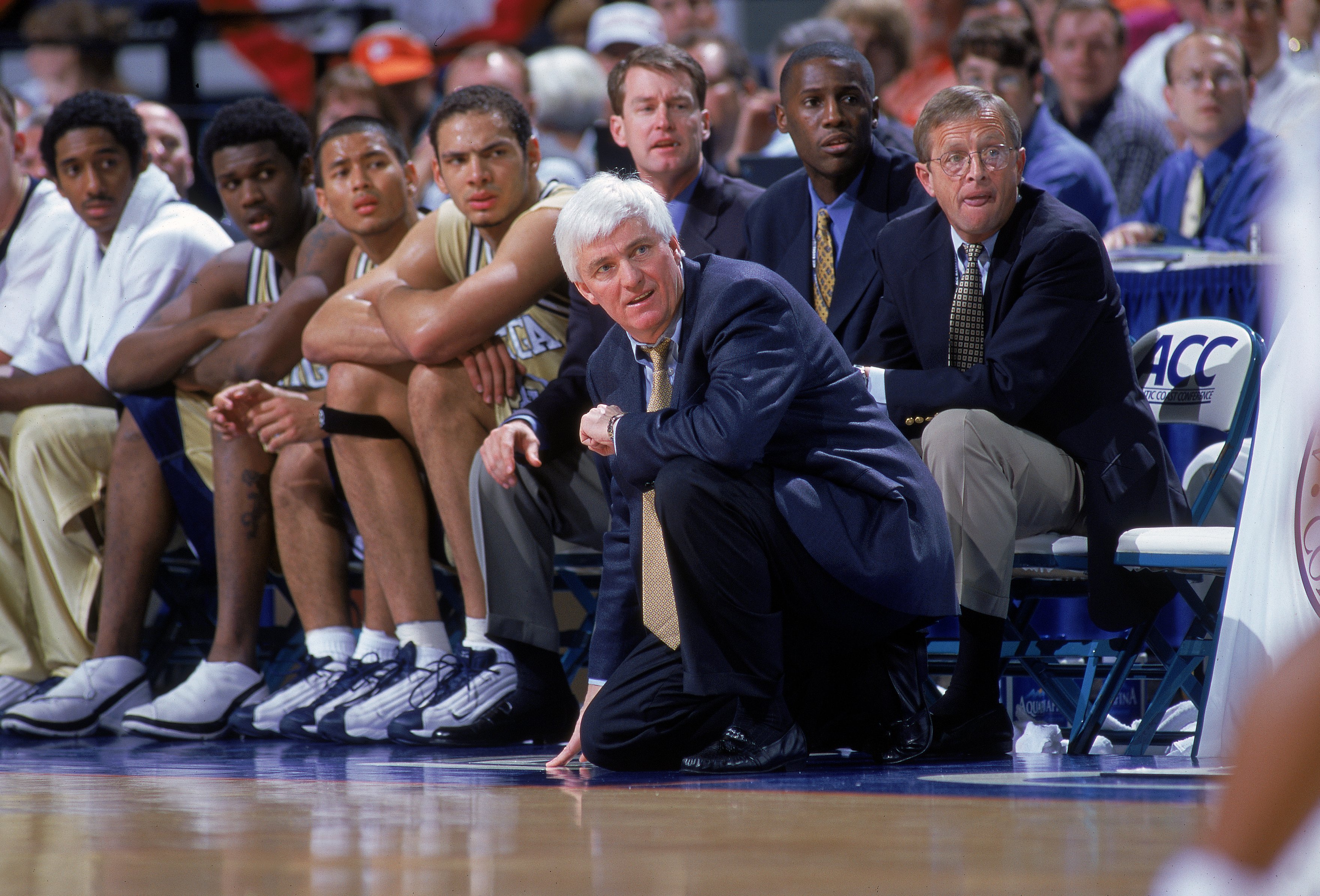
Seth: That was, of course, the Lethal Weapon 3 team with Dennis Scott, Kenny Anderson and Brian Oliver. And if memory serves, the night they won their Elite Eight game and went back home to Atlanta, they went over to his house and toilet-papered his front yard.
Just the fact that they had that relationship with him. And Bobby was probably the most well-liked coach by other coaches, which is often not the case. So I’m glad we were able to educate our young people about Bobby Cremins.
The Hoops HQ Shot Clock Challenge
Seth: All right, now we come to the big highlight of the show. We’re going to put 60 seconds on the clock and run you through a speed round.
Andy: Okay, here we go: Baseline or sideline coaching position — which is better?
Byington: I love the baseline, because it intimidates the other coaches.
Andy: Purple and white or black and gold?
Byington: I love the black and gold. I’m not a big gold fan, but the black is intimidating. I like black.
Andy: Tyler Tanner’s shot — did you think it was going in?
Byington: Yes. I wish he’d taken one more dribble. But when it left his hand, I was like, “It’s lined up.”
Andy: Oklahoma City (vs. Nebraska) — I was there to witness it. Was that the best atmosphere for an NCAA Tournament game you’ve ever seen, even though you were the visitors?
Byington: My Apple Watch gave three warnings that the decibels were too loud. That’s how loud the place was.
Andy: Best thing about the city of Nashville?
Byington: The food. I know everybody’s going to say different things, but it’s a great food city.
Seth: All right, good. Pretty good. You did it in 60.
Well, Mark, listen, I really appreciate you joining the show. It’s been really fun. Vanderbilt has been down for a long time, so to see the energy you’re bringing there, the way you guys play, and watching a guy like Tyler Tanner do his thing — it’s a lot of fun. Keep it rolling, and thanks for joining us on The Hoops HQ Show. Best of luck to you.
Byington: Yeah, I appreciate you guys having me. And I don’t want to leave without saying this: Thank you for everything both of you do for college basketball. It’s important, and it does not go unnoticed. Thank you so much for what you guys do.
Meet your guides