At 23, Duke Miles is one of Vanderbilt’s elder statesmen, a fact his teammates won’t let him forget. Many refer to him as “Unc” — short for uncle, but more importantly for the purpose of their good-natured needling, it rhymes with dunk. As in Unc can’t dunk.
On Dec. 3, early in the first half of an SEC/ACC Challenge game against SMU, Miles, a 6-foot-2 graduate student, showed those whippersnappers a thing or two. When the Commodores’ 6-foot-7 senior forward Tyler Nickel stole an errant pass, Miles sprinted from the Mustangs’ free-throw line and Nickel tossed the ball ahead. Miles caught it just past midcourt. After a single dribble, Miles rose and rammed home a two-handed dunk, then swung on the rim for a second or two, perhaps for a bit more emphasis.
Well, what do you know? Unc can dunk.
“A lot of people on our team and our fans didn’t exactly know he could,” 6-foot sophomore guard Tyler Tanner tells Hoops HQ, laughing at the recollection. “That was an exciting — and surprising — play.”
Perhaps it was surprising for some, but not for Miles.
“That was really the first breakaway I had all year,” Miles says. “As I was sprinting down the court, I thought, ‘I’m going to give them something to talk about.’ When I did it, everybody was surprised. But I’ve got all kinds of tricks — reverse, windmill, all that stuff. I just choose not to do it.”
That dunk was a microcosm of De’Marquiese “Duke” Miles’ college basketball journey. This dude has traveled around so much he makes Marco Polo look like a shut-in. Since his career began in the COVID-marred 2020-21 season, Miles has played for or been committed to seven schools. Starting last April, just before he entered the NCAA transfer portal after a season at Oklahoma, until his sojourn finally ended after signing with Vanderbilt in mid-May, he technically was on the roster of four teams.
One might look at Miles’ itinerary and assume he’s a basketball mercenary in search of the biggest payday he could get. But that would be wrong, for two reasons. First, Miles’ career began before the NCAA allowed athletes to be compensated for NIL. And second, though Miles obviously wasn’t going to refuse an NIL windfall, his motivation for moving around so much wasn’t money. He wanted to prove to others what he already knew — that he can play the college game at its highest level. He just needed to find a place that would give him a leading-man role.
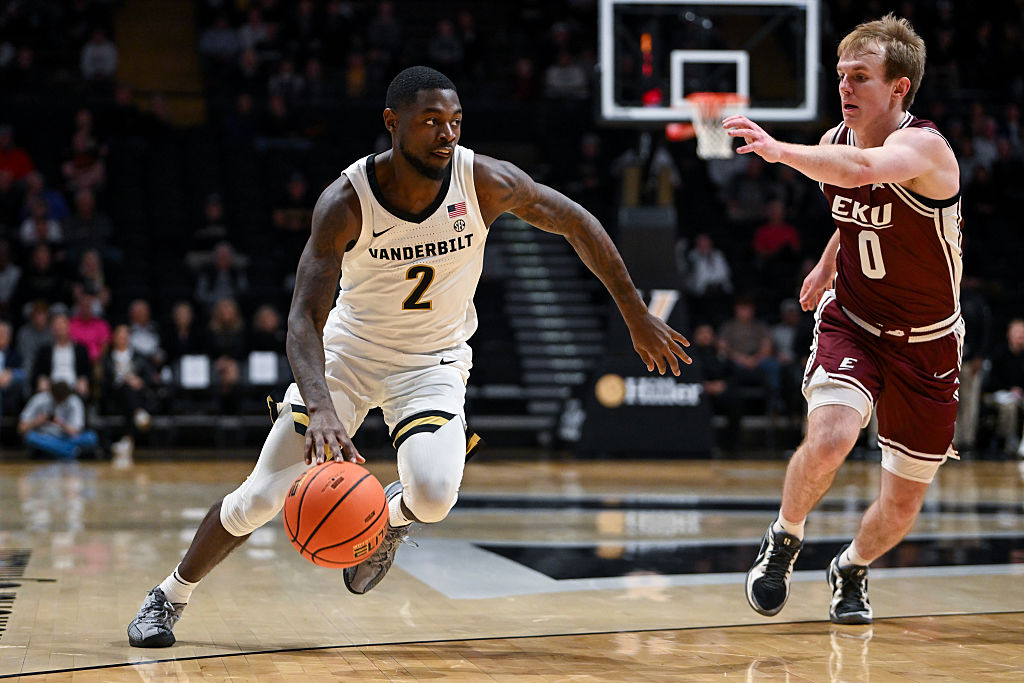
For Miles, validation — including that dunk against SMU — has at last come in the final season of his college hoops odyssey. He’s leading a 10-0 Vanderbilt team that’s ranked No. 7 in the NCAA’s NET rankings, No. 11 in advanced metric guru Ken Pomeroy’s ratings, 12th in the coaches’ Top 25 and 13th in The Associated Press poll. On a balanced team with four double-figure scorers, four others averaging between eight and nine points and four players averaging at least 4.2 assists — only 26 teams in the college basketball history can make that latter claim — Miles is the top scorer (16.6 points per game), tied for the team lead with Tanner in steals (23) and second in assists (42). His shooting percentages are solid across the board — 49.5 from the field, 60.0 from two, 37.5 from three and 83.6 from the free-throw line.
Vanderbilt’s coaches and players knew what they had in Miles well before the Battle 4 Atlantis tournament that was played during Thanksgiving week. After Miles scored 28 points against Western Kentucky, 20 against VCU and 25 against Saint Mary’s as the Commodores claimed the championship, the rest of the country began to catch on. His 73 points were a tournament record, and he was an easy choice for tournament MVP. Last season, Oklahoma also won the Battle 4 Atlantis, giving Vanderbilt’s quick-with-a-quip radio play-by-play announcer Kevin Ingram a perfect idea for a new nickname for Miles — “The Duke of Atlantis.”
“What he did in the Bahamas wasn’t anything surprising,” Vanderbilt coach Mark Byington told Hoops HQ. “He had played at a really high level against Virginia in an exhibition game, and in another exhibition against UAB he did the same thing. He’s not an elite athlete, but he knows how to compensate for that. There’s a lot of nuance to his game. He knows who he is. A lot of guys are trying to be what they’re not.”
The Journey Begins
Miles grew up in Montgomery, Ala., and wanted to play for Auburn. He shared that dream with his grandmother. She was a lifelong Tigers fan who played an unusually vital role in her grandson’s development in basketball — which he began playing at age three — taking him to practices, encouraging him to do his best, telling him to never give up. When Miles was in the third grade, he told his father he wanted to get serious about the game. Fortunately for the youngster, Marcus Miles knew exactly what to do. He enrolled his son in history class.
“At first, we didn’t do any dribbling or shooting,” Duke Miles says. “The first thing my dad taught me was to study the game, to know its history and learn the fundamentals of basketball from the best players.”
Miles went as far back as Steve Nash to learn the art of passing. From Kyrie Irving, Miles learned how to finish at the rim with either hand. Jalen Brunson’s shot fakes were incorporated into Miles’ arsenal. There were many other influences and more cribbed signature moves, giving Miles a Frankenstein concoction of a game that would serve him well.
By the time Miles entered Montgomery’s Robert E. Lee High, he was ready to roll. He helped lead the Generals to a 112-17 record in his four seasons and to the Alabama 7A state championship in 2019-20. Miles hoped his high school success would lead to a scholarship offer, and he remembers receiving about 18 of them, from junior colleges, Division II schools and some mid-major Division I programs. But Auburn wasn’t among them.
Miles eventually chose North Alabama because during the pandemic, it was the only school he could visit. But he later decided it was too far from home – UNA’s campus in Florence is about 205 miles from Montgomery – and reopened his recruitment. He then chose Troy — about 50 miles from Montgomery — because it was rebuilding under then-second-year coach Scott Cross and had recruited a large class of freshmen. Miles thought he had a chance to thrive, and he did. As a freshman in 2020-21, Miles started 20 of 26 games and averaged 8.6 points, 2.9 rebounds, 3.6 assists and 1.7 steals.
“Once we had the opportunity to coach him, it was easy to see how easy the game came to him,” Cross says. “He picked things up quicker than just about any player that I have ever coached. We were running a pick-and-roll offense at the time, and he picked up every pick-and-roll progression and read, and he would slice up defenses. He also had cat-quick hands and was one of the best steal guys in all of college hoops.”
Injuries marred the rest of Miles’ two seasons at Troy. During an offseason team bonding session — a seemingly risk-free kickball game — he bent back both his big toes sliding into a base. Midway through his sophomore season, he suffered a concussion that limited him to 17 games. Yet another concussion forced him to redshirt in 2022-23. A doctor told him he should never play basketball again, but he wasn’t about to give up the game he’d loved since he was 3. Miles sought a second opinion, and this time got the news he wanted. He was back in the game, only not at Troy.
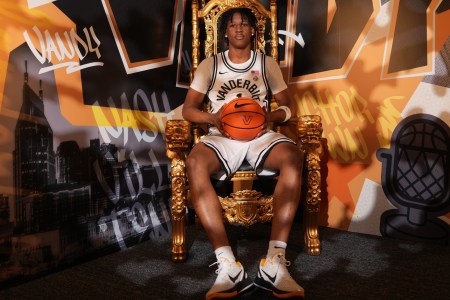
Vanderbilt Scores Another Big Win As Gabe Nesmith Commits
The dynamic wing is one of the highest-ranked prospects to commit to the Commodores in the modern recruiting era
Becoming the Man
In the spring of 2023, Miles entered the transfer portal with the full blessing of the Troy coaching staff. Coincidentally, a Troy connection led him to his next stop. Alan Huss, then in his first year as coach at High Point, needed to build an entire roster. He had come from Greg McDermott’s staff at Creighton, which advanced to the NCAA Tournament’s Elite Eight. By the time Huss could get to High Point, hire a staff and start recruiting, he was in a time crunch.
“Pretty much everybody we could contact had warts (issues),” Huss says. “Duke’s was his injury history, which was a little scary unless you’re trying to field a team of 13 players.”
Miles’ first point of contact from High Point was assistant coach Flynn Clayman, who had played at Troy and, like Miles, endured his share of injuries. After Miles met Clayman, there was no question where he was headed next.
“Coach Flynn told me, ‘You’re just a guy that needs a second chance,’” Miles says. “‘We want to put the ball in your hands and show the world.’ So, I took a leap on High Point, not even knowing where it was. It turned out to be one of the most beautiful experiences I ever had.”
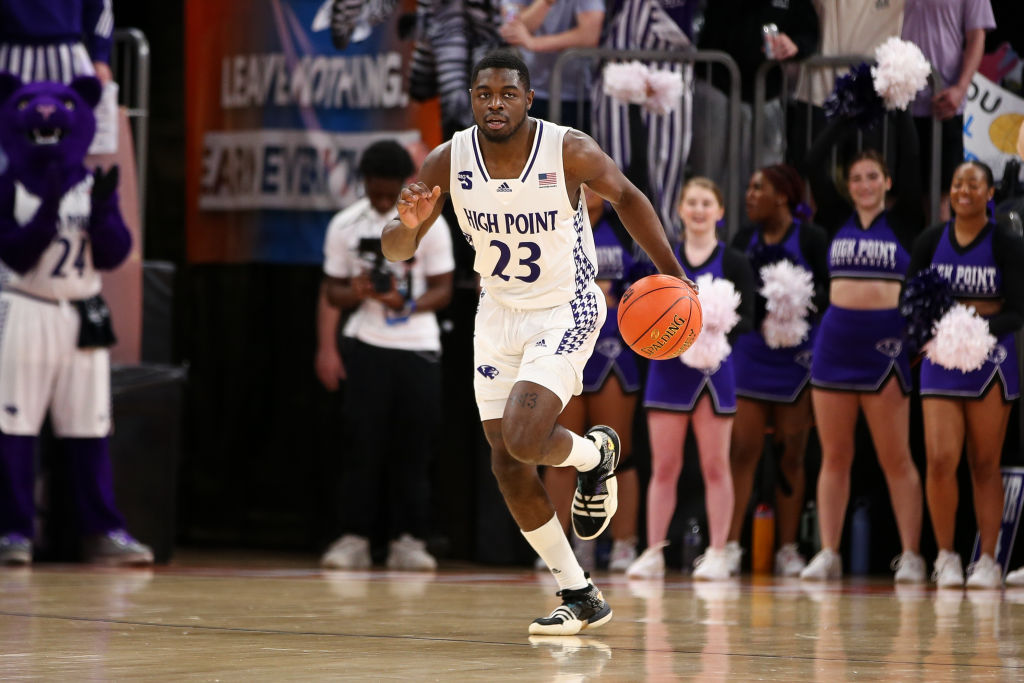
In his lone season with the Panthers, Miles started 27 games and averaged 30.6 minutes, 17.5 points and 3.6 assists. He led the Big South Conference in field-goal percentage (52.8) and two-point percentage (58.3) and shot 36.1 percent from three and 80 percent from the free-throw line. He was headed for Big South MVP honors until suffering yet another freak injury involving his toe. This time, after Miles grabbed a rebound, an opposing player landed on his left heel, pinning it to the floor. His toe bore the brunt of the impact, and he was sidelined for six games. But Huss, who had come from the Big East, had seen enough to know Miles — who was chosen the Big South’s Newcomer of the Year — could play at a higher level than High Point.
“Duke is the most cerebral player I’ve had the opportunity to coach,” Huss says. “He’s elite with his decision-making, whether it’s passing or shooting. He’s elite with his pace; a lot of players tend to get sped up. You can’t make Duke go any faster than he wants to go. He just rhythms you to the spots he wants to go, and there’s nothing you can do about it. He’s deceptive, he changes speeds and he misdirects you with his eyes and his fakes. If he doesn’t get to a spot where he’s comfortable, he just gives the ball to the next guy and waits for it to come back around.”
On the Move Again
Huss assumed that after Miles’ breakthrough season, it was going to be hard to keep him, and he was right. Still searching for that power conference school where he could be a focal point, Miles entered the portal in the spring of 2024 and instantly became a hot commodity. This time, Auburn came calling. But Miles was mature enough to know then-Tigers coach Bruce Pearl already had a veteran team and there was only one basketball to go around. His other choice was Oklahoma. Miles loved the small-town feel of Norman and signed with the Sooners, thinking he was all set to start and play a major role.
That would have been the case, too, until the Sooners caught a lucky break in July, when five-star guard Jeremiah Fears announced he was graduating from high school a year early and signing with Oklahoma. Fears had been committed to Illinois. By the time Fears joined the Sooners, the portal was closed, and Miles couldn’t leave. Miles started all 34 games for a team that earned a spot in the NCAA Tournament, but his numbers (9.4 points and 2.0 assists per game) paled in comparison to those of Fears, who led the Sooners in scoring (17.1), assists (4.1) and steals (1.6) on his way to becoming the seventh overall pick in the 2025 NBA Draft.
“Lottery picks don’t come through (Oklahoma) that much,” Miles says. “So I had to fit into the role Coach Moser wanted me to fill. I was a 3-and-D guy (Miles shot 43 percent from behind the arc and made 48 steals). After the season, he said he really didn’t see me expanding that role (this season). But I wanted my High Point role. There were no hard feelings. I graduated from Oklahoma. I still keep in touch with Coach Moser. But I wanted to show the world what Duke Miles basketball was all about.”
Once again, Miles entered the portal. The bidding for his services was intense. “I was recruited by everybody,” Miles says, “from Oregon to Gonzaga to Kansas. It was hectic. Around the same time, I lost my grandmother the day after her 60th birthday. It ripped me, and I was lost. She’s the reason I play basketball. So I was going on emotion. It was hard to think.”
Auburn again was among the schools recruiting Miles, but he reached out for a safe port during his personal storm. That was Virginia and new coach Ryan Odom. Odom’s associate head coach is Griff Aldrich, who was the coach at Longwood when Miles played at High Point. Familiarity with Aldrich was enough for Miles, so last April 7 he committed to the Cavaliers without visiting the campus. Miles assumed he would become Virginia’s starting point guard, but when Odom and his staff signed BYU transfer Dallin Hall, also a point guard, Miles had a change of heart. Four days after committing, he announced he was reopening his recruitment.
Eleven days after that, Miles wound up at Texas A&M, another school with a new coach — Bucky McMillan — trying to pull off a roster overhaul. Miles might have stayed in Texas, but after the Aggies signed NC State transfer Marcus Hill, he once again asked to be released from his letter of intent. That was May 2.
Home at Last
It wasn’t as though Miles just dropped into Vanderbilt’s lap. Byington and his staff tried to recruit Miles as soon as he entered the portal. Undaunted after Miles rejected the Commodores twice, Vanderbilt jumped into the fray a third time, which turned out to be the charm.
“We were still searching,” Byington says. “We really wanted someone like Duke. By the time he left Texas A&M, we had our entire team in place but him. We showed him his role, he was comfortable with our style and one of our assistants (Kenneth Mangrum) had been with him at Troy. We knew his background and what he was all about. When he committed (on May 12), he was the last piece of the puzzle. I remember thinking we’ve got a chance.”
So far, Byington looks like a prophet. The Commodores haven’t played the toughest schedule in the country, but they haven’t lost and they’ve got metrics magic going for them. Tough non-conference games at Memphis (Dec. 17) and Wake Forest (Dec. 21) lie ahead, but Byington loves his team. He’s been more than willing to give Miles, in his sixth and final season of college basketball, the chance to be a game-changer.
“We told him we wanted him to be ‘High Point Duke’ and not ‘Oklahoma Duke,’” Byington says. “And we figured out in harder situations we can trust him to go make a play. Sometimes it’s a grind possession he can finish for us. Other times he can be aggressive and make a play that wasn’t there.
“I say this to our guys all the time: ‘Be aggressive but let the game decide what you’re supposed to do. Don’t fight it.’ And that’s Duke’s game.”
When he looks back at the expanse of a career that’s taken him from a boy to a grown man and halfway around the country, Miles is happy about how it’s going to wind up. He would give anything if his beloved grandmother were around to see it happen, but he plays every game in her honor. The advice she gave him is always front of mind: “Never stop believing in yourself.”
“I’ve always just wanted to be able to play my game,” Miles says. “Having a coach like Coach B, who tells you, ‘I’m going to put the ball in your hands because I trust you to make the right reads,’ that’s all I could hope for. It makes your confidence rise to another level.
“I don’t care if I have two points but 10 assists, or 20 points and no assists. I just want to help this team win. Because when we win, we’ve all been a part of something special.”
Meet your guide