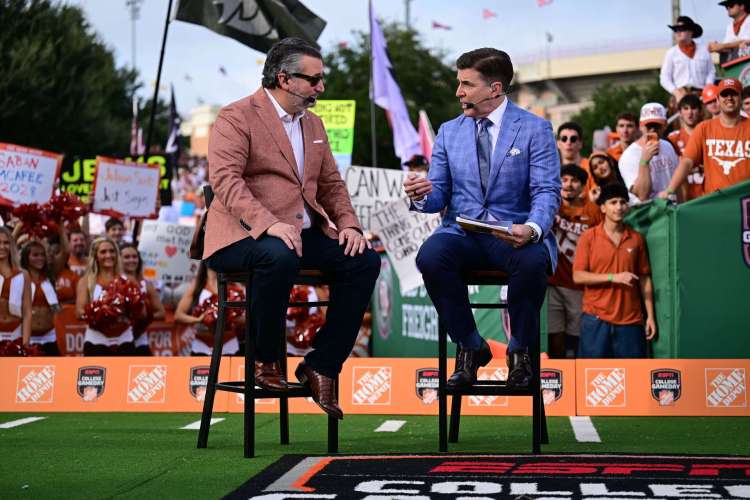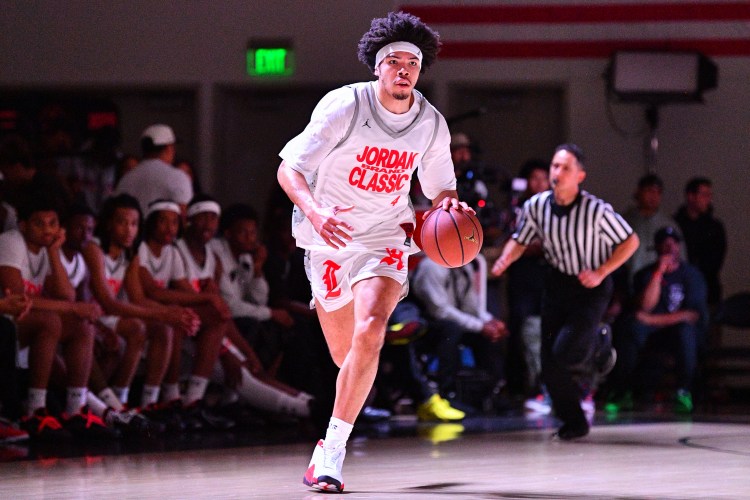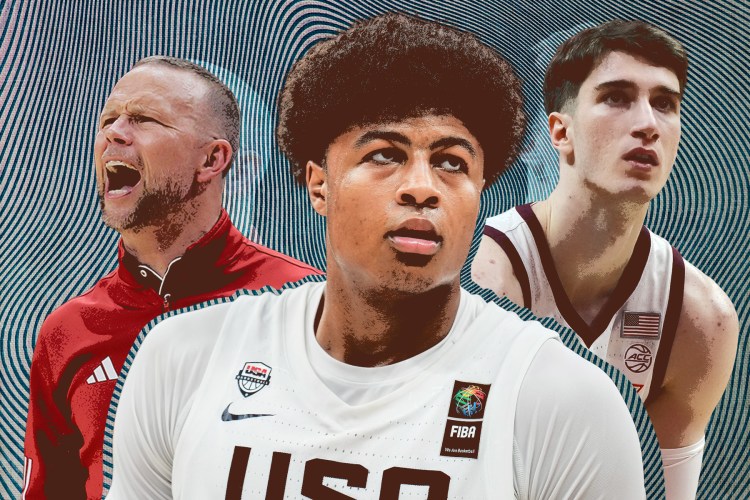

Blue Devils coach Jon Scheyer joined Seth Davis and Andy Katz on The Hoops HQ Show Friday morning to talk about Cameron Boozer’s IQ, how this year’s Duke team measures up to the 2024-25 squad, his favorite tournament city and more.
Stream full episodes of the podcast on Hoops HQ’s YouTube channel, @hhqsports, or live on the Fubo Sports Network.
Seth Davis: Let’s start with the big win over Michigan. A lot of people, myself included, weren’t surprised that you won, but by the way you won — matching Michigan’s physicality, their size, their toughness, beating them as badly as you did on the glass. Has that always been the design for you with this team? Or is that something that has evolved over the course of the season by necessity?
Jon Scheyer: Well, you know what? I think that’s natural. As a coach, I think you can’t win games if you’re not tough. What struck me is how our team has been built from a roster-construction standpoint. I think back to the first time we played on the road — there was an exhibition game at Tennessee. When you play at Tennessee, you better be ready for a fist fight and the battle on the boards. And without Maliq Brown that game, I thought we showed an incredible toughness. Dame Sarr was just coming back too.
And the games we played along the way — Michigan State, Arkansas, Florida — man, these guys have been battle tested. I think we found out very quickly. Last year’s group was the No. 1 three-point shooting team in the country. We may not have that, but we have this strength of how can we win the possession battle?
We can beat you at the rim, we can beat you in the paint, and then embracing that. So I think it’s developed over time. But yeah, the tough mindset and all that is something I hope every team has, but this group, the identity has been fun to have it come along.
Andy Katz: Jon, I was there when you guys absolutely took apart Syracuse defensively on Monday. It was a lower scoring game. This group has a lot of headline guys that obviously like to score. How did you get them to buy into this team’s defensive identity?
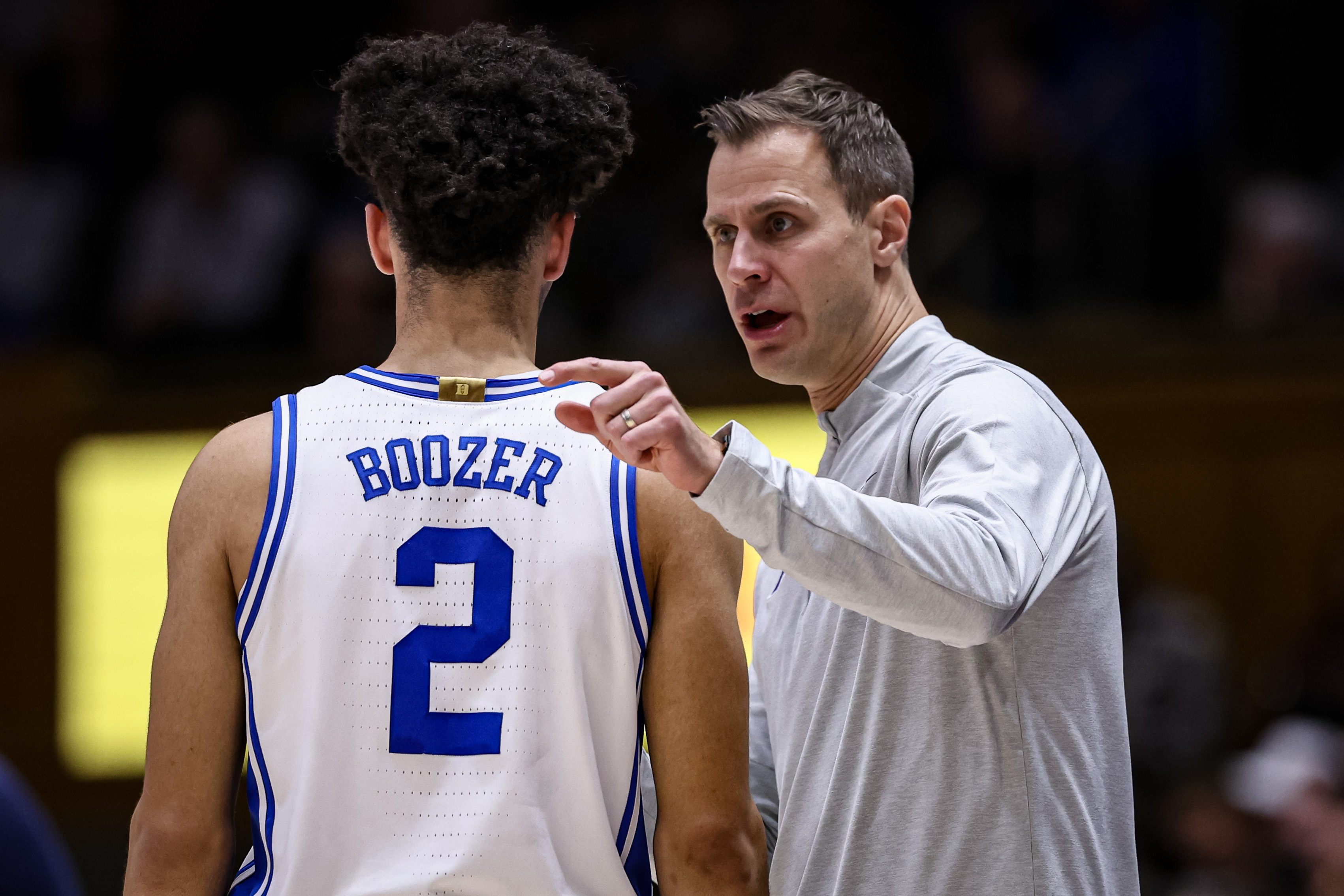
Scheyer: Well, that’s been fun to figure out because our defense was really good at the beginning of the year. We took a step back in the middle of January there. I think it starts with making sure you have the right guys that want to take coaching, that want to understand how to be the best players they can be. So yeah, Cam Boozer puts up all these numbers. He knows when he blows an assignment, you can get on him. He’s pissed about it. He wants to get the next one.
Isaiah Evans. Isaiah’s growth this year, where he’s asking questions and scouting reports in our film sessions. It’s every single one of our guys, and they respond to what you show you care about as a coach. You know, what impacts playing time and ultimately what impacts success.
So I think the thing we’ve tried to do is just continue to paint that picture as consistently as possible. And our guys have done an incredible job. Our length has really helped us. We’re actually longer than last year. We have really good individual defenders, but I think there’s a mentality there with our guys that I love to see.
Seth: So I want to ask you about Cam Boozer. Obviously, he’s had an incredible season. I used to say about Zion Williamson that it’s almost a shame he was such an incredible athlete and dunker, because people almost missed how good of a player he was and how skilled and how well he passed and fought the game. I feel similarly about Cam.
We talk about his passing ability, but to be a great passer, you have to be a great thinker. This kid never makes a bad decision. And it’s so interesting that whenever you guys get late in the game, late in the shot clock, coming out of a timeout, you always put the ball in his hands. With all of the games that you saw him play in high school, did you really understand how good of a thinker that he was? Or again, is this something that you’ve discovered since he’s gotten to Duke and responded accordingly?
Scheyer: I knew that he had a gift for thinking the game. I think it’s a thing that we can never fully see though, like he never played with a big guy in high school. He was always the biggest guy on the court. He was impacting the game in a lot of different ways. And again, he was still shooting threes, he was pushing the ball.
But one of things we found this year, is him handling it in pick-and-roll is a really important thing. And that can be a big setting, that can be a guard setting. He’s obviously got the low post, he’s got the elbows. You really can put him anywhere. And so I think that’s the thing that’s just jumped out to me, Seth, his ultimate versatility to impact the game with the ball in his hands anywhere, but also without the ball, because he draws such a crowd too.
Andy: When I was there last Monday, it was still the All-Star break. And you had Cooper Flag, Kon Knueppel, (Khaman) Maluach was there, (Tyrese) Proctor was there. I mean, all these guys that were in the Final Four last year — you lose all five starters. And then you bring in the Boozer twins, and Carlos is there, who was part of this Duke brotherhood.
And it just struck me about how you’ve been able to navigate all this — losing the entire core of this group, starting five NBA guys. Then you bring in the twins of a former Duke player. And that sometimes has added pressures of coaching kids of a former star player. And yet, you’ve been able to navigate all of that, I think seamlessly from the outside. How have you done it?
Scheyer: Well, it doesn’t feel seamless to me. We knew we were losing a lot of firepower, obviously, after last season. And I was determined to figure out a way to get back here. We knew we had some special guys coming in. The decision we made most importantly was to focus on retention.
I think it was a game changer for us. In a world where you can easily go outside and recruit really good players and bring them in, our decision this past spring was to double down on the guys that went through that season. We had five of them returning: Isaiah (Evans), Darren (Harris), Caleb (Foster), Maliq (Brown) and Pat (Ngongba). So I think that was a huge deal. You bring in the freshmen who I thought had great competitive spirit, like really good stuff about them. We added Dame Sarr late.
And again, you have to remind yourself, you have to start all over again. I think this group was unfairly being compared to last year’s team. When you remember the end of last year’s team, you don’t remember the beginning, when we went through some stuff, right? And I think this group has just had a great way about them of going through their journey, sticking together. And I’ve just loved being with these guys because of it.
So how have we done it? I don’t know. I don’t know. Recruiting great players, recruiting great character, having an incredible staff, to me is the recipe to how we’ve been able to do it.
Seth: As we all know, the saying is you never want to follow the man. You want to follow the man who follows the man. In your case, you followed the man and you’ve done an unbelievable job. I’m sure it hasn’t felt seamless, but the numbers and the results indicate a level of continuity that is unusual in terms of following a quote-unquote legend. Why do you think this has worked so well where so many other instances have failed?
Scheyer: I remember when I found out I was getting the job and one of the guys I’ve really relied on for a long time as my agent, Jimmy Sexton, said, “Listen, you’re going to want to do a million things. Just get really good players.”
That’s what I focused on — just how can we put together the best team, with the best players that you can get, guys who make you a better coach. I’m not here if we didn’t get Dereck Lively right away. Kyle Filipowski. And then you go Jared McCain and Cooper and Kon and Tyrese and you go down the line. I think that’s the best thing we’ve done or continue to do.
And then I think the second thing is I’ve been confident or been able to just figure out my identity as a coach. Well, Coach K and obviously the values of what I’ve learned here are always going to be something that I continue to preach and build on. But we’ve had good success with following instincts. You can’t try to be somebody else. That’s something Coach K and I talked a lot about before I took the job and something that I’ve been able to do and our staff has done as well.
Andy: I think one of the other big things that worked in your favor that hasn’t with other people in your situation is you had credibility and equity there already. You were there. Nina King, she’s an assistant AD, she becomes AD. President (Vincent) Price knew who you were. All these different people knew you, the brotherhood knew you, you’d played there, you’d won there. So there was all this equity that was built in. You weren’t coming from the outside.
In this case, I think it was important that you were there to have all those other peripheral people that are important, that alignment from top down, that believed in you, that trusted you, that knew you to allow you to succeed. How right am I on that theory?
Seth: Plus that season as the coach in-waiting.
Scheyer: Yeah, and that was huge for me, too. I think timing is everything. I think building up equity in the job you do every day as an assistant coach or whatever role you’re in builds trust. I think on the flip side, you have to be careful there because the lens through which you can be viewed is: Is he ready? Are you sure?
And I had to answer those questions of how do you handle the first time you see failure? Your first losses? I had to answer those questions along the way and still have, you know, questions to answer. But that was key. And then the coach in-waiting year was, for me and Coach K, the one of the most we bonded. I think it was my best job as an assistant coach because I could have a little bit more empathy of just, man, that is a hard decision. You actually are making the call, right? You call timeout here, you sub there. It just gave us a great runway to talk about the game, talk about in-game decisions and all the things that go with running a college basketball program.

Top 10 National Storylines to Watch for 2026-27
Mark Pope’s hot seat, Michael Malone’s NCAA debut and four stellar freshmen star in the top storylines of the impending season
Seth: I joke around because I saw your neck get a little stiff when somebody asked you this after the Michigan game. But the reality is, Jon, you haven’t lost a lot. So you don’t give us much to work with. It is interesting, though, that your last three losses have all been after you had double-digit leads. What did you learn from those experiences that you can apply in an NCAA Tournament game?
Scheyer: The first thing that people miss is it’s hard to get the leads in the first place. That’s hard to do. And we’ve been fortunate — and hopefully it keeps this way — where we’ve been right in each game, every game where it’s a one-possession game, you got a chance to win right at the end. That’s hard to do.
So for me, it starts there with how do we continue to have the readiness to gain separation in games? That’s very important. The other thing I would say before I answer your question more directly is, unfortunately leads happen in the game of basketball. So the notion that you’re just supposed to get a lead and keep it, just keeping your foot on the gas. Well, it’s not, it’s not so simple.
And now I think there’s very pragmatic things in each of the three games I could tell. I think all three were a little bit different with each of them, but there’s lessons to be learned from the standpoint of — like in both games, two of the three games we had flagrants or technicals. Those are possessions, right, you can point to free throws, you can point to many different areas. It goes back to winning in the margins — understanding how precious it is. And I think our guys understand that, they embrace it. We’ve handled it really well since and learned from it.
Andy: You may dodge this one because we’re still a long ways away from this, but I’m just curious, was there a moment where you looked at where the Final Four is this season (Indianapolis)? You won it there in 2010 — obviously one of the greatest endings that almost wasn’t because of Gordon Hayward’s shot that didn’t go down — but same building, 16 years later. It would be an unbelievable story: winning as a player, winning as a head coach. When did you notice where the Final Four is this year?
Scheyer: A while ago. A while ago. Don’t forget about ‘15, also.
Seth: And ‘91, wasn’t it? Not the same building, but ‘91 was in Indianapolis, too.
Scheyer: Exactly. So I’m all for good vibes. Like, I’m all for whatever signs that are out there. The more that we bring it in and feel that it’s our time, the better it is for me. So I’m all for it. We got, as you know, many steps we gotta take to even start thinking about that, but I’m well aware of where it’s at and nothing would make me happier than to be back there, to get a chance to do that.
Seth: Last question. This is the high pressure question, all right? I want you to give me your all-time Duke starting five. I’ll absolve you from the worry about whether you should put yourself on it. You don’t have to make that decision. So Jon Scheyer — you’re ineligible. There’s no wrong answer here.
Scheyer: I was not worried about that.
Everything is wrong about this answer because you have to try to compare Christian Laettner’s career to anybody. It doesn’t compare right and the different eras, but obviously, you’re gonna have the greatest winner in the history of the tournament on there: Christian Lattner. Shane Battier is absolutely on there. Grant Hill is absolutely on there. Johnny Dawkins is absolutely on there, for me with what he’s done. I’m sentimental too, with what they’ve meant to the program, right? Like if none of us are here without Johnny Dawkins. So how many is that?
Andy: That’s four.
Jon: I get one more. I mean, how could you not choose the leading scorer in the history of the school in JJ Redick? I’ve coached some guys that could be on there. But those are my five. What do you think?
Seth: Not a bad five, not a bad five. Even Andy Katz and Seth Davis couldn’t screw that up.
Meet your guides