A sobering November has come and gone for the Big East, which went 12-21 in games against other power conference competition. Butler, Connecticut and Georgetown each had two victories, leaving only a smattering of accomplishments split between the league’s other eight teams.
That puts more importance on the remaining high-end nonconference opportunities and on every league game against a sure-fire NCAA Tournament team. And one of those stands out above everyone else a month into the season.
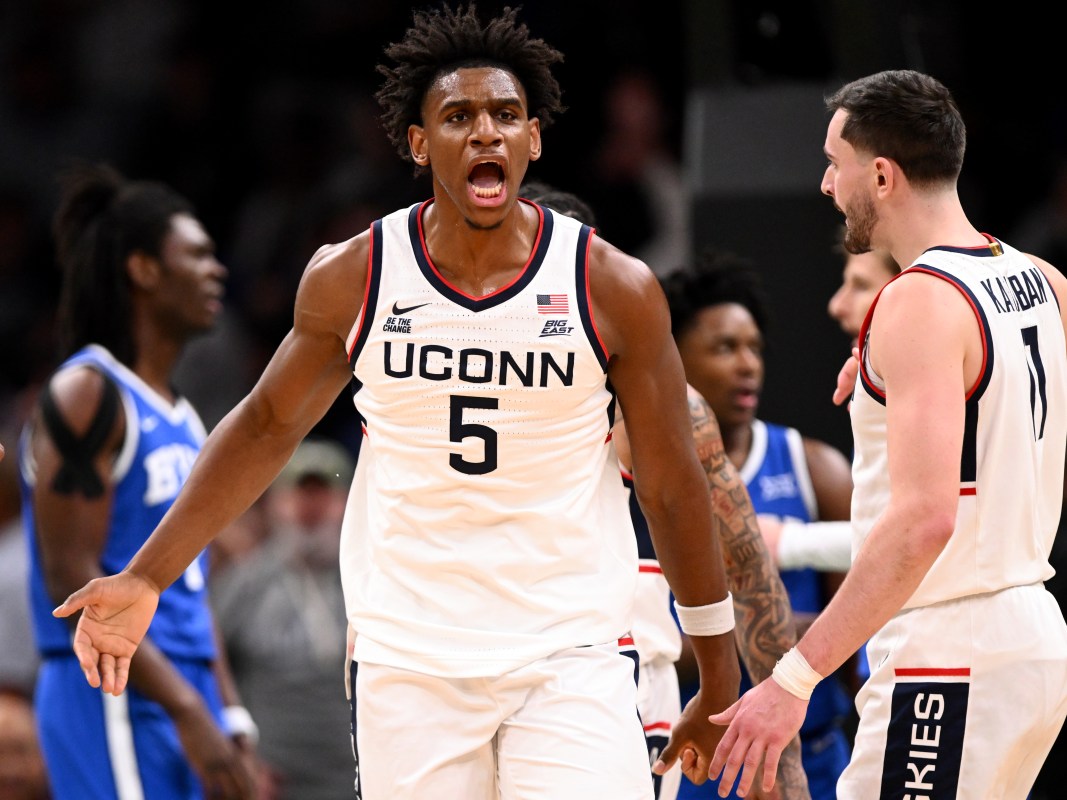
1. Connecticut (7-1)
A variety of question marks dot the Big East. Well, pretty much everywhere other than Storrs, where the Huskies have rediscovered a zest (and a penchant) for defense that didn’t exist for much of last season. That improvement shows up in the raw data (tied for eighth nationally in scoring defense) and advanced numbers (eighth in KenPom.com’s adjusted defensive efficiency entering Tuesday). It was also very much on display in the Huskies’ inspiring win at Kansas Tuesday night.
The offense isn’t shabby, either, with four players averaging at least 12 points and seven managing 6.6 points a night. Tarris Reed Jr., a 6-foot-11 senior center, was sharp in three games before an ankle injury sidelined him for two contests. He returned to play 15 minutes Friday against Illinois but missed the game against the Jayhawks.
Oh, and about that game with the Illini? UConn contained a potent offense on the way to a 74-61 victory at Madison Square Garden, a superb neutral-court victory to pair with last month’s victory over BYU in Boston.
The November returns suggest the Huskies could be on their way to amassing a profile much like Duke’s last season: dominant, and consistently at a level above everyone else in a league that appears to be having an off-year.
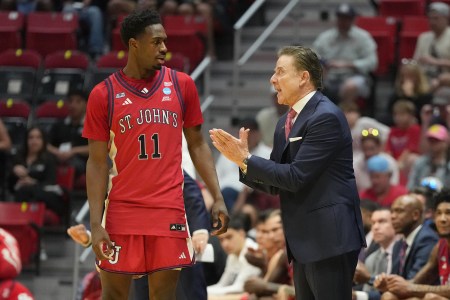
2. St. John’s (4-3)
The Red Storm looked like half of a national title contender in November. The offense is fine, with 6-foot-7 graduate student Bryce Hopkins (16.1 points) and 6-foot-9 senior Zuby Ejiofor (15.6 points) leading a group of six players averaging double figures in scoring. But the defense? Let’s just say it’s not in midseason form – or at least it better not be.
St. John’s picked up a victory over Baylor in Las Vegas last week, which makes it more accomplished than much of the Big East at this point. And it’s unlikely any of the Red Storm’s other losses (Alabama at home, Iowa State and Auburn in Vegas) will be viewed as anything worse than missed opportunities to improve postseason seeding when March arrives.
But all three of those teams piled up at least 83 points, and Baylor got to 81. A failure to get stops on just one shot is a major liability. St. John’s is 316th nationally in defensive rebounding percentage, per KenPom.com, and Iowa State (22 second-chance points) and Alabama (19) punished the Red Storm as a result.
The situation is not dire, but it also is not as rosy as when coach Rick Pitino and Co. were coming off a 31-5 season and being feted as a championship contender throughout the summer and early fall. But with much of the rest of the Big East struggling, December nonconference games against Ole Miss and Kentucky are valuable opportunities to demonstrate progress and collect résumé–building victories.

3. Butler (7-1)
Calling the Bulldogs the best of the rest would be far too dismissive of what they’ve done to date. They beat South Carolina and Virginia in the Greenbrier Tip-Off. They’ve encountered minimal resistance in their four home games, winning each by at least 25 points. And their only loss was an 87-85 setback at SMU when the Mustangs scored on a layup in the closing seconds.
Finley Bizjack, a 6-foot-4 junior, remains a perimeter ace at 42.6 percent from three-point range, but he’s blossomed into a top option and leads Butler at 17.6 points an outing. Gonzaga transfer Michael Ajayi, a 6-foot-7 graduate student, has six double-doubles in seven games and has helped the Bulldogs rank eighth nationally in rebounding margin.
Now comes the task of maintaining a good start. Two seasons ago, Butler opened 10-2 but sputtered to an 18-15 finish. Last season, the Bulldogs started 7-1, but lost their next nine on the way to 15-20. This looks like a superior defense team compared to its immediate predecessor, and Thad Matta could have a team capable of posting a winning record in the Big East for the first time since 2019-20.
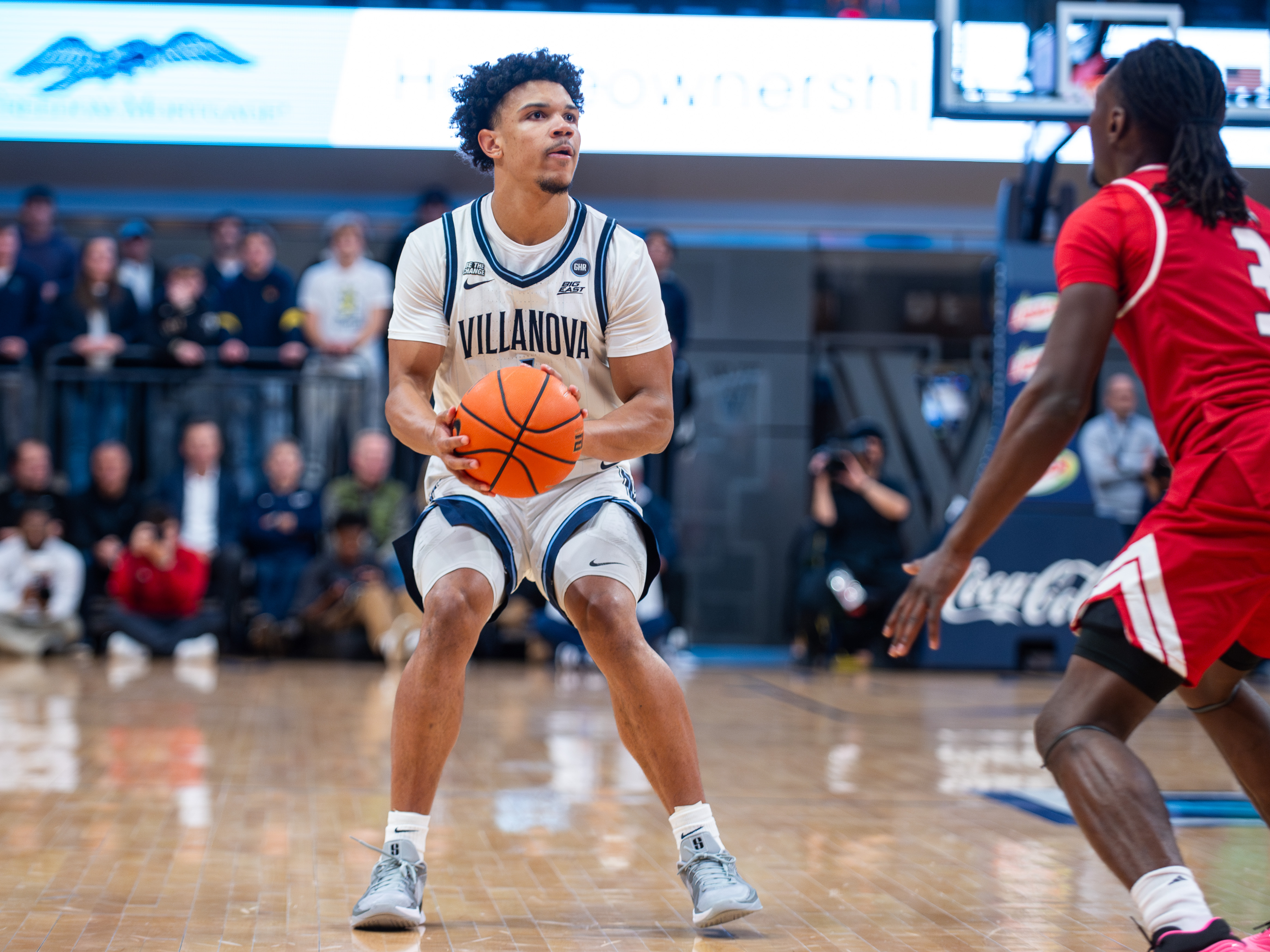
4. Villanova (6-1)
Few coaches like to dig into the intricacies and vagaries of scheduling as much as Kevin Willard, so perhaps it’s not a surprise he did solid work in setting up the Wildcats for a start that simultaneously was successful but not filled with false hope.
First, Villanova opened with a 71-66 loss to BYU in Las Vegas, a perfectly credible showing for an almost entirely new team against an opponent with one of the nation’s most talented players. The Wildcats then returned to the Philadelphia area and have yet to leave, rattling off six in a row behind 6-foot-3 redshirt sophomore Bryce Lindsay (18.1 points) and 6-foot-2 freshman Acaden Lewis (13.3 points, 5.6 assists).
The winning streak includes a victory at La Salle and Monday’s 74-56 victory over Temple, ensuring Villanova a place in Saturday’s Big 5 title game. The Wildcats didn’t even reach the championship in the first two years of the Big 5’s current format, let alone win one. Reclaiming a place atop Philly’s hoops hierarchy would be a fine first impression for Willard to make, regardless of how the rest of the season goes.
5. Seton Hall (7-1)
In a single game – an 85-74 victory over NC State on the first day of the Maui Invitational – the Pirates made it abundantly clear they’re vastly better than a season ago. The dynamic second half against the Wolfpack did more than blowouts of Saint Peter’s, Wagner, Fairfield, Monmouth and New Haven could ever accomplish.
While Shaheen Holloway’s group didn’t run the table in paradise, it did recover from a two-point loss to USC well enough to dispatch Washington State 75-61 in the third-place game. And that gave Seton Hall as many victories before Thanksgiving as it compiled all of last season.
Miami transfer AJ Staton-McCray, a 6-foot-4 graduate student, leads the Pirates at 13.9 points per game, and 6-foot-4 junior Tajuan Simpkins is providing 12 points a night off the bench after transferring from Elon. Meanwhile, Seton Hall has some menace again on defense. It leads the country in block percentage, per KenPom.com, thanks to two of the top three shot-swatters in the Big East: 6-foot-10 freshman Najai Hines (2.5 blocks per game) and 6-foot-9 senior Stephon Payne (1.8).
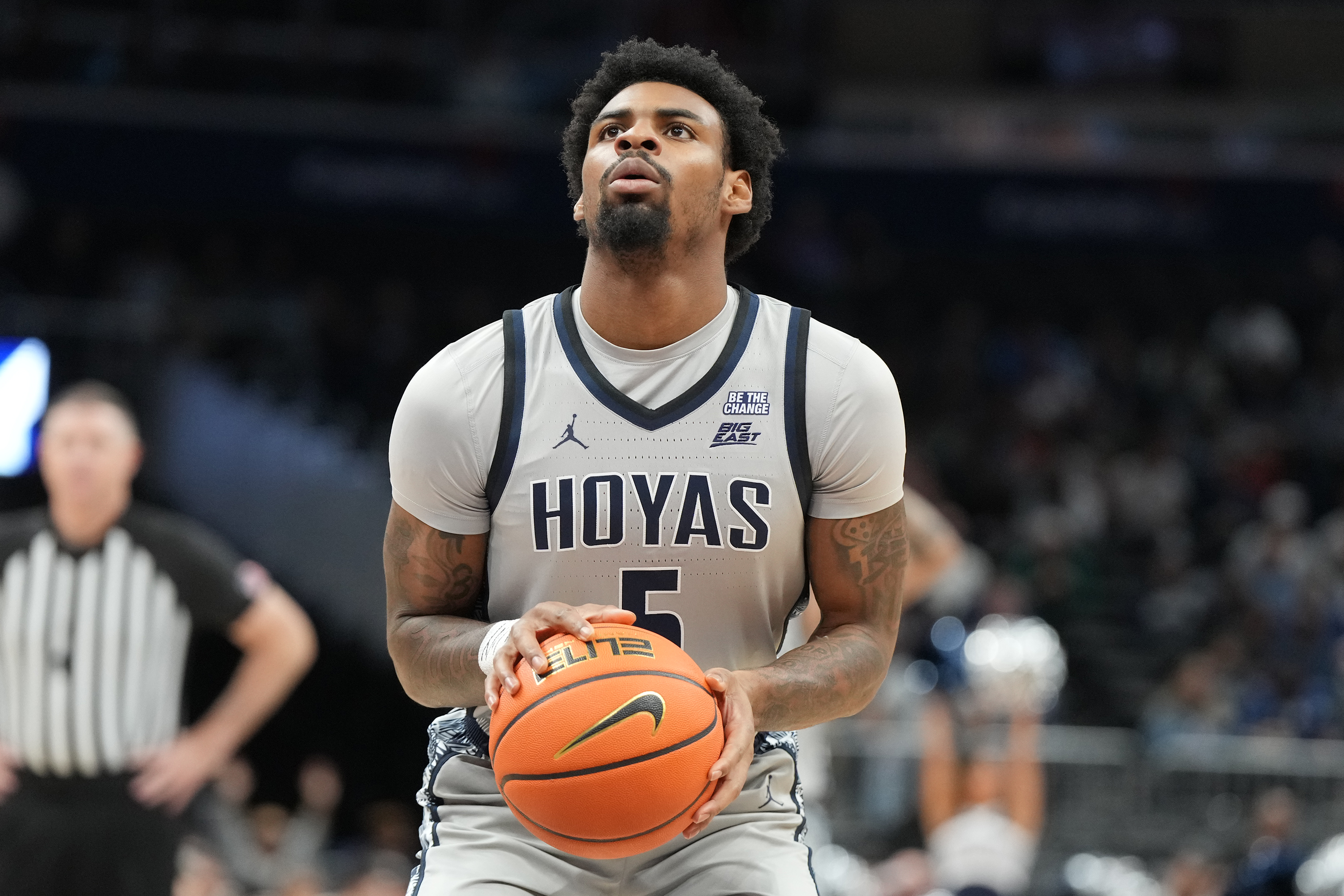
6. Georgetown (5-2)
The Hoyas beat Maryland and Clemson on the way to a 5-0 start, their best since 2017-18, and appeared to be a possible breakout team after spending much of the past decade as an irrelevant and often listless program.
But the loss of 7-foot-1 senior center Vince Iwuchukwu, who underwent a medical procedure two weeks ago, has altered coach Ed Cooley’s options. Not only must Georgetown adjust on the fly to the departure of its most tested big man and lean more heavily on 7-foot redshirt freshman Julius Halaifonua, it also leaves the Hoyas more vulnerable to their actual weakness: outside shooting.
Iwuchukwu is a true interior presence, while Halaifonua is a more skilled player. As a tandem, they offered Georgetown the chance to offer an optimal look based on an opponent. But without Iwuchukwu, there’s less for foes to be mindful of in the low post.
The Hoyas are shooting 28.4 percent from three, 335th out of 365 Division I teams. They were a little better than that in losses last week to Dayton and Miami, making 16 of their 51 threes (31.4 percent). But it’s still an area that could bedevil Georgetown as long as Iwuchukwu is out – and possibly even after he returns.
7. Creighton (5-3)
The Bluejays are a hard team to read. None of their losses – Baylor and Iowa State in Las Vegas, at Gonzaga before that – are blots on a postseason profile. Their best victory came against Oregon, which was without center Nate Bittle.
But 6-foot-10 sophomore Jackson McAndrew, Creighton’s best returnee, made it through just four games before a foot injury ended his season. There’s a slight echo here: Pop Isaacs played in eight of the Bluejays’ first nine games last season before he was shut down for hip surgery. Greg McDermott’s team struggled for a couple of weeks to figure out how to compensate, then won at St. John’s on New Year’s Eve and went on to have a fairly typical Creighton season, albeit one with a slightly lower ceiling.
Maybe that happens again. After all, the Bluejays are doing some things (keeping opponents off the foul line, not giving up many three-point attempts) they normally do. But it’s also not as slick a group of shooters as usual, and McAndrew’s loss hurts on that front. For now, balance will be a calling card; Creighton has five players averaging between 9.6 and 11.7 points.
8. Xavier (6-3)
The Musketeers are the most improved team in the Big East since the start of the season, an important distinction. Part of that is a defense of the evident progress made at Butler and Seton Hall. And some of it is an acknowledgment that Xavier was really, really shaky while splitting its first four games.
A split in the Charleston Classic – a one-point loss to Georgia, a 78-68 victory over West Virginia – revealed some progress. And after tacking on lopsided victories over Texas A&M-Corpus Christi and Saint Francis, the Musketeers’ strengths are increasingly clear.
Xavier is 37th nationally in three-point percentage (38.4 percent) and 11th in assist-to-turnover ratio (1.91). Making outside shots and taking care of the ball is a good base (though a meager 44.9 percent from two is suboptimal).
Tre Carroll, a 6-foot-8 graduate student, is averaging 15.9 points and 6-foot-3 senior Roddie Anderson III (13.9 points) is settling into a role as a jolt off the bench after redshirting last season. There’s still plenty to work on, but the Musketeers could yet be interesting. That – perhaps coupled with a victory over Cincinnati in Friday’s Crosstown Shootout? – would provide a solid foundation for first-year coach Richard Pitino.
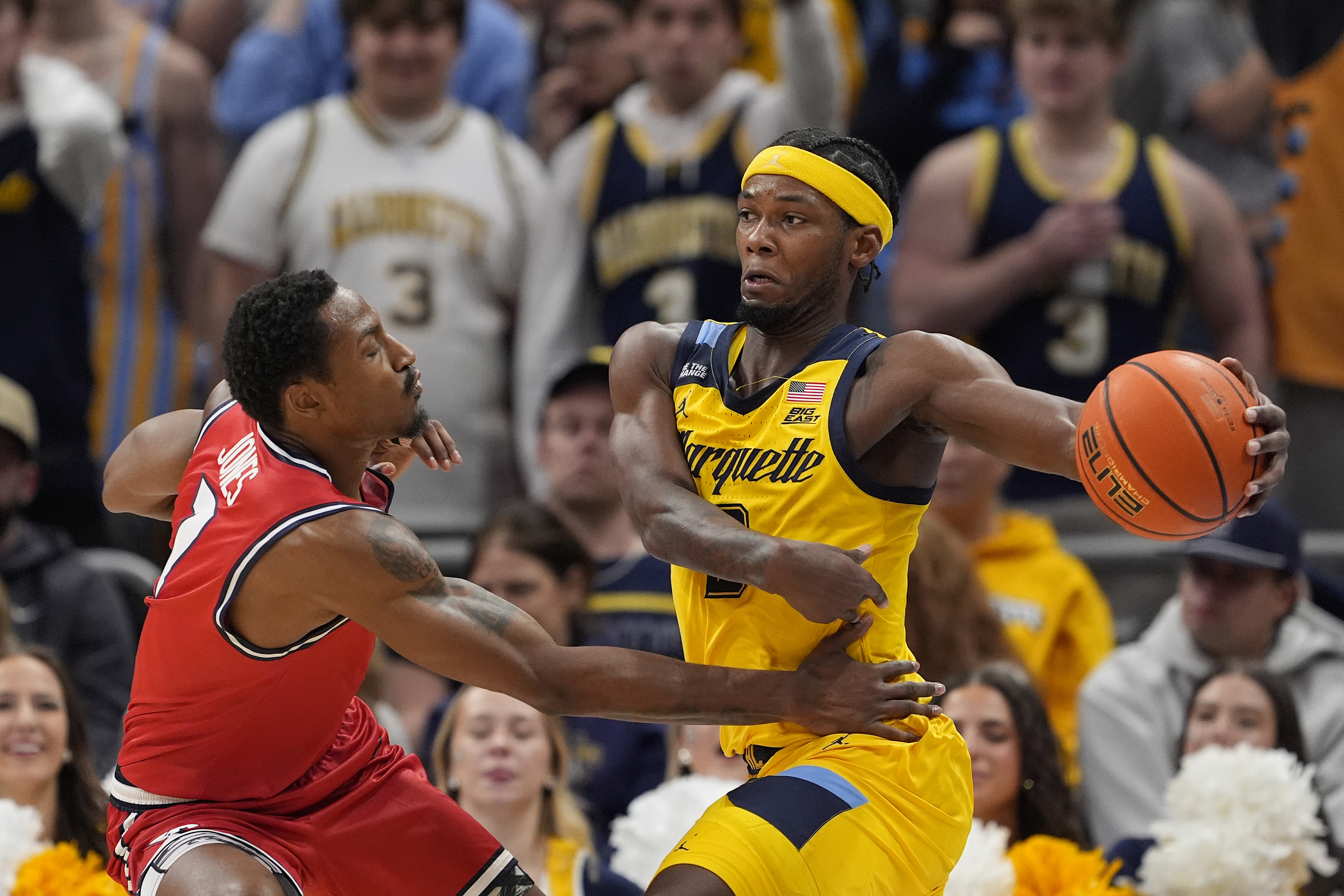
9. Marquette (4-4)
The discussion around the Golden Eagles would be a bit different if they had better luck. (They entered Tuesday 354th in KenPom.com’s “luck” metric). It’s not hard to squint and imagine Marquette beating Oklahoma rather than losing by a point, turning back Dayton instead of falling in overtime and fending off Maryland after leading seven in the first half.
If all that happened, the Golden Eagles would be 7-1 and Big East scoring leader Chase Ross would be hailed as coach Shaka Smart’s latest developmental triumph. Ross, a 6-foot-5 senior, has nearly doubled his scoring average, from 10.5 points to 20.9, and he’s shooting a nifty 64.4 percent from two to make up for a dip in his work from the outside.
But Marquette didn’t beat Oklahoma, which had lost its first two serious tests to Gonzaga and Nebraska. It didn’t outlast Dayton, which did follow that up with an overtime victory over Georgetown. And it couldn’t stop Maryland, which has proven quite stoppable for other high-major teams. (The Terps’ blowout losses against Gonzaga and Alabama last week marked the first time they lost consecutive games by at least 33 points since falling to Navy and Army at the end of the 1943-44 season).
So instead of being a fortuitous 7-1, Marquette is an unfortunate 4-4 and hearing plenty about Smart’s reluctance to embrace the transfer portal. That’s a discussion for another day. Right now, the Golden Eagles aren’t particularly remarkable even with Ross’ scoring punch, and they have plenty of work ahead of them if they are to claim a fifth consecutive NCAA Tournament berth.
10. Providence (5-4)
The Friars are playing at faster tempo and their offense has ticked up after last season was derailed by the absence of Bryce Hopkins. But Providence isn’t defending much better, which is why its best chances to collect high-end victories in nonconference play (Florida, Wisconsin, Colorado, Virginia Tech) have come and gone.
Even a fun offense is going to struggle when it has to score 90 points to defeat a good team. And aside from a 77-65 win against Penn State on Nov. 22, there haven’t been enough stops against quality opposition.
The remaining nonconference schedule (Fairleigh Dickinson, Rhode Island and Brown, all at home) does not offer much to bolster the Friars’ postseason hopes. But those games would serve a fine purpose if Providence can get its defense right before league play begins Dec. 13 at Butler.
11. DePaul (5-3)
The Blue Demons aren’t easy to get a read on. Four of their victories came against teams ranked in the 300s in the NET and KenPom. Their other triumph was a neutral-court victory over Georgia Tech, one of four power conference teams lower in the NET than DePaul (Rutgers, Oregon and Maryland are the others). An early loss to Buffalo is somewhat more palatable now that the Bulls are 8-0. And then there’s Saturday’s 33-point loss to LSU, which doesn’t look good no matter what numbers are tossed about.
The Blue Demons aren’t explicitly bad at anything, yet they’re also not exemplary at much other than preventing opponents from taking threes and assisting on 68.1 percent of their made field goals. A quarter of the way through the season, it’s hard to peg their identity. It’s not quite a blank canvas, but it’s as close as it comes after a month of games.
Meet your guide