
Sam Hoiberg never expected to actually play for his father, Fred, at Nebraska. He joined the team in 2021 as a walk-on because he didn’t have any other Division I scholarship offers. Sam figured he would redshirt his first season, apply his maniacal work ethic to get better, and hope to latch on with a mid-major down the road.
After a couple of months in the program, Sam’s older brother Jack, who followed a similar path at Michigan State, kept telling him, “These guys are not that much better than you.” Sam didn’t quite believe him until one day when he was working with the scout team in practice. It was his job that day to mimic Ohio State guard Justin Ahrens, a long-range shooting specialist. “I started off seven for seven from three,” Sam recalls. “That’s when I started dreaming of really doing it.”
At the time, that dream felt like a fantasy. Three years later, it is very much a reality. Through hard work, resilience, a little bit of luck and a lot of support from his family, Hoiberg has helped the Huskers engineer a season for the ages. They started by winning their first 20 games. They reached their highest-ever rank (No. 5) in the AP poll, finished in a three-way tie for second place in the Big Ten and are currently projected to be a No. 3 seed in the NCAA Tournament. That would put the Huskers in excellent position to win their first NCAA Tournament game in program history.
Hoiberg stands a meager 6-foot 183-pounds, but he has loomed large while started every game at point guard. Still, he is typically noticed more for his trademark headband than eye-popping stats. Hoiberg ranks fifth on the team in scoring at 9.7 points per game to go along with 5.2 rebounds, 4.4 assists and 2.1 steals. But he also anchors a defense that is ranked No. 5 on KenPom in adjusted efficiency and was named to the Big Ten’s All-Defensive team.
At the end of the regular season, Hoiberg ranked third nationally in assist-to-turnover ratio (4.22 to 1), led the Big Ten in steals percentage and was ranked second in the league in three-point percentage (43.6). He also led the league in defensive win shares, per CBB Reference, and he is the only player in the country 6 feet or under who averaged 5.0 rebounds. Perhaps most remarkably, in Nebraska’s five games against ranked opponents, Hoiberg dished a total of 28 assists and had just one turnover.
You won’t find Hoiberg’s name on any lists of the best players in the country, but there is one place where he is being properly exalted: He has been named captain of my 2026 All-Glue Team.
The All-Glue Team was first created in 2000 — or three years before Hoiberg was born. It began with a story in Sports Illustrated written by the legendary basketball writer Alex Wolff to preview the NCAA Tournament. I have continued selecting All-Glue teams every year since. You can find the complete list of the 25 previous All-Glue teams below.
A Glue Guy is hard to define but easy to spot. My only general (although not hard-and-fast) rule is that he should not be one of his team’s top two leading scorers, but only because that’s not what his team needs from him. A Glue Guy should put up numbers in a variety of categories, but his most vital contributions don’t show up in a box score. He is a winner, first and foremost, and though fans might not always notice him, his teammates and coaches understand his true value in holding things together.
Hoiberg is indeed a winner, the only player in Nebraska history to be a part of three straight 20-win seasons. That is especially remarkable considering he came from such humble beginnings. “I’d be BS’ing if I told you I wasn’t surprised,” Fred Hoiberg tells Hoops HQ. “He just does it with an unbelievable work ethic. He plays with a chip on his shoulder, which you have to have when you’re his size. He’s had a huge impact on our team and I couldn’t be prouder of him.”
The dam broke midway through Sam’s redshirt freshman season. A few days after junior guard Juwan Gary was lost to a season-ending shoulder injury, senior guard Emmanuel Bandoumel also went down with a season-ending knee injury during a loss at Penn State. “I’ll never forget that plane ride home. I told him, ‘You’re our third point guard now,’ ” Fred says.
Sam, who had barely played all season, was a bundle of nerves while scoring six points in 17 minutes in a home loss to Northwestern. The next time out, he had 15 points in 15 minutes against Maryland. He never looked back. “It’s crazy how this whole thing worked out,” Fred says. “I don’t know if he ever would have gotten a chance if it weren’t for those injuries.”
After averaging 3.4 points as a sophomore, Sam continued to improve last season and moved into the starting lineup in late January. He helped spur the Huskers to a 7-11 record finish in the Big Ten, which was followed by a four-game sweep to the championship of the College Basketball Crown in Las Vegas. Sam has continued to work hard this season, but he has also learned to relax and play on an even keel with help from his twin brother Charlie, who joined the program as a graduate manager. “That twin telepathy, I’m telling you there’s something to that,” Fred says. “Charlie knows what makes him tick. He’s been great for Sam’s confidence.”
Hoiberg ranks first in EvanMiya.com’s Glue Guy rankings. He has had his share of big moments this season, but perhaps no game demonstrated his importance better than the Huskers’ game at USC on Feb. 28. Hoiberg played just seven minutes in the first half due to foul trouble, and Nebraska was down by five at the half. Hoiberg played all but one minute in the second half, and though he finished with just 7 points, 5 rebounds and 2 assists, Nebraska was plus-21 during his 27 minutes and ended up winning 82-67. “Things completely flipped, not because he was scoring but because he was doing all the little things,” Fred Hoiberg says. “That really is what made Sam who he is his entire career. He just knows where to be. He’s one of the best defenders in the league. He takes care of the ball. He just does a lot of things really well.”
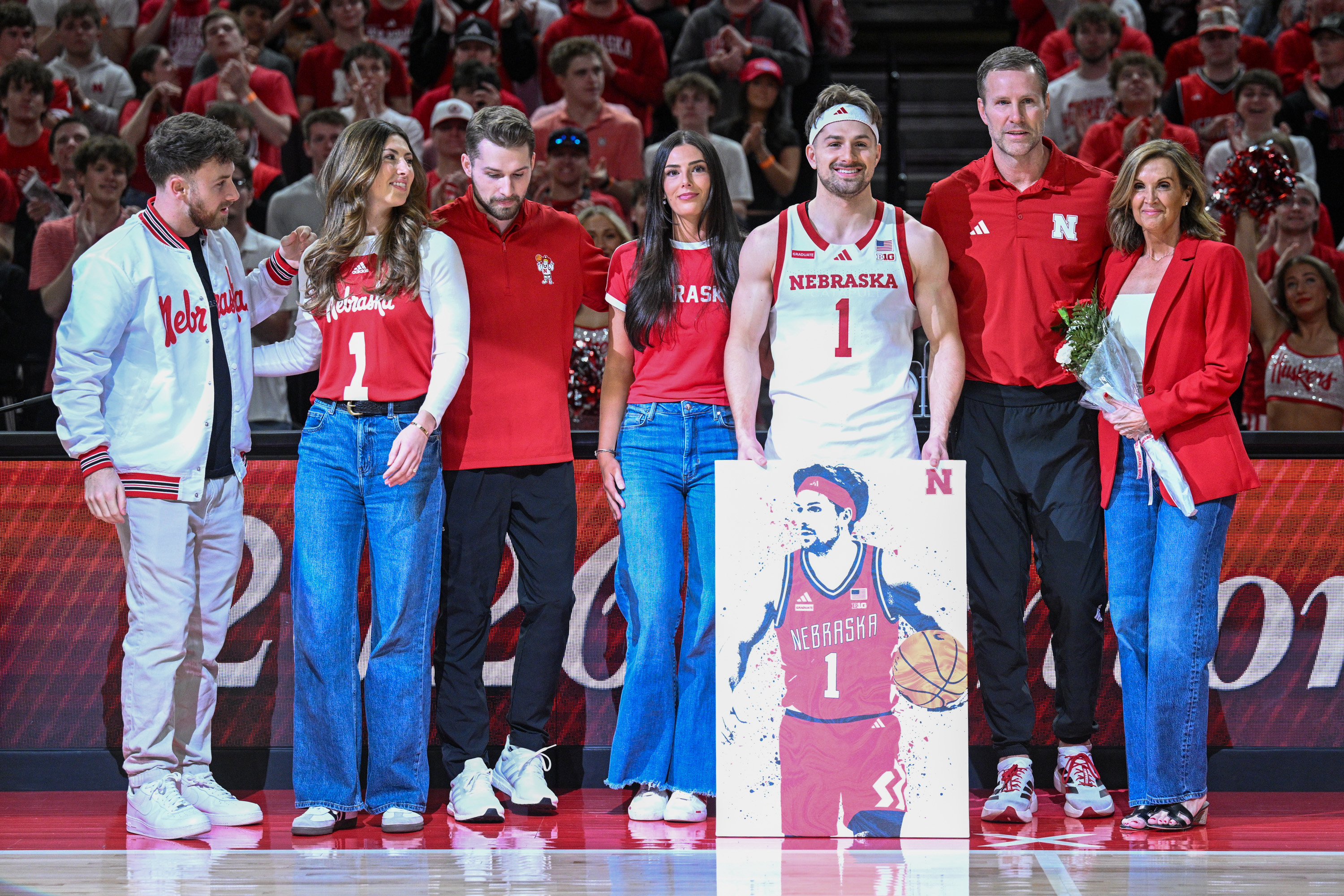
Father and son (not to mention mom Carol, who always insisted to her husband that Sam was good enough to play) had an emotional senior night last Sunday, which was followed, naturally, by an overtime win over Iowa. Now they can soon turn their attention to ending the program’s streak of never having won an NCAA Tournament game. “I don’t think I’ll be satisfied with my legacy if we don’t this tournament win, because that’s been on my mind ever since I got here,” Sam says.
Though he is focused on the goals ahead, Sam is well-aware of the remarkable road he has traveled the last five years. He recalls early in his redshirt season when the Huskers lost by 35 points at home to Michigan. After the game, he went onto the court to practice his shooting. “People were waiting for autographs and I was out there getting shots up, thinking in my head, I’m not going to let this go on any longer,” he says. “I didn’t believe it for a second, but seeing that it happened and being a part of this turnaround has been such a rewarding thing for me. The legacy I’ve left behind is something I never expected.”
Here is the rest of the 2026 All-Glue team, followed by a complete list of the past winners:
Maliq Brown, 6-foot-9 senior forward, Duke
When a senior is not even in the starting lineup, he usually doesn’t get much recognition. Brown, however, was not only named the ACC’s Sixth Man of the Year but also its Defensive Player of the Year. He led the nation’s most efficient defense in steals and deflections, and he ranks second in the country in steal percentage. Brown also ranks seventh nationally in two-point percentage while averaging 5.0 points, 4.7 rebounds and 1.8 assists in 19.8 minutes per game.
This was the role that Duke coach Jon Scheyer envisioned when Brown transferred from Syracuse last year. As a sophomore, Brown averaged 29.6 minutes and was named to the ACC’s All-Defense team, garnering the third-highest number of votes. He also showed his toughness by fighting through a dislocated shoulder and sprained knee to spur Duke to a Final Four.
Brown shined brightest last Saturday while starting in place of the Blue Devils’ sophomore power forward Patrick Ngongba, who missed the game with a foot injury. Brown’s defensive versatility and uncanny knack for collecting loose has always been vital, but during Duke’s 76-61 home win over North Carolina, he added a season-high 15 points to go along with 10 rebounds, 5 steals, 2 assists and a block.
“Maliq was off the charts tonight,” Scheyer said afterward. “Maliq is as unselfish of a guy as I have ever coached. He’s also as competitive of a player that I have ever coached. I thought tonight was an example of how good he is on the floor. But for me, it’s more the person, the teammate. He has been incredible for us.”
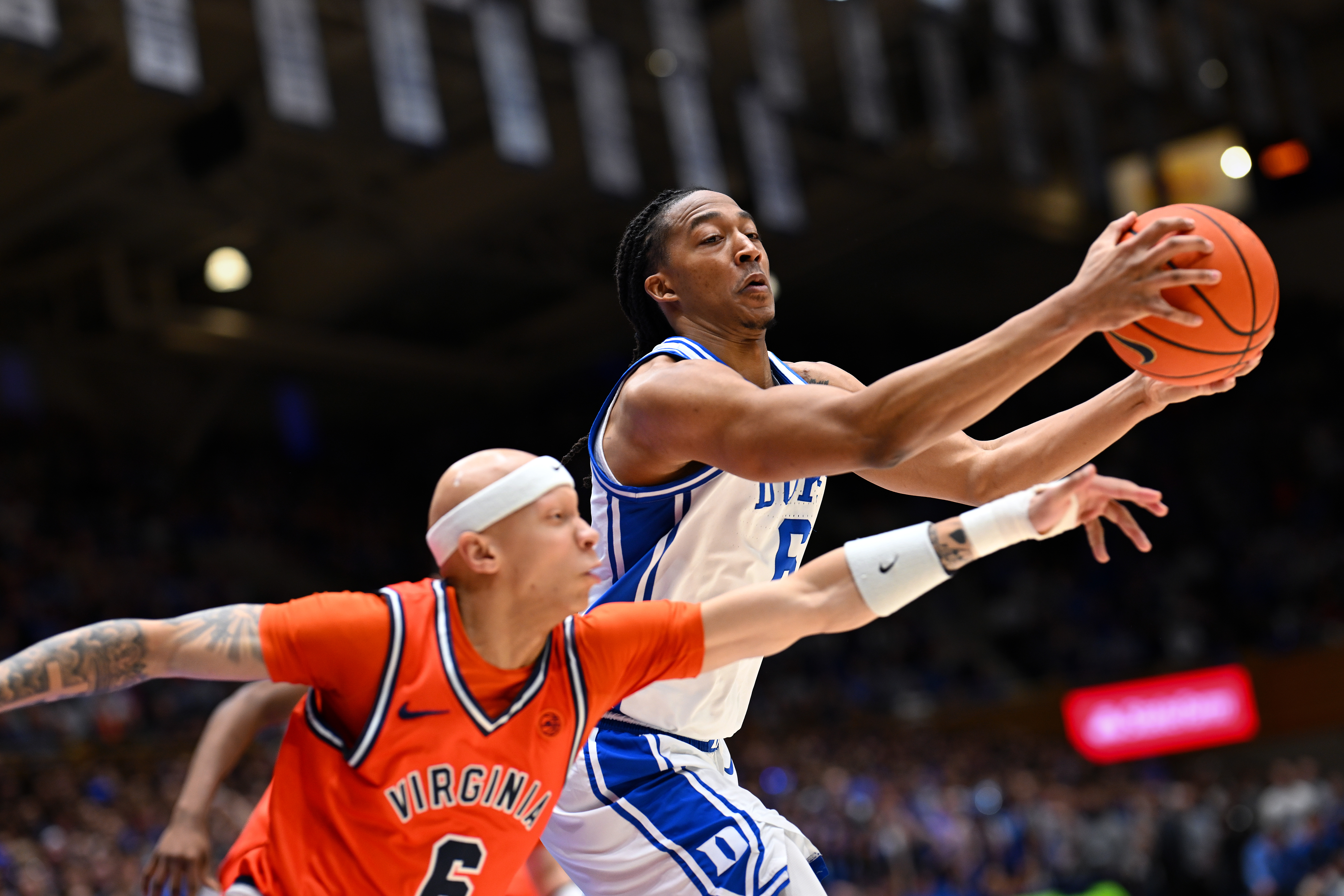
Rueben Chinyelu, 6-foot-11 junior center, Florida
The fact that Chinyelu was named the SEC’s Defensive Player of the Year was no surprise. He is one of 15 finalists for the Naismith National Defensive Player of the Year award and has already been given the national honor by The Field of 68. Chinyelu, however, was also named the SEC’s Scholar-Athlete of the Year. That is one more indication of the depth of his character and his value to the Gators as they close in on a No. 1 seed in the NCAA Tournament.
Chinyelu ranks fifth on the team in scoring at 11.4 points per game, but he leads the nation in rebounds (11.7 per game) and defensive rebound percentage while ranking second nationally in offensive rebound percentage. He tied Florida’s single-season record for double-doubles with 18. Chinyelu’s true value as a Glue Guy is reflected in his remarkable ability to quickly shift his enormous physique to switch on ball screens and lock down small point guards just as well as he bodies up big men in the paint. He also averages 1.1 blocks and 0.7 steals per game.
Chinyelu was born in Enugu Agidi, Nigeria, and developed his game through the NBA Academy Africa in Senegal. After shining at the NBA Academy Games in Atlanta in 2022, he earned a scholarship to Washington State, where he averaged 4.7 points and 5.0 rebounds as a freshman. He started every game last season for the Gators’ national championship squad, averaging 6.0 points and 6.6 rebounds in 19.0 minutes. He entered the NBA Draft last spring before deciding to return to Gainesville a week before the deadline to withdraw.
This season Chinyelu has played 24.6 minutes per game as a starter and has improved his numbers across the board. That includes free throw percentage, which went from 48.9 his freshman season to 69.0 this season. If Florida repeats as national champs, Chinyelu will probably not be named the Most Outstanding Player, but his teammates and coaches will know they could not have done it without him.
“He’s raised my expectations for himself quite high,” Gators coach Todd Golden said. “The maturation and growth that he’s had, just really elevating his game over the course of his time here has been incredible. He’s a tireless worker, and he backs up what he says. He’s super unselfish.”
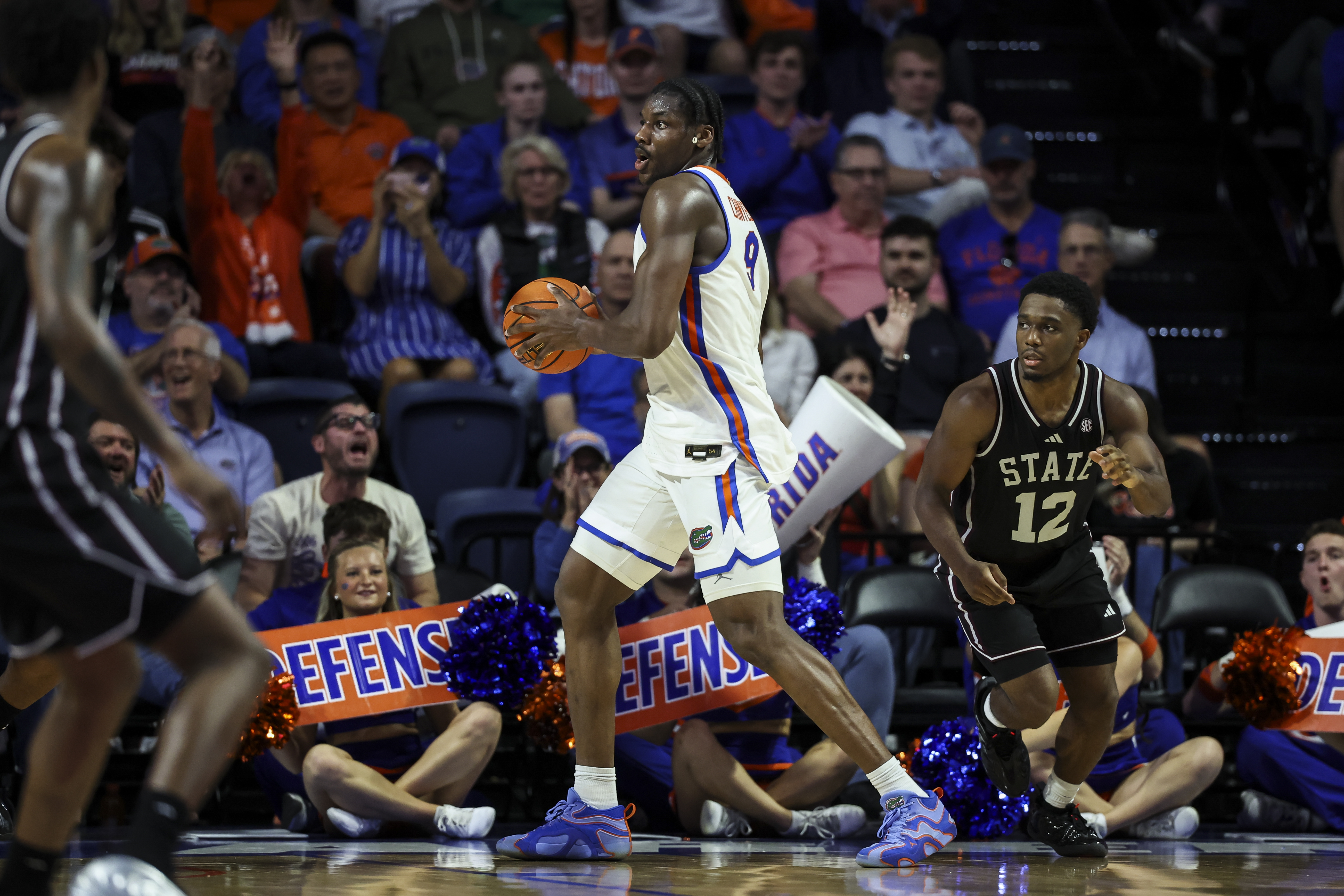
Ivan Kharchenkov, 6-foot-7 freshman forward, Arizona
Kharchenkov was born to play basketball. His father, Alexander, was a longtime pro in the Soviet Union and Russia. His mother, Elena, was also an elite player. Ivan was born in Moscow, but when he was a year old the family moved to Landsberg, Germany, where his father took a job as a coach. He grew up going to his father’s practices and games, and eventually he took an interest in the game.
Ivan joined Bayern Munich, a club in the Bundeslinga, when he was 12 years old. When he was 16, he became the youngest player ever to compete in a Bundesliga game. He excelled at the 2023 and ’24 FIBA U18 Europen Championships, but after playing just seven minutes in 23 games for Bayern the following season, he searched for a better option. He ended up at Arizona largely because one of his teammates in Munich, Elias Harris, had played at Gonzaga while Wildcats head coach Tommy Lloyd was an assistant there.
Kharchenkov is 19 years old, but at 6-foot-7 230 pounds of chiseled muscle, he looks and plays a lot older. He has started all 31 games and, in true Glue Guy fashion, contribues a little bit of everything: 9.8 points, 4.0 rebounds, 2.3 assists and 1.5 steals per game. He is also routinely assigned to guard the opponent’s best perimeter player.
Kharchenkov has shown he has the ability to score — he had 18 points in the season opening win over BYU and 16 in a road win at Houston — but he is more focused on doing the dirty work to help his team win. His name might not make any headlines, but if the Wildcats advance to the Final Four, then everyone will see just how much he means to this team.
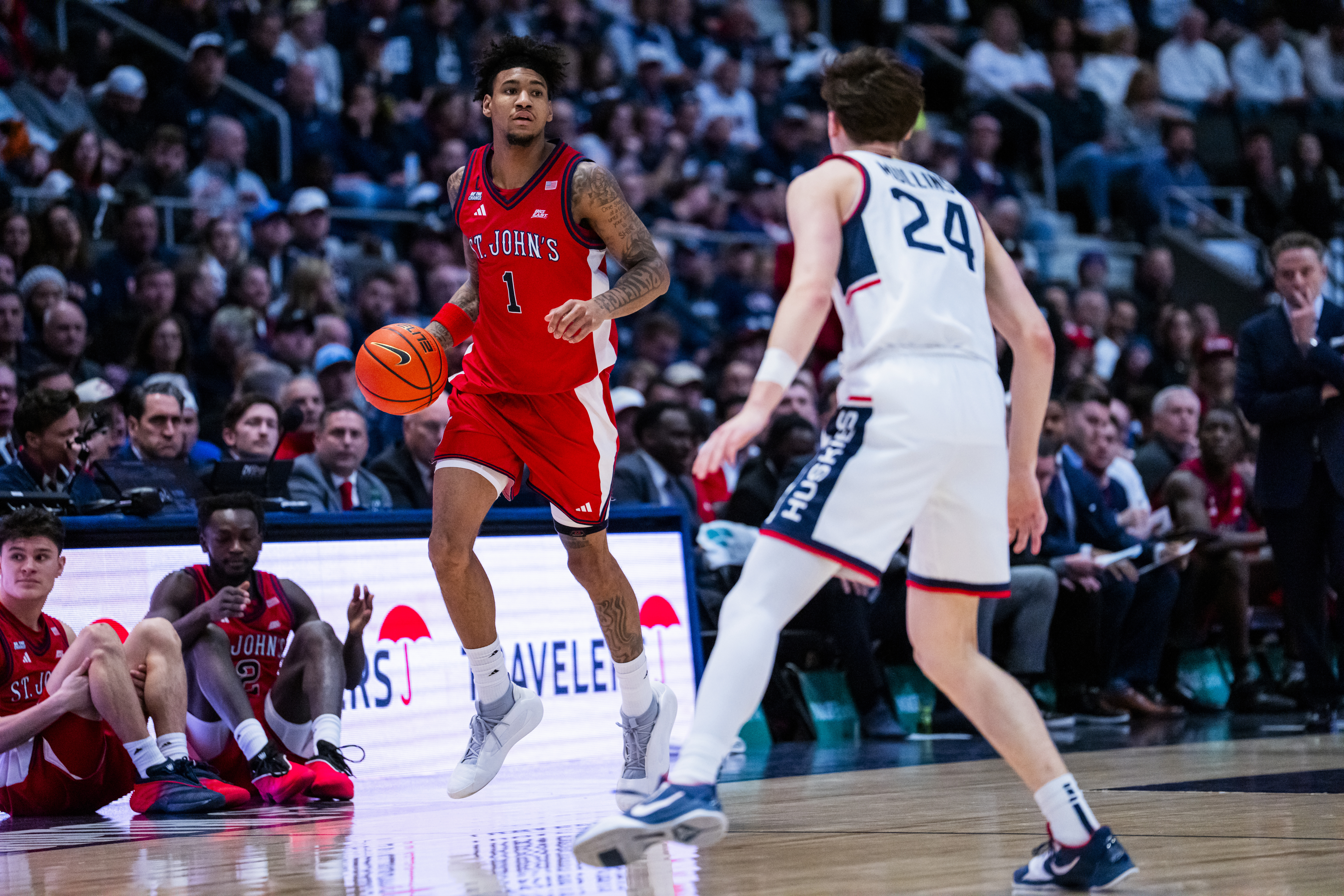
Dillon Mitchell, 6-foot-8 senior forward, St. John’s
After St. John’s lost 77-71 at home to Providence on Jan. 3 to drop to 9-5, coach Rick Pitino knew he needed to change things up. So he re-inserted Mitchell into the starting lineup in place of junior point guard Dylan Darling. Mitchell had started the first two games but spent the previous 12 as the sixth man. “It wasn’t so much the starting as much as getting him more minutes,” Pitino told Hoops HQ.
Since that game, Mitchell has averaged 7.6 points, 7.8 rebounds, 3.9 assists and 1.2 steals while shooting 48.7 percent from the floor. He was also named a tri-captain. Most importantly, the Red Storm have gone 17-1 with their only loss coming at UConn. “He’s one of our top two or three best defensive players. We’ll put him a lot of times on a point guard,” Pitino said. “When I take Dylan Darling out of the game, he can play point forward and bring it up. He’s a very, very intelligent person. We’re a better team when he’s on the court.”
Mitchell has spoken about the struggles he endured while trying to live up to expectations he faced as a prized recruit coming out of Montverde Academy. He was ranked No. 5 in the Recruiting Services Consensus Index and was named a McDonald’s All-American. When he did not live up to that hype during his first two seasons at Texas, he transferred to Cincinnati, where he averaged 9.9 points, 6.9 rebounds and 1.7 assists. He transferred again to St. John’s last spring for the chance to play for Pitino (and make significantly more NIL money).
Mitchell was selected to the Big East’s All-Defensive team and was a third team all-league selection. His 3.2 to 1 assist-to-turnover ratio ranks 21st in the country. He has twice dished a career-high seven assists, and he is top 10 in the Big East in rebounds (6.9), offensive rebounds (2.5) and double-doubles (four). Regardless of the expectations Mitchell faced four years ago, he has distinguished himself as a versatile, valuable player, one who is worthy of All-Glue immortality.
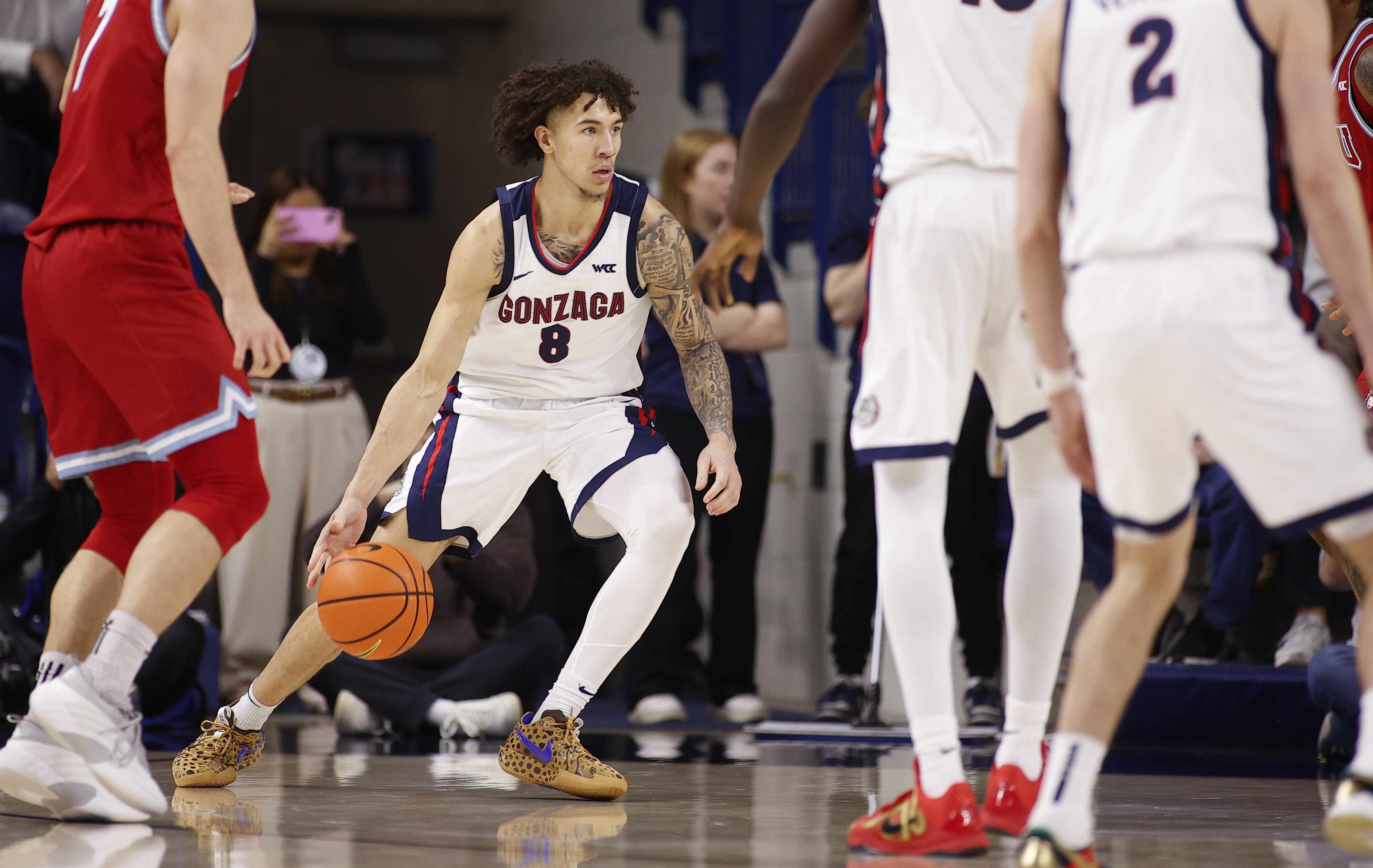
Jalen Warley, 6-foot-7 senior forward, Gonzaga
Warley came to Gonzaga from Florida State partly for the opportunity to play some point guard. Zags coach Mark Few had the same notion. But when Gonzaga was suddenly down two starting forwards due to injury in January, Few asked Warley to do something he had rarely, if ever, done: play center.
Warley moved into the role and led the Zags to three straight wins, including when he had 19 points, 4 rebounds, 2 assists and steal in a win over San Francisco. “I’m a huge fan of his,” Dons coach Chris Gerlufsen said afterward. “You know, I always try to give credit to the guys that play the game in the way that I want it to be played, and he’s a guy who I’d love to have on my team. For a guy who’s not a great shooter, [he] finds a way to impact winning on both sides.”
Warley, who ranks third in EvanMiya.com’s Glue Guy rankings, has earned the same praise from inside his own locker room, where his Glue Guy contributions fueled the Zags to a 30-3 record heading into the NCAA Tournament. “He’s been our five man, he’s been our point guard, he just does all those little things for us,” Few told Hoops HQ. “We knew he would be a phenomenal defender, which he is. He’s somebody we thought could do a little bit of everything. He’s done more than that.”
Warley has not attempted a three-pointer all season, but he is one of those rare defenders who can truly guard all five positions. One local writer made the argument that he is the most versatile player in the history of the program. He reported that Warley was just one three Zags under Few who averaged more than seven points, five rebounds, two assists and 1.5 steals while shooting 50 percent or better.
Warley comes from basketball stock. His father played for Saint Joseph’s and his grandfather played a couple of years for the Philadelphia 76ers. Jalen grew up in Philadelphia, and he brings an east coast toughness to Spokane. He played three years at Florida State and then transferred to Virginia. When Cavs coach Tony Bennett announced his retirement right before the start of the season, Warley transferred to Gonzaga, even though it meant sitting out as a redshirt.
Warley suffered a deep thigh bruise early in Gonzaga’s loss at Portland on Feb. 4. He tried to play through the pain before missing two games, including a loss at Saint Mary’s, before coming back for the West Coast Conference Tournament. He only scored six combined points in the wins over Oregon State and Santa Clara, but his teammates understood that his impact went far beyond the box scores.
“Both ends, he’s special, man. He’s phenomenal,” said senior forward Graham Ike, Gonzaga’s leading scorer and rebounder. “The way he gets us into action, the way that he just keeps the ball moving on the offensive end is special. And then on the defensive end, he’s handsy. He’s everywhere. He’s hitting his coverages. He’s talking to us. He’s pulling us together for huddles. We’ve definitely missed his energy and his leadership on the floor and I’m glad to have him back.”
Past All-Glue Teams
2025: Joseph Tugler, Houston (captain); Dylan Cardwell, Auburn; Alex Condon, Florida; Hayden Gray, UC San Diego; Jahmai Mashack, Tennessee; Anthony Robinson, Missouri
2024: J’Wan Roberts, Houston (captain); Stevie Mitchell, Marquette; Robert Jones, Iowa State; Mason Gillis, Purdue; Josiah-Jordan James, Tennessee; Chad Baker-Mazara, Auburn
2023: Kevin McCullar, Kansas (captain); Trey Galloway, Indiana; Andre Jackson, UConn; Stevie Mitchell, Marquette; Jamal Shead, Houston; Anton Watson, Gonzaga
2022: Dalen Terry, Arizona (captain); Justin Minaya, Providence; Paul Mulcahy, Rutgers; Tyler Wahl, Wisconsin; Da’Monte Williams, Illinois; Jaylin Williams, Arkansas
2021: Herb Jones, Alabama (captain); Trent Frazier, Illinois; Marcus Garrett, Kansas; DeJon Jarreau, Houston; Justin Smith, Arkansas; Mark Vital, Baylor
2020: Mark Vital, Baylor (captain); K.J. Feagin, San Diego State; Andres Feliz, Illinois; Marcus Garrett, Kansas; Trey Landers, Dayton; Darryl Morsell, Maryland
2019: Zavier Simpson, Michigan, and Matisse Thybulle, Washington (co-captains); Zylan Cheatham, Arizona State; Nojel Eastern, Purdue; Trent Forrest, Florida State; Ashton Hagans, Kentucky; Galen Robinson, Houston
2018: Theo Pinson, North Carolina (captain); Isaiah Wilkins, Virginia; Rashard Kelly, Wichita State; Rawle Alkins, Arizona; Dakota Mathias, Purdue; Silas Melson, Gonzaga
2017: Jordan Bell, Oregon (captain); Landen Lucas, Kansas; Dakota Mathias, Purdue; Ben Moore, SMU; Nathan Adrian, West Virginia; Isaiah Briscoe, Kentucky
2016: Matt Costello, Michigan State (captain); James Farr, Xavier; Landen Lucas, Kansas; Kaleb Tarczewski, Arizona; Rapheal Davis, Purdue; Marshall Plumlee, Duke
2015: Rico Gathers, Baylor (captain); Alex Barlow, Butler; Josh Gasser, Wisconsin; Dustin Hogue, Iowa State; Tekele Cotton, Wichita State; Rapheal Davis, Purdue; Briante Weber, VCU (honorary member)
2014: Patric Young, Florida (captain); Tekele Cotton, Wichita State; Josh Gasser, Wisconsin; Justin Jackson, Cincinnati; T.J. McConnell, Arizona; Akil Mitchell, Virginia
2013: Mike Hart, Gonzaga (captain); Kyle Anderson, UCLA; Melvin Ejim, Iowa State; Roosevelt Jones, Butler; Nate Lubick, Georgetown; Travis Releford, Kansas
2012: Darius Miller, Kentucky (captain); Quincy Acy, Baylor; Travis Releford, Kansas; Toure’ Murry, Wichita State; Anthony Marshall, UNLV; Jorge Gutierrez, Cal; Zack Novak, Michigan
2011: Tyrone Nash and Carleton Scott, Notre Dame (co-captains); Terrell Bell, Virginia Tech; Brady Morningstar, Kansas; Draymond Green, Michigan State; Zack Novak, Michigan
2010: David Lighty, Ohio State (captain); Chris Kramer, Purdue; Reggie Redding, Villanova; Willie Veasley, Butler; Rick Jackson, Syracuse
2009: J.T. Tiller, Missouri (captain); Taylor Griffin, Oklahoma; Jermaine Dixon, Pitt; Garrett Temple, LSU; Travis Walton, Michigan State
2008: Stanley Burrell, Xavier (captain); Tory Jackson, Notre Dame; Dave Pendergraft, Gonzaga; Derrick Jasper, Kentucky; Justin Mason, Texas; Wisconsin Badgers (team)
2007: Dane Bradshaw, Tennessee (captain); Kyle Shiloh, Nevada; Dominique Kirk, Texas A&M; Othello Hunter, Ohio State; Marcus Landry, Wisconsin
2006: Sean Dockery, Duke (captain); Dane Bradshaw, Tennessee; Mike Hall, George Washington; Sean Marshall, Boston College; Luc Richard Mbah a Moute, UCLA; Kenton Paulino, Texas
2005: Jamaal Levy, Wake Forest (captain); Louis Hinnant, Boston College; Erroll Knight, Gonzaga; Christian Moody, Kansas; Ellis Myles, Louisville; Roger Powell, Illinois
2004: Jaron Brown, Pittsburgh (captain); Tyrone Barley, Saint Joseph’s; Erroll Knight, Gonzaga; Roger Powell, Illinois; Nick Robinson, Stanford; Robert Tomaszek, Texas Tech
2003: Rick Anderson, Arizona (captain); Jaron Brown, Pittsburgh; Justin Hamilton, Florida; Chuck Hayes, Kentucky; Robert Johnson, Oregon; Ellis Myles, Louisville; Tony Robertson, Connecticut
2002: Gerald Fitch, Kentucky (captain); Dahntay Jones, Duke; Billy Knight, UCLA; Byron Mouton, Maryland; Jarrad Odle, Indiana; Antoine Pettway, Alabama
2001: Sergio McClain, Illinois (captain); Nate James, Duke; Luke Walton, Arizona; Justin Hamilton, Florida; Marcus Toney-El, Seton Hall; Jason Capel, North Carolina
2000: Lavor Postell, St. John’s (captain); Alex Jensen, Utah; Nate James, Duke; Brian Beshara, LSU; Stevie Johnson, Iowa State
Meet your guide