
Seth Davis: We are joined by national championship coach, Cori Close for UCLA women’s basketball. Cori, thanks so much for joining us. Let’s be honest, you’ve been a little bit tough to chase down these last couple of weeks. You’ve had a couple of things going on. First of all, you won a national championship — congratulations on that.
Interesting part of the calendar: a week after you win the championship, five — count them, five UCLA Bruins got drafted in the first round of the WNBA draft. You gotta restock your roster through NIL, making some staff hires and obviously being celebrated for winning. I don’t know that anything can truly prepare you for this experience, and yes, these are first-class problems.
But try to explain for us what life has been like since you cut down the nets in Phoenix.
Cori Close: Yeah, I ran into Dawn Staley at the draft and she said is your head spinning? I was like, yes, absolutely. 100% yes. I do think — exactly — they’re first world problems. I’m sure not complaining, but it has been a whirlwind. I’m a sleep routine person and I have not had any sleep routine going on right now.
But wonderful things to share with, to celebrate with our players in the draft, but it has literally been morning til way late into the night every single night. All over the country, you add an evaluation period for recruiting, you add the portal, you add all these things together and it’s been maybe the craziest three weeks of my life, but it’s definitely something I’ll never forget
Andy Katz: Before we spring forward, I just want to go back to that weekend. Working at the Big Ten Network, I watched a ton of your games and loved watching your team. That weekend, even when I was in Indy, I thought that weekend was sort of a microcosm of this team and your ability to adapt to different styles and different ways to win. That semi-final was not pretty, but you found a way to beat them. Obviously offense was at a premium, but you ended up beating Texas. And then you had to play a little bit different, more to your pace in beating South Carolina in the championship game.
What was that like to have to deal with two different styles, win two different ways on such short prep?
Close: Yeah. Well, the Big Ten prepared us for that, to be honest. That’s one of the things that I am so thankful to be a part of the Big Ten for is that not only is there depth of excellence throughout the entire conference, but there’s such varied styles of play.
That same thing happened in the Big Ten Tournament, right? In the semi-final, you’ve got Ohio State and then it was press and steal, score. And then we have to turn and go play against Iowa and honestly, some similar things happened in terms of that style was a little harder for us. We had to sort of grind it out in the semi-finals and then a better style for us and we won by 51 in the final.
But I think that one of the things it taught us is that offense is gonna be premium some of the time. As much as we enjoyed offense — and we were the most efficient offense in the country pretty much the whole year — we knew when it came down to it, it was gonna have to be anchored in our defense, because there was gonna be a game where it was gonna be so hard to score, and could we still find ways to win?
We actually referred to several games in the Big Ten in the middle of that Texas game. Like, y’all, we know how to do this. Just keep focused on the next stop. Let’s get ourselves, I mean, we did not play well. I really did apologize to the fans because we had this big stage and nobody wants to see a game like that. I felt bad about that because we weren’t moving our game forward. But the bottom line for us is trying to find ways to win. And I’m so grateful to be a part of the Big Ten. I actually provided so many reference points for us to be able to go in and make those adjustments and find ways to win.
Seth: Cori, I know that the seeds were sown for this championship. There are many of them, of course, but last year you take UCLA to the NCAA Tournament Final Four for the first time in school history. You lose by 34 points to UConn. And then this year you get to that championship game against a great team and a great program in South Carolina, and you win that game by 28 points. I’m sure there’s a really long answer to this question.
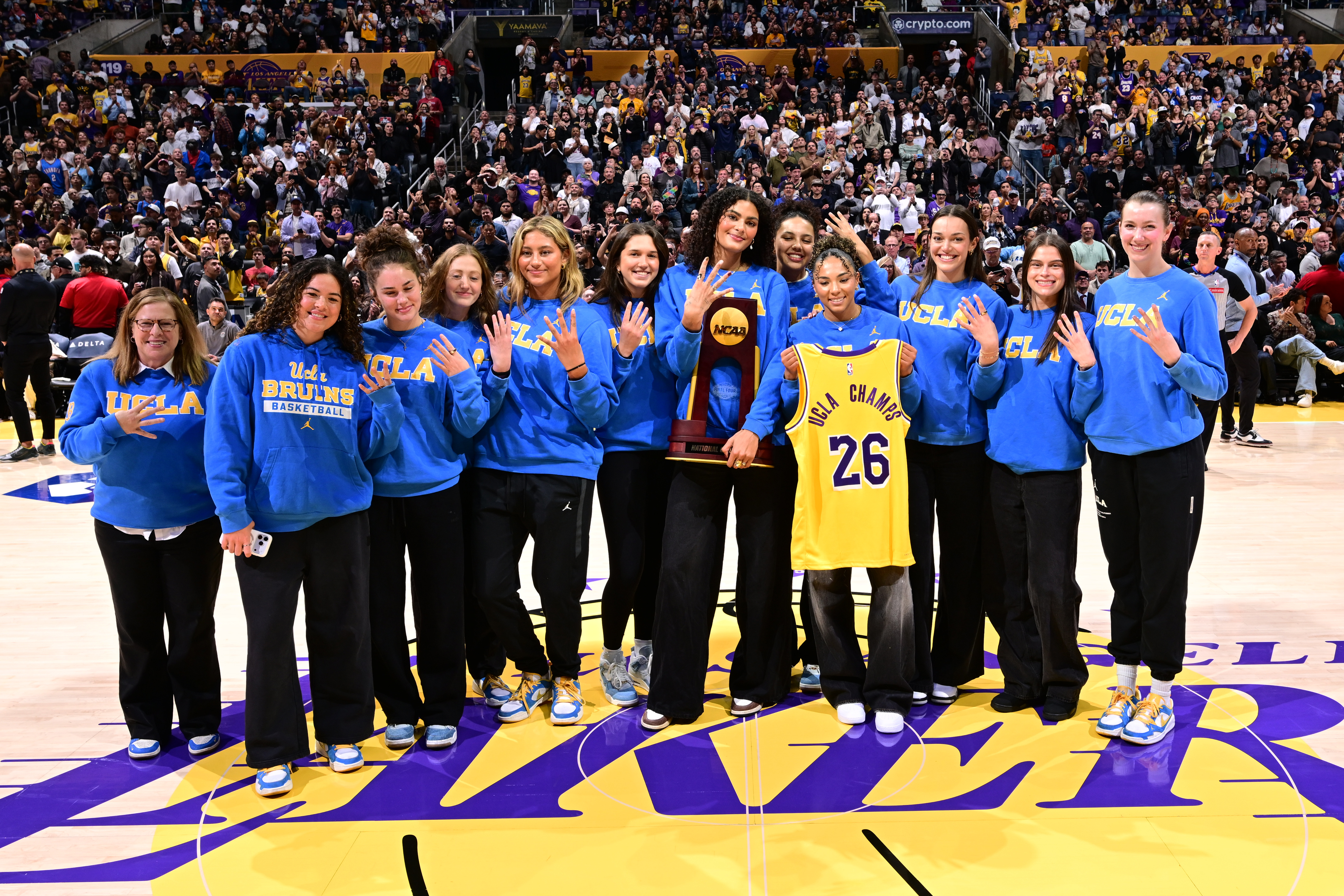
What’s the condensed version of how you got from that point to this one?
Close: Yeah, well first of all, good job putting boundaries on the coach to make sure that I’m a little more condensed. In a short sentence, it’s about reflection. You know, learning and leadership. When I say leadership, it’s not just mine, it’s our program’s. It’s being willing to hold the mirror up and go: what did that teach us? Where are the key learning points? How do we debrief with that? It was learning about the event, not just the game. You have to win the event at the Final Four. It’s a different beast, right?
So it’s everything from what was our mental training like and how did we minimize distractions in the most effective way or didn’t? What was our game planning like and how could we have, in the midst of different constraints that you have no control over in the Final Four, how can we learn to handle those differently so that we can anticipate as opposed to react, which we did the first year? And then just truly going, building that within the team. Like, okay, we always say now that success leaves clues and how do we scale the process of what we did? The opposite is also true: To go, okay, how do we fail forward and what was that like? And then how do you get the team to really adopt those lessons and have them lead those from the locker room?
So we spent a lot of time on both sides of that as a staff and then really talking to the team: what are the standards that we were taught that we didn’t meet and what are you willing to commit to over the next year?
We were in our team retreat in Santa Barbara in August and we were like, okay, we’re gonna reverse engineer this: are you willing to focus and refocus on these habits over and over and over again to lead you to a different place? And it was really rewarding for me going to the Final Four and seeing that, already, their mindset had been shifted and they understood the assignment and the habits were already formed. And so we honestly won the Final Four in August, not in April.
Katz: Off that point, Cori: So often we’ve heard in the last couple of years since the Big Ten expanded to 18, the West Coast teams can’t win the Big Ten because of the travel, blah, blah, blah. That might be true on the men’s side because you know what? They haven’t had the best teams. You had the best team, but you also had a very veteran team to handle this schedule.
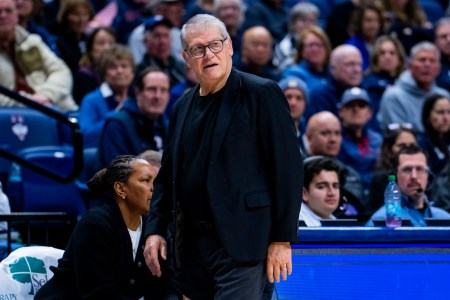
Geno Auriemma Q+A: 12 Titles, One Vision and His All-Time UConn Starting 5
12-Time NCAA Champion Geno Auriemma breaks down UConn’s thunderous return to form and the landscape of women’s college basketball
How much did that play into the journey of this group to not get derailed in the Big Ten?
Close: Well, I think it’s important, but I don’t think it’s the only necessary thing. Character is character. Habits are habits. Perspective is perspective and you can choose that. Those are under your control. And so, I think that us, as leaders, chose to be in the Big Ten. We gain a lot of benefits from being in the Big Ten. Are the West Coast teams a little bit disadvantaged in how we travel? Yes, but we’re advantaged in the fact that we get to be a part of the best conference in the country. We get resources that we do, we benefit. We get a lot of things and so I think it’s short-sighted to complain about that and it’s not going to get you to where you need to go.
On the women’s side, I also have to give credit to USC. They won the regular season championship last year and both of us had younger rosters. We won the Big Ten tournament, and then fast forward: we definitely had a veteran, talented, high-character roster this year. But I think it’s really about a choice of vision and what you allow to come into your frame of reference. So I don’t know, I just am in this modern area. What’s the alternative? And would you want to be there?
If you want to be competing with the best and against the best. If you want to compete for championships on a consistent basis. If you want to bring the highest amount of notoriety and resources to your university and athletic department, there is no better conference. And especially in this ever-changing landscape. Yes, is there a sacrifice? And have we had to change a lot of things in terms of how we travel, how we do nutrition, how we sleep, when we go? I mean, we’ve had a very strategic transition in that, but wouldn’t want to be in any other place.
Seth: Cori, as the NCAA Tournament was starting, your All-American center, Lauren Betts, published an extraordinary article in The Players’ Tribune. The headline was “I Want to Be Here.” I encourage everybody to go and read that. You and I talk a lot about mental health and everything that goes into performance and being an athlete. Here’s a young woman who right now is 6-foot-7, has been tall and different her entire life, everything that a young woman deals with with that difference that young men do not.
She revealed in that article that after she transferred from Stanford to UCLA, she was so overcome with some anxiety and depression that she actually checked herself into a hospital, to sort of dig into all that stuff.
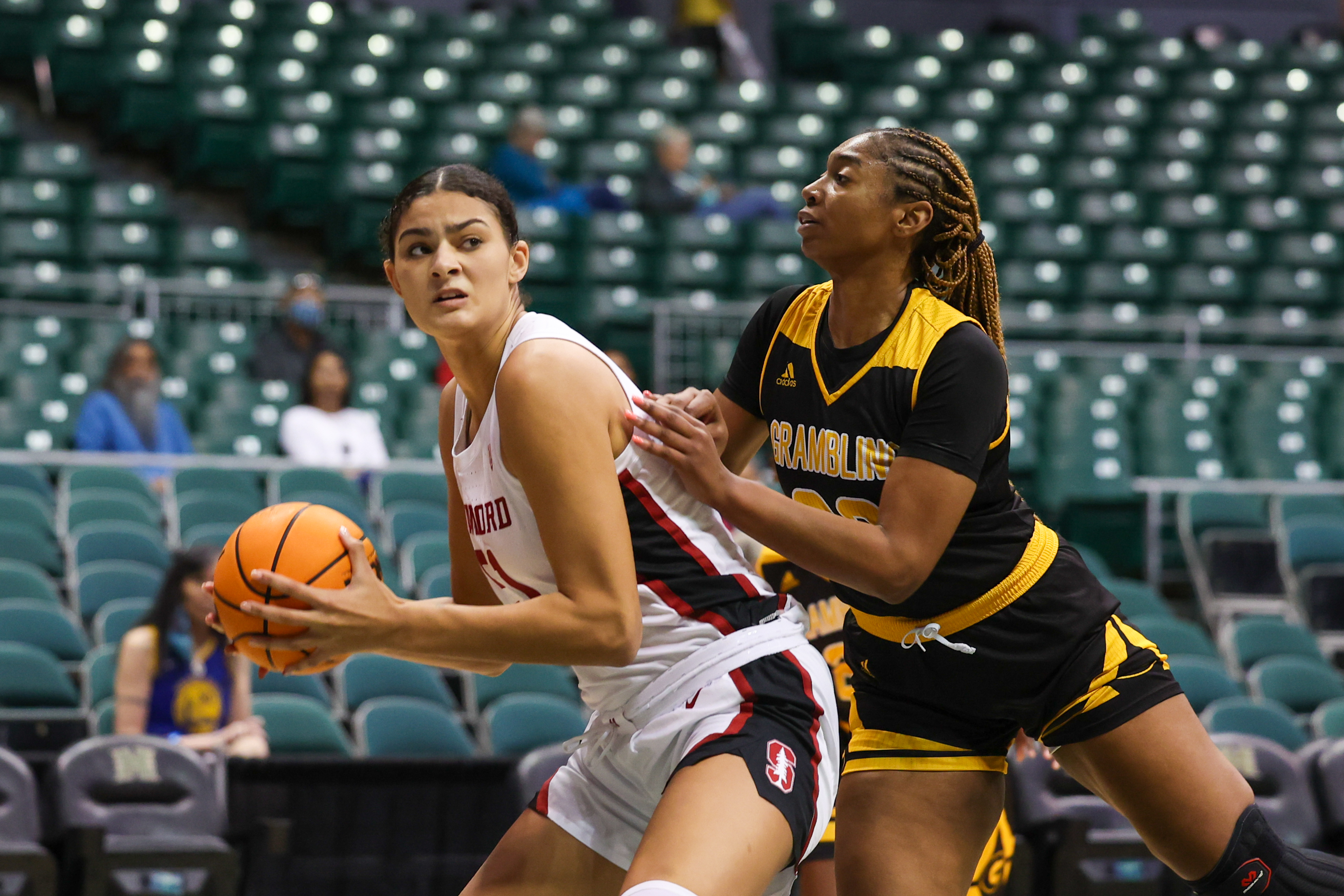
I’m wondering if you could speak in a macro way about the journey that Betts had and also the risks and rewards of revealing all of that just as her final NCAA Tournament’s getting underway.
Close: Yeah, watching that unfold has been pretty incredible because ever since I knew her — I recruited her out of high school. She turned us down, went to Stanford. But she played on my U19 World Cup team right before she went to Stanford. And seeing just sort of her battle, I could tell inside of her the level of, or maybe lack thereof, of confidence.
I remember when she was trying out for that USA basketball team, like she had zero confidence, I mean zero. To watch the maturation, the real hard work — Seth, you’ve been courageously vulnerable with our team and talking about these really difficult things. And I got to give you credit. I remember sitting after you talked to our team, the players were stretching and rolling out right after that. And I asked Lauren, how was that for you? She goes, one of the best people we’ve ever had come in and talk to our program. Spoke right to my heart. So credit to you for furthering that link in that part of her journey.
She really related to that but Lauren, I think it’s a great lesson for me as a leader that when you’re courageously vulnerable, you not only create freedom in your own life and heart but you maximize your impact with others — we so badly want to armor up and protect — she has taught me how to do that.
I remember we were at Penn State this year and she was in our locker room. We’d just won by a lot and we were getting ready to go, get on the plane to go home and she had big tears in her eyes. I was like, what happened? Are you okay? And she goes, coach, these are good tears. I said, what happened? She said, there was a line of probably 100 people that were waiting for autographs — and that really shifted for us this year, that people were coming to watch us on the road — and this little girl, I think she was about 14 years old, said, your story and the fact that you were willing to share, I went and got help where I wouldn’t have gotten help maybe otherwise.
After that point she’s gotten that several times. I saw a clip the other day of her and the Washington Mystics, and a mom and her daughter coming to meet Lauren, and the daughter just starting to cry. The mom says, you have no idea how you’ve affected my daughter’s life. I think that was a very vulnerable place for Lauren to share her story to the depth that she did. But it’s been really amazing to watch her be rewarded for that courage and how it’s impacted people everywhere.
Andy: When you recruit a sibling of a star player, that can go one or two ways. How does each one want to handle that? How do they get along? One’s more of a star than the other at this point. That can obviously change.
But how did you handle that aspect with the Betts family and with Lauren specifically?
Close: Yeah, not very well, honestly. So we had sort of moved on, right, to Sienna, who was — she’s an incredible player in her own right. And Lauren was at Stanford and we were all in on recruiting Sienna.
We were really close to getting a commitment from Sienna, then things happened really fast — you know how things happen so quickly in the portal — and all of a sudden we’ve got Lauren coming and Sienna would not speak to me. She was so mad at me. She’s like, how could you have done this? UCLA was my school, it was my school. And Michelle Betts, the mom, called me after Lauren had committed and said hey you need to call Sienna, she’s not in a good place.
It took us probably a good maybe month or six weeks to try to give her a vision that this could be her own experience and that this was only gonna be one year and that they were gonna share it. That this is really a unique opportunity, and after Lauren leaves, what our vision was gonna be for Sienna in her own right. That she’s a unique story, unique interest, unique player, and that we were gonna really try to serve her well in that way, but it was not easy. And so we eventually got there.
It was interesting the other day, maybe about halfway through the NCAA Tournament, I said to Sienna, I know this hasn’t been totally easy, but would you have traded it and she said, no, I’m not sure. It may have been the biggest thing that has enhanced my relationship with my sister of our whole lives. And so I think in the end it was really good, but the journey was not easy.
Now you’ve got Dylan (Betts) coming up and he’s going to be his own player. I’ve become really popular with men’s coaches. All of a sudden I was sitting next to Matt Painter, actually at the Wooden awards and he goes: Hey, when it’s appropriate, I’d love to talk about Dylan. And I get that a lot, and I don’t blame them. I’d be doing the same exact thing. But you know, they’re an incredible family. I think the challenge is how do you enhance the experience of shared things while still giving them a lane they can run in on their own?
Seth: Last question, Cori, just talking about women’s basketball in general and the NCAA women’s tournament in particular: Some folks, predominantly Geno Auriemma, had not great things to say about the setup of the tournament. I’m not sure people realize that half the tournament goes to one place and half the tournament goes to another place. So this year it was Fort Worth and Sacramento, 32 teams for the second weekend.
It’s just a lot of teams in one place and there are a lot of logistical challenges in that.
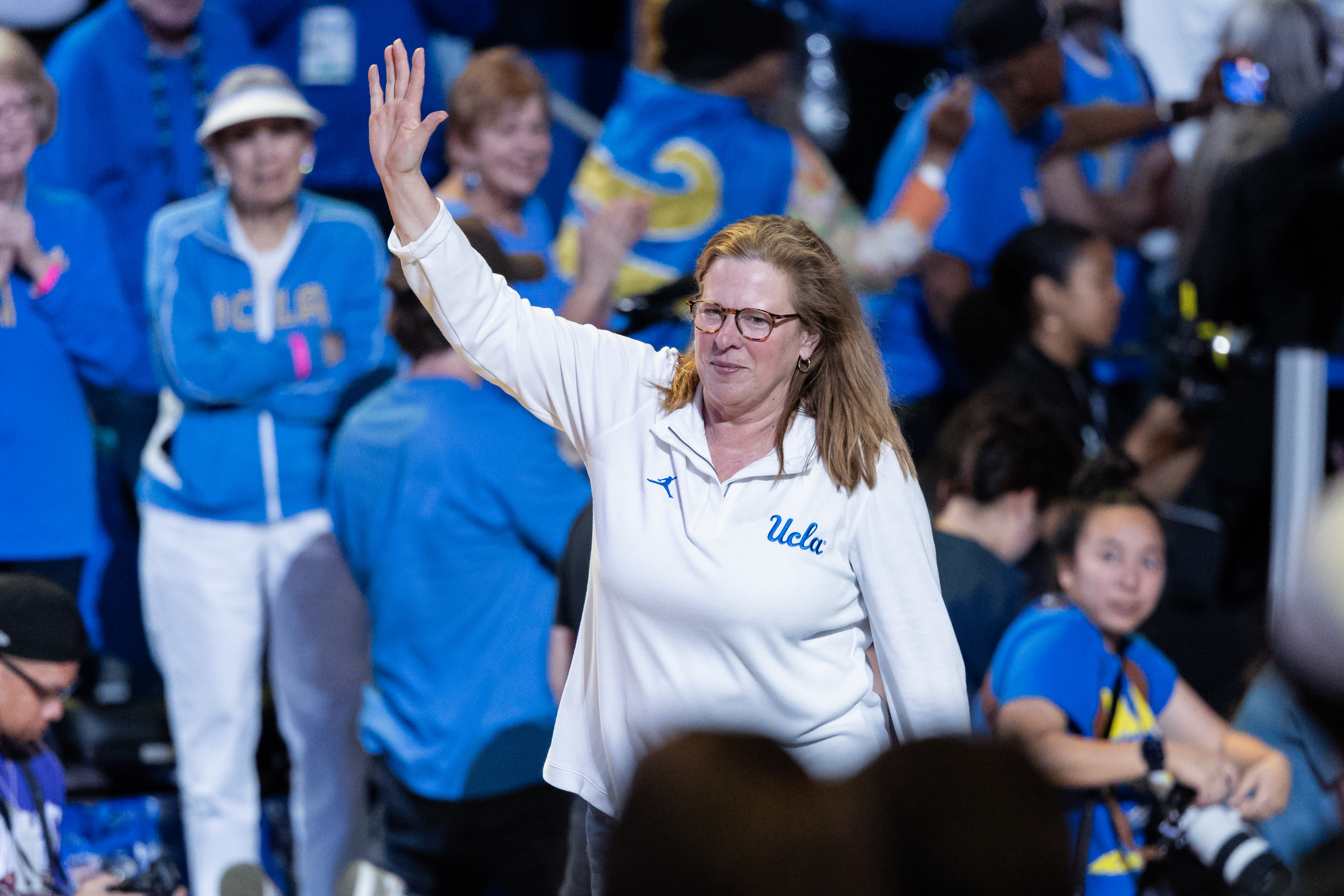
Is that something that you think is sustainable? In general, what would you recommend to make the NCAA Tournament not only a better experience for the players and coaches, but to market it on a national level so it continues to grow and prosper?
Close: Well, I think that’s the big key, right? How do we build on the momentum to make sure that it continues to grow and prosper? I think that trying to figure out the same in the first two rounds is unique to the women’s tournament, that people might not know that the top 16 teams host. And so, obviously that’s a tremendous advantage if you’re one of those top 16 teams. We’re trying to figure out what are the good markers that, okay, now we are at a level of interest and popularity that is sustainable, even if you’re not in your region.
The reality is, there’s no wonder Geno is the best, can’t argue with what he’s done, and he’s been very good to me, specifically through the years. But there’s no coincidence of why he loves it so much. If you look back on all of his regionals, there’s Albany, Fairfield, there’s always a region that’s within two hours driving distance from him, you know? So I get that. But I also think that we got to think about, okay, now can we sustain going back to four regional sites? Can we, are there sacrifices?
Two years ago when we played LSU in the Sweet Sixteen, we had mechanical issues coming out. We got there at about two in the morning. We were the first press conference and it was literally like four or five hours later. It’s a very difficult thing and it’s probably not a coincidence how much better we played this year — the first time in my 33 year career that we were in the same time zone the entire time: Sacramento and then in Phoenix.
But I think that’s the business challenge, right? We really need to be thoughtful and we need to be principled, centered and we need to have data points to know our audience, know where the TV coverage comes from. What do corporate sponsors really want? How do we maximize that? So we make a decision based not on logistical challenges. There’s some things that are, when you have that many teams in one space, there’s going to be some sacrifices.
Do we want our teams to be playing their best and showcase their best at that level? Yes. But I also think you want to make sure you have full arenas. You want to make sure that you’re in good TV windows. You know, there’s just so many things to be able to consider. And I think what Geno did say though, that I really do agree with is we need to make sure that the decision making body on those issues are well equipped. That they represent the business aspect. They represent the logistical, organizational aspect and even the officiating. There’s all these things and I don’t necessarily think the decision-making bodies are representatives of how to make the best decisions based on those parameters. So to me, that’s where I would have the biggest change is who’s making the decisions and how do we make sure those data points are well covered.
Seth: That was like my main takeaway: whoever’s making these decisions needs to be talking to Geno, right? Like he needs to know why decisions are being made. Cause you know, if he doesn’t like something, he’s going to say it — he doesn’t have much of a filter. Never had a filter. Certainly doesn’t have it now. The same thing is happening on the men’s side, just in terms of coaches being a part of that conversation. Well, I’m very glad that this coach was a part of this conversation because you are an absolute beacon in this space. And I’m not just talking about women’s college basketball. I’m talking about athletics, about life, mindfulness, mental health, everything that you talk about.
So to me, Cori, the best part about you winning the championship is that your platform is getting even bigger. Your voice and your words are going to reach even more people. And that’s a good thing for everybody. I know you got a zoom with a recruit coming on. So get good players, keep winning. And thanks for being with me and Andy today on The Hoops HQ Show.
Close: Well, I appreciate it. One of the big things about increasing the platform and all that — and I’ll leave you with this — is that if it’s not about investing in people, if it’s not about coaching people’s hearts, if it’s not about growing something bigger than yourself, it’s really just an orange thing going in an orange thing, and it’s fun for about an hour and a half.
The reason I really wanted to be on this particular podcast is that I know you two are about substance and people as well as growing the game So thank you. It’s an honor to be a part of it and I appreciate partnering with you guys in that.
Meet your guides