
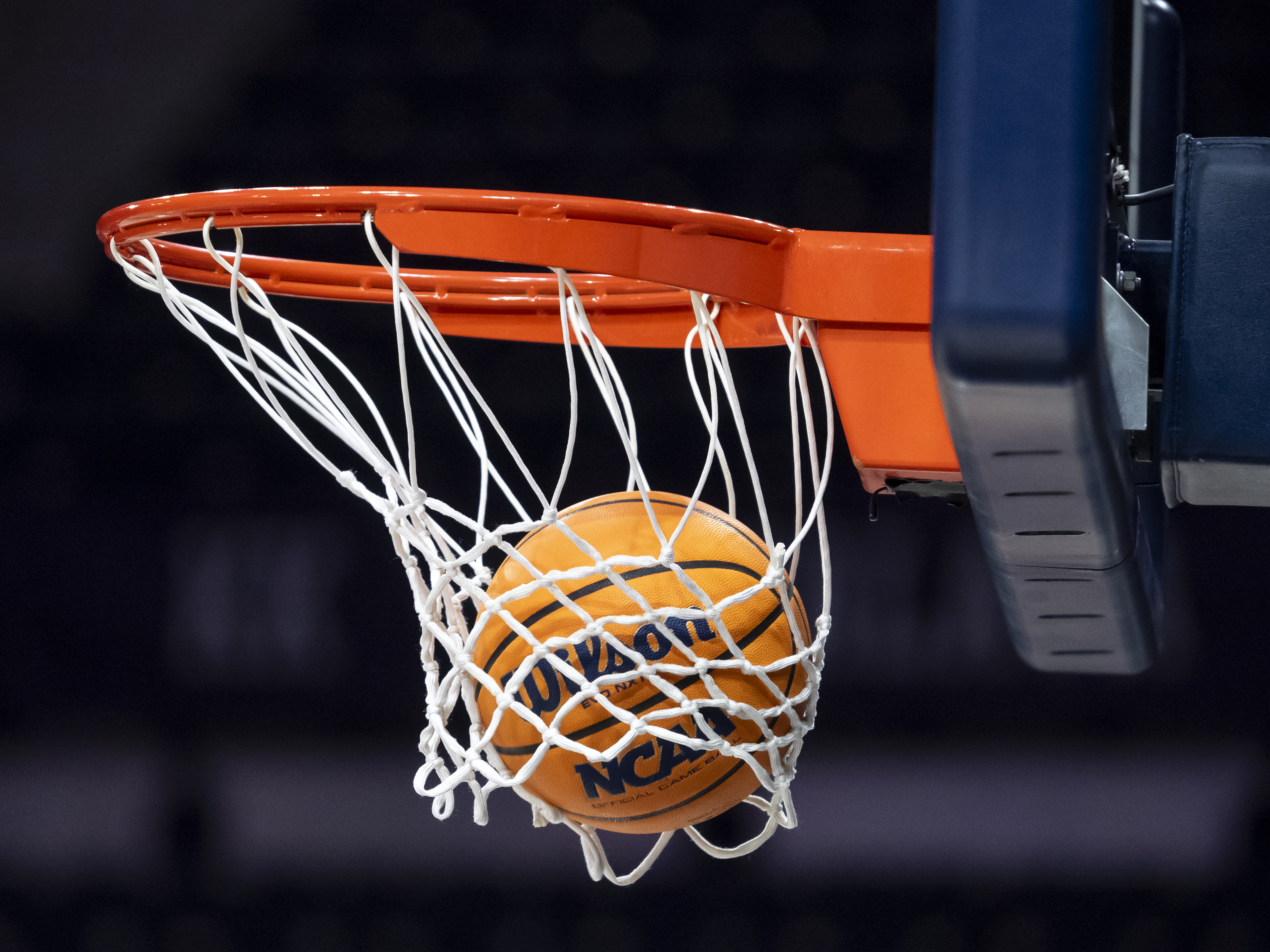
The ball struck the backboard first, producing a loud thud in an eerily silent Paycom Center in Oklahoma City. Then it hit the front rim, then the back rim, before somehow rattling out of the basket.
The potential game-winning halfcourt heave from Vanderbilt’s Tyler Tanner on Saturday did more than just end the Commodores’ season and send Nebraska to the Sweet Sixteen. It poured gasoline on a firestorm of scrutiny regarding the basketballs used in the NCAA Tournament.
Less than a week prior, a video posted by Rebound Rundown boomeranged around the Internet. It showed a coach pounding a Wilson Evo NXT basketball on the newly laid First Four court at UD Arena. The ball bounced higher than one would expect, prompting a mountain of speculation on social media.
Could it be that the official basketball of March Madness was … overinflated?
That line of conjecture isn’t new. Introduced ahead of the 2022 NCAA Tournament, the Evo NXT has been a recurring topic of discussion. It has drawn attention for its unique color — a much brighter shade of orange — and that it appears to be more pumped up than a typical basketball, bouncing harder off the floor and flying further off the rim on missed shots. In a single-elimination tournament, that is no small matter: As teams fight to keep their seasons alive, every subtle detail takes on greater significance.
The Evo NXT is different from what many programs use during the regular season. NCAA rules permit teams to choose which brands they use for home games, and most do so in accordance with apparel deals. For example, Duke uses the Nike Elite, while Nebraska plays with the Adidas Pro. The ACC Tournament features the Spalding Legacy, so the Blue Devils see three distinct basketballs in March alone.
Before becoming the official basketball of the NCAA Tournament, the Evo NXT was unveiled at the high school level and in professional leagues overseas. It was also tested in the 2021 NIT. After receiving positive feedback from players, Wilson and the NCAA brought it to the Big Dance in 2022.
Each March Madness basketball goes through a long and rigorous evaluation process at Wilson’s “Center of Excellence” factory before it touches a tournament court. Chris Rickert, the head of product at Wilson and a former college basketball player at Iowa, says the company does a “quality control check for over 2,500 basketballs” that are used across the men’s and women’s D-I, D-II, D-III and NIT tournaments.
As for the bounciness, which several players — including stars such as Iowa’s Bennett Stirtz and Virginia’s Thijs De Ridder — have called out, Rickert says that Wilson sets the basketballs “at the exact PSI that’s within the NCAA spec for both men’s and women’s and ships them out to every single site. In addition, we provide every site location with the digital pressure guide, where they can measure and test the PSI as well. Through the NCAA, we do multiple rounds of testing to ultimately land on that perfect range of PSI for the player.”
Rickert adds that after sending the basketballs, the company informs each site exactly where the PSI should be and tries to “babysit and monitor (the process) as closely as we can to avoid any possible negative reactions we see out there.”
Contrary to popular belief, the basketballs do not have PSI levels outside of the norm. But a number of players told Hoops HQ that the game balls do feel bouncier and require an adjustment on their part. “It’s like, ‘Man, this might be coming back a little bit faster than I thought,’” Wright State sophomore guard Solomon Callaghan said.
“Really bouncy,” UCF senior guard Riley Kugel said. “You have to respond to it. It’s really just who’s better at making an adjustment. Your shot is going to be different — it’s going to hit the back rim hard and fly out. The ball is going to dribble above your shoulders. It’s just an adjustment.”
Tennessee’s Ja’Kobi Gillespie and Virginia’s Dallin Hall, both lead guards, told Hoops HQ that the balls seem to be better this season than they were in last season’s tournament. “I don’t know if they did that intentionally or we got a good basketball,” Hall said. “Hopefully they can keep using more worn-in basketballs.”
Like Hall, many players have speculated that the bounciness is because the balls are brand new. But Rickert says Wilson makes an effort to break them in beforehand. “They go through a machine that dribbles them and pre-breaks them in so it’s never like a fresh ball out of the box,” he explains.
The Evo NXT was specifically designed for three-point shooters. Wilson saw the way the game was evolving and varied its formula accordingly, developing what it refers to as “extended range technology.” The brand redistributed the weight of the Evo NXT to allow for improved rotation on shots and added an extra layer of texture — “essentially pebbles on top of pebbles,” Rickert says — that creates a better grip and wicks away moisture.
While the general public has fixated on the inflation of the basketballs, Wilson has been encouraged by the rising levels of offense in March Madness. On the opening day of this year’s tournament, three teams recorded 100-plus points (Saint Louis, Michigan and Illinois) for the first time since 2007. Miami (OH) set a First-Four record with 16 threes in its 89-79 win against SMU, and High Point knocked down 15 in its upset of Wisconsin. Overall, teams are scoring more points, shooting a better percentage from the field and committing fewer turnovers than in past tournaments.
Multiple players, particularly outside shooters, told Hoops HQ that they are fans of the Evo NXT. “I mess with the basketball,” said Virginia senior Jacari White, a 6-foot-3 guard. “It’s not as sticky. It feels better coming off.” White shot 6 of 8 from behind the arc and finished with a game-high 26 points in Virginia’s 82-73 first-round victory over No. 14 Wright State.
“I do like shooting with them,” said Wright State’s Callaghan, who was 4 of 6 from deep in that game. “They feel a little bit lighter and you have a little bit more range.”
Like it or not, the differences between the Evo NXT and other basketballs are certainly noticeable to college-level players, which begs the question: Should the NCAA just have one official basketball for the entire season?
In the days leading up to the NCAA Tournament, every team in the field started practicing with the Evo NXT. Some programs tried to familiarize themselves with it even earlier. When Duke and Michigan faced off in mid-February, they chose to use the Evo NXT (both are Nike/Jordan schools). Kansas has an apparel deal with Adidas, but coach Bill Self has his team play with the Evo NXT all season long.
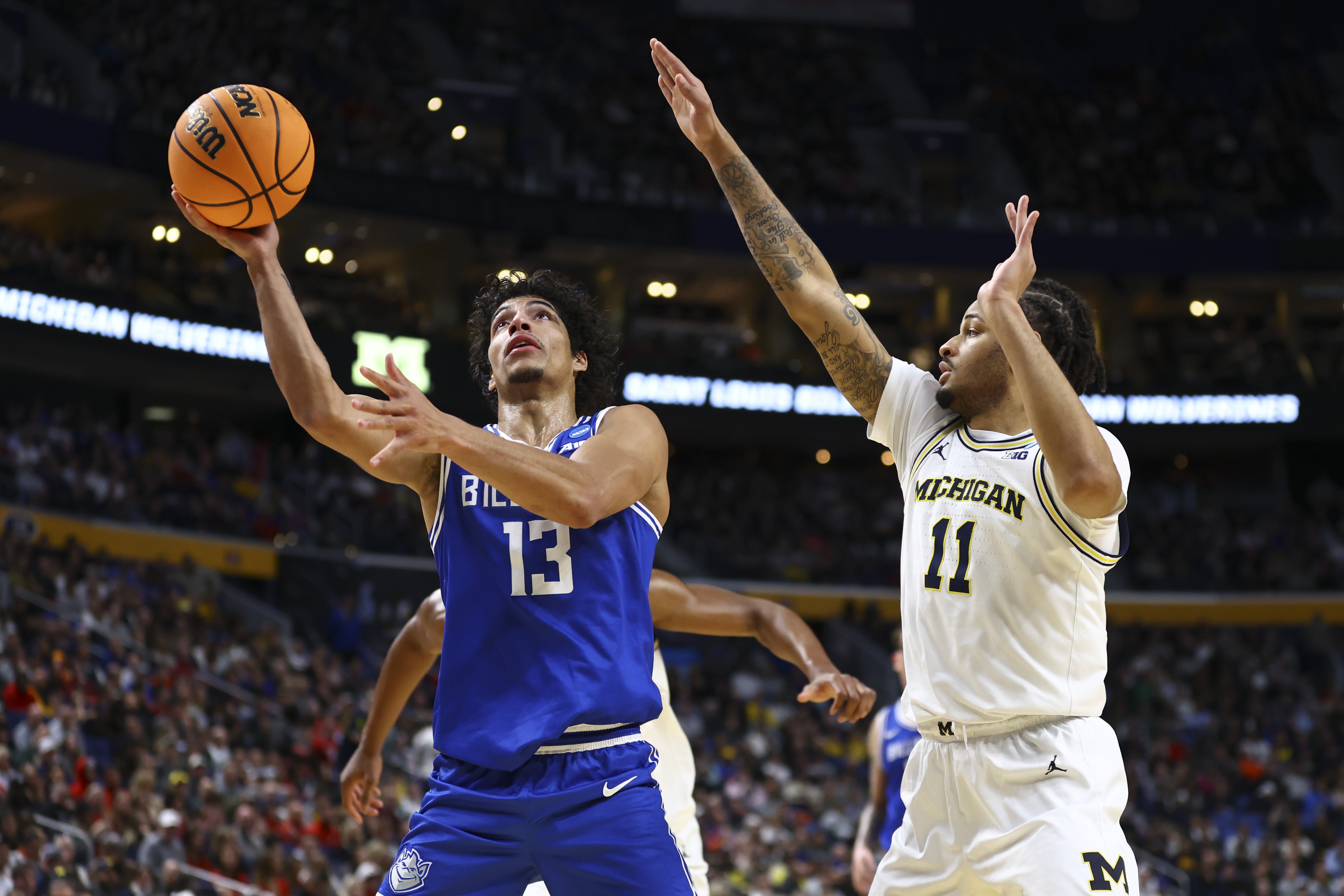
The lack of a uniform basketball has drawn criticism from players and coaches through the years, including Wake Forest coach Steve Forbes, who recently posted about it on social media. The NBA and the WNBA use Wilson exclusively, although each has its own model (the W uses the Evo NXT). FIBA works only with the Molten BG5000. Yet college teams see a wide range of basketballs over the course of a season.
“It would definitely be a lot easier with one basketball. But we’ve been playing for a while. So once you get a feel for it, you know what to do. But it’s definitely harder,” UConn senior guard Malachi Smith said.
“I don’t really see that happening with all of the different shoe labels, but I feel like it would be the best option,” said Virginia freshman guard Chance Mallory, “so everybody could just be focused on one thing.”
Kugel suggested that the variation makes college basketball — and the NCAA Tournament — unique and fun, adding another layer of madness to the Madness. Yes, players have to adjust to the Evo NXT come March. But it’s an adjustment that everyone has to make, and it doesn’t take long for hoopers at this level to adapt.
For those reasons, the consensus among many is that all of the fuss over the basketballs has been, well, overinflated.
“The ball is still round and orange,” UCLA sophomore guard Trent Perry said. “You just have to go out there and play.”
Meet your guide