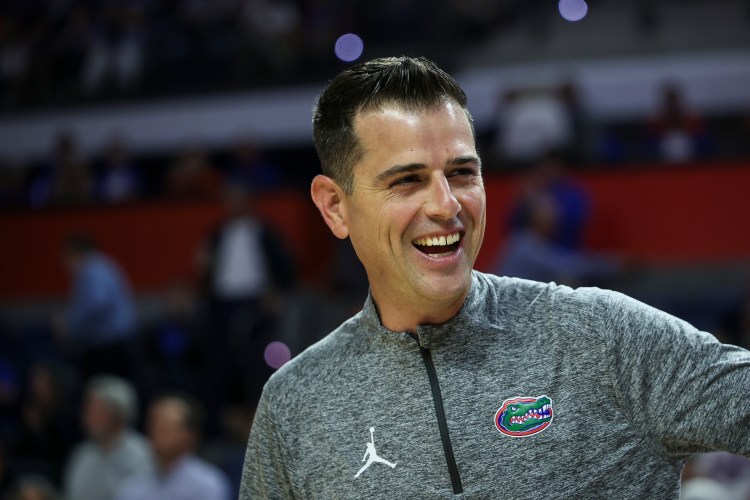

Todd Golden, coach of the reigning NCAA champion Florida Gators, joined Seth Davis and Andy Katz on The Hoops HQ Show Friday morning to talk about Florida’s slow start, the pressure of repeating, integrating new players Xaivian Lee, Boogie Fland, and the SEC Tournament.
Stream full episodes of the podcast on Hoops HQ’s YouTube channel, @hhqsports, or live on the Fubo Sports Network.
SETH DAVIS: Let’s start with the big picture here, your experience coming off a national championship. I’m sure a lot of people told you that your life would change based on the results of that game and that tournament. What’s the most surprising part about the experience and all that you’ve dealt with as the coach of the reigning national champs?
TODD GOLDEN: A couple of things. Number one, right after the championship game, you win and you wake up the next morning and you don’t really feel that different, to be honest. You just wake up and what’s done is done and you start thinking about, all right, what comes next? So you kind of realize that the joy is in the doing, right? And being around your team every day and being able to accomplish that together.
But you don’t get to celebrate it very long, especially nowadays. So the focus was going right back to building the team back up for this coming year. And in terms of how life changes: expectation. That’s the thing that I keep going back to. After winning the national championship, we just had a lot more expectations this year from a program standpoint, from a player performance standpoint and it took us a little bit early in the year to battle our way through that. But I think we’re better for it at this moment.
ANDY KATZ: Todd, I was with you guys at the beginning of the season in that opening game. You got — I don’t know if lucky is the right word — but pieces fit last year and you had a couple of holdovers. This year, maybe just took a little bit longer and that’s normal. A lot of schools are experiencing that, where it took maybe til late January, February for all of it to fit.
What was that process like this year as compared to last year in terms of trying to get the transfers and the returnees all to fit together?
Golden: Yeah, it was definitely a challenge for us early on. I think last year we returned a lot in regards to guys that were already in the program with Walter (Clayton Jr.), Will (Richard), obviously Tommy (Haugh) and Condo (Alex Condon). So those guys had a lot of continuity and really understood how to play with each other.
Whereas this year we had the frontcourt back with Tommy, Condo, Rueben (Chinyelu) and Micah (Handlogten). But all four of those guys we asked to take on more this year and to play bigger roles and to take on more usage offensively.
So those guys were kind of uncomfortable early on just taking on more. And then we bring in Xaivian (Lee) and Boog (Boogie Fland), and we asked Urby (Urban Klavzar) to take on more responsibility coming off the bench. So, I think this year all eight guys that are playing had to take on more. And that process took a little bit. Obviously we’re playing two point guards with Boogie and X. Lee. And I think it took us a little bit for those guys to get comfortable playing together, you know, playing off the ball a little bit, which they weren’t used to in the past.
We didn’t make it easy on ourselves playing UConn, Arizona and Duke early. I’m not sure those are the types of teams that you want to try to get your footing against. But, we fell a little short in those games, but we knew that we had a chance to be pretty good if we stayed the course. And the thing that I’m most proud of with this team is that we stayed together. We were 5-4. Everybody was talking about how Florida, you know, was a flop or Florida wasn’t anywhere near as good as they were last year. And our guys stayed the course. They didn’t splinter. They didn’t point fingers. And it allowed us to really work together in December to get better. I feel like we’re improving the right way as we get into the heart of the season here in February.
Seth: See, that to me, Todd is such an interesting process because I feel like coaches could go one of two ways. It’s very similar to being a parent. You talk about these outside expectations and trying to live up to what happened last season. On the one hand, you can say we gotta tune that out, we gotta stay locked in, it’s just the people in this locker room. But there’s also the realism that you’re coaching young men who live on social media. It’s not like you can pretend it’s not there, so let’s address it head on. Which avenue did you take?
Golden: We tried very hard as a staff to kind of separate last year’s team and success from this year’s team because we knew it was going to be a much different and a much harder challenge to start the year. So we talked about that a lot. But to your point, the social media, that was the issue for us early on.
A couple of guys had some tough games early. And then, you know, they’re hearing from national people about them not being up to snuff compared to last year’s team. Even here in Gainesville, guys were getting ripped on social media after we had some tough games. So we definitely had to address it. We didn’t run from it. And then we did talk about it saying, hey, listen, man, we know here in this locker room, and within the 15 guys on this team and the 10 guys on our staff that are here every day working together, what we’re capable of, and we can’t allow outside noise and expectation to affect what we’re trying to do. And our guys were mentally tough. They did a good job. And we dealt with some of that adversity and some of that confidence issues early. But I feel like they responded the right way and we’re better for it now.
Andy: Xaivian Lee is a great example of that, where there was a lot of flack going around. You know — could he go from Princeton to the SEC and take the reins? And look, there’s a natural progression to raise your level. And he had to do that. And now he’s playing exceptionally well. How did you coach him and mentor him through that as he went from an Ivy League lead guard to being one of the better lead guards in the SEC?
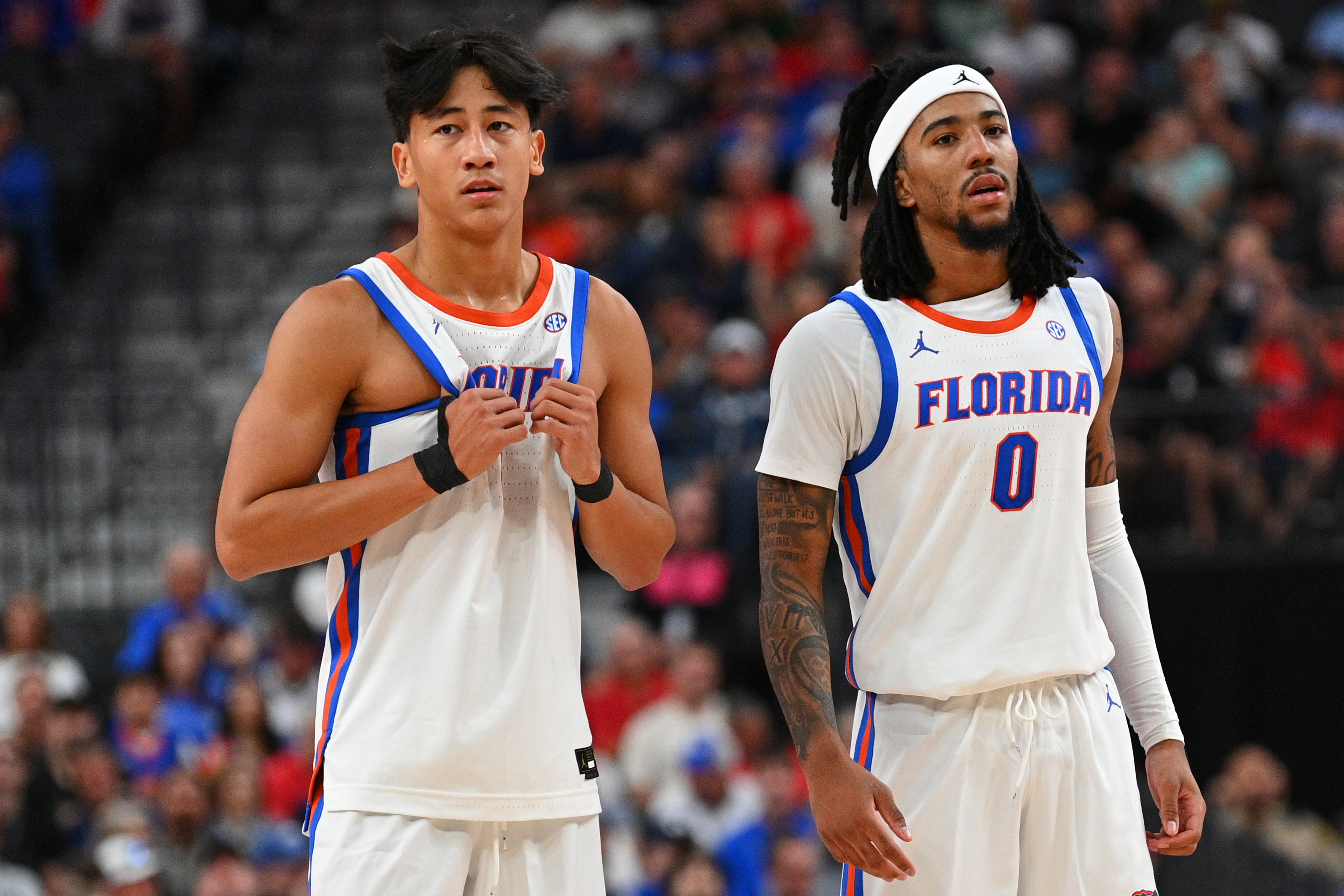
Todd: Yeah, first of all, you’re exactly right. He’s been amazing, really the last month, two months in terms of the way he’s played and we knew that he was a very good player coming from Princeton. He did great things up there, always played well against top competition when he was at Princeton. And we knew it was just a matter of him getting comfortable. And so for me, I tried to do everything I could to let him know that we had his back, even when he wasn’t shooting the ball well early in the year.
I told him, bro, we’re rolling with you. So, you got to find a way to get comfortable and you know, fit in in these different lineups and you can be a little more aggressive. So that was an adjustment for him because we held him to a much higher standard defensively. Held him to a much higher standard rebounding, taking care of the ball. And now he’s playing with four other guys that are really, really good, really talented, some guys that’ll play in the NBA. So that was an adjustment and we knew it wasn’t going to happen overnight. And the same thing for Boog — that it was going to take a little bit of time.
But (Xaivian) was tough. He stayed the course. I give him a lot of credit because he was getting hounded early on in the year about not being good enough and not doing his part. But we believed in him and we knew if he stayed the course and stayed tough mentally that he’d be all right. And now he was SEC Player of the Week last week. He’s doing a great job. And his elevated play has taken our team to another level.
Seth: And his backcourtmate, Boogie Fland. I think you could say a lot of the same things about him, particularly his ability to manage the team. His assist-to-turnover ratio, not trying to do too much. And again, here’s somebody coming as a transfer from Arkansas. High level, high profile. I’m sure he’s well compensated for making that change and you know that comes with a lot of stress. So how have you coached him through all of this?
Golden: Very, very similarly. I think early on, it’s tough for a guy coming in as a point guard to a team that just won the national championship to find that balance of being a leader and being vocal, but at the same time, respecting the guys that had been in the program and had done it and trying to find the right way to partner with them on a day-to-day basis. And, again, that month of November, when we were going through that tough stretch, we were just trying to find our way a little bit and try to find a way to be consistent.
The thing that I credit Boog with is he’s been elite defensively. He’s done a great job at the point of our defense, leading us to be in a top-five defense in America. And, you said it, he’s managed our team incredibly well. His floor presence, the pace in which he plays offensively and also his understanding of finding guys in the right spots and getting them in their comfort zone. He’s done a great job as a floor general for us this year.
Florida Redeemed: How the Best Team in the Nation Got Its Mojo Back
Florida retained six players from its Championship roster, but they weren’t winning trying to imitate last year’s team
Andy: I know we have still a couple more weeks left of the SEC but from a macro sense — SEC Tournament, NCAA Tournament — what’s the best way to coach and lead your team through back to back-to-back days, to win a title, and then, over the course of three weekends, to do it again?
Golden: As cliche as it sounds, it’s a one day at a time thing, especially in that SEC Tournament. We want to win it again, if possible, but you’re going to have three incredibly difficult games. For last year’s experience, we were really fatigued after the SEC Tournament. You know, we found a way to win it. It was a huge moment for our program. We get the one seed, but we were definitely dragging a little bit those next couple of days.
And then it bled into Raleigh where I felt like we weren’t playing with the same level of pop against Norfolk, and then we get into that game against UConn where we had our backs against the wall. It wasn’t really until after that win that I felt like we kind of recovered and got our legs back under us. So that’s something that we got to be mindful of this year. When you’re playing in those tournament settings, it’s all you got to find a way to win. So you don’t really worry about staying fresh and staying ready as you get to the tournament. A little too competitive to be thinking about that. You just got to do everything you can to find a way to win and then take advantage of the time you have after to recover.
Andy: Obviously everyone wants to win these conference tournaments, that’s why you play them. But I know in covering the Big Ten, there have definitely been issues with teams, if they play Thursday or Friday, they can get upset and have been upset. So I do think that is an issue of how you manage that quick turnaround.
What’s your advice for those coaches that play on Sunday and then may have to play on Thursday?
Golden: Two years ago, we had to play four games in four days to make it through the SEC Tournament. We were definitely fatigued, you know, fell short against Auburn and we were definitely tired going into the NCAA Tournament, playing against Colorado in Indianapolis. It’s definitely a challenge. I think for us, in our league, one of the huge advantages is being a top four seed in the SEC Tournament, because that means you only have to play three games in three days to win.
But it’s definitely something you have to be thinking about. My best advice is pray that you get games on Friday in the NCAA Tournament. That was a big advantage for us last year. That’s one thing that can help you out quite a bit.
Seth: Todd, you were definitely one of the more outspoken critics of Nate Oates and (Alabama’s) efforts to get Charles Bediako eligible. Andy and I kind of had a disagreement about this. Andy felt like if you’re someone like Charles Bediako, you made the decision to go pro, then you should live with the consequences. I felt like, hey, that’s what the legal system is for. And if he wants to take his shot, he should take his shot. We know how it ended up. But I feel like coaches are kind of betwixt and between on this.
On the one hand, we need to have rules and stick to them. But on the other hand, when a coach has the ability to make his team better and win some more games, I don’t know too many coaches who would turn that down. So what are the responsibilities right now in this uncertain environment of coaches and schools when what’s good for their program might be at odds with what’s best for the game?
Golden: I think we’re at an inflection point a little bit in regards to, you know, a lot of these eligibility questions and issues. For the Bediako situation, I don’t fault Nate for doing what he did to try to get a guy that had been in his program back eligible. They felt like they needed a little bit of a lift in the front court. Obviously, Charles is a great player and helped them in their time.
But with that being said, that eligibility piece, it was understood in our profession that if a guy stayed in past the draft deadline, that they weren’t coming back to play college. And now with him playing on that TRO, and then it got flipped again and now he’s not allowed to play, we just want a little more direction in regards to how these situations are going to be handled. To your point, the legal system stepped in. I don’t know how much they can do once that happens.
But listen, college basketball, I don’t think has ever been healthier or ever been more competitive. A lot of people want to focus on some of these issues, but big picture, macro-wise, our game’s in great shape. And I think as long as we can get a little more direction on some of these issues, it’ll make things easier for us to operate in a healthy environment. And I also think it gives more clarity for the student athletes.
Right now, I think these high school guys are up against a tough situation with a lot of these older Europeans coming over, a lot of these older American guys getting extra years and we’re gonna get a little bit of a backlog coming out of high school where these guys are gonna have no opportunities to continue playing where ten years ago, they would be going to high major schools. I think that’s a little bit of the situation we’re in and we got to sort that out. But at the same time our product’s really good, our ratings are as high as they’ve ever been and I think we have an opportunity to continue to raise our game if we handle these situations the proper way.
Meet your guides