
CHICAGO — The line of students stretched from the door of Gentile Arena, through an atrium, around a corner and into the student center, where it disappeared into a food court. There was no shortage of enthusiasm among the Loyola Chicago undergrads, even for a 6 p.m. start for a Tuesday game against George Mason.
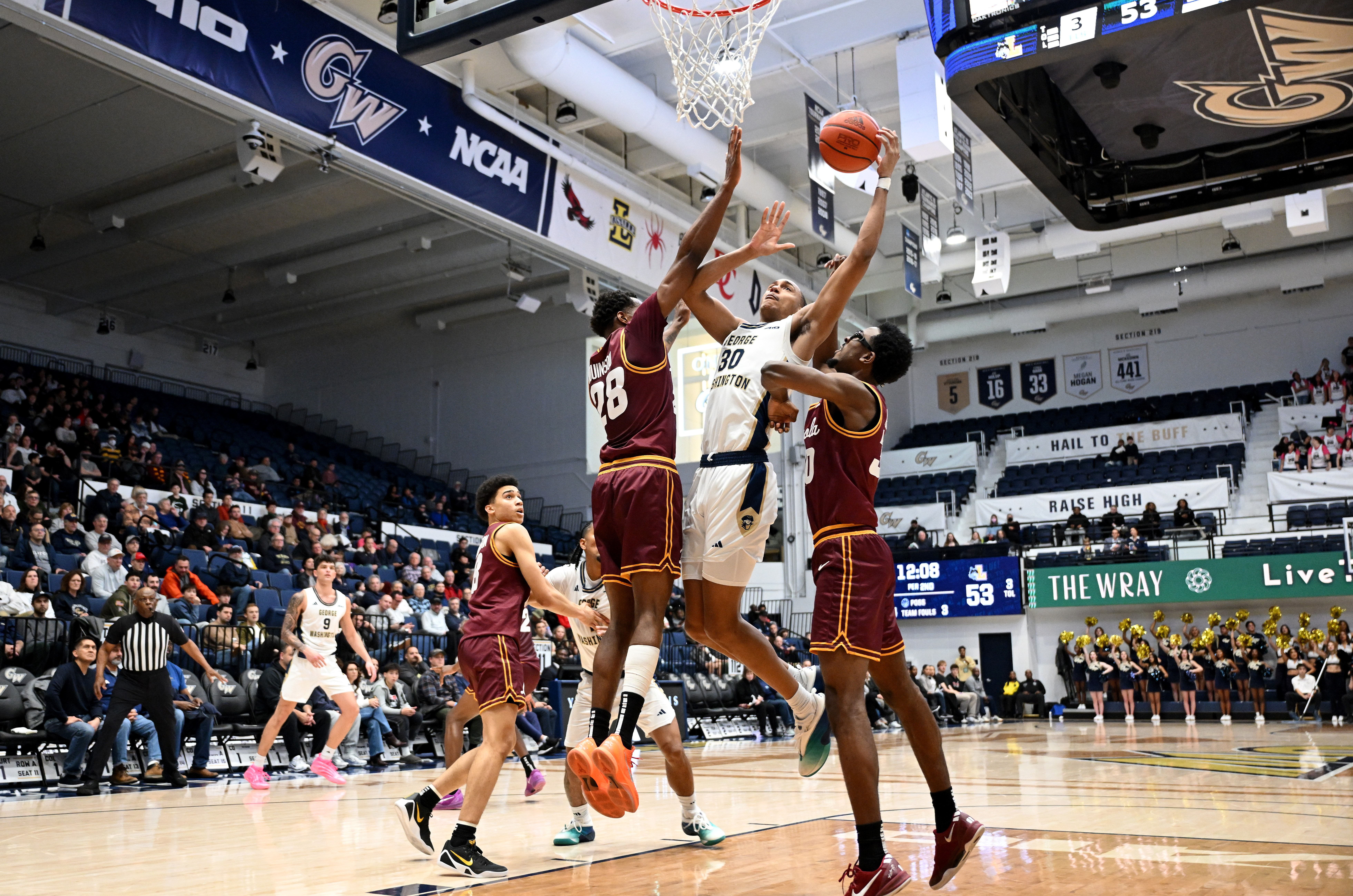
The dedication from the students was impressive considering that Loyola Chicago, which had been picked to finish fifth in the Atlantic 10 in the preseason, was now nestled at the bottom of the standings with a 1-3 record (5-12 overall). In their previous game, the Ramblers had been humiliated by 45 points at George Washington. That was yet another dispiriting loss in a season full of them, including home losses in buy games to Mercyhurst and Chicago State.
Despite the ardent student support, the Ramblers lost that night, 82-74. They’ve since lost four more, including 85-64 Tuesday at home to Saint Joseph. That stretched their losing streak to eight games and left them alone in last place in the A-10. Ranked 99th in KenPom in the preseason, the Ramblers have fallen all the way to No. 308.
To be fair, the Ramblers have suffered through injury after injury, reduced to eight players by midseason and starting a walk-on. But despite being a proud program that has both a cherished distant and recent history, Loyola Chicago has unquestionably been one of the biggest disappointments of this college basketball season. That, in turn, has raised difficult questions about the ability of this program to survive in the uncertain new world of pay-for-play, revenue sharing, NIL, and the transfer portal.
This program is ambitiously resourced, but after losing three starters from the NIT semifinalists of last season, fifth-year coach Drew Valentine made several miscalculations in the transfer portal, falling into the familiar trap of being tantalized by raw talent instead of cultural fit. Without the flow of developing players a program like Loyola might have been able to rely upon in the past, there was nothing to fall back upon.
Loyola hopes one bad season can’t undo a carefully laid foundation that, despite an Atlantic 10 regular-season title in 2024 and the run to the NIT semifinals last spring, still hasn’t gotten the Ramblers to the NCAA tournament since 2022, when they were still in the Missouri Valley.
The disappointing season has naturally raised questions about Valentine’s status. The student newspaper, the Loyola Phoenix, published a column recently calling out the players’ lack of commitment while acknowledging the mounting criticism toward Valentine. The university declined to make any players available for this story immediately before or after the George Mason game or over the 10-day period that followed, which included three more double-digit losses.
For the time being, the school’s athletic director, Steve Watson, who promoted Valentine to the top job in 2021 after Porter Moser left for Oklahoma following a run to the Sweet 16, is standing firmly by his man. “Unwavering,” Watson told Hoops HQ. “He’s fantastic. He’s what Loyola basketball is all about. He’s the kind of guy you want coaching your kids.”
Watson was also quick to point out the Ramblers could have as many as eight players back next season, including five who have started games this season, Rubin and Moore among them. That suggests the real test for Valentine may not be how he handles this season, but the next one.
Not surprisingly, Valentine offers a vote of self-confidence as well. “I think I feel less pressure,” he told Hoops HQ. “I’ve proven not only that we can win and get a team to the tournament but respond to a tough year and come back and win. I got my job at the craziest time ever. My first year was the first year of immediate eligibility and transfers, and then NIL starts, and then it goes from collectives to rev-share. We change leagues. It’s kind of crazy. I think I’ve done a good job with the help of our administration at putting our program in a position where, sure, we may not have made the NCAA tournament run like before, but we’ve been consistent. Everybody still looks at us.”
Valentine has been through this before. During his second season, the Ramblers’ first in the A-10, they fell to 10-21. The Ramblers rebounded to win the league the next season, giving hope that those growing pains were in the past. But they are back and more painful than ever.
“I want to be a consistent winner,” Valentine said. “This is our second time in our four years in the A-10 when it hasn’t been consistent. I think this year is different from previous years because our talent level is enough, and injuries have gotten in the way of that.”
A month before the season began, the line to pay respects to Loyola’s most famous fan was even longer than the line of students to get into the George Mason game. Sister Jean Dolores Schmidt was 106 when she passed away in October, eight years after she became an international celebrity as Loyola’s team chaplain during the Ramblers’ run to the Final Four in 2018.
It’s difficult to conceive of Loyola basketball, let alone Loyola itself, without her beneficent presence. You can still buy socks with Sister Jean’s face on them. She has her own logo among the A-10 logos in Gentile Arena, and nearly every adult fan wears one of her trademark striped scarves.
“There’s a void, there’s no doubt,” Watson said. “We’re going to make sure no one forgets that impact, and how important she was to the program, to the department and to the university. But it’s different. It’s just different. It’s still weird.”
A homegrown celebrity fan like Sister Jean is one of many advantages Loyola can boast over its basketball peers, along with a pair of Final Four appearances.
Being in Chicago is both a blessing and a curse. Though it can be difficult to get a foothold in a busy, pro-sports focused media ecosystem, the city is rich with top recruits. Loyola center Miles Rubin, a two-time all-A10 pick, played at Public League powerhouse Simeon and chose Loyola over DePaul, among others. He stayed after a breakthrough freshman year and after an all-A10 sophomore year.
A major market like Chicago also provides a dedicated, affluent donor base willing to ensure the flagship basketball program is capitalized to compete in the A10, and without any football program to sap resources or attention.
“We are where we need to be,” Watson said. “The financial commitment to our basketball program has been outstanding. That hasn’t changed and we don’t anticipate that changing. We’re funding it to be at the top of the league.”
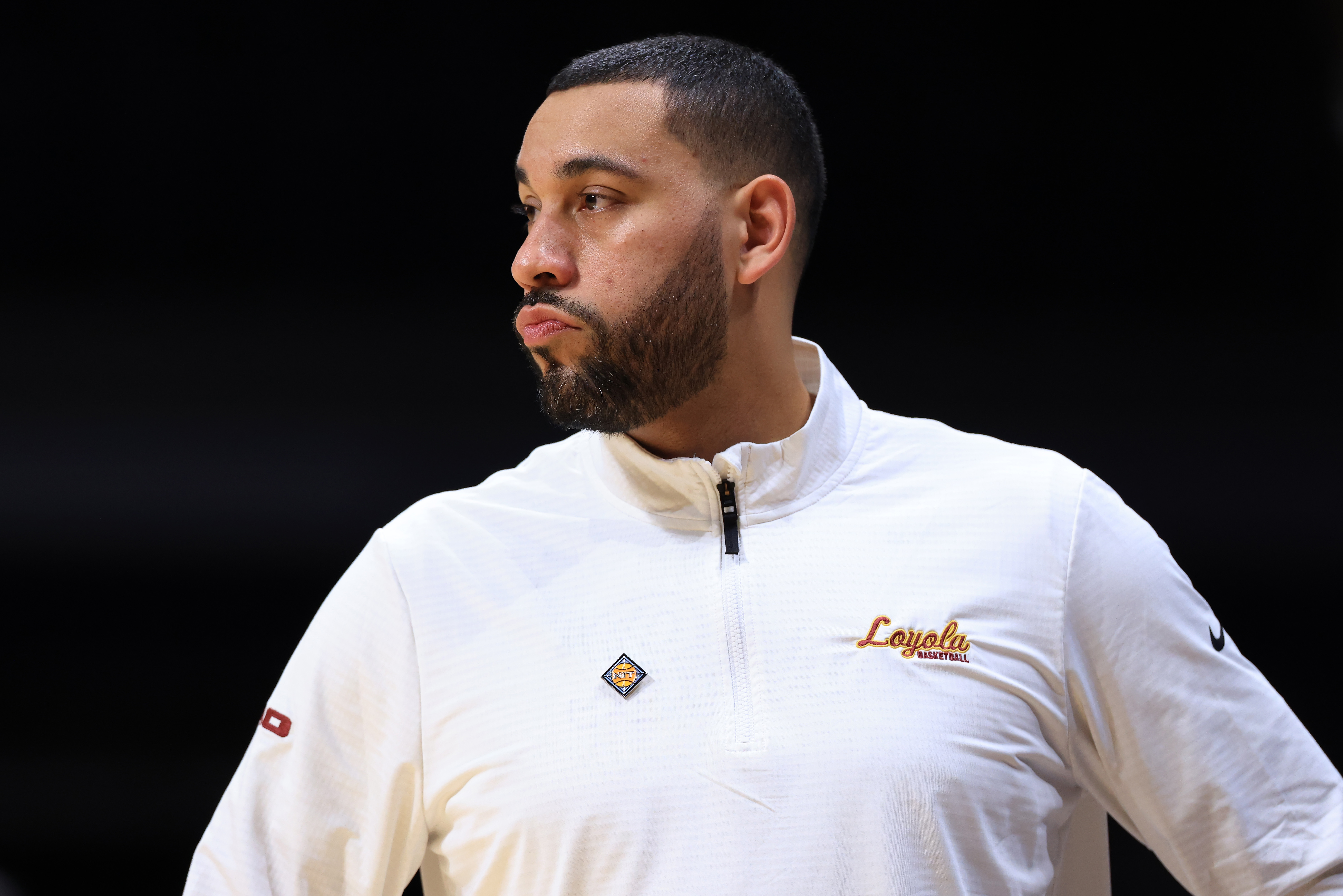
When Watson promoted Valentine in 2021, Valentine was, at 29, the youngest men’s basketball coach in Division I. He played for Greg Kampe at Oakland, spent two years as a graduate assistant under Tom Izzo at Michigan State and another two years back on Kampe’s staff before joining Moser in Chicago.
Valentine’s first Loyola team made the NCAA tournament, losing to Ohio State as a No. 10 seed. Then Ramblers regressed to 10-23 the next season, which means this isn’t the first time they have found themselves in this position. They have made the NIT twice since, making the semifinals a year ago, but this year will almost certainly extend the NCAA tournament drought to four years.
The Ramblers lost three starters from last year’s team, but with Rubin and point guard Justin Moore returning, they aimed high in the transfer portal, bringing in players from Wisconsin, California, New Mexico and Charleston. With the addition of a four-star recruit in Chuck Love, expectations were high for the Ramblers to pick up where they left off.
Instead, they fell off completely. The injuries started over the summer. The absences, combined with the roster turnover, kept the Ramblers from getting into any kind of a groove. And Valentine’s portal additions, pursued while Loyola was still competing in the NIT, never really clicked.
“This year’s class, I leaned more into offense and what I thought talent level would help us win, rather than going out and getting guys like Braden Norris,” Valentine said, gesturing across the court to the former Loyola point guard, visiting with the team that morning. “He wasn’t the most talented dude, but he was tough.”
Valentine is not giving up hope. “Right now, if we get our guys, by the beginning of February, back where they were two weeks ago?” Valentine mused. “We’ll be in a good spot to have a good February, have a good March.”
That would make for a great story, but in the meantime Valentine and his team are up against some harsh realities. The standard of excellence for this program was set long ago. The question is whether the Ramblers can live up to it again.
Meet your guide