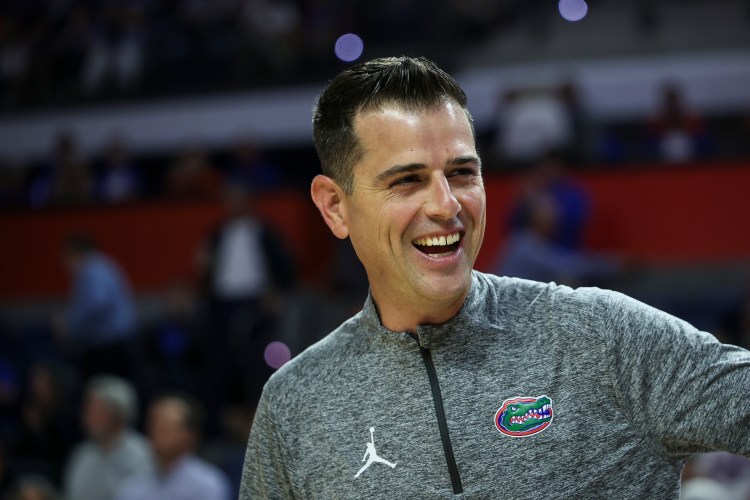
Will Wade rang in the new year with some fireworks. Just not the kind that were set off over Times Square at the stroke of midnight.
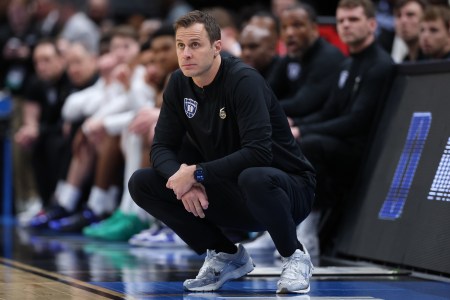
Following his team’s win against Wake Forest in its ACC opener, only a few hours before the ball dropped to begin 2026, the volatile NC State coach set off a barrage of expletives in a postgame tirade defending struggling star Darrion Williams.
The preseason conference Player of the Year had become cause for concern among fans and the media after being held to single-digit scoring in six of seven games while going just 3 for 20 from the floor in two starts after sitting out a game with a shoulder injury. The criticism didn’t sit well with Wade, who went off when asked about Williams after the game.
“I’m tired of people picking on the kid,” Wade said. “I get it. He makes a lot of money for us, but there are about 10 other schools that would have paid as much or more than we paid for the kid. The kid is not perfect. I understand that. The kid is not perfect, but he is a damn good player and we are lucky to have him at NC State.”
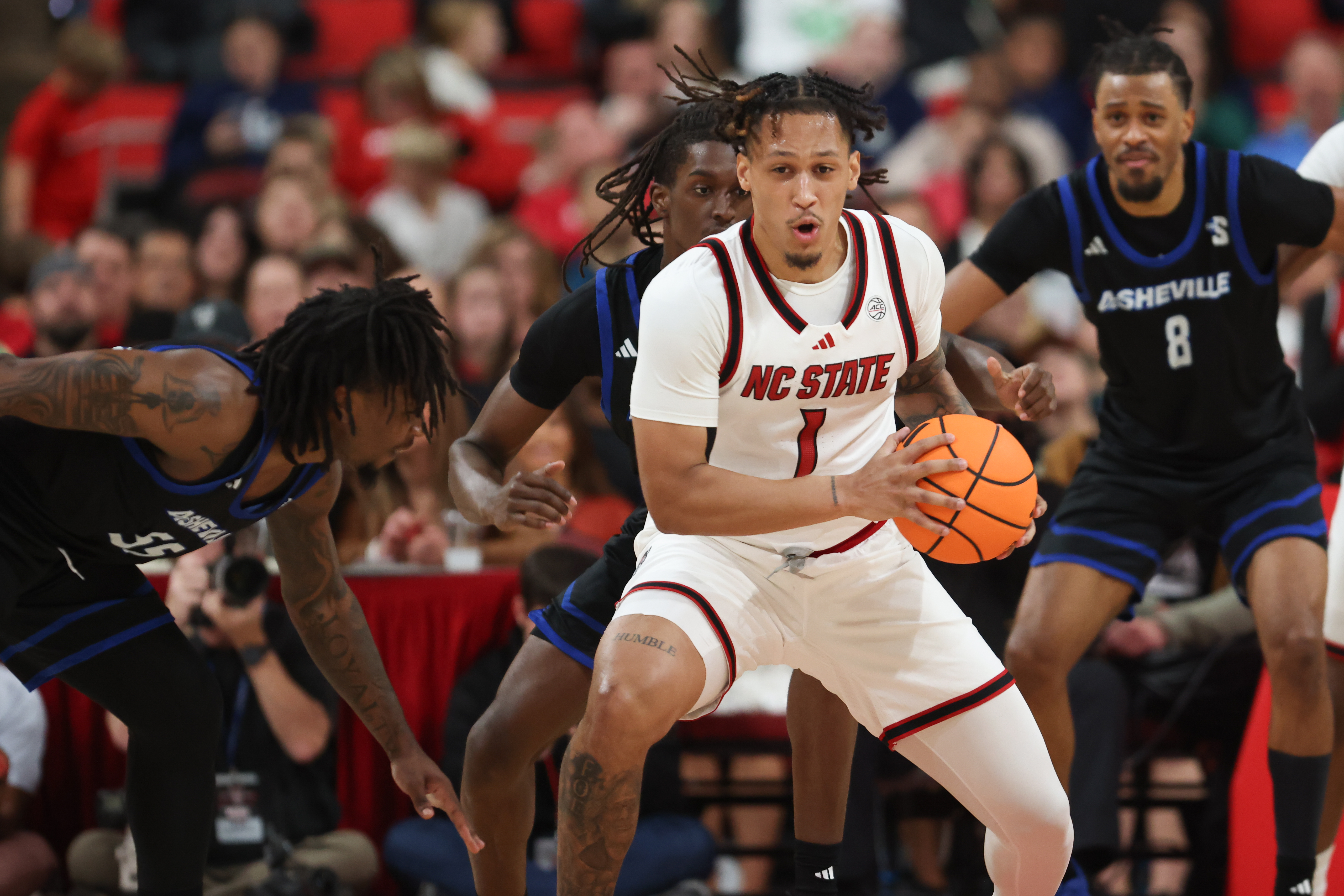
The rant was clearly performative, designed more as a show of support for Williams than aggravation toward the reporter who asked about it. And as was the case a few weeks earlier when he openly questioned his team’s toughness, Wade’s approach to the situation paid off with immediate results.
In the two games since proclaiming that “everybody needs to shut the hell up about” Williams, the senior guard has bounced back to make 11 of his 26 field goal attempts (5 of 9 on three-pointers). He scored 22 points with 4 rebounds, 2 assists and a steal in State’s 79-70 win at Boston College on Tuesday.
“I just had to get back in the gym and get back to the basics,” Williams said after the BC game, adding that his “confidence never wavered…I’ve been shooting well since even before the break. So I made a couple of the easy ones and my teammates never gave up on me. They told me before the game, ‘Just be you.’”
While some of Williams’ improvement can be attributed to recovery from an injury and the extra work he put in with assistant coach Vernon Hamilton, the coach also earned an assist by running more sets designed specifically for Williams — including a few that had him initiating the offense as a point guard. “We just made a concerted effort to get him the ball, which we haven’t done in other games for whatever reason,” Wade said after the game. “We’ve gone away from that, but he makes the right play when he gets the ball.”
Despite his recent dropoff, Williams still leads the Wolfpack in scoring at 14.3 points per game, while ranking second in rebounds (5.3 per game), assists (48) and three-point baskets (31). Currently 11-5 (2-1 ACC), the Wolfpack is going to need him to return to that level on a consistent basis to have a shot at returning to the NCAA Tournament after missing out a year ago.
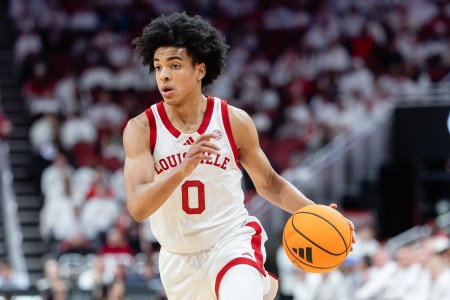
Inside the ACC: Louisville Freshman Breaks Out; UNC at Crossroads
How will the Tar Heels fare without their leading scorer and rebounder? PLUS: A look at Louisville star freshman Mikel Brown Jr., a resurgent Florida State and more news from the ACC.
Shrewsberry’s meltdown sheds spotlight on new continuation rule
Most of the comments posted to the viral video of Micah Shrewsberry charging after officials last Friday were just as outraged as the Notre Dame coach over the controversial last-second four-point play that cost the Irish their game at Cal and led to Shrewberry being publicly reprimanded by the ACC. And in previous seasons, their anger would have been justified.
But because of a change to the so-called “continuation rule,” the call that ultimately decided the game – though still a judgement call – was correctly enforced.
Notre Dame led by three with time running out when Shrewsberry instructed his team to foul in an effort to prevent a game-tying trey. Guard Logan Imes did just that as Cal’s Dai Dai Ames picked up his dribble and prepared to shoot. Under the old rules, Ames would have gone to the free-throw line for a one-and-one opportunity with two seconds remaining. Not anymore. Because the college game has gone to the NBA model that allows the player to finish his drive or shooting motion after absorbing contact, the three-pointer Ames got off counted. He then made the and-one to give the Bears a 72-71 victory that sent Shrewsberry into an epic rage.
The Irish coach has since apologized for his behavior, while acknowledging that the new rule contributed to the confusion over the call.
“It’s difficult. It’s different,” Shrewsberry said Monday during the ACC’s weekly coaches Zoom session. “They throw in new rules each year that you’ve got to get up to speed with pretty quickly.”
Shrewsberry might be the first ACC coach to get caught by surprise by the new continuation rule. But according to Georgia Tech’s Damon Stoudamire, who spent time in the NBA as an assistant with the Boston Celtics before joining the Yellow Jackets, he probably won’t be the last.
“In a normal NBA game, when you have endings like we did last week, as a player you go up to the ref and say ‘Hey, I’m fouling this guy,’” Stoudamire said. “We talk about the rule, but a lot of times the refs have to prepare too. There’s a lot that goes into that. It’s not as easy as one, two, three. I’m pretty sure we’ll have some other things that happen that will put (the new rule) on the forefront as well. It’s unfortunate (for Shrewsberry), but we’ve got to figure that piece out.”
Triple-doubles becoming a habit for SMU’s stat-stuffing BJ Edwards
BJ Edwards isn’t SMU’s leading scorer and he’s only second on the team in assists and rebounds. But when it comes to filling up the stat sheet in all three categories in a given game, no one on the Mustangs – or the ACC, for that matter – has been better this season.
The 6-foot-3 senior wrote his name into the conference record book on Nov. 21 by amassing 24 points, 13 assists and 10 steals in a lopsided win against Arkansas State. It was the first triple-double in league history to include steals. He recorded another triple-double on Dec. 28 with 21 points, 11 rebounds and 10 assists in a win against Cal State-Fullerton.
In doing so, Edwards became the first Division-I player nationally in 2025-26 and only the seventh ACC player ever to record multiple triple-doubles in a season. The SMU school record is three, set by Gerald Lewis in 1992-93. Edwards nearly matched that mark on Dec. 7 when he picked up nine points, nine rebounds and 11 assists in an overtime victory against Texas A&M.
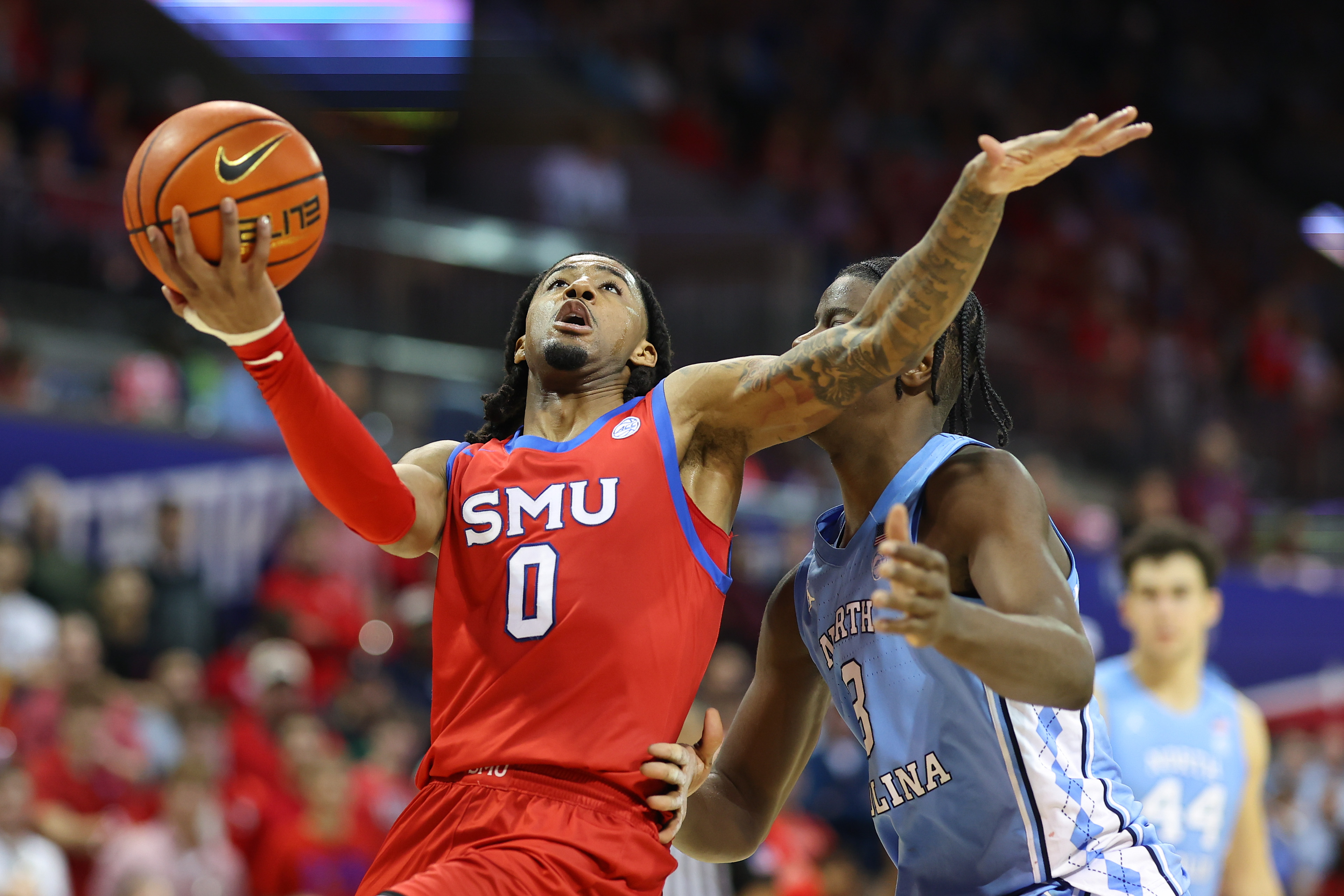
Like a hard-throwing baseball pitcher capable of tossing a no-hitter whenever he takes the mound, Edwards has triple-double potential every time he’s on the court, in the estimation of his coach Andy Enfield. “BJ defends at a high level. He steals the basketball. He was first-team (All-ACC) on defense last year as a junior, and he’s improved his offensive productivity,” Enfield said. “We need him to score more for us this year, because we lost three double-figure scores off last year’s team. So our goal in this offseason was to give him more confidence and skill development with his offensive game so he can score.
“He’s averaging about 13 and a half points a game on very efficient shooting, he’s improved his three-point shooting and his decision making, his 78 assists this year to 28 turnovers is outstanding as a secondary ball handler behind will be and then, of course, there’s his rebounding and his winning plays that he makes.”
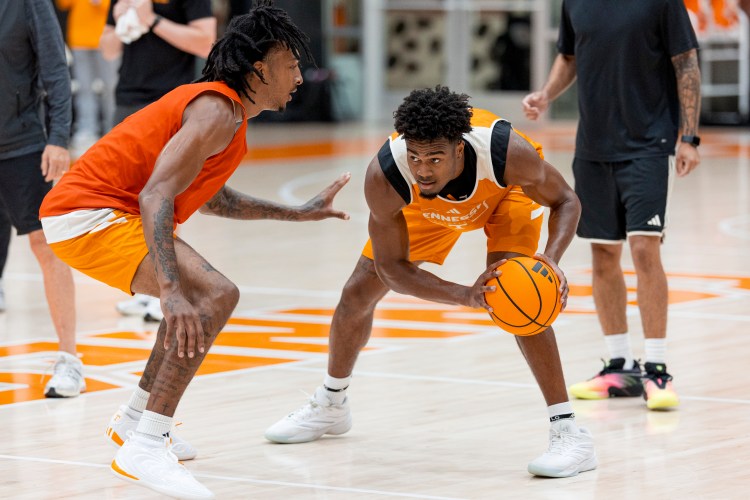
Edwards is in his third season with the Mustangs after starting his career at Tennessee. His averages of 13.5 points, 5.7 rebounds and 5.5 assists, as well as his .468 field-goal percentage are all personal bests.
“That’s what guys that have been in college a few years developed their game should look like with time,” Enfield said. “He’s done an amazing job of just buying in, getting better, going out on the biggest stages and making plays.”
Around the rim
- Three of the four first-year ACC coaches are off to strong starts. At Miami, Jai Lucas is one win away from doubling the Hurricanes’ overall win total of seven from all of last season. NC State’s 11 wins under Wade are just one fewer than his predecessor Kevin Keatts managed in 2024-25. At 13-2 and ranked 23rd nationally, Ryan Odom has Virginia two victories away from matching last season’s total. The fourth conference rookie, Luke Loucks, is off to a 7-8 (0-2) start at his alma mater, Florida State. But that record might be deceiving. His first two conference games with the Seminoles have been against No. 6 Duke and No. 17 North Carolina, the ACC’s two most recognizable bluebloods. “Yeah, thank Commissioner (Jim) Phillips for that. A nice welcome to the ACC,” Loucks said. “To start our conference play with UNC and Duke gave me a good chuckle. But it’s also part of playing the ACC. I’m glad those teams are as good as they are. It’s a good measuring stick for our group as we build this program and lay down a foundation.”
- Louisville is just 2-3 in its last five games and has lost back-to-back ACC games to Cal and Duke heading into the weekend. The slump has put the Cardinals in danger of falling from the national rankings for the first time this season, but coach Pat Kelsey isn’t concerned. He’s confident his team will return to form as soon as star freshman Mikel Brown returns to the lineup. Brown, who averages 16.6 points and a team-leading 5.1 assists, has been sidelined with a back injury since taking a fall in a win against Memphis on Dec. 13. Although Kelsey said Monday that he can see his starting point guard back “out there really soon,” he isn’t going to rush the process and risk a setback. “He wants to be out there so stinking bad, you can tell,” Kelsey said of Brown. “We feel really, really good that he’s going to come around sooner rather than later. He’s working his butt off. Nobody is spending more time in the training room. Everything structurally is fine. It’s just that we haven’t been able to get the discomfort, the spasms and things like that to settle down when we thought we were turning the corner.”
- Stanford went 1-6 last season in games played in the Eastern Time Zone, with the only victory coming by a single point at North Carolina in mid-January. This year’s Cardinal is already 1-0 after beating Virginia Tech 69-68 in Blacksburg on Wednesday. Coach Kyle Smith is hoping that the win is a sign that his team is better suited to handle the coast-to-coast grind than it was a year ago – not because of any changes in their travel routine, but because the majority of his roster has been through it before. “With 11 guys returning, they know what it takes now,” Smith said. “Last year I described us as astronauts doing something no one’s ever done before. We just kind of deal with this thing. So coaches have experience, players have experience, and hopefully that’s going to help us as much as anything. When the ball goes up, we know what to do.”
- The average age of a starter in last season’s Sweet Sixteen was 21.6 years old. By this March, the entire rosters of 11 of the ACC’s 18 teams will average more than 20 years old. NIL is one reason why teams are getting older than in the past. The ability to earn a living has led to players staying in school longer. The influx of internationals with club experience and G League players who haven’t signed pro contracts has also contributed, as Wake Forest coach Steve Forbes noted this week. “It’s interesting how you term a freshman,” Forbes said. “Dickie (Vitale) once said that we had diaper dandies. Now I think we have Depends dandies for some of these freshmen at 22 years old.”
Meet your guide