No one at Selland Arena knew I was wearing a heart monitor underneath my dress shirt except for the Fresno State trainer.
I had alerted him that I was experiencing rapid heart beats and my doctor thought it would be a good idea to track how my heart handles stress when I’m covering games.
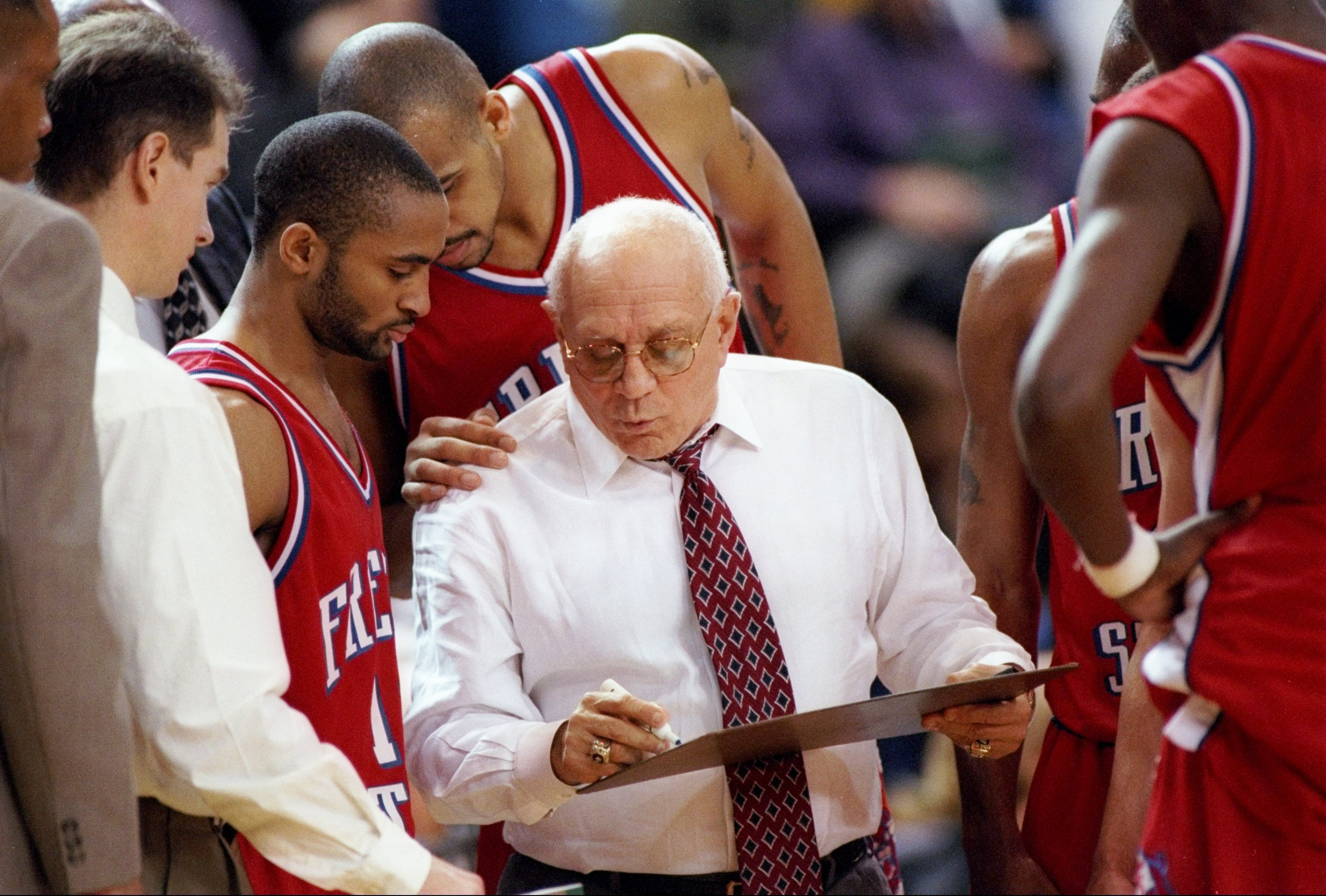
So, at halftime when Jerry Tarkanian’s Bulldogs went into the locker room, I quietly went into a side room where the team’s trainer checked the monitor.
I was on the training table, lying down and having the portable monitor read in real time.
I did this for a few games and all turned out fine.
But the health anxiety continued for a two-year period. Covering Fresno State basketball was a pressure cooker. There was a point-shaving investigation. There were constant eligibility issues. There was the demand of covering Tark for the adoring community while also balancing the hardcore journalism that we needed to do at the Fresno Bee. My friend and colleague Adrian Wojnarowski was the columnist and I was the beat writer. We had competed for the same position but ultimately we were hired as a team.
The adrenaline rush of dealing with breaking stories and never knowing what the day would bring was exhilarating but also anxiety producing.
It was the mid to late 1990s. I was in my twenties and I had never experienced stress like covering this team. I got headaches so severe that I thought might have a brain tumor. I had a CT Scan to be sure. Thankfully, it was clean.
There were times when I looked at my veins and thought they looked like an odd shade of blue. I wondered about my circulation. I continued to make up diagnoses of things wrong with me, all because of the stress.
I didn’t know this, but it was all related to the anxiety.
One time, while at the movies with Adrian and our wives, I started to feel a rapid heartbeat. I quietly slipped out, saying I had to use the bathroom, but thought I was going to have a heart attack. So I just walked outside trying to find some calm. No one knew I needed to just breathe and find some peace for a few moments.
My doctor, who was invaluable to me as a trusted source, wanted to do his due diligence and make sure there was nothing medically wrong with me.
The final piece was talking to a therapist about why I was experiencing these emotions. I’ll never forget when he told me the next time I think I’m having a heart attack — despite standing straight up — to do something physical.
So I ran.
I ran out of the house, up and down the street.
Back and forth.
Again. And again.
And again.
Until I was dripping in sweat in the Fresno winter fog.
There was no way I was having a heart attack if I could run. I was standing straight up. I was not on the ground.
I was fortunate. The therapy worked for me. Not everyone is as fortunate.
Of course, checking to make sure there isn’t something really medically wrong with you should always be a priority. Health anxiety is real, too. And there is nothing wrong with feeling anxious about your health. But seeking help shouldn’t be done in the shadows, either.
The four years I spent covering Tark helped make me the reporter I would continue to be in 18 years at ESPN and the last nine at BTN, TNT, NCAA and HoopsHQ.
Dealing with and working sources, ensuring they are credible, massaging relationships and walking that fine line to be able to get information while not alienating the subjects.
“I wouldn’t change any of it. The time covering Fresno State, the memories, the personal growth, was all worth it.”
Being a beat writer at that time had a ton of challenges. Covering an aging Jerry Tarkanian was something I won’t ever forget, either.
Adrian and I were once in the gym talking to Tark when he suddenly just stopped talking and slumped his head forward.
We were convinced that he stopped breathing and looked at each other, wondering which one of us was going to have to give him mouth-to-mouth. But he then startled himself and woke up. Tark had a tendency to just fall asleep. But his nodding off looked as if the batteries had expired.
He did it again another time when I was with him in his office, lights off to watch game film. Suddenly, the remote control just slid out of his hand and hit the floor.
I flew with him to Las Vegas once and when we landed at a new terminal that he didn’t recognize he thought the pilot had messed up.
We got to the top of the ramp and as he looked around he said we’re not in Las Vegas and proceeded to walk back down the jetway.
But we were. He just hadn’t been to that terminal.
The characters that came through the basketball office and locker room were endless, including a good friend of his from Las Vegas who pronounced once in the locker room in San Diego that the players had made him a lot of money by covering the spread.
I remember the players all looked befuddled by the comment as the friend slapped their hands and exited.
There were always times when you had to wonder what could be or could not be reported based on the access. There was a constant stress of trying to figure this out.
One of my favorite quips from Tark came when they were preparing to play at Colorado State and Wyoming. A player said to Tark that he was worried about that stuff up there. And Tark said, “What stuff?’’ The player said, “You know, that stuff?’’ Tark said, “You mean altitude?” “Yes,’’ said the player. Tark then quipped, “Don’t worry, we’re playing inside.’’
Those were the loose moments amid a chaotic time in my professional life.
I wouldn’t change any of it. The time covering Fresno State, the memories, the personal growth, was all worth it. It was a difficult time, but I’m glad I got the help I needed.
And by the way, I’m still running.
Meet your guide