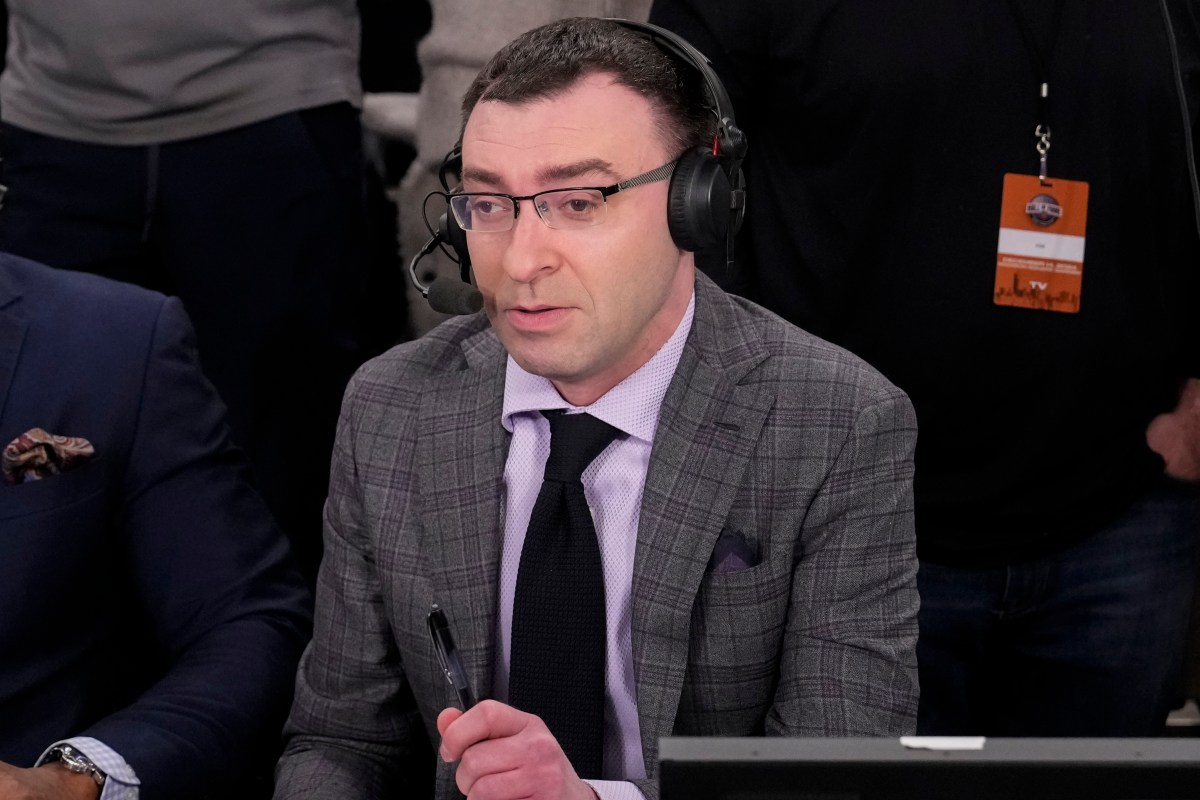
NEW BRUNSWICK, N.J. – Jason Benetti is having breakfast in the lobby restaurant of the Heldrich Hotel in New Brunswick, N.J., a short walk from Rutgers University, where he will be calling a basketball game for Fox later this evening. It is a Tuesday in early December and he is cheerfully, but somewhat reluctantly, answering questions about his life and career. The sight of a familiar face stops him mid-sentence.
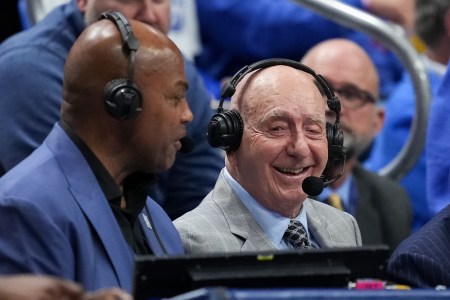
“Ah, ah, ah!” Benetti bellows in his distinct baritone voice, as his broadcast partner Bill Raftery strolls over. They chat for a bit, riffing as if sitting courtside with headsets on and producers in their ears.
“(Hoops HQ) ran out of story topics, so they’re doing a story on me,” Benetti cracks.
“Oh my God, they must be hurting!” Raftery replies, smiling widely.
Decades ago, when Benetti was a kid growing up in the Chicago area, he would watch and listen to Raftery call big-time college basketball games. It still amazes him that the two are teammates and close friends. Benetti doesn’t take any of it for granted. At the age of 42, he has established himself as one of the best broadcasters in the business. He recently emerged as the leading candidate to become NBC’s top MLB play-by-play voice, according to a report from Front Office Sports.
That would be remarkable in its own right, but Benetti’s origin story comes with an unusual twist: He has cerebral palsy (CP), a neurological disorder caused by damage to the brain before, during or shortly after birth. While he doesn’t have chronic pain or major health complications as a result of CP, Benetti does have a drifting eye and pronounced limp. His full body hitches as he moves, but he has no trouble getting around. “The hurdles are not physical for me,” he says. “They are because I don’t look the same as everybody.”
Benetti has long understood that in order to overcome those hurdles, he needs to jump higher than the competition. He has risen to the top of his profession through his talent, his intellect, his humor, and most of all, his will. He would like for people to think of him as just a great broadcaster, and not a broadcaster with cerebral palsy. “He’s got the whole package,” says Steve Scheer, a senior coordinating producer for Fox Sports. Scheer, who previously worked at CBS Sports, has teamed with many legendary sportscasters through the years, including Raftery, Jim Nantz, Ian Eagle, Gus Johnson, John Madden and Frank Glieber. “Jason is in that category. What he’s done with his (disability) is just amazing.”
Benetti was born 10 weeks premature and spent three months hooked up to oxygen machines in the intensive care unit, recovering from a lung disease. The early ordeal caused him to develop CP, which led to numerous surgeries (one on his eye and multiple on his legs). For a significant stretch, Benetti was bouncing back and forth between the operating table and therapy. “From an emotional standpoint, it was a lot to put a child through,” says Rob Benetti, Jason’s father. “He’s always been a very strong, fighting spirit.”
When he was in the first grade, Jason was briefly in a wheelchair. He then wore large leg braces similar to the ones Forrest Gump sported — and famously sprinted out of — in the 1994 film. (“I hate Forrest Gump,” Benetti says with a chuckle. “It’s a great movie… but it doesn’t happen like that. You have to go to a doctor’s appointment and they have to take them off.”).
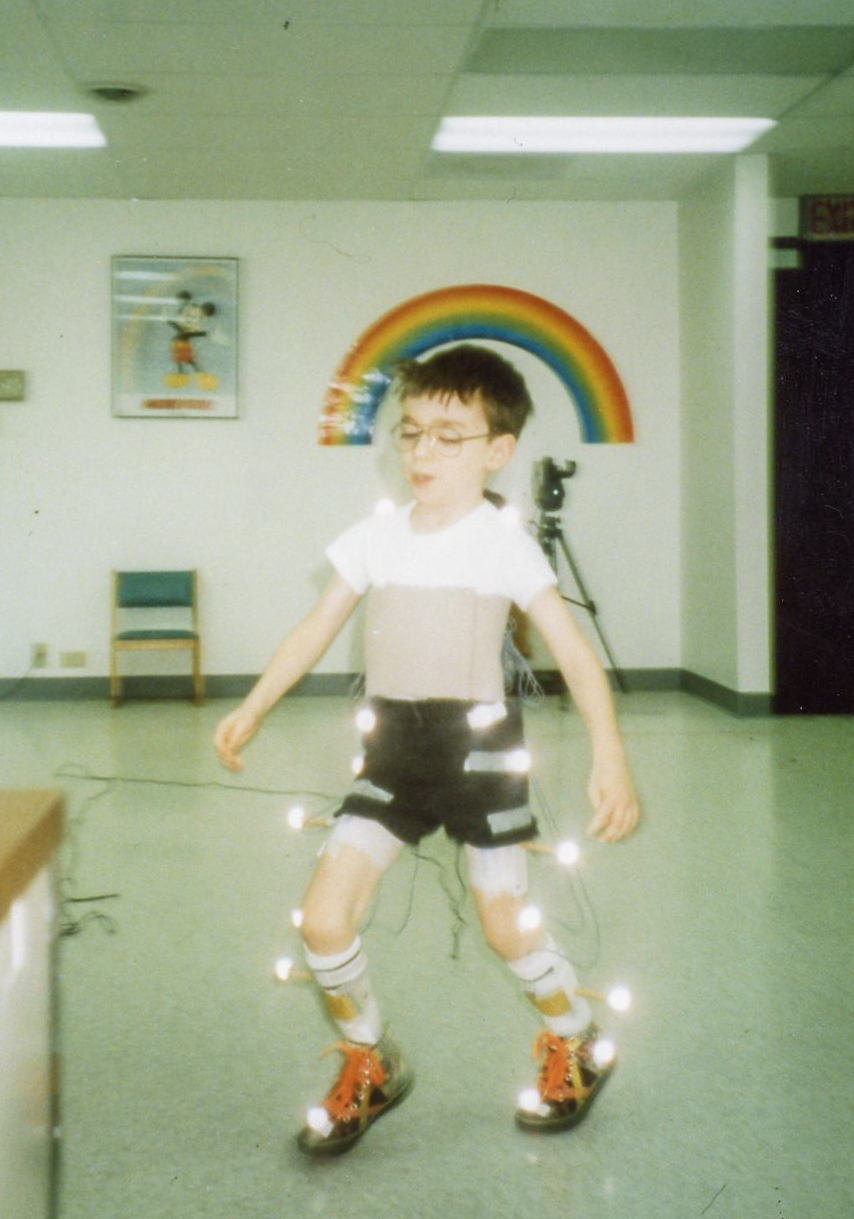
The surgeries were over by the time Benetti reached the third grade, but his wandering eye and peculiar gait prompted endless stares and teasing at school. He has a mild form of spasticity that causes his body to flinch when touched, so kids would tap him on the shoulder and mock his reaction. “Why are you scared?” they would say.
Others carelessly conflated CP with other disabilities. They assumed he was blind — students from another school once hollered “pretty bird” at him, a reference to a well-known Dumb & Dumber scene that features a blind boy — or intellectually impaired.
In fact, Benetti has always been exceptionally bright. He had a robust vocabulary seemingly from the moment he started putting sentences together. His parents, Rob and Sue, recall having “very real” conversations with their son by the time he was five years old. “We’re not talking about ABCs,” says Rob. “We’re talking about being able to reason with a little young man.”
Tests confirmed that Jason was cognitively advanced for his age. He had a way with words and a tendency to hold court with those he was comfortable around. “We would play games like Trivial Pursuit,” remembers Sue, “and he was kind of the MC.” Like any good host, Jason was funny, witty and entertaining. He had an affinity for comedy and improv, obsessing over shows like Saturday Night Live and Monty Python.

Benetti’s love of sports began on a Nintendo console

Benetti was a bright kid — and an all-star emcee

A stint as a tubist led Benetti to his first press box
Benetti also developed a strong love of sports, one that began with Nintendo video games — he would sometimes commentate the action while playing — and blossomed into much more. On Sundays, he and Rob would pack as many screens as they could into the living room to watch the NFL. The family regularly attended Chicago White Sox games and went to a few IndyCar races. Jason was, suspiciously, “always sick” on the first Thursday of the NCAA Tournament. He was also the one who organized the bracket pool among his classmates every year.
While he struggled to play sports, Benetti joined the band at Homewood-Flossmoor High School. He chose the tuba, the biggest and most cumbersome instrument, which proved challenging for the marching band. The band director tried to choreograph a halftime show that worked around him, allowing him to remain stationary at the center of a moving production. But Benetti hated the attention that drew and how it singled him out as different. So the band director proposed another idea: What if Benetti dropped the tuba and instead announced the show from the press box?
That was the birth of Benetti’s broadcasting journey. He loved the gig from the very beginning. In the booth, he felt free, empowered, confident. He could speak openly without the fear of being judged, discounted, or pitied because of the way he looked. “I suddenly became more outgoing,” Benetti says. “In retrospect, the first time that I felt like I had value to add was behind a microphone.”
“You could say that through that process, he found his voice,” adds Rob. “He was able to express himself.”
Benetti had found his calling. He joined Homewood-Flossmoor’s radio station and became the announcer for the football games. He was dead set on going to Syracuse because of its renowned communications school. Once there, he triple-majored in broadcasting, economics and psychology, and called lacrosse and women’s basketball games on the university’s prestigious radio station (WAER). Benetti did everything within his power to carve out a broadcasting career. “If I could find your email address, you were getting an MP3 of my work,” he says. He sought guidance and advice from giants in the field. As a senior, he vividly remembers receiving a call from ESPN announcer and Syracuse alum Sean McDonough. “You have a future doing this,” McDonough told him.

Upon graduating, Benetti began his professional career calling games for the Syracuse Chiefs, then the triple-A affiliate of the Washington Nationals. He also decided to attend law school at Wake Forest because, well, why not? In addition to working Chiefs’ games during that time, Benetti was the play-by-play guy for High Point University basketball and filled roles for several regional networks, including Westwood One, Time Warner Cable Sports and the Big East Conference.
“From the opening moments, I could tell this guy had a mind and a perceptiveness like nobody else I knew,” says Kevin Brown, Benetti’s broadcast partner for the Chiefs who now does play-by-play for the Baltimore Orioles. “I think he’s the best partner ever. I don’t think there’s anybody in the industry who’s better than he is at connecting with their analysts.”
Initially, Benetti had no interest in doing television. He had pursued broadcasting in an effort to escape the spotlight, not grab it. But as his confidence grew, he became more comfortable putting himself out there.
Still, there were visible nerves when he first stood before the camera. It took a few years and some counsel from the experts for him to settle in (back in 2010, Ian Eagle wisely advised him not to “oversell,” which went a long way). “There was no doubt that he could do it and he was going to be great at it when he did it,” says Brown. “Every new job he’s gotten, most of them in TV, it’s been a thrill every time because he is as skilled at the medium as anybody, whether he realized that at first or not.”
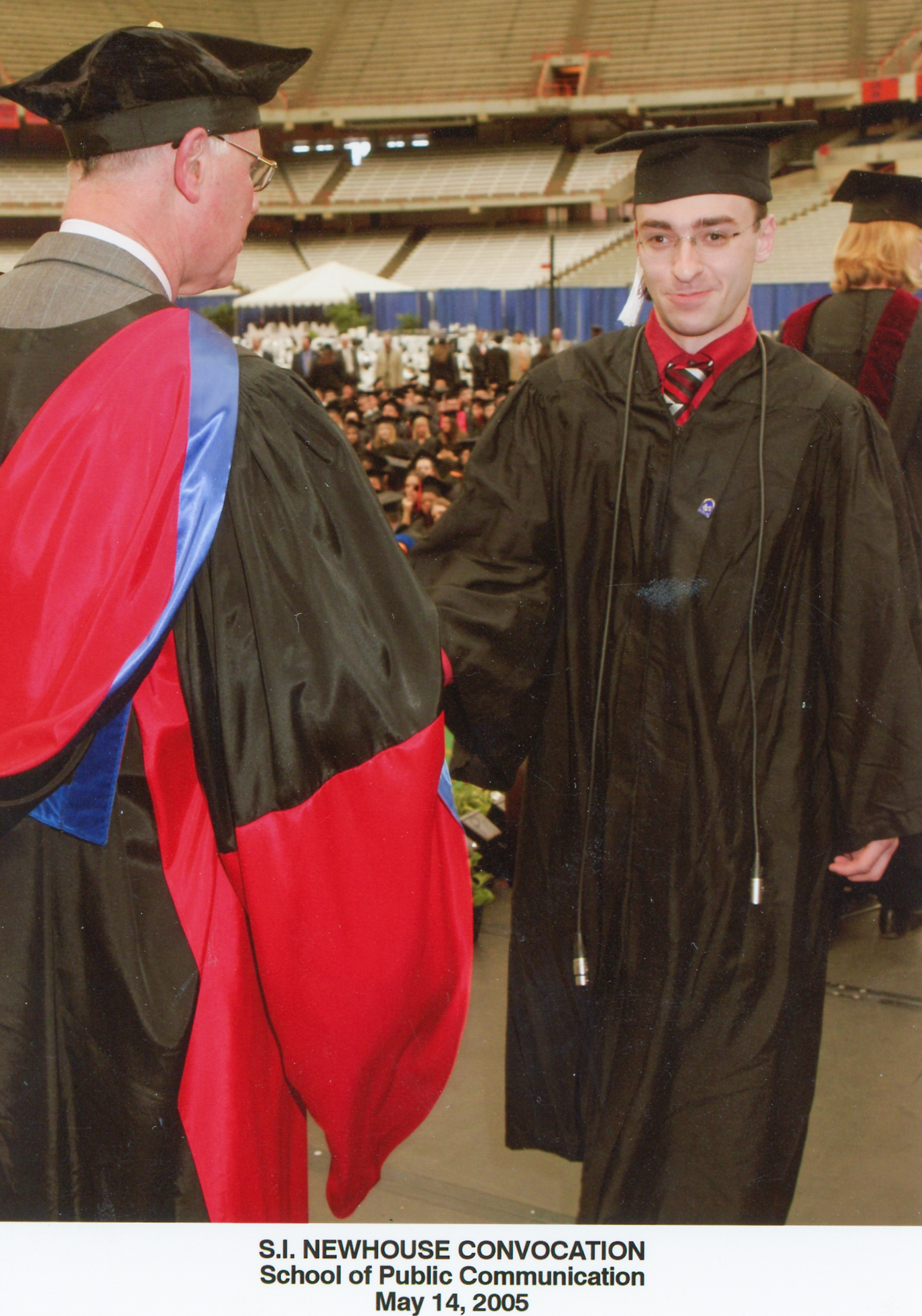
As the opportunities have come, Benetti has seized every one. In 2011, he joined ESPN (his first national TV broadcast was an ESPN3 college basketball game between Syracuse and Albany). Five years later, he landed his dream job as the voice of the Chicago White Sox, his hometown team, while continuing to call a variety of sports for ESPN. He also did play-by-play for NBC’s Olympic baseball coverage during the 2020 Summer Games. He joined Fox in 2022 and jumped from the White Sox to the Detroit Tigers in 2024. “The hardest part about this whole thing is we don’t get to see him much because he travels so much,” Sue says. “The good thing is, we get all the Detroit games, so we feel like he’s at home.”
Indeed, Jason is the same person on TV as he is off it: sharp, insightful, engaging, full of self-deprecating jokes and amusing pop culture references. (During a broadcast Tuesday, he likened Houston guard Kingston Flemings’ quick, choppy steps to Fred Flintstone starting up his car). Authenticity is an essential component of Benetti’s approach. That was one of the reasons he gravitated to the late great Bill Walton. The player turned broadcaster was always his true, eccentric self no matter how many cameras and microphones were around.
Benetti doesn’t like when people act fake — when they pretend to be somebody they’re not, or pretend they don’t see his disability, or pretend he’s not capable of doing something. “In the Mean Girls sense, Regina George would never be my friend, because it’s just disqualifying,” says Benetti, “which I think helps me find the people who really get it.”
Of course, he has encountered plenty of people along the way who clearly don’t “get it.” After he was named sports director at WAER in college, a fellow student who had been vying for the position changed his “away message” on AOL Instant Messenger to, “at least he’ll be a great story in somebody’s magazine one day.” There was an ESPN executive who suggested he focus on developing his radio skills, implying that he wasn’t TV-worthy. When he was with the Tigers last summer, the bus driver saw him approaching from the team hotel and swiftly turned the vehicle off to bring the hydraulics system down. The bus lowered a comically small amount. Did you really think that step was going to be too high? Benetti thought to himself. How do you think I got here in the first place?
“You can’t play life straight,” Benetti says. “Normal interactions are very rare for me at this point. The whiplash of it is the weirdest part, because it can be in an airport: ‘Oh, I love your work.’ And then two seconds later: ‘Sir, do you know what pre-check is?’”
“From the opening moments, I could tell this guy had a mind and a perceptiveness like nobody else I knew.”
Kevin Brown, Baltimore Orioles sportscaster, on Benetti
Benetti knows that he has zero control over how others react to him, so he hyperfixates on what he can control. He was hell-bent on getting the best grades in school. His prep work for broadcasts is astounding. As Brown recalls, the two would be calling a 7 p.m. triple-A baseball game together and Benetti would tell him, “We’re getting to the stadium at 11 a.m.”
The extensive research Benetti does behind the scenes shows on the air. He is quick with a fascinating stat or obscure anecdote or tidbit of history. He calls college basketball, college football, the UFL and the MLB for Fox. Somehow, he has a pulse on everything happening in each sport. “His basketball knowledge and IQ for the game is incredibly high for a play-by-play guy,” says color analyst Robbie Hummel, who has called many college hoops games alongside Benetti at Fox and ESPN. “He’s a genius in so many ways. If you’re talking about pop culture, he knows everything. If you’re talking about music, he knows everything. Movies, everything. Sports, everything.”
Inevitably, by the time the pair links before a game, Benetti has already finished his homework. He knows the teams, the players, the coaches like the back of his hand. Play-by-play is “a heavy responsibility,” Benetti says. To nail every moment, he needs to be ready.
“To me that’s his superpower,” Rob Benetti says. “His preparation.”
“But I was just saying…”
Despite a three-minute Bill Raftery tangent that interrupts breakfast, Benetti picks up exactly where he left off. “The repetition of, I can tell when a flight attendant is about to be like, ‘The exit row is too hard for you.’ I see it developing in slow motion,” he continues. “Part of what I deal with in adulthood is like, how much does that variable impact every interaction? And how much does it still impact my career?”
Benetti shed the urge to hide behind a microphone long ago. These days, he is everywhere — calling games across the country, hosting podcasts, posting selfie videos on social media and engaging with fans. He has partnered with the Cerebral Palsy Foundation for a YouTube series called “Awkward Moments,” which playfully spreads awareness about CP. He is determined to keep rising in the broadcasting world (his “white whale” is to call an NCAA Tournament game on TV), to be — as he puts it — “the best at this.” But he does sometimes wonder whether how he looks will get in the way.
“I’m doing really good games, especially in college basketball, and I appreciate the hell out of it,” Benetti continues. “I get to work with Bill Raftery — it’s a marvelous thing. But if you have one job and it’s the lead job in a sport, you don’t have to pick somebody who looks like me. I do have to make the work as good as humanly possible. That’s the thing that has carried me through all of this. Just focus on the work.”
🏀 GET IN THE GAME! A 1-year subscription to HOOPS HQ is now 25% off. 🏀
Meet your guide