
The Big Ten’s 26-year national championship drought finally came to an end last season, as a dominant Michigan team rolled through the NCAA Tournament.
It was an exceptional year for the conference as a whole. Seven teams landed in the final AP poll, nine received bids to the Big Dance, six reached the Sweet Sixteen and two advanced all the way to the Final Four. Among the league’s many standout players, four earned All-American honors: Michigan’s Yaxel Lendeborg, Illinois’ Keaton Wagler, Purdue’s Braden Smith and Michigan State’s Jeremy Fears Jr.
“I would say from a talent standpoint, last year’s Big Ten was as difficult as I’ve ever faced across the league,” USC coach Eric Musselman told Hoops HQ in May.
This year’s Big Ten looks just as — if not more — loaded. With the season inching closer, here are five burning questions for the rising conference:
1. Can Michigan’s new frontcourt carry the torch?
During its run to the national title, Michigan was powered by its “Big Three” of forward Yaxel Lendeborg, forward Morez Johnson Jr. and center Aday Mara. All three players opted to enter the 2026 NBA Draft and were picked in the lottery, leaving the Wolverines with a lot of work to do to ensure they were equipped to defend their throne.
With a pair of quality guards already set to return in 6-foot-1 senior Elliot Cadeau and 6-foot-4 sophomore Trey McKenney, the staff concentrated its portal efforts on building a new frontcourt. It succeeded by landing — and then retaining in the wake of Dusty May’s departure for the NBA — 7-foot-2 junior center Moustapha Thiam, 6-foot-11 junior forward J.P. Estrella and 6-foot-10 senior forward Jalen Reed.
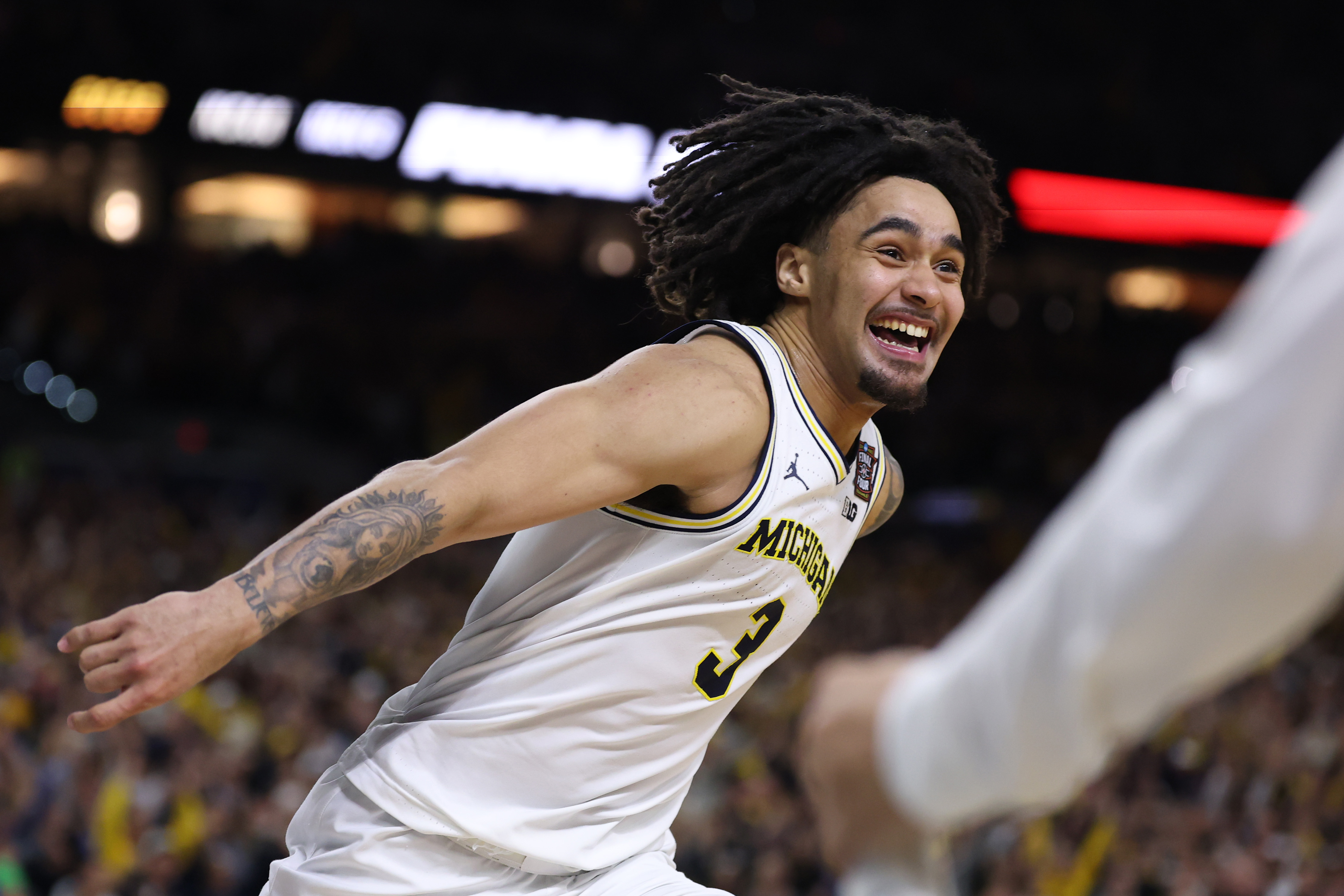
Hoops HQ ranked Thiam as the No. 26 overall player (No. 2 center) in the portal after the Senegal native averaged 12.8 points, 7.1 rebounds and 1.6 blocks for Cincinnati last season. The versatile Estrella played an integral role on a Tennessee team that reached the Elite Eight, posting 10 points and 5.4 rebounds per game. A veteran from LSU, Reed has battled injuries the past two years but been very productive when healthy.
While May is gone (replaced by assistant Mike Boynton), the Wolverines still have the talent to go back-to-back and should open the season ranked in the top 10. Whether they can return to college basketball’s biggest stage will depend largely on how the new frontcourt comes together.
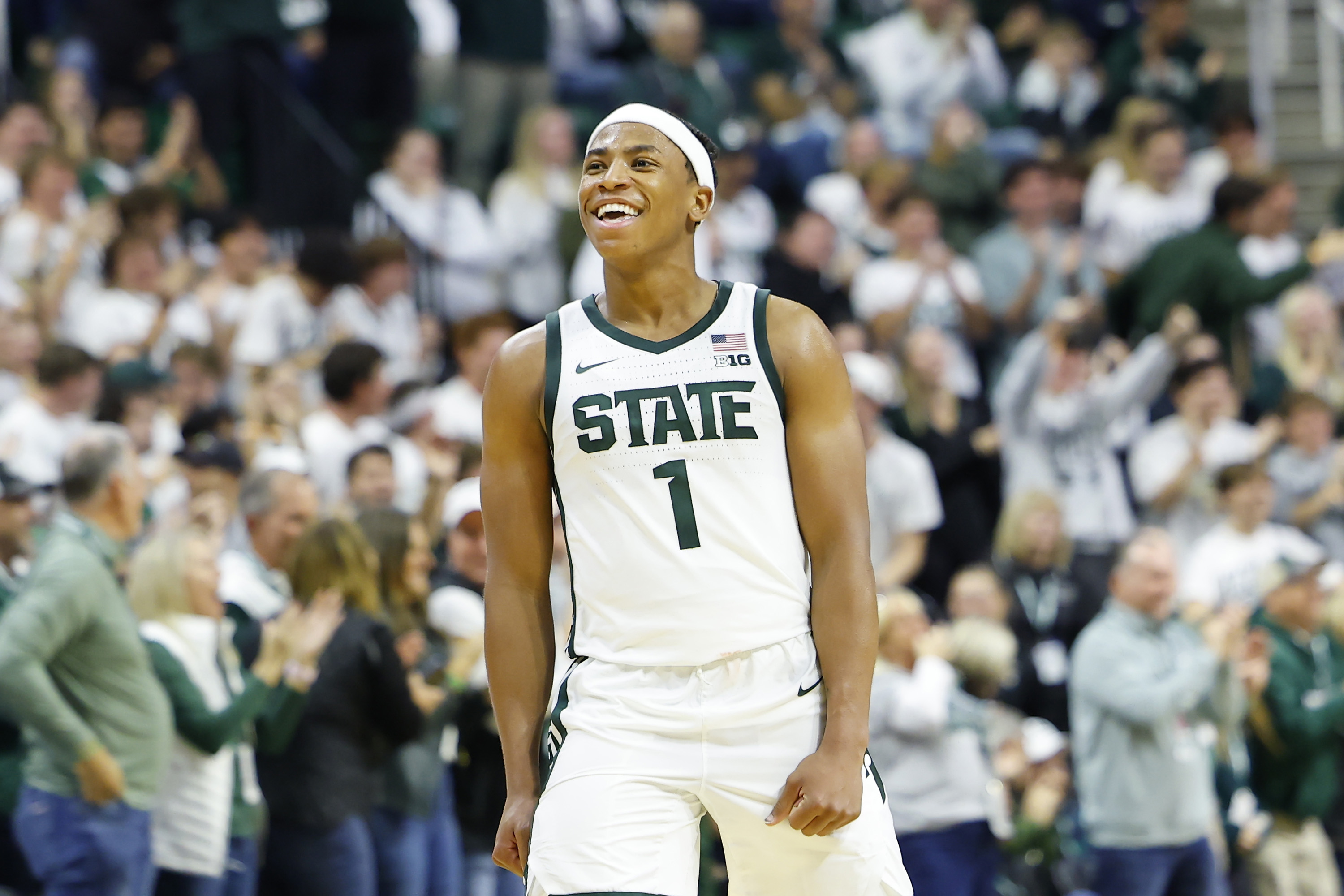
2. How far can Jeremy Fears Jr. lead Michigan State?
After he led the country in assists (9.4 per game) and earned Second Team All-American honors as a redshirt sophomore, Fears is likely to begin the 2026-27 season as one of the favorites to win the Wooden Award.
The 6-foot-2 point guard was outstanding in his second year running the show for the Spartans, who finished second in the Big Ten with a 15-5 record. Fears was the only player in college basketball to average at least 15 points and nine assists and set a number of program records along the way, including most assists in an NCAA Tournament game (16 against Louisville).
With Fears back, Michigan State sits at No. 4 in Hoops HQ’s Never-Too-Early Top 25. Tom Izzo was able to retain four other key players as well: 6-foot-4 junior guard Kur Teng, 6-foot-6 senior forward Coen Carr, 6-foot-7 sophomore forward Jordan Scott and 6-foot-8 sophomore forward Cam Ward. Combine that continuity with a Hall of Fame coach and arguably the nation’s best floor general and MSU has to be considered one of the top contenders to cut down the nets in April.
The Spartans have made six Final Fours since 2001 but fallen short of their ultimate goal each time. To finally reach the mountaintop in 2027, they’ll need Fears to take yet another leap.
3. Will Indiana’s incredible portal class live up to expectations?
A year ago, Indiana pursued mostly mid-major stars in the portal, landing seven transfers from non-Power Five schools. That approach did not result in an NCAA Tournament berth, as the Hoosiers went 18-14 and placed 10th in the conference. The historic program has been to the Big Dance just twice in the past decade.
Darian DeVries’ new transfer class — ranked No. 7 in the nation by 247Sports — is composed almost entirely of high-major players. The impressive haul includes elite scorers in 6-foot senior guard Markus Burton (Notre Dame) and 6-foot-3 junior guard Bryce Lindsay (Villanova), established big men in 6-foot-10 junior forward Aiden Sherrell (Alabama) and 7-foot-2 junior center Samet Yigitoglu (SMU), and versatile wings in 6-foot-6 junior guard Jaeden Mustaf (Georgia Tech) and 6-foot-5 junior guard Darren Harris (Duke).
Burton, who was limited to just 10 games in 2025-26 due to a broken ankle, has a career scoring average of 19.1 points. The sharpshooting Lindsay averaged 12.3 points and connected on 38.3 percent of his threes in one season with the Wildcats. Sherrell finished second in the SEC in blocks, while Yigitoglu was first in the ACC in offensive boards.
That talent influx has raised the expectations in Bloomington significantly, putting more pressure on the Hoosiers to climb the league standings and snap their March Madness drought. “The expectations are very high here,” DeVries told Hoops HQ’s Andy Katz in July. “We have the same expectations. Our fans want to win. We want to win the Big Ten championship. We want to play deep into the tournament. We’re looking forward to chasing down those goals. Indiana basketball is still a big brand and the fans here are all about it and excited about it and we can’t wait to get back on the floor again.”
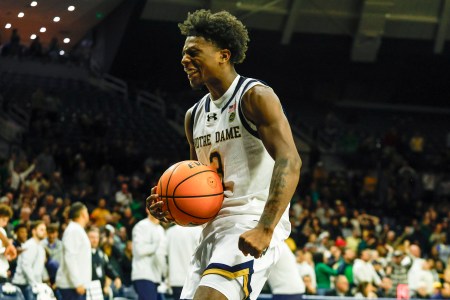
Ranking the Top 20 Men’s Transfers in the Big Ten
Indiana’s portal class is one of the best in the nation. See where the new Hoosiers rank among the best incoming Big Ten transfers.
4. Will UCLA’s Nikola Kusturica be among the league’s top players?
UCLA’s outlook for the 2026-27 season changed dramatically in mid-July when the program reached a multiyear, eight-figure agreement with Serbian star Nikola Kusturica, a 6-foot-9 wing widely believed to be the best international prospect in his age group. Kusturica is projected as the possible No. 1 pick in the 2028 NBA Draft.
The 17-year-old chose the Bruins over Kentucky, Michigan, Gonzaga and more top schools after dominating the FIBA U17 World Cup in Türkiye. Through seven outings, Kusturica averaged 24.6 points, 6.9 rebounds, 2.3 steals and 1.7 blocks to earn All-Star Five honors. Facing the United States in the championship game, he put up 37 points and 9 rebounds.
Last summer, Kusturica led Serbia to a gold medal in the FIBA U16 EuroBasket with averages of 20 points, 7.7 rebounds and 3.4 assists. He has been with the prestigious EuroLeague club FC Barcelona since 2023 and became the youngest player ever to suit up for the club’s first team in September 2025.
“Nikola is an elite prospect with great size, skill and a competitive fire which is hard to find,” UCLA coach Mick Cronin said. “As a 6-foot-9 guard, he can play all over the floor. He impacts the game as a scorer, playmaker and shot blocker. For a very young player, Nik has had a decorated career with the Serbian national team and his club team in Barcelona.”
With a solid transfer class and strong returning core, UCLA looks like a Big Ten title contender, at least on paper. The ceiling of Cronin’s team rides mainly on how well Kusturica transitions to the college game. Will the international sensation match — or exceed — the absurd hype?
5. How well will USC’s overhauled roster gel?
It has been a bumpy start to USC’s tenure in the Big Ten, partly due to injuries. The program has finished 12th in the conference and failed to reach the NCAA Tournament in consecutive seasons. But with a stacked new roster, Eric Musselman’s team is positioned for a major bounceback in 2026-27.
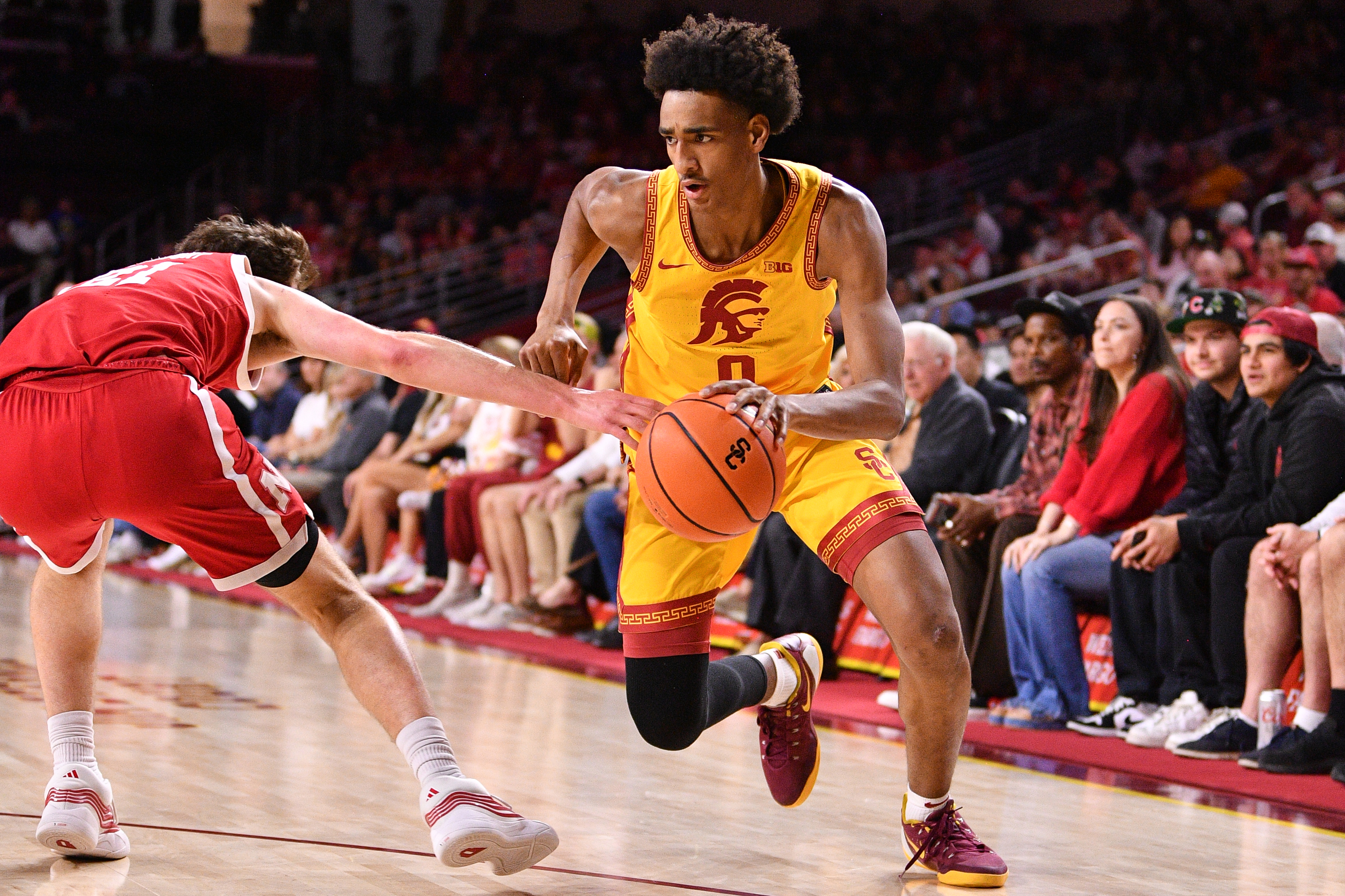
In addition to retaining three starters (6-foot-4 senior guard Rodney Rice, 6-foot-6 sophomore guard Alijah Arenas and 6-foot-10 junior forward Jacob Cofie), Musselman landed a top-25 transfer class and a top-10 recruiting class. His portal haul includes 7-foot-1 sophomore center Eric Reibe, who played a key role off the bench at UConn, and established veteran KJ Lewis, a 6-foot-4 senior guard from Georgetown. All three of the program’s incoming freshmen were named McDonald’s All-Americans: 6-foot-8 forward Christian Collins (No. 8 in the 247Sports Composite), 6-foot-11 forward Adonis Ratliff (No. 20) and 6-foot-11 center Darius Ratliff (No. 31). The headliner is Collins, a highly versatile prospect projected to be a first-round pick in 2027.
“I think it’s the first roster in the three years (we’ve been at USC) that we feel is like what we had at Arkansas, where we have a deep bench, we have a group that’s got experience, we have three McDonald’s All-Americans coming in, we have size up front,” Musselman told Hoops HQ.
From a pure talent perspective, USC has one of the deepest teams in the country. The group lacks continuity, however, especially considering Rice and Arenas were limited to just six and 14 games, respectively, last season and never played together. If the Trojans are able to build chemistry quickly and effectively, they have as much upside as any team in the league.
“That’s really what the summer is for, for us to try to figure out over that eight-week period what works, what doesn’t work, who plays well together,” Musselman said. “And then we also have obviously September and October, so a second eight-week period. Those 16 weeks are gonna kind of determine where we are.”
Meet your guide