Nothing prepares any human for the news that they have cancer.
A tumor.
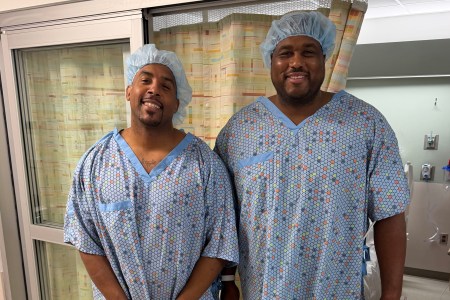
Facing a major surgery called the Whipple procedure, used to remove tumors that are near the pancreas, small intestine and bile ducts.
The surgery removes the head of the pancreas, the first part of the small intestine, the gallbladder and the bile duct.
The surgery is highly invasive, can take months to recover from and will knock down the strongest of people for quite a while.
The purpose is to get the cancer out and hope to prevent it from spreading to other organs.
Oh, and then there is the preventive chemo that usually follows.
And in most cases there are up to 12 rounds, every other week, which means it will last six months.
“You can’t prepare for anything like this,” said Rutgers coach Steve Pikiell, whose life changed forever last summer when he was hit with all of this news and then the subsequent August surgery.
Pikiell’s wife Kate had a battle with breast cancer 10 years ago, so dealing with a cancer fight wasn’t foreign to the family. But this diagnosis was more daunting.
“I see the world in a little different way now as I go through chemo treatments and there’s not a parking space in these huge parking garages,” said Pikiell, who completed his fourth round of chemo the week of Nov. 9.
“Cancer is everywhere,” said Pikiell, who turned 59 on Nov. 21. “A lot of people are dealing with this, people you don’t know are dealing with it. I always talk every year to my team about challenges and obstacles. This is another obstacle that I have to deal with. I’ve got to win. I’ve got some good people with me.”
Discussing this with Pikiell was painful. My brother Danny died of bile duct cancer on Oct. 9. He had the same Whipple surgery in January 2023. He spent more than three years on and off chemo, part of multiple cancer trials at Sloan Kettering Hospital in New York and at the National Institute of Health in Maryland. He had periods of calm, months of anxiety waiting for scans, dealing with lost weight, and a rarely discussed condition called cachexia, where the cancer has taken away muscle and body fat and causes this eating disorder. Cachexia causes inflammation and alters the way your body deals with energy and nutrients. The patient would like to eat, but the body is saying it doesn’t want the food, which leads to even more weight loss, weakness and lack of mobility.
It’s all awful.
“I’m very sorry about your brother because I know you know what it’s like,” said Pikiell.
Pikiell has nine siblings and none of them or his parents were diagnosed with any kind of cancer.
“So I was like the chosen one and that’s how I look at it,” said Pikiell. “So we’re going to fight this thing, do a good job, listen to the doctors. But that’s been the one thing that has been hard for me because as a coach, I’m the one barking the orders. Now I’ve got to sit there and listen to people that are telling me what to do. My wife is making sure that I’m a good listener because I probably haven’t been a good listener in the past.”
Pikiell said his appreciation for the doctors has increased. A coach can make a poor decision, lose a game, assess and move on. But the surgeon was there for six-plus hours, “and can’t make a mistake,” he says. “My admiration for (doctors) and the determination that they have is unbelievable. They can’t have a bad day.”
Pikiell said he had to get in as good a shape as he could prior to surgery. He had to make sure he was emotionally and mentally ready for the challenges that were ahead.
But nothing could mimic what he was about to experience.
“You see 90-year-olds and 15-year-olds getting infusions,” said Pikiell. “It’s unbelievable. I have a great prognosis moving forward and it has been incredibly heartwarming to know people that have have reached out and been so supportive.”
Pikiell said he has received calls and texts from all over the basketball community, at all levels, former players and staffers from every stop on his playing and coaching journey. He said he even heard from opposing players, with the first one to reach out being former Northwestern player Brooks Barnhizer, who is now in the NBA with Oklahoma City.
“It’s amazing when you catch how many lives you can touch,” said Pikiell. “But cancer is humbling. You’ve got to fight.”
But nothing about this battle is enjoyable. It’s hell.
“Chemo sucks,” said Pikiell. “But you’ve got to deal with it. The first week I had so much nausea. I couldn’t eat anything. Everything I drank tasted like metal. For the first few days I had pins and needles in my hands. The fatigue surprised me. I was in great shape but now (on the off-week), if I go to practice I’m exhausted and have to come home and take a nap.”
Pikiell’s last scheduled chemo treatment is March 3.
“Not that I’m counting,’’ said Pikiell. “That’s the last treatment on the calendar. Every day I mark it off on the calendar and know I’m one day closer.”
Assistant coach Brandin Knight has taken over the team on an acting head coach basis. Pikiell and Knight communicate all the time. Pikiell also discusses the program with the staff and is helping out like a second general manager.
But his doctors and his wife Kate, as well as his four children — Brooke, John Patrick, Olivia and Kevin — are making sure he’s not going to any games. His immune system is compromised, so he can’t be at Jersey Mike’s Arena, let alone travel to a road game.
The Scarlet Knights have a top-10 recruiting class coming in next season. This year’s team can ball, and while they suffered a few losses in Las Vegas at the Players Era 8, this squad can score and plays as tough as the previous Rutgers teams.
This program was a bottom dweller in the Big Ten and American previously prior to Pikiell.
Pikiell would have led Rutgers to the NCAA Tournament in 2020 but March Madness was canceled due to Covid.
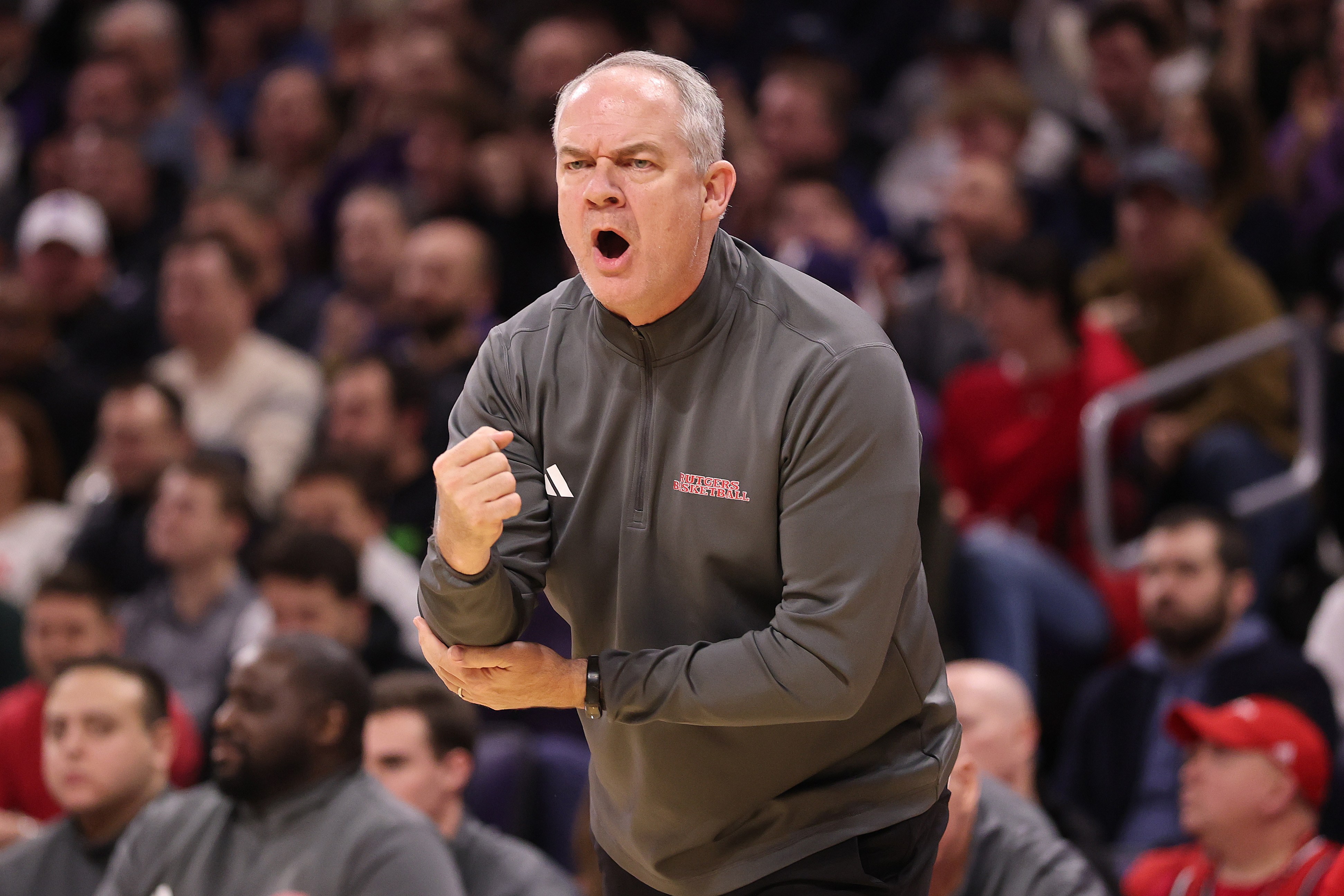
So, the Scarlet Knights had to do it all over again — and did, winning four of their last six games to get a bid to the bubble tournament in 2021. They did it again in 2022, too.
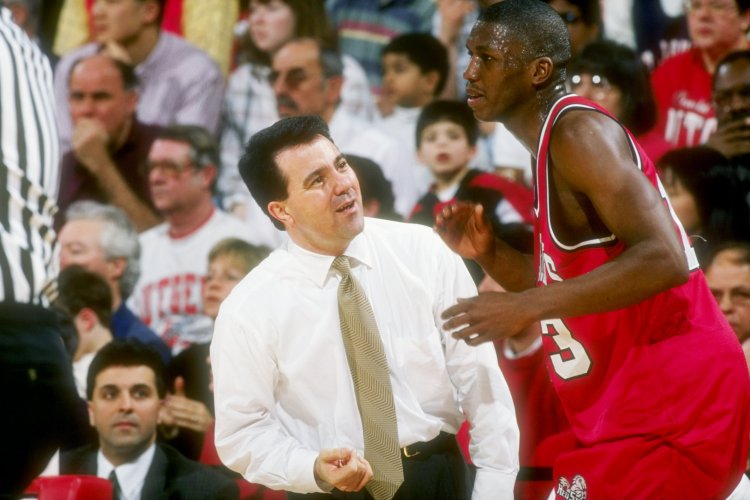
And that’s why the cancer research campaign the Pikiells started is called Rutgers Tough. That’s what this program has always been under Pikiell since he arrived in 2016. He played for one of the toughest coaches in the history of the game in Jim Calhoun at UConn so it should be no surprise that Pikiell gets his players to play just as hard as the Huskies.
The Pikiells gave a donation to the Rutgers University cancer institute and have created a donation link at www.scarletknights.com/RutgersTough.
“You’ve got to be tougher at Rutgers,” said Pikiell. “To beat cancer you have to be tough. But we’re trying to help people as much as we can. People are going through cancer with no way to pay, no health care plans. I sat with a guy the other day and he was telling me his infusion cost and it was $12,000 for that day and he had no health insurance. I want to be able to help people who are in need. I’ve been blessed and I have this opportunity to help people in need. We’re selling shirts and all the proceeds go to fighting cancer. It’s a great cause. Cancer keeps coming unless you do something about it. We’ve got to find cures. And they’re close on a lot of different things.”
Pikiell is right. The longer you live with the disease, the better chance medical advances will help. My brother wasn’t so lucky. He was about to try a newly approved pancreatic cancer drug, but insurance denied the claim because his cancer was bile duct and not pancreatic, even though they are adjacent cancers. If he had to pay out of pocket the drug was going to cost $42,000 a month. Yes, you read that right — $42K a month.
I told Steve I’ve been thinking a lot about him lately. Seeing him on a zoom call, down to 190 pounds, but still with a zest in his voice in his off week of treatment was a good sign.
“It’s great seeing you,” said Pikiell. “I miss you and look forward to seeing you on the sidelines.”
Me too. All of us who have met Steve, covered Rutgers, and know about his struggle are hoping he will be able to coach again.
“I answer to one person on this and that’s my wife,” said Pikiell. “She’s awesome and at some point I will be over there (on campus). But there’s white blood counts. There’s a lot of things going on. It’s the flu season, too. The doctors don’t want me jumping on planes right now. That’s not a great idea. So I have some limitations. But when I feel up to it, I will try. I’m starting to lift weights again. I’m starting to try to get a little bit stronger. I’ll be doing that. Hopefully soon, I will be able to make a few appearances, especially on that off-week.”
We all hope so, too.
Meet your guide