
About a decade ago, shortly after his professional basketball career had come to an end, Terence Dials was grocery shopping with his family in Columbus when they happened upon a blood pressure monitor. His daughters insisted that they all take readings, and when it was Terence’s turn, the monitor recommended that he immediately go to the hospital.
Dials first drove to Ohio State, his alma mater, and met with training staff. Their advice was the same: He should see a doctor as soon as possible. Dials was eventually referred to a nephrologist, which is when he discovered that he was suffering from kidney disease.
“My kidneys were still functioning back then, they were just going to get worse,” Dials tells Hoops HQ. “My nephrologist’s job was to keep them elevated to the point where they’re not getting worse — through medicine, exercise, diet. He told me that eventually I was going to need a transplant because the kidneys don’t reverse. They don’t get better.”
Dials was able to keep his kidney health steady for nearly a decade before things started to take a turn. As his creatinine levels spiked, his energy levels sharply declined. Just over a year ago, his GFR (Glomerular Filtration Rate), a measure of how well the kidneys are filtering waste from your blood, dropped below 20, meaning that he was eligible to be placed on transplant lists.
When Dials informed his loved ones that he was looking for a donor, his best friend and former Ohio State teammate JJ Sullinger answered the call right away. Sullinger acted so quickly that he didn’t even ask his wife first — a detail that, in hindsight, he regrets. “Luckily and thankfully, she was on board and supportive,” Sullinger tells Hoops HQ. “I really didn’t think about anything too much. When you’re able to do something for family, you do it. That’s how I was raised.”
After he was confirmed as a match, Sullinger donated a kidney to Dials in mid-October. The five-hour surgery — performed at the University of Cincinnati Medical Center — was a success, giving Dials a fresh start. “I didn’t even realize how bad it was until I got a new kidney,” Dials says. “And now I’m like, wow, I have energy. I feel better. And mentally, you’re free knowing that you have a new lease on life. This is a new beginning, a new chapter.”
Thad Matta, who coached Sullinger and Dials on the Buckeyes, shared the news during halftime of the Ohio State-Butler preseason game on Oct. 25, calling it “maybe the greatest thing I’ve ever seen in my coaching career.”
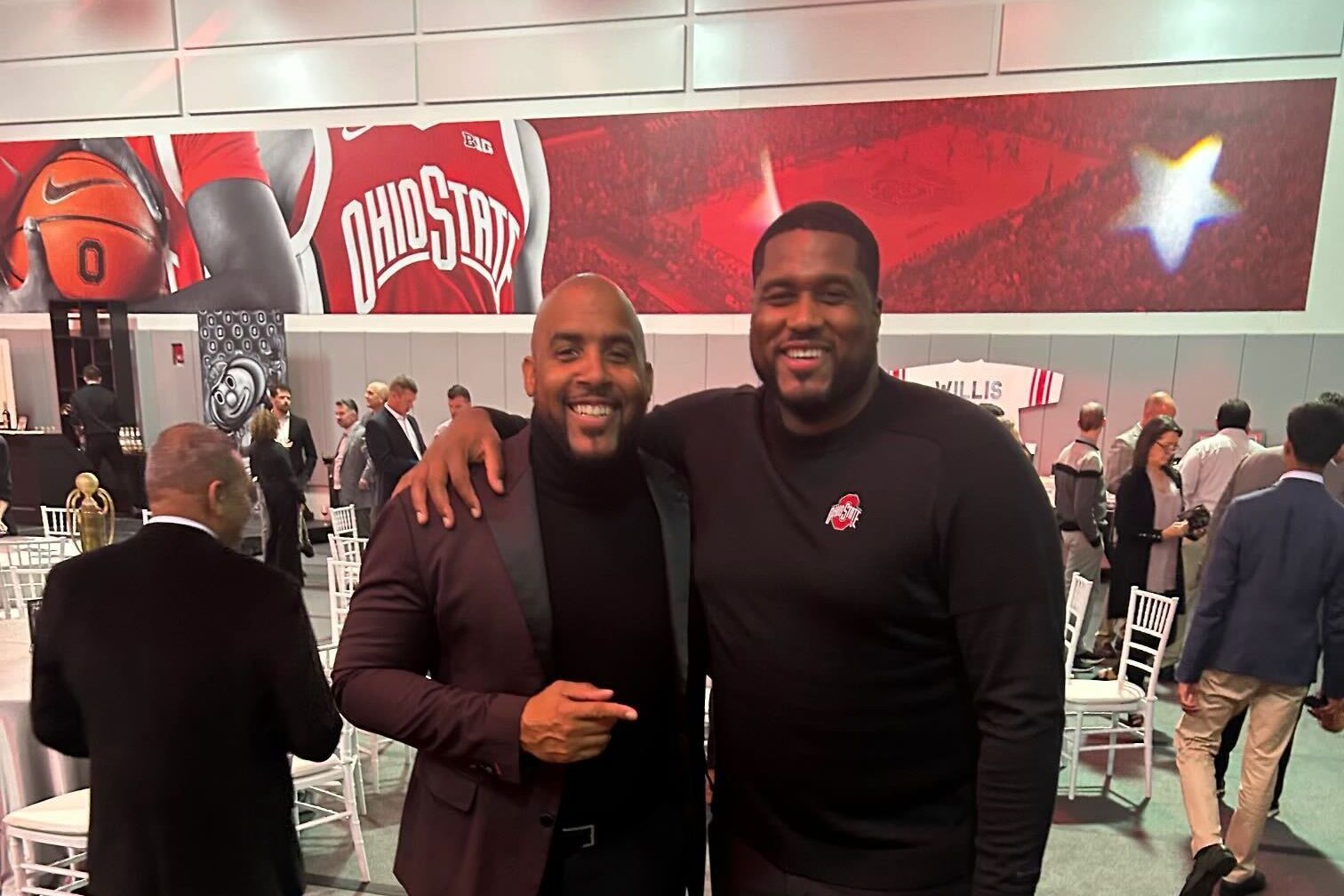
That Sullinger was the one to step up speaks to the unbreakable bond between him and Dials, which was born at OSU more than 20 years ago. It’s the sort of bond that has become harder to foster in college sports today, given how frequently players switch teams. In an era defined by NIL and the transfer portal, the power of basketball to bring people together and create lifelong — sometimes life-saving — relationships is often overlooked.
“It’s very different now. It’s very hard to build those bonds,” says Dials, who currently serves as the recruiting coordinator for the Buckeyes. “The old heads kind of joke around, like, in this new era of college basketball, these guys won’t have what we had because they’re bouncing around. They’re at four schools in four years or three schools in four years, and you can’t build anything that way. We’re trying to show them that this is what it’s supposed to look like. When we say family, we really mean it.”
Before they were friends, they were adversaries.
In high school, Sullinger and Dials — two elite Class of 2001 prospects from Ohio — were on rival AAU programs. Sullinger played for Ohio Red, and Dials for the Cleveland Top Prospects. Their teams clashed many times during the late 1990s; but, as Sullinger regretfully admits, his Ohio Red squad never prevailed.
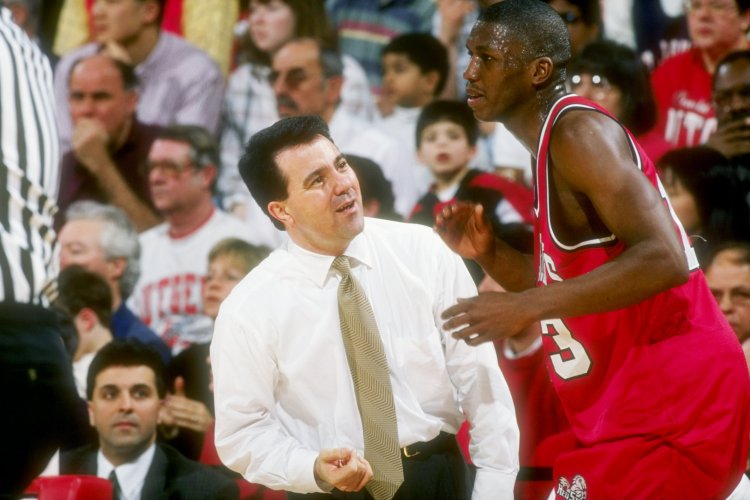
A physical 6-foot-9 forward, Dials earned a scholarship to Ohio State, which was then coached by Jim O’Brien. OSU was also Sullinger’s dream school, but the program didn’t have an open roster spot for him. After a productive freshman campaign at Arkansas, the versatile 6-foot-5 guard transferred to the Buckeyes in the spring of 2002.
When Sullinger arrived in Columbus, he and Dials instantly connected. “We just hit it off,” Dials says. “I’m not even sure why we did, but we just had a lot of the same interests and both loved to hoop. We had open gyms every day and built a bond from there.”
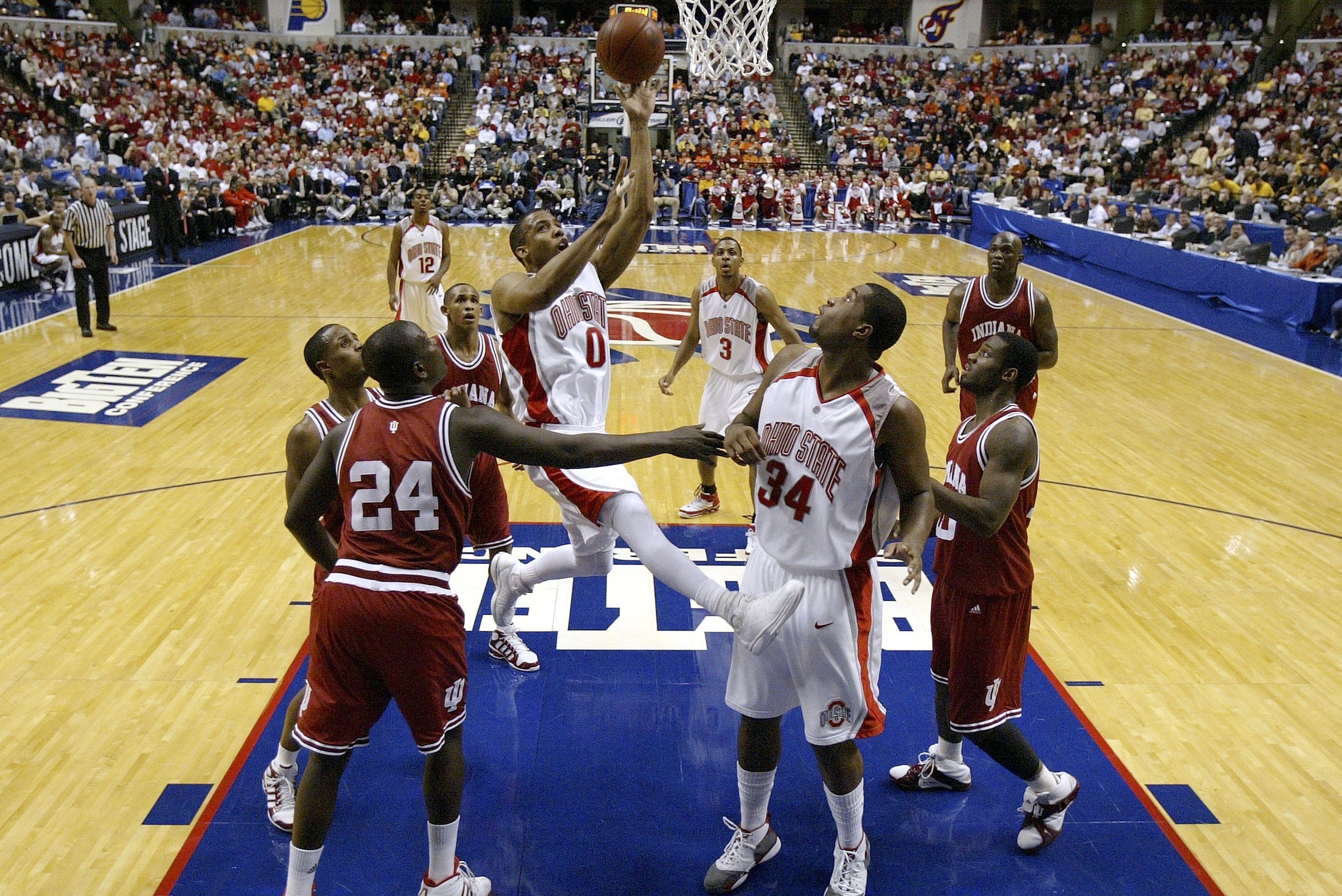
Sullinger had to sit out the 2002-03 campaign — per NCAA transfer rules — and Dials wound up taking a medical redshirt due to a stress fracture in his spine, so the two spent a lot of time on the sidelines together. They both started the ensuing season, which did not pan out as expected. Ohio State stumbled to a 14-16 record and O’Brien was fired in June for NCAA violations. The school hired Matta, a veteran who had spent the previous three years at Xavier, to replace him.
Matta immediately changed the culture at OSU, fostering a family atmosphere predicated on hard work. “We went from being five individuals on the floor and in the locker room to being one collective unit,” Sullinger says.
Practices and offseason workouts were strenuous — Dials and Sullinger have painful memories of running the stairs at Ohio Stadium — but they strengthened the brotherhood. The Buckeyes won 20 games in 2004-05, including an unforgettable victory over No. 1 Illinois at Value City Arena in early March.
As seniors, Dials and Sullinger helped guide the program to a 26-6 record and the Big Ten title. Sullinger averaged 10.1 points and 7.0 rebounds and was named to the All-Big Ten Tournament Team, while Dials earned the conference’s Player of the Year award with averages of 15.3 points and 8.0 rebounds. The team, which did not have a single NBA player, far exceeded expectations, going from unranked in the preseason to No. 6 in the final AP poll.
By then, Dials and Sullinger were inseparable. All the highs and lows they experienced on the court brought them closer, and their friendship extended far beyond the game. The Sullinger family — JJ, his brothers Jared (a future two-time All-American at OSU) and Julian, and his parents James (nicknamed “Satch”) and Barbara — often hosted Dials for dinner, especially on Wednesday steak nights. Eventually, Satch took to calling Dials “Four,” as in his “fourth son.”
Both Sullinger and Dials had children of their own during college, and they leaned on each other for support and advice. “I don’t remember any of my time at Ohio State without him being my best friend,” Sullinger says. “And it’s just been like that since.”
Upon graduating, the two embarked on separate journeys. Sullinger played four years professionally in seven different countries. Dials also ventured overseas, spending a decade bouncing around leagues in Europe and Asia. They remained in close touch throughout their travels and reunited every summer in Columbus. “We would be at the Life Time (gym) every morning,” Dials recalls. “Running the pool, lifting weights. Those types of things help you grow closer.”
“Our kids consider each other cousins,” Sullinger adds. “There’s never been a cooling-off period in T and I’s friendship. He was in my wedding. He was in Jared’s wedding. He’s always been a part of my family.”
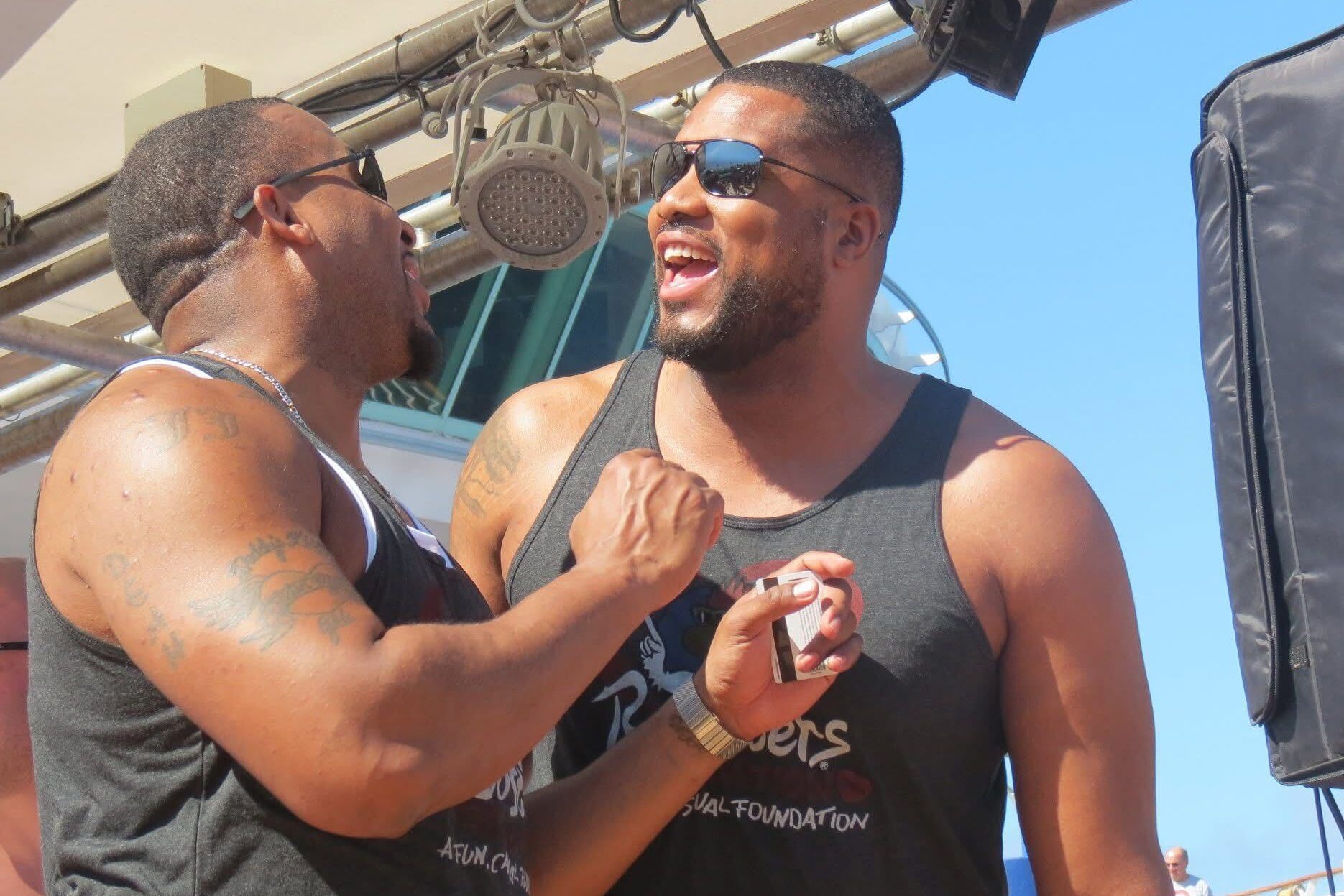
While Sullinger knew that Dials had kidney disease, his friend was always quiet about it. When he finally got on the transplant list in 2025, Dials texted members of his inner circle to see if anyone might be willing to donate. Sullinger was the first to respond.
Within two weeks, Sullinger was confirmed to be a match; but that was merely step one in an intensive process. Sullinger’s tests also revealed that he was pre-diabetic and had slightly elevated blood pressure. In order to donate a kidney, he needed to improve his own health first. Thus, Sullinger made significant lifestyle changes. He altered his diet, cut out alcohol, prioritized sleep and worked out extensively. For a year, he trained as if he was back at Ohio State, playing for coach Matta.
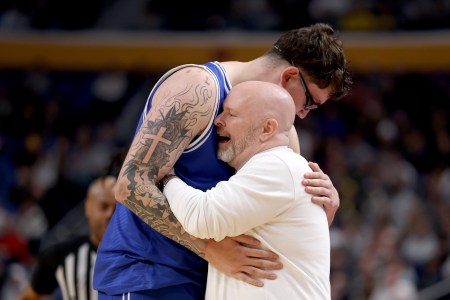
Finally, Sullinger got the green light from doctors. He went straight to Dials’ office on campus to deliver the news. Dials was in disbelief until Sullinger showed him the email. The two cried and embraced before mapping out the next steps.
The operation was scheduled for Monday, Oct. 12, a week after Sullinger’s 44th birthday. They arrived at University of Cincinnati Medical Center at 5:30 a.m. The surgery took five hours but seemed to pass in a blink. Sullinger was discharged the following afternoon, while Dials spent a week being monitored at the hospital.
Since then, Dials has been shocked by how energized he feels. Sullinger has been gradually recovering; in a month or so, he should be able to return to the gym. They have both received an outpouring of messages on social media, offering love and support.
“If I’m being honest, man, I have a really hard time accepting praise for what I did,” Sullinger says. “I understand the magnitude of what I did and the importance. But taking credit and being viewed as a hero or something like that, it’s just really hard for me. Because I was raised to do what you can when you can for the people that you love.”
In late October, a few days before the 2026-27 season tipped off, Ohio State head coach Jake Diebler gathered his team in the film room for an important meeting. He wanted to share the story of Dials and Sullinger, who were both in attendance.
“One of the best things about being a college basketball player is your teammates,” began Diebler, who played for Valparaiso from 2005-09. “My best friend to this day, I never met him until we set foot on campus as freshmen. I can call him right now and he’d stop whatever he’s doing to help me if I need him.”
Through teary eyes and quavering voices, Dials and Sullinger explained what had happened, tracing it back to when they were student-athletes at Ohio State.
The current OSU staff has worked hard to keep the culture that Matta established alive and cultivate an environment that fosters friendships like that of Dials and Sullinger. Of course, that is a much tougher task in the modern era of college sports, with rosters changing dramatically most offseasons. “Jake has done a great job of trying to manufacture some of the closeness, because you have a short window,” Dials says. “Every year, you have a short window to get a group of guys close, and I think depending on the players that you have, it’s basically on them.”
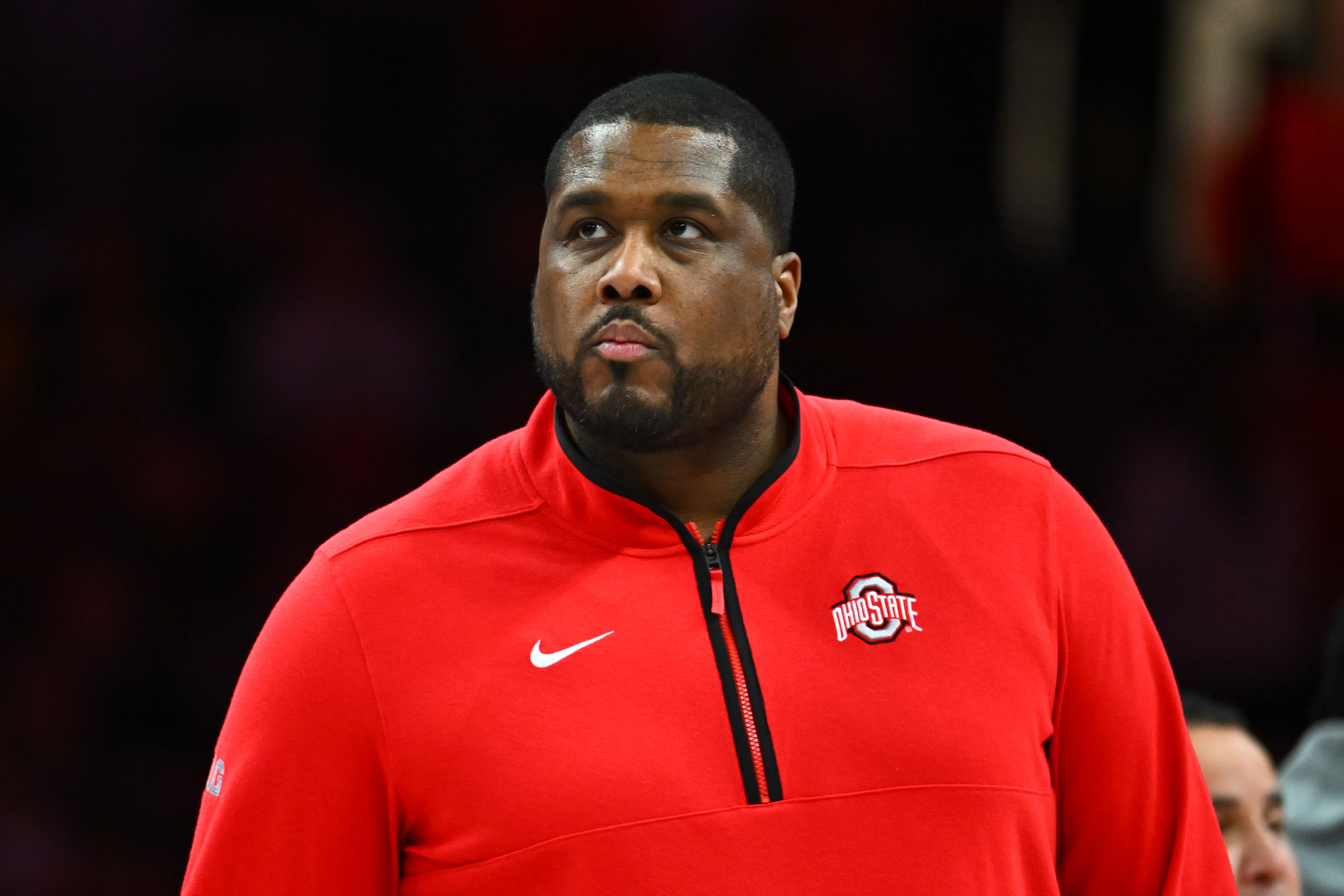
The Buckeyes have had solid retention under Diebler, ranking in the top 25 percent in continuity in back-to-back seasons. This year, they are led by a pair of returnees in junior guard John Mobley Jr. and sophomore forward Amare Bynum.
Sullinger has been impressed with the job the program has done, but there’s no denying that things are different these days. “You asked me how this bond was created, and I talked about a summer day running Ohio Stadium,” Sullinger tells Hoops HQ. “I don’t think guys get those chances anymore. Basketball teams are perfected during the season, but the bonds are created in those summer workouts and things like that. And if you don’t have those or you’re starting fresh every summer with a new team, a new coach, new players, it just doesn’t gel the way you need it to.”
During the emotional meeting, Diebler stressed the importance of building those bonds — not just for Ohio State’s success this season, but for the lives of each player well beyond basketball. Before wrapping up, Sullinger chimed in with one final message.
“The truth of the matter is, man, it’s bigger than basketball, but it starts with basketball,” he said. “And it starts with the guys right next to you.”
Meet your guide