
Who has the right to be a college athlete, and for how long?
Those are the big questions at the core of the fights being waged inside courthouses across the country, as well as in the halls of Congress. Lost in this conversation is the sad fact that the “student” part of being a student-athlete has been lost, and in turn cost the NCAA dearly.
Far too often, when the choice must be made between athletic revenue and academics, education is sacrificed at the altar of financial enrichment. It is not too late for the NCAA to right this wrong and regain its standing in this debate.
So here’s my idea: The fifth year of eligibility which the NCAA is proposing should be conditioned upon the student-athlete meeting the graduation requirements of the school they attended for his or her “senior” year. This would allow all fifth-year student-athletes to spend their final year of athletic eligibility in graduate school. This new standard would apply to everyone currently enrolled in any form of college athletics, including those in two-year colleges.
The advantages of this proposal are numerous. First, it would return the focus of time spent in college to degree completion and graduation. Second, it would reward academic performance. Third, it would slow the transfer epidemic without the implementation of any onerous movement restrictions. It would also provide student-athletes with an opportunity to earn a graduate degree (or some part of one). Lastly, this plan does not compromise the quality of athletic competition or the amount of money a student-athlete can earn. This model allows everyone their greatest opportunity to win in a fashion that is sustainable and is directionally consistent with the NCAA’s current plan.
Perhaps best of all, this change would shift the balance back towards education, thereby helping the NCAA regain its anti-trust clause protections.
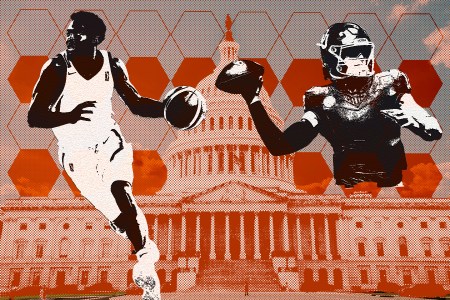
The NCAA Is Making (Yet Another) Big Mistake
In trying to prevent athletes from “ghosting” into the transfer portal, the NCAA is undermining its own legal positions
Establishing athletic eligibility rules has never been an easy path for the NCAA. Since the early 1900s, the organization has sought to create a model of collegiate athletics that 1) keeps pace with shifting societal values; 2) correctly balances life as an athlete against the demands of the classroom; and 3) fairly addresses the concerns of student-athletes regarding compensation and amateurism. From the Institutional Control Era that gave power over eligibility to individual schools to the ill-fated dalliances with freshman varsity ineligibility and Propositions 48 and 16, right up to our current NIL/Unrestricted Transfer Era, generations of college athletes have witnessed the NCAA’s struggles first-hand.
The “Four Seasons Rule”, which allowed student-athletes four seasons of competition, has been the standard since 1961. The purpose of the rule was to promote amateurism, standardize competitive fairness, and to align athletic participation with the four-year academic window. For more than half a century, the rule accomplished this while also allowing the NCAA to successfully fend off anti-trust challenges.
The Covid-19 pandemic changed everything. Entire seasons were cancelled and student-athletes around the country worried about losing a year of competition. In an effort to make student-athletes whole in the face of this widespread disruption, the NCAA granted an extra year to spring and winter sport athletes. This transformed the “five years to play four seasons” requirement into a “six years to play four seasons” opportunity. This well-intentioned effort spiraled out of control due to the excessive granting of waivers and exemptions. When combined with the Covid year, the advent of Name, Image, and Likeness compensation, and the change to the transfer rules, the NCAA was saddled with a perfect storm.
One of the NCAA’s biggest mistakes has been its tendency to make decisions in a vacuum. By failing to include more voices in its decision-making process, the organization became myopic and created the impression that it was arrogant, selfish, and out of touch with reality. Changing this perception will not be easy. However, one step in the right direction is to become more collaborative with other key stakeholders in the collegiate athletic space. The NCAA can accomplish this by convening a special committee of student-athletes and representatives from the NCAA, NAIA, and community colleges. The mission would be to create an eligibility system that is comprehensive and reflects the modern relationship between higher education, athletics, and society.
The NCAA is correct in believing it must address the current eligibility crisis. If the organization is truly interested in stemming its tide of courtroom losses, it must return to the days when it was credibly believed to be an educational enterprise. It’s the right thing, as well as the smart thing, to do.
Meet your guide