It has been yet another frenetic week in the drive to reform college sports. On one screen, we have another effort in Congress, this time taking place in the Senate. The Protect College Sports Act is a rare bipartisan legislation co-written by Senators Ted Cruz (R-Texas) and Maria Cantwell (D-Washington), who lead their respective parties atop the Senate Commerce Committee. Their effort immediately ran into a buzz saw of objections from the SEC and Big Ten, and though passage of the bill seems unlikely, efforts to move it along remain alive – barely.
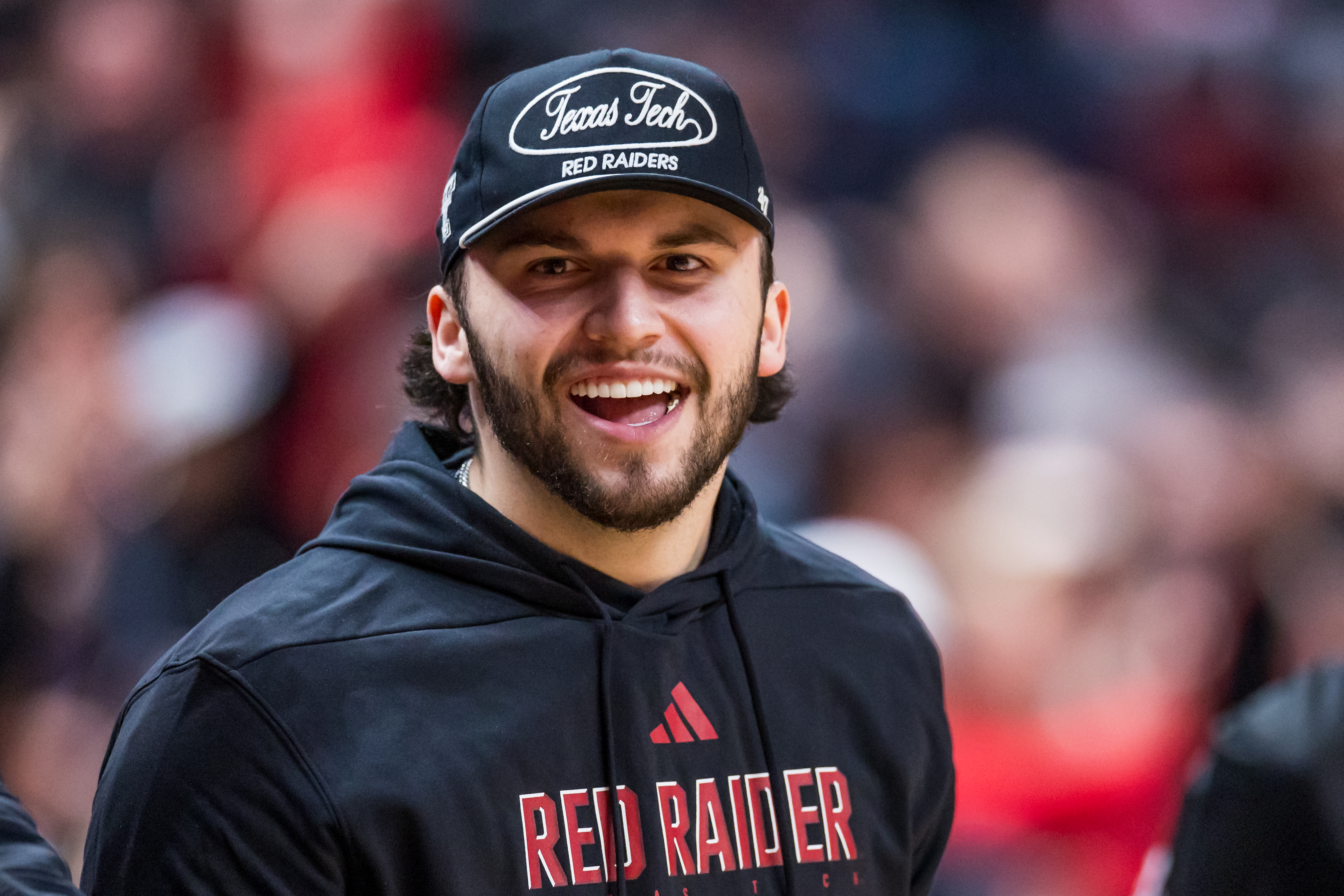
The debate was galvanized after a judge in Lubbock County, Texas, issued a temporary injunction against the NCAA’s decision to render Texas Tech quarterback Brendan Sorsby ineligible for gambling on college sports, including games involving his own team. That decision, which the NCAA will no doubt appeal, added to the sense of urgency for Congress to finally get something done.
Those split screens gave momentum to the argument that there is only one truly, workable, permanent fix to what ails college sports: a players’ union, which would theoretically produce a Collective Bargaining Agreement akin to the ones that exist in other professional leagues. If this is truly the only proper solution, then college sports is in even worse trouble than everyone thinks. Because the possibility of a players’ union is not just unworkable and unlikely, it is pretty much impossible under the law as it stands today. The reasons have almost nothing to do with whether athletes deserve one.
Start with the wall that stops every union drive cold: the split between public and private schools. The National Labor Relations Act, the federal law that gives private-sector workers the right to organize, covers only private employers. The National Labor Relations Board has no authority whatsoever over a public university. That single fact reshapes everything, because the overwhelming majority of major college programs are public. When Northwestern’s football players tried to unionize a decade ago, the Wildcats were the only private school in the Big Ten. The Board looked at that lopsided map and, in 2015, simply refused to decide the case, reasoning that letting one private team organize while its public rivals could not would wreck the competitive balance the whole enterprise depends on.
Nothing about that math has changed. A union at Vanderbilt or USC would have no counterpart at Alabama, Georgia, Ohio State or Texas, because those athletes are employees of state governments, not private companies. Their bargaining rights — if any — are set by state law, and here the picture gets worse, not better. Many of the states with the most powerful football programs are precisely the states that restrict or flatly prohibit collective bargaining for public employees.
You could, in theory, end up with unionized players at a handful of private schools, a patchwork at public schools in labor-friendly states, and nothing at all across most of the South. A single national CBA covering Division I cannot be built on that foundation. There is no legal mechanism that stitches fifty conflicting state regimes and the NLRA into one bargaining table.
The clever response you hear from union advocates is that schools could simply route around this problem by spinning their athletic departments off into private corporations — separate entities that would fall under federal labor law. It is a tidy idea on a whiteboard and a fantasy in the real world. Picture a state flagship handing control of its football program — its stadium, its brand, and tens of millions in public revenue — over to a private company. In most states that is a political nonstarter, and in many it would be flatly unlawful. Public assets, public employees and state constitutions do not bend that easily. You could imagine the powerhouse programs breaking away entirely into a privatized super league with real employees and a real union. But notice what you would have built: professional football wearing college colors. Whatever that is, it is not college athletics anymore.
Then there is the awkward question every labor lawyer asks first: Who, exactly, would the players bargain with? A union negotiates with an employer. But a college athlete plays for a school, competes in a conference and lives under rules written by the NCAA — three layers, none of them a clean, single employer. Professional sports solved this with multi-employer bargaining, where a league office negotiates one deal for all the teams. College sports has no league office with that authority and no legal structure to create one. Without a defined employer on the other side of the table, there is no table.
The Public Is Still Not Sold On the Protect College Sports Act
The NCAA committed a major turnover by not featuring student-athletes in its case for the bill. Is it too late?
All of this assumes the threshold question has even been answered, and it hasn’t. Whether athletes are “employees” at all remains genuinely unsettled. The Johnson case, testing employee status under federal wage law, continues to grind through the courts. The labor board’s general counsel once issued a memo declaring that athletes were employees — and that memo was rescinded when the administration changed. The highest-profile organizing petition at Dartmouth was withdrawn in early 2025 once the political winds shifted and the unions feared an adverse ruling would set them back further. Notably, the House settlement that started this whole conversation also went out of its way to avoid the issue; the court said plainly that whether athletes can unionize “is not one for adjudication” in that case.
Washington has shown no appetite for clearing the path, either. The administration’s executive order on college sports directs federal agencies to reinforce amateurism and resist treating athletes as employees. On Capitol Hill, the SCORE Act — which would have flatly barred athletes from employee status — collapsed and is now effectively dead. The Protect College Sports Act pointedly does the opposite of resolving the question: It neither classifies athletes as employees nor bans unionization, instead calling only for further “consideration” of collective bargaining somewhere down the road. This is why Rep. Steve Scalise (R-La,), among other Congressmen, has said he will vote against it.
Finally, there is the question that sits at the heart of the whole debate: Where is the demand? A union is something workers organize because they want it. Right now, the loudest voices calling for a collective bargaining agreement are not the athletes — they are athletic directors and conference commissioners. The reason is no mystery. A genuine CBA would hand the NCAA the prize it has chased for a decade: the “non-statutory labor exemption,” a doctrine that shields terms reached through real bargaining from the antitrust lawsuits that have repeatedly beaten the association in court. In other words, the people most eager for a players’ union are the people a union would exist to negotiate against.
That gets the purpose of labor law exactly backward. Collective bargaining exists to protect workers, not to solve management’s litigation problems. And the athletes, for their part, are doing just fine under the current regime. Antitrust law has already delivered them direct revenue sharing, open NIL markets, and freedom of movement — gains they won in court without paying a dime in union dues or trading away leverage at a bargaining table. Ask yourself why a star quarterback who can already sign endorsement deals and transfer at will would rush to unionize so his school can gain legal cover. He wouldn’t, and most of them don’t.
So no — a college athletes’ union is not impossible because athletes don’t deserve a seat at the table. It is improbable because the legal architecture was never built to hold one, the workarounds are either unlawful or unrecognizable as college sports, and, most tellingly, the workers it would supposedly serve have little reason to want it. The pressure for a union is coming from management. That alone should tell you how unlikely it is to arrive.
Meet your guide