
It has been a busy week for the Protect College Sports Act, the expansive federal bill aimed at bringing stability to the chaotic world of college athletics. There were some promising signs early in the week that the bill could actually be passed before the Senate’s Aug. 7 recess, but by Wednesday night those signs turned dark once more. The effort is not dead, but it’s far from vibrant.
The action began on Tuesday when Congress sent a revised version of the bill — co-authored by Senators Ted Cruz (R-Texas), Maria Cantwell (D-Washington) and Eric Schmitt (R-Missouri) — to the SEC and Big Ten, hoping to garner their support ahead of a possible vote on the Senate floor next week. Lawmakers issued a deadline of 9 a.m. Wednesday for league administrators to either back the new iteration or continue their opposition. While some progress was made overnight, that deadline passed without a resolution.
The overall negotiation has been messy, with one side (the Senate committee) rushing to get the legislation over the finish line and the other (the conferences) seemingly content to take its time. As the clock ticks, the odds of the bill moving forward before the Senate begins a month-long recess decrease.
Read Our Interview With Ted Cruz
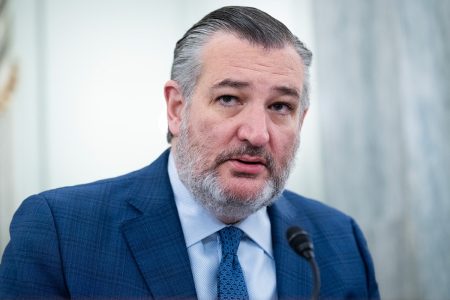
“I Believe We’ll Get It Done”: Senator Ted Cruz Hopes His Bill Will Fix College Sports
Cruz joined The Hoops HQ Show to break down the Protect College Sports Act, a new bipartisan bill that addresses transferring, eligibility and more issues affecting college athletics
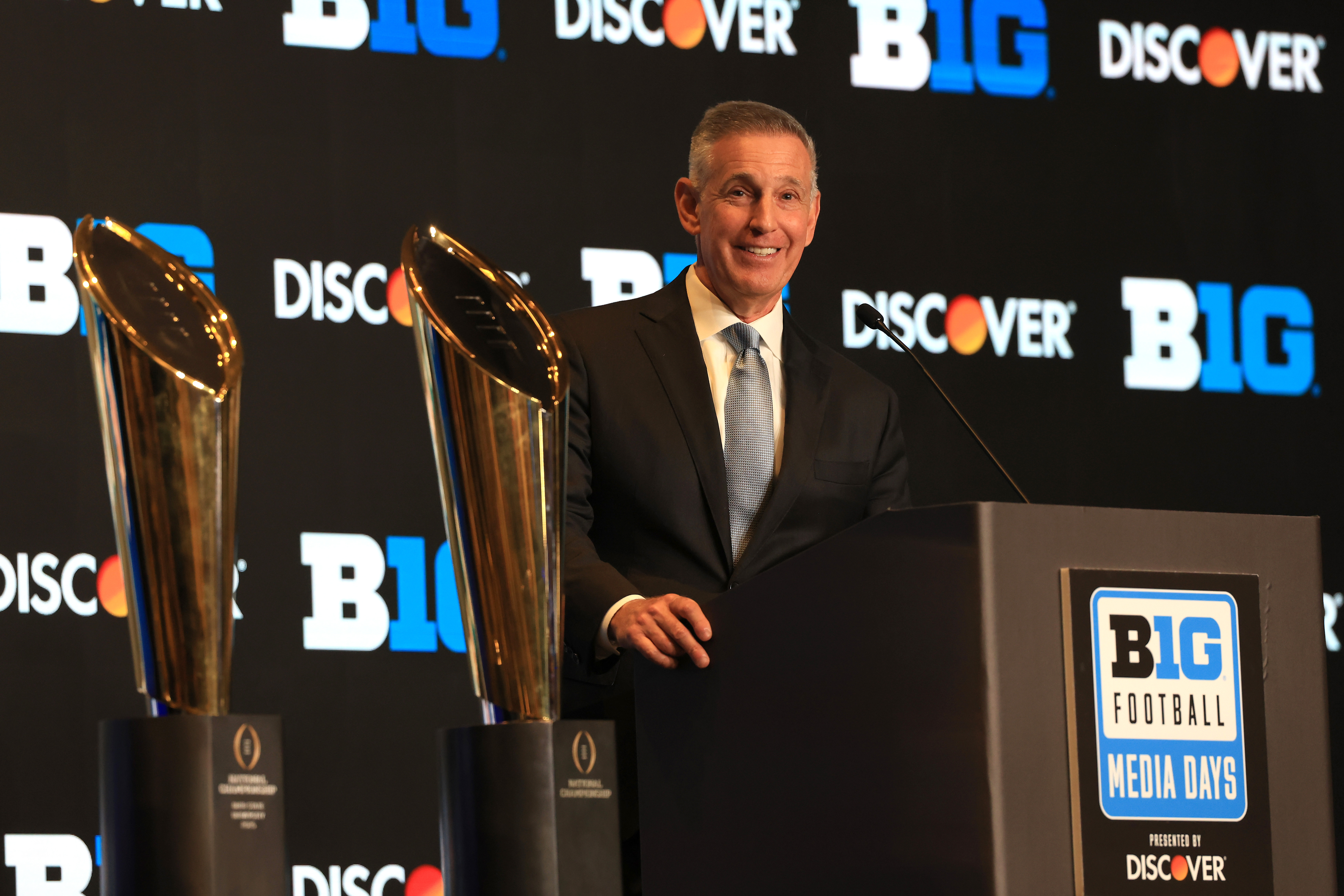
During a 38-minute press conference on Tuesday morning at his annual football media day, Big Ten Commissioner Tony Petitti gave lukewarm support to the bill, suggesting that — even with the impending changes — there is likely to be a lot more work to do.
“We are ready to review (the bill),” Petitti said, addressing a room full of reporters at the Hilton Chicago. “I mean, we can only go as fast as getting the paper. We are not the experts in this legislative calendar. We’re not deciding when something goes to the floor, but what we’ve pledged is if we can get the changes, I’m sure there’s going to be back and forth… I don’t think anybody expects that we’re going to get the changes today and we’re just going to check the box and say it’s all good. There’s going to have to be back and forth.”
The back and forth is now in full swing, diminishing hope that the bill will be ready to hit the Senate floor prior to the recess.
The support of the two powerhouse conferences, which have been in close communication, is critical if the bill is going to advance. Certain tweaks to the language are still being discussed, but the amended version did make several concessions based on the leagues’ demands, including:
- Creating a pool of $20 million for schools to use to retain athletes, plus up to $5 million available exclusively for women’s NIL
- Making participation in media pooling voluntary
- Prohibiting new entities (such as private equity) from acquiring the assets or media rights of schools to form a new conference
- Allowing for conference expansion with non-covered schools but only up to 19 members
- Lowering the threshold in the superleague provision from $1 billion to $700 million to include all Power Four conferences
According to Yahoo Sports’ Ross Dellenger, lawmakers and conference leaders agreed upon a new retention pool figure ($22.5 million instead of $20 million) after deliberating on Tuesday. SEC and Big Ten officials were delivered an updated version on Wednesday afternoon, but according to Dellenger a scheduled 7 p.m. meeting of league presidents was canceled. If Senate Majority leader John Thune is unable to file for cloture on Thursday, it will be near impossible for the Senate to vote on the bill next week.
When Sen. Cruz joined The Hoops HQ Show in late May, he expressed optimism that the bill would pass this summer. “It is a high hurdle, but I believe we’ll get it done,” he said. Cruz acknowledged that “big money” was one of their main oppositions.
“On the revenue side, the SEC and the Big Ten generate more than two-thirds of all of the revenue in college sports. Those are the powerhouses, those are where the eyeballs are, that’s where the money is,” he said. “And they have expressed concerns, resistance to the provision in the bill that allows for the pooling of media rights. We also provide explicitly that a superleague is banned because the SEC and Big Ten have talked about combining, and the bill explicitly says that’s banned because that’s terrible. If that happens, the rest of the country gets left behind. So our opposition, ironically, is from the far left and from big money. But I think we found a sweet spot.”
Unfortunately, that sweet spot has turned out to be more bitter than Sen. Cruz anticipated. Now lawmakers are up against a very compressed legislative calendar. If the Senate does not pass the bill before the recess, the next legislative session is not until mid-September. With the Nov. 3 midterm elections looming, it would be quite a heavy lift for the bill to also pass the House of Representatives, go through the reconciliation process, and garner a signature from the president. As of now, there remains a glimmer of hope that the SEC and Big Ten will give their stamp of approval in time to schedule a vote for next week. If not, the road for the bill will grow longer or, more likely, come to an abrupt end.
Meet your guide