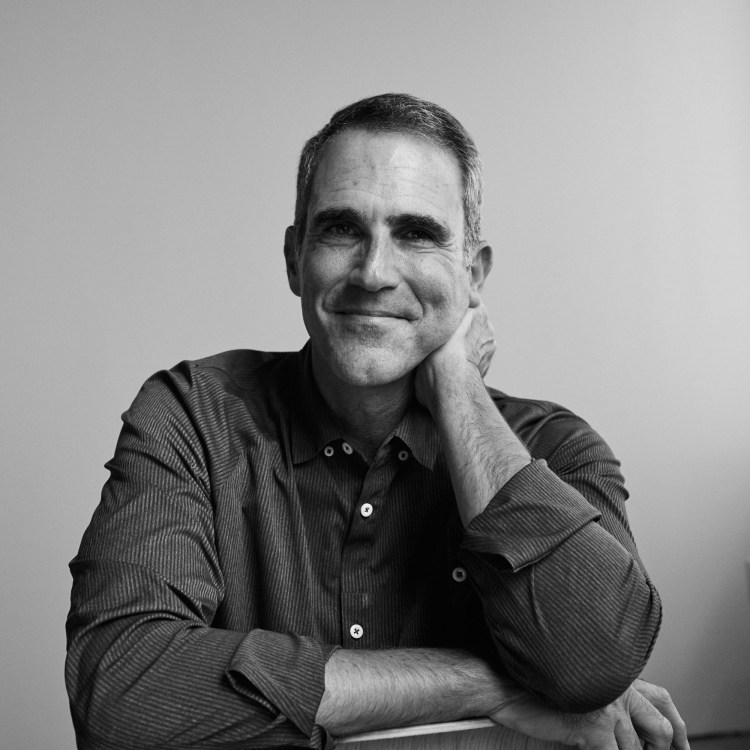

Scott Drew joined Seth and Andy on The Hoops HQ Show Tuesday morning. Stream the full episode on YouTube, Spotify or Apple Podcasts.
Seth Davis: Seth Davis and Andy Katz back with you to break down everything that happened and is happening in the world of college basketball. It’s been a frenetic few weeks since Michigan cut down the nets in Indianapolis.
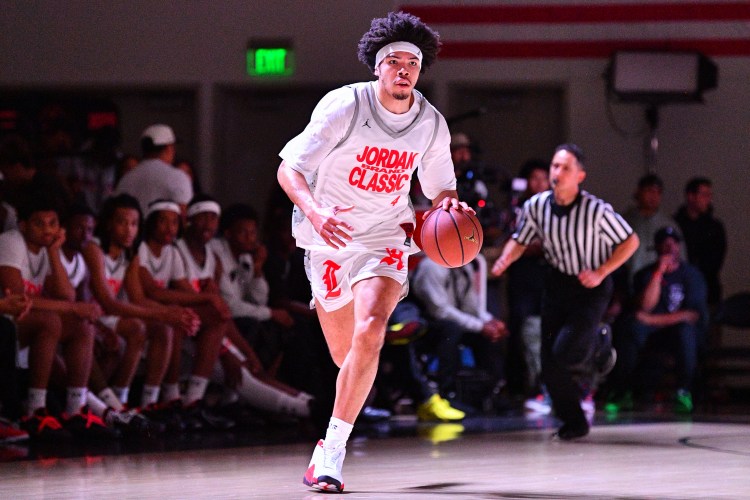
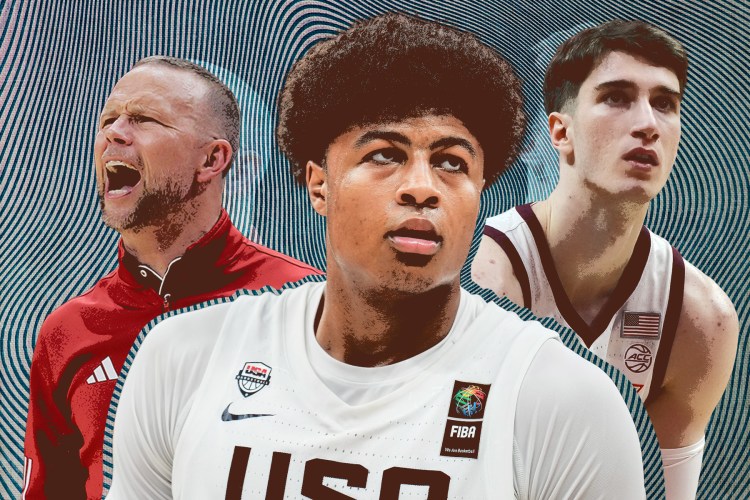
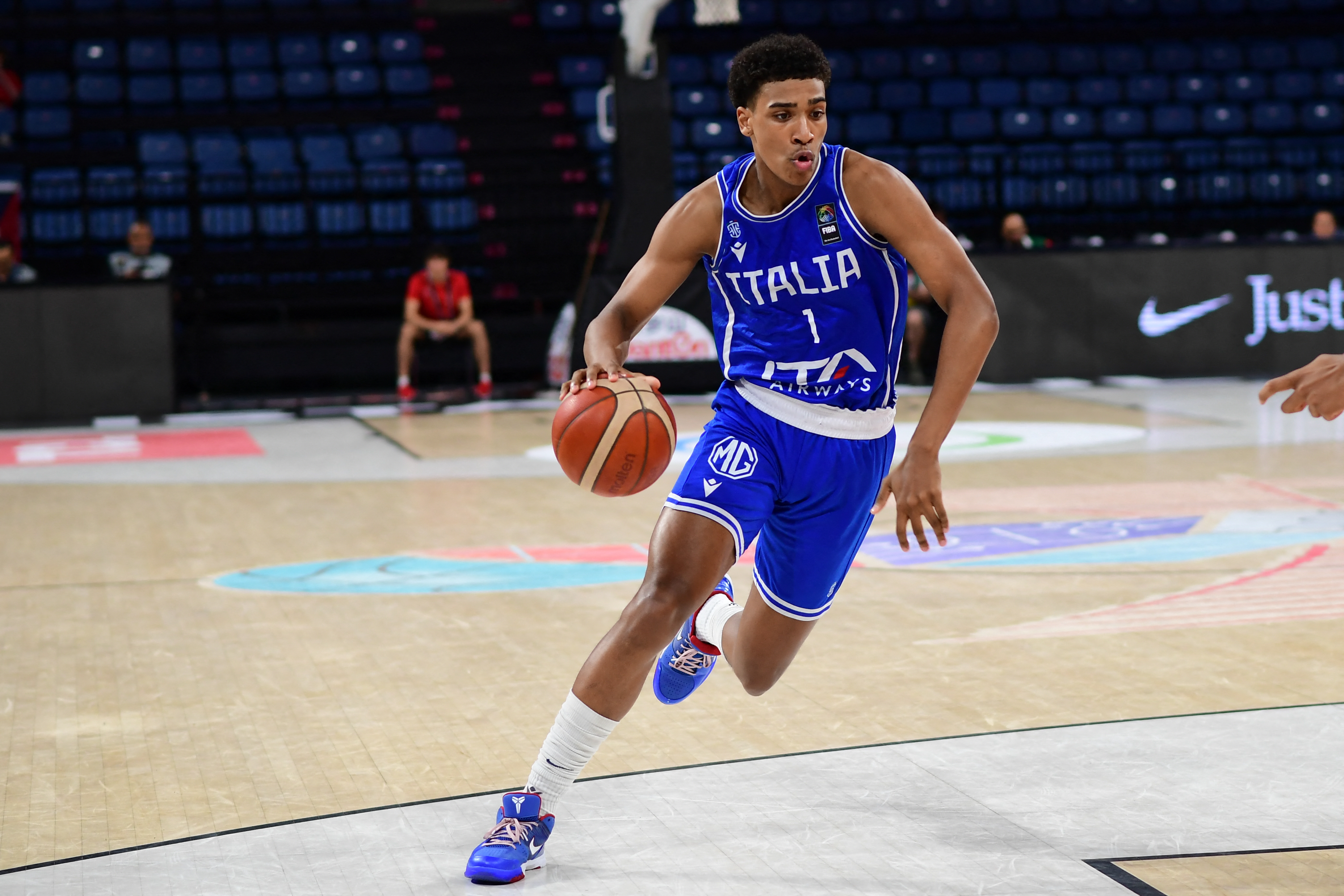
We’re joined by Baylor coach Scott Drew, who has had his own interesting adventures in the transfer portal. He’s got a great high school recruit in Dylan Mingo coming into the fold.
Scott, I know it’s a busy time. The three weeks after the portal opens is the one time we can’t get anyone on the phone. It is absolutely madness.
Explain to our viewers what the last month or so has been like for you and your staff.
Scott Drew: Well, first and foremost, you don’t sleep. Second of all, you recruit until you have a roster.
I can tell you that I did really like the rule that we put in place — that the portal didn’t open until after the Final Four. I know it was really hard for the teams playing in the Final Four — you win or lose the national championship game and now you’re in the portal. But at the end of the day, I believe that was a lot better for the greater good because the last three weeks of the NCAA Tournament, the emphasis wasn’t on every coach being on Zooms and getting commitments. It could be focused on March Madness where it belongs. Really happy we made that tweak.
But as far as once that portal opens, it is ripping and running and you’re trying to secure the best roster possible for the following year. We are making some headway because contracts now do have some buyouts attached. You could have multiple year contracts. So there is more stability than there was before. And when you sign somebody, there’s a better chance that you kept them rather than being able to lose people. So we are making headway in the portal.
Seth: Just to jump in on that real quick, are you doing that more now: multi-year contracts, buyouts, so if they transfer, you get paid? Are you more willing to do that this cycle?
Drew: Yeah, I think buyouts are something that’s much more common than it was before. The multi-year ones are something that’s less common, but happening. Again, some agencies really want that, some agents don’t want that, some individuals want that, some don’t. So really it’s up to them. But as far as the buyout, yes, that’s something that pretty much everybody’s trying to implement.
Andy Katz: Scott, before you came on, I brought up the inequities that have always been there within power conferences, mid-majors: Some schools have more money, more flexibility.
How have you seen the arms race change or stay the same — whether it’s for players, facilities, food, training — in this new era?
Drew: Money’s just different. And what I mean by different is flying on Southwest or flying on American or flying private, that might not make the difference in someone choosing a school. Five-hundred thousand or a million dollars, that changes their opinion. So that is obviously a much bigger card — a trump card — when it comes to salaries or contracts.
I would think that at the end of the day, like you said, regulation as far as Congress can help unions, what might it be? Control what you can control is what we always tell our players. And I think we’ll work with Charlie Baker and the NABC and we’ll try to come up with better ways to adjust the portal — maybe age limit, maybe five-in-five — different ways to promote equity in that fashion and format.
At the end of the day, I think there are certain things we can all agree to. When somebody finishes four or five years of college, the goal is to have a degree. I don’t think there’s anybody that says we don’t want kids to graduate. So how do we make that attainable? And how is that something that they can have the rest of their life while they’re in college?
Andy: Scott, you bring up the five-in-five. This was an interesting thing when you had James Nnaji during the season: He still was within that five year window from his high school graduation year, even though he had been professional overseas.
Where are you with that five-in-five starting at the end of your high school graduation, and allowing players to do what they want with those five years?
If you want to redshirt, that’s your business. If you don’t want to play for a year, that’s okay. At the end of that five years — from 19 to 24 or 18 to 23 — you lose eligibility. Where are you on that?
Drew: I think most coaches want to get out of the waiver business. They don’t want 26- and 28-year-olds in college — they want everybody, in large part, in that 18 to 23 range.
Now I think there’s some other things you can put in with that to make progress toward degrees or an academic focus. Bringing in somebody at age 22 or 23 that has one year and there’s no realistic chance of them obtaining a degree nor do they even want a degree… That’s what college is for, an 18- or 19-year-old where they can finish with the degree. So I think that’s some other things we can look at as far as with the age limit, degree progress.
Again, if you’re playing professional basketball overseas, you can be attending a college and working toward a degree if that’s something you’d want to do. And in the states, even if you’re in the G League, you could be taking college credit somewhere, if that’s what you’d want to do.
I do know bringing someone in for one year when the reality is they’re going to take one semester classes, maybe not even finish the second semester — The goal of college is for someone to start it and get a degree. And let’s not take something away from Little Davis or Little Katz. Let’s let them get a degree.
Hot Takes: Summer Recruiting, Dusty May, Eligibility and the 2027 NBA Draft
Seth Davis and Andy Katz discuss Dusty May’s jump to the NBA, the proposed 5-in-5 rule, the future of high school recruiting and more
Seth: Yeah. Well, you don’t have to worry about recruiting either of our kids — at least not to play. I’m sure they could be good managers, sports information directors. But you know what’s interesting about this new environment, Scott, we’ve talked about this before: You really had it rolling there for a while, most notably, when you won the national championship in 2021. Next year, you tied for first place in the Big 12.
I gotta say, since this NIL, portal era has started, you’ve slipped further and further behind. In 2025, you finished seventh in the Big 12. And then last year had a rough season. I know a lot of injuries as well, but did not make the NCAA Tournament for the first time since 2018, I believe. You did not get dumber as a basketball coach.
You are still a great basketball coach, but it does feel like this new model has not been great for Baylor. Tell me what’s going on.
Drew: Well, I think first you’re right. We had the year we won it all. The year before, we would have been a No. 1 seed. The year after, we were No. 1 seed. And then the next couple of years, we made the tournament, won a game in the tournament, didn’t advance. Some of that depends on matchups. Some of that depends on your injuries and whatnot.
One thing that’s been tough for us is the first 17 years we had one ACL injury. And now in the last six years, we’ve had six. It’s like we have hit — last year we basically had three season-ending injuries. And with NIL, I think most teams probably don’t have the depth that they used to have, because once that money runs out, then the quality of player tends to go down. So instead of having 11, 12, 13 quality players, maybe that NIL salary, you’re paying for nine. Then after that, there’s a drop off and if you get a couple injuries, it’s hard to go through the rigors of any Power Four conference or any good conference with six or seven guys, staying out of foul trouble and whatnot. With us, every year you try to get better at what you do.
Hopefully I’m not, as you say, I haven’t gotten dumber, but I found that — with Phil Jackson, he won three championships. Michael went, played pro baseball, and then he didn’t win the championship. And then Michael came back, and then he wins three more. I tell you, it’s amazing how all that works, right? But at the end of the day, we are really excited about the class we’ve been able to put together right now. And really excited about the lessons learned in the past. You constantly try to change, adjust, get better at what you do and that’s exciting for me. Also excited to be on this show with you two guys because you can tell me what I need to do to make sure we get it back rolling.
Andy: Seth, at the same time you just rattled off those stats, what else happened? Houston and Arizona joined the league. And Kansas also, for their standards, they won 14 straight. They came down a notch.
What have the additions of Houston and Arizona to the Big 12 changed for the rest of you in terms of trying to compete for the top?
Drew: Well, I think they definitely made us a stronger and better league. If you look at this year, if a couple injuries for Texas Tech, Iowa State, I mean, we had several teams that could have gone to the Final Four this year, deeper than I can remember in a while. But as a coach, it’s exciting because you’re going up against other elite coaches in great programs and the best want to play against the best.
I know that’s how I get better, is competing against coaches like Coach Sampson and Coach Lloyd and programs like that. At the same time, I do think, again, basketball change is pretty quick with the portal and NIL and just how things go — from this year we’ll have Tounde and Cameron Carr hopefully drafted high. We’re the only program to have a top-19 pick the last five years. Second-most first-round picks in the last five years to Duke.
And your teams can change like that. Not only losing guys to the pros, but if you lose them to the portal. Retention is so key. And the teams in our league that have been good have retained guys, haven’t lost as many to the pros, and that’s why they were good.
Seth: Well, when you ask our advice about how you can compete, it comes down to money, right? I mean, people can say, money doesn’t guarantee you. And people want to talk about Kentucky’s twenty $2 million. But the reality is it’s kind of like the talk about the Yankees and the Dodgers in Major League Baseball. Having a lot of money means you can make more mistakes, right?
So at the end of the day, you need money to compete. I’m guessing you probably don’t have as much as you’d like to have to be able to compete in NIL, in the transfer portal. So how do you go about fixing it? How much time do you spend on it?
Is it about getting that whale that’s got a couple billion dollars and can just cut you a check? Or do you have a bake sale? Explain to us how fundraising works.
Drew: Yeah, well I think first and foremost, every coach would tell you they wish they had more. And like you said, the more NIL money you have, the more mistakes and injuries you can sustain. And it’s very similar to the stock market. I mean, you’re never going to get every stock right. And no college coach is going to get every portal person right, just like the NBA misses on draft picks.
In sports, you can’t buy championships. What I mean by that is the Dodgers and Yankees can make more mistakes, but it doesn’t guarantee they’re winning it every year. So there is some luck and chemistry and everything involved to advance and win. But definitely the more money you have — I think every school’s trying to figure out what that sweet spot is, what’s sustainable. Some do it with many hands make light work, others do it with one or two whales. I know you two are whales and you support your alma maters and they’re appreciative of that. But I can tell you from a coaching standpoint, we’ll control what we can control and that is when the portal is open and who we can recruit from there.
Hopefully the contractual language allows people to have options to maybe stay at a school, graduate from a school. And those things, I think, help the game more. There is no league that has free agency every year. I mean, if the NBA did it every year, I don’t think that would be good for the game. And at the end of the day, most college kids are going to use that college degree.
We don’t need APR data to say if you transfer to four schools in four years, you have a better chance to graduate. We all know that’s not the case. So let’s make sure that we don’t miss a couple generations of kids getting degrees because we can’t come up with rules that are better followed and sustainable.
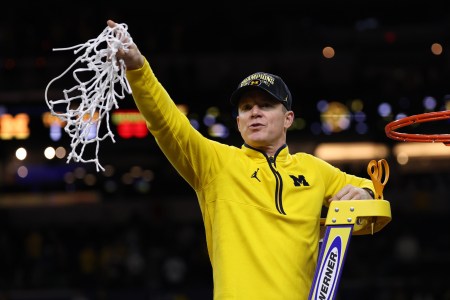
Andy: Scott, in the last few years, I guess since COVID — take Bill Self out, because that was his second — in terms of first timers: You win a national championship. Dan Hurley wins one, then a second. Todd Golden wins one. Now Dusty May. This is sort of a new generation. You’re now all in this club. Coaches coach forever. Never even sometimes get to the Final Four, let alone win a title — like someone like John Chaney.
What’s it like to be in that club now of younger — sub-60, I guess I should say — coaches that have won titles?
Drew: Well, first you get perks like you get to be on your show. So this is a great thing. But second of all, when you win one, you really do realize how blessed you are. And what I mean by that is to not take a key injury at the wrong time. Maybe there was a game where you got a couple key buckets or a key play that enabled it to happen.
I look at the year before we won it all. I thought us and Kansas were the two best teams and it got canceled with COVID. The next year we did win it and it was a blessing, because three weeks, four weeks prior to that, we had a COVID outbreak and we were able to recover from that. If that happens two weeks later, we probably don’t, we lose in the first round. So I mean that we were extremely blessed.
And then the next year we were 15-0 and arguably, analytically, that was our best team. And then we lose our leading scorer in conference to a stress fracture and we lose the co-defensive player of the year to a torn ACL. And we still finish with the No. 1 seed — and lose to North Carolina in overtime, who went to the championship game. I don’t know who beat them. Seth, do you know who beat them?
Seth: I know who didn’t beat them.
Drew: But anyway, when you win one, you’re like, man, you were blessed. And it’s something different, like great teams when they get back together and you share that bond. Anyone a part of that national championship, you just see them and it’s a different bond. And when you’re having a tough day of practice — I learned this from Tony Bennett — you can always look up in the rafters and see that banner and it brings a little smile and a little pep to your step.
Seth: Scott, along with the players that you’re bringing in in the portal and your high school players, you have a very important re-addition to your coaching staff: Jerome Tang. He was with you forever. Went to Kansas State, didn’t end so well there, but he is back in Waco.
Why bring Jerome Tang back? And tell me about that. I know you guys have a very special relationship.
Drew: Coach Tang, we were 19 years together. Most marriages don’t last 19 years nowadays, so the fact that he helped build this program, knows everything about Baylor and more importantly, we talk about changes with rosters. We’ve had a lot of success.
A lot of coaches have gone on to do great jobs. Whenever you get a chance to get a person like coach Tang back, that chemistry and just knowing what each other’s strengths are, weaknesses, being able to help each other — the longer you know someone, the more you’re able to be open and honest as well. I think that people always want to hear the truth and it’s easier to get that from someone who feels more comfortable giving it to you. Like our wives, our wives all are great at that, right?
Andy: Seth, before we let him out of here, you know, he is a rule follower except for one time in the bubble in COVID. Scott and Mark Few broke rules by playing pickleball. So Mark Few’s going into the Hall of Fame despite that — this August, by the way, with our Hall of Famer right here, Curt Gowdy Award winner.
Scott, who’s the better pickleball player, you or Mark Few?
Drew: Oh snap. First of all, we were partners. So he won, I won, we won, we’re all good. But he’s a better pickleball player. I got to give him props. So when he’s done playing, I think he’ll join the senior tour, he said. So he’s serious.
Seth: He’s that guy, like the old guy in the viral video that gets into a fist fight on the pickleball court, right? Everyone thinks Mark is this placid guy. He’s really not.
Drew: No, no, no, he’s very humble. I mean, he beats you and smiles while he does it.
Meet your guides