Ackerman's storied career as a basketball executive is coming to a close with her impending retirement as Big East commissioner
Getty Images
Val Ackerman joined Seth and Andy on The Hoops HQ Show Friday morning. Stream the full episode on YouTube, Spotify or Apple Podcasts.
Seth Davis: We are very pleased to be joined by soon-to-be former Big East commissioner Val Ackerman. She’s had a lot of amazing jobs inside the sport of basketball, high up in the NBA, the first president of the WNBA, USA Basketball, the last 13 years as Big East commissioner. She just recently announced her retirement effective Aug. 31.
Val, congratulations on your retirement. What led into the decision and the timing of it? And I’m sure everyone’s asking you:
What are you going to do next? Because you don’t strike me as the retiring kind.
Val Ackerman: Well, first of all, great to see both of you guys and thank you for the great work you all do supporting the sport of basketball. You all are lifers like I’ve been.
So it was sort of not one thing, Seth. I’ve been at this now, this is my 38th year in the sports business, starting back in 1988 when I took my first job as staff attorney at the NBA working for Gary Bettman, then the general counsel.
Spent 16 years at the league, first on the men’s side, then on the women’s side, and then following that did, as you mentioned, work for USA Basketball, for FIBA. Then I’ve had the honor for the last 13 years of being associated with the Big East. I’m no kid anymore. I’m not afraid to tell my age — I’ll be 67 this fall.
I just feel like the things that I hoped I would be able to do for the Big East have been done. We’ve got some important business relationships now securely in place with our television arrangement, which is set now for another five years following this year, year one of our six year deal. We’ve got our deal with (Madison Square) Garden set through 2032, and hopefully for many years after that. We’ve got some other business deals that are also important that are in place.
It just seemed like the right time, frankly, for me to take my bow and then help the league make the transition over to the next leader. I’m sure it’ll be another great leader in the Big East. So a combination of factors, I think. This was on my mind the last few months really, but I didn’t want to make a fuss during the basketball season. I really did want the attention to be on our schools and of course our great March Madness run.
So this just seemed like the right time to reveal my plans. I want to thank our board for being supportive of that. We’re hard at work now with the plan for the succession and the replacement. We will have a search firm hired soon and they’ll run point on the process of identifying and then interviewing candidates. We’ll try to put it on as fast a track as we can, because we would like to have this person in place by Labor Day. The good news is without football, we don’t have quite as busy a schedule during the summer months as the football leagues have. So there is some breathing room this time of year that I think can certainly help with the transition.
So that’s really it. It’s been really exciting and an honor to do this. And I know the Big East will continue to do great things.
Andy Katz: All right, so Val, I’ll have you talk about yourself here for a moment. You are a trailblazer, which is really amazing when you think about every touchstone that you’ve had in this sport.
In what way do you think you’ve had the most impact?
Ackerman: Well, I take great pride, Andy, in being somebody that women in the business can point to and say, hey, wow, it can be done. Because I didn’t really have any women to look up to when I — at least in management — when I was starting out at the NBA.
To be honest, the women I really looked to as role models were Pat Summitt, not because she was in management, but because she just was this amazing, strong, successful woman who was working in basketball. And then I always admired Robin Roberts who I had a chance to work with early on. She, believe it or not, was doing talent work. She was doing play by play for the first batch of WNBA games on ESPN with Pat Summit as the analyst. So, you know, those two really made a great impression on me, but now I sort of see so many women getting in the business and I really do hope that the fact that I’ve been able to get some things done will inspire them a little bit as they look to bring up the rear and beyond. So that’s one.
I do think launching the WNBA was massive. It was hard work. There were naysayers around every single corner. David Stern gets all the credit for getting this done at the NBA and convincing NBA owners at that time that women were going to be so important to the future of the game of basketball. And that was the NBA’s agenda at that time. And so being part of that was really incredible. Being part of the first Dream Team was really incredible. Great memories of traveling in Barcelona with the rock stars of the game.
But frankly, being able to help get the Big East back on track. That’s why I did it for so long. I had a five-year contract when this started up and it became so important to me to keep at it. That’s why I hung around for a few more contracts. So getting the Big East back and really, I think I’ll close by saying, reinforcing that a basketball league can make it in a football world.
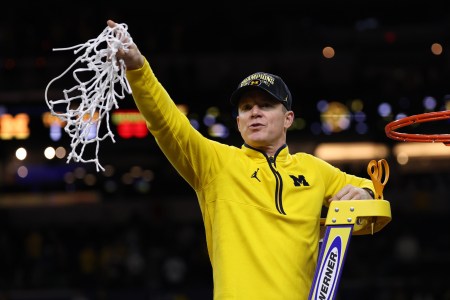
Three of the Big East’s big-time coaches: Rick Pitino (St. John’s), Dan Hurley (UConn) and Kevin Willard (Villanova)
Getty/HHQ Lin
And everything that we’ve been able to do in terms of our tournament, in terms of focus on basketball, in terms of perpetuating the legacy of the league with its high-profile coaches, the great players that have gone on to play in the NBA, all of that stuff is —and to think about Dave Gavitt, who I knew, and what he was trying to get accomplished. And the fact that we’ve been able to carry on his legacy here is a point of pride.
Andy: One quick follow up. Early on in your career, as you just stated, Val — as I said, you’re a trailblazer — so often you were the only woman in the room. And now, we’re seeing more female commissioners and more women in authority.
Early on, what was it like to walk into those rooms, whether it was NBA, USA, wherever it was, and you’re the only woman?
Ackerman: Well, I sort of just rolled with it, Andy. I don’t know how to say this. I just always felt very comfortable being around guys. I mean, I’m a sports person and so I feel like I’m fluent in the language of sports. I think people were able to quickly understand my sincerity, my knowledge base. I’ve tried to have kind of the right manner in terms of dealing with people.
The guys that I’ve worked with have — there have been a few exceptions — but most of them have been fabulous to work with. And I don’t really think of them as men. I just think of them as people I work with. So I’ve never really found it to be that sort of hard to deal with.
I will say the interlude where it was hardest for me was when I was having my kids. And I really did feel like some folks were looking at me like I had a third eye. Because I’m walking into those same rooms and now I’m seven months pregnant. And, you know, I’m dealing with men whose wives didn’t work and certainly didn’t come back to work if they’d had kids. So I think that was probably one of the tougher interludes during my career, convincing people that I was really serious about my job and hanging in there. And my husband Charlie was working too, so those were some tougher years.
But again, back to your point, I want to exude optimism here about more women than ever before in the business. And as they go higher up the ranks, hopefully we will see more women in the room once you get to the top tiers.
Seth Davis and Andy Katz discuss Dusty May’s jump to the NBA, the proposed 5-in-5 rule, the future of high school recruiting and more
Seth: Let’s dig into some of the topics of the day. We only get to grill you on these for a little while longer. You’ve been talking to me and so many others about this incredible shift, huge disruption in college sports over to pay for play. And in the wake of the House settlement, Val, you and I talked about how this could be a great thing for the Big East because that was a salary cap. So revenue sharing was going to be capped at $20.5 million across the board.
A lot of that was going to go to football at all these schools, and the Big East doesn’t have football on that level. So that should have been an advantage, coupled with NIL payments being true NIL as opposed to a boost to pay for play, regulated and all that. It just seems to me like it’s as if all that never happened. Everybody is just continuing to spend as if there is no settlement. There is no NIL or CSC (College Sports Commission) or any of that. Therefore, further putting the Big East at a disadvantage because now you don’t have that football money to spend without a cap.
What’s your take on the situation in the Big East in the current environment and in the future?
Ackerman: Well, I’ll share your, I think, implied suggestion here that there’s no rules and no cap. And I want to qualify that by saying I have tremendous respect for Bryan Seeley, who is running the CSC, who I’ve had many dealings with. I’ve tried to be a resource to him. And I know he’s working earnestly and very hard to try to create a system here that is true to the House settlement.
That does allow for some restrictions here, which I think was the deal. That yeah, the players would now have these enhanced revenue opportunities through direct payments, most of all, but that there’d still be some regulation around it to try to prevent out-of-control spending. I think this is proving to be really hard.
That’s not a judgment against Bryan, because I think he understands it implicitly and he’s trying hard, but really, I don’t think anybody would really have expected it to be this far off from where we thought it would be. And so what does it mean for the Big East? Well we’re very much in it. I mean, our schools, we don’t have the football payments. We have some resources. We have very passionate donor bases, and they’re a big part of things, as you probably know.
Our schools are prepared to use institutional money, which is now allowable with the rev share system to compensate basketball players. And back to the other things, my other feeling is that we have some other really important things in place. I mean, all the other stuff you need doesn’t go away in terms of, it’s important. So we’ve got the TV. Our players have great exposure. We’ve got the Garden. We’re playing in big markets. We’re playing in NBA buildings most of the time — at least half of the time. And we’ve got great, great fan support there. They’re the big guys on campus and our women are too, because basketball is the priority sport on both fronts.
So I do think we have some, we have the attributes that you need all rolled up to be successful. But I can’t say it’s not getting harder for everybody. If you talk to a (power four) AD, they’re probably stressing as much as our guys are because they have to pay the football players. So I don’t know. I don’t have a crystal ball here on where we’re going to be in a couple of years with this. I think for now, the Big East will continue to be, what I would call, leaning in hard in basketball. Our schools are spending money to acquire the players that they think are necessary to meet their competitive aspirations.
So it goes, and we’ll get the tournament: multiple bids and hopefully continue with deep runs for the foreseeable future. But if you were to ask me, what’s it to look like in 10 years or maybe even five years? I’m going to confess, I don’t have the answer.
Andy: Val, we’ve talked many times about expansion and access to the tournament. As we are taping this, it’s not official, but all signs point to 76 on the men’s and the women’s sides. And it certainly would have benefited the Big East, because there were a couple of teams that were on the wrong side the last couple of years.
How do you think the 76 team NCAA Tournament is going to work on the men’s and women’s sides?
Ackerman: Well, we were supportive of this, Andy. We had no objection to it as long as some key objectives were accomplished. And among them was that we wouldn’t go backwards on the money, right? Because expansion means more costs.
I know the NCAA, Charlie Baker and Danny Gavitt and others, were working very hard to make sure that the revenue that would come in from the additional games — from television, from ticket sales, maybe enhanced sponsor dollars — all of that would cover, and then some, of the costs of expanding. And I feel very confident that if this is close, that those objectives have been accomplished.
So yeah, you’re absolutely right. I mean, we always sort of have a team or two on the bubble. We’ve got some locks, and then most leagues at our level, have a team or two on the bubble. So if this means a couple of them get in, that’s great.
We also made it clear in early discussions that we didn’t want to see the window change because no conference — especially us — wants to see our conference tournament impacted. As it was explained to us, the way they’re doing this with 76 would not require an earlier start and would allow for a finish at the same time.
So they’re going to maybe, I don’t know, that’s going to be reflected in those early round games. But it means the Big East Tournament, for example, stays intact. We don’t have to mess with that, or the regular season, which was important to the conferences, especially in our case with the success of the Big East Tournament. Because all of that seems to have been accomplished, we’re good with it.
On the women’s side, same. We’re not as deep on the women’s side. UConn is obviously a standard bearer for us. That’s gonna be a point of emphasis, I think, for our board and our ADs going forward, is our investment in women’s basketball. I do worry that the football leagues are gonna be and remain very dominant in women’s basketball. Why? Because they have football dollars to spend. And those football revenues help a lot of other sports besides football. We don’t have the benefit of that.
I do hope the Big East can figure out a way to keep women’s basketball front and center, make the investments needed to stay competitive, to get multiple bids into the tournament. I’ll be helping our schools with their strategic outlook in the coming months. That is definitely on the list. Beyond UConn, whether it’s St. John’s or Marquette or Creighton or Villanova, we have some teams that have been competitive. Hopefully they can keep that.
Seth: Val, last question because you’re not going to have to answer these types of questions in retirement. You’ll be sort of an oracle, maybe speaking from above. If you could be czar of college sports and really change something, or just pick one thing for starters. We have efforts in Congress. There’s this question about eligibility, five-in-five. There’s concern about the survivability of non-revenue sports — Arkansas just eliminated its tennis program.
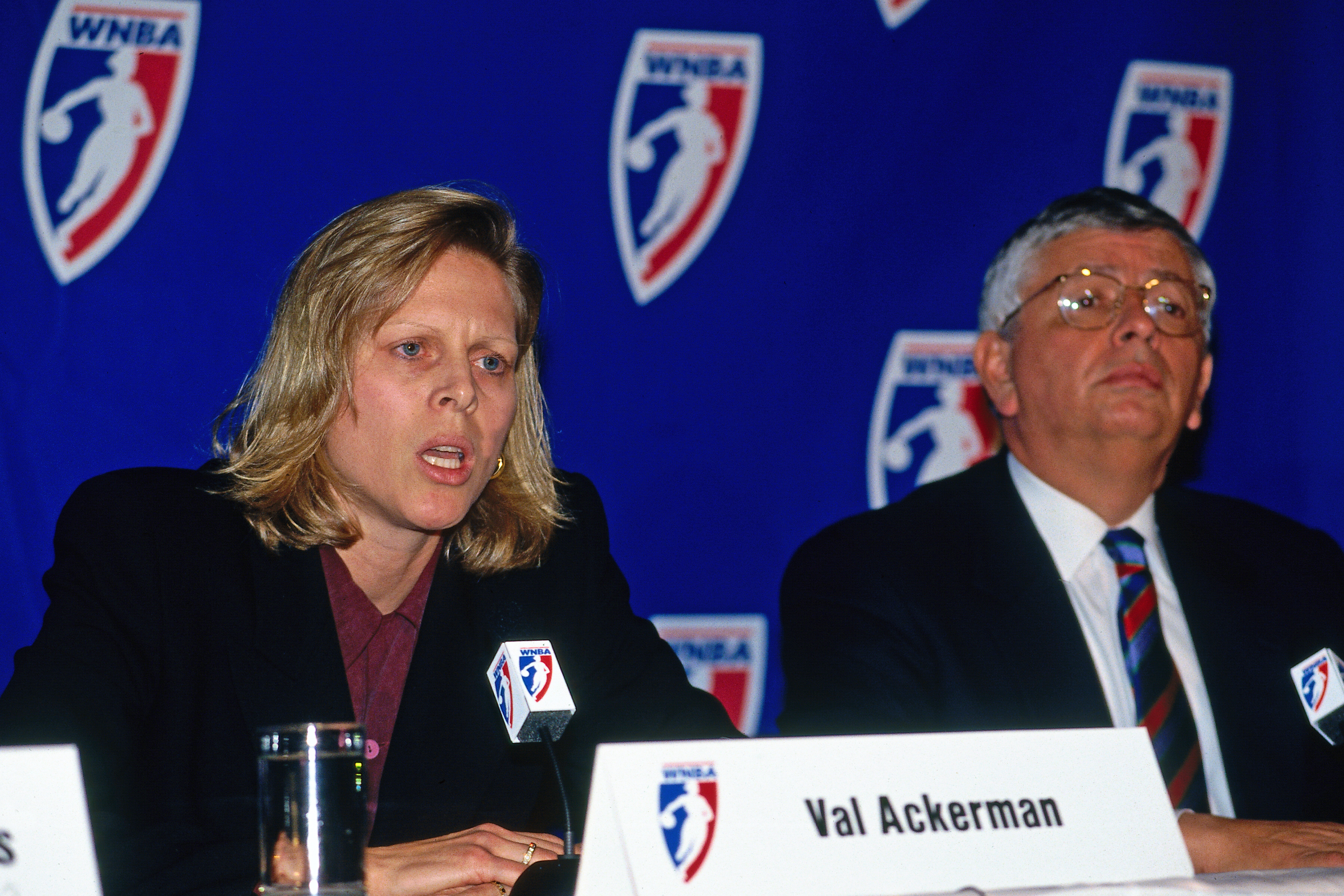
Ackerman seated next to David Stern at the 1996 press conference announcing the inaugural season of the WNBA
NBAE via Getty Images
If you could start somewhere to fix something to maybe turn the tide, where would you start?
Ackerman: Well, it has to be some legislative solution here to the madness, for one. I was part of the roundtable at the White House. I was assigned to a follow-up committee. We’ve had a couple of calls run by Randy Levine trying to get at these rules, trying to figure out some way to reconcile the antitrust challenges. It may be down the road that we deal with the employment or non-employment question.
State laws — states have to stand down. It just seems to me we can’t have state judges making decisions that are affecting national policy. I mean, that’s just all messed up to me. So I think that the biggest one for me is some congressional action, even if it’s narrow. We’ll take a skinny SCORE Act at this point, that even if it only deals with eligibility, if we could go back in time a little bit on transfers.
I think if we could get back to one-time immediate eligibility and transfers, that would clean up some of the other problems we’re having around tampering and agent interventions, et cetera. So I think it all starts with that, Seth, the congressional scope of things.
But if you ask me for one thing in basketball, I’ve said this before, I would love to see a combined men’s and women’s Final Four. That is my crusade. My dying breath will be combine the damn Final Fours.
“I would love to see a combined men’s and women’s Final Four. That is my crusade. My dying breath will be combine the damn Final Fours.”
I’m joking partly, but I would seriously really, really love to see. I was one of the very few commissioners this year who went to both. Women’s basketball is suffering because the key players are all at the men’s Final Four. And why wouldn’t you be? It’s where the action is. But if we could expose the women to that audience, create some efficiencies, maybe create a colossal commercial property where one plus one would equal five, because it’s all in one place like it is in the Grand Slams in tennis.
I’ve said to the powers that be, let’s try it once. Even if you don’t want to stick with it, let’s just see what it’s like, because I feel very confident it would be massive and great. So anyway, if I had one wish on a non-congressional action point in the sport of basketball, college basketball, that would be my ask.
Andy: Seth, to that point, Val and I have talked about this a lot: it’s gotta be the right city. And we just saw in Indianapolis where they did have, obviously, some fans of the NIT, but they had Division II, Division III, and you’ve got Lucas Oil Stadium, literally down the street from Gainbridge. So you need two facilities that are within proximity. Not saying the women can’t be at the same dome, but if you have multiple facilities, I think it’s easier to deal with extra games and all that.
Ackerman: Think Indy, think Atlanta, think New Orleans, think Vegas. It can be done. It can absolutely be done. And I know there’s been some reservations on both sides. The women, I know have been concerned about overshadowing. I don’t think that’s the problem now. I think they could more than hold their own. And certainly being able to gather the writers, to gather all of you in one place would be great.
Andy: I will say this. You were there in Indy. I did a tailgate tipoff on that Friday in downtown Indy where they show the women’s semis on the giant screen in the bars. People were watching the women. On the off days, they were watching the women in the city of the men’s Final Four.
Ackerman: Exactly. You have a captive audience. If you put those tickets up for sale, maybe they get $40,000 in the Dome. You don’t even have to play in the 18,000 seat cap. Plus, there’s a revenue opportunity there. That is not insignificant now, as the NCAA is paying all of its legal bills and settlements. It could be a revenue stream.
So anyway, I just hope that somebody or somebody thinks, okay, you know what, let’s give that a try. That would be my fondest wish.
Seth: This is probably the most that I’ve thought about this, because I’ve always kind of stopped: Well, that’s just too much logistically in hotels. But from a personal standpoint, I’m a huge fan of women’s college basketball. If I could have gone to the women’s Final Four that Friday night and that Sunday, I would have one-thousand percent been at those games. So Val, let’s form a committee with the three of us. Let’s make it happen. You got nothing better to do. We can be on the shuffleboard court. You are not going to be inactive. That’s what I know.
Ackerman: Let’s do it guys, okay? Done. My golf game’s about to get a whole lot better. I’m just saying.
Meet your guides
Seth Davis
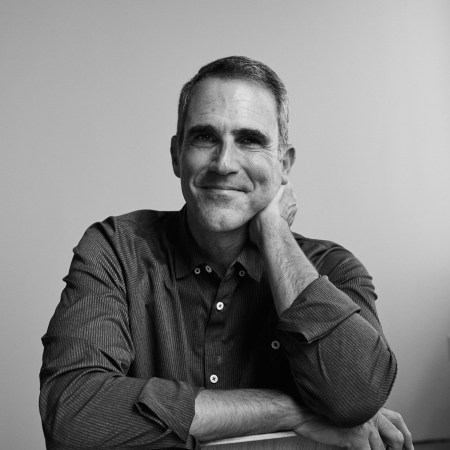
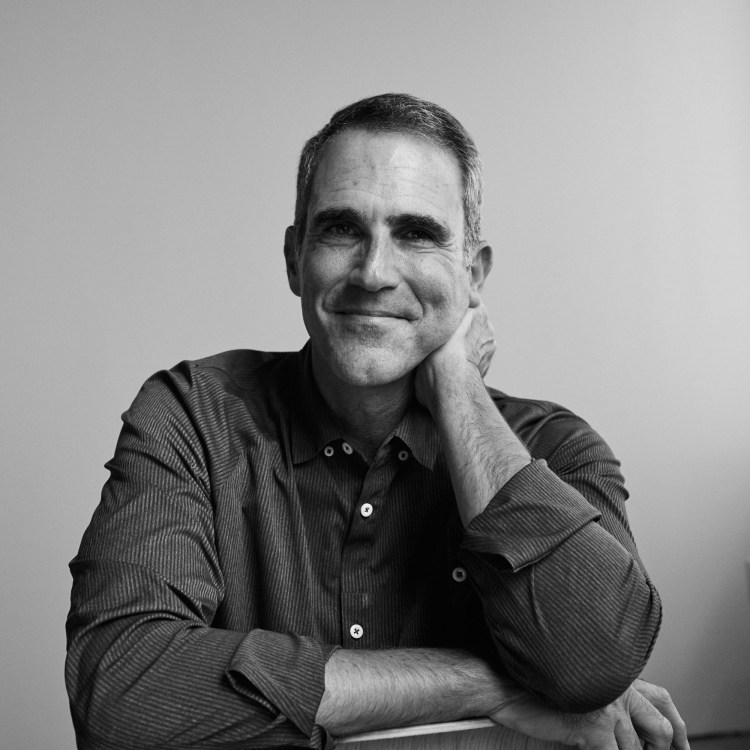
Seth Davis, Hoops HQ's Editor-in-Chief, is an award-winning college basketball writer and broadcaster. Since 2004, Seth has been a host of CBS Sports and Turner Sports's March Madness NCAA basketball tournament. A writer at Sports Illustrated for 22 years and at The Athletic for six, he is the author of nine books, including the New York Times best sellers Wooden: A Coach’s Life and When March Went Mad: The Game Transformed Basketball.
Andy Katz is Hoops HQ's senior correspondent, an analyst for Turner Sports and the Big Ten Network, and a national correspondent for NCAA.com. Previously, he spent 18 years at ESPN as a college basketball reporter, host and anchor. He is a former president of the United States Basketball Writers Association. Follow him on X at @theandykatz.