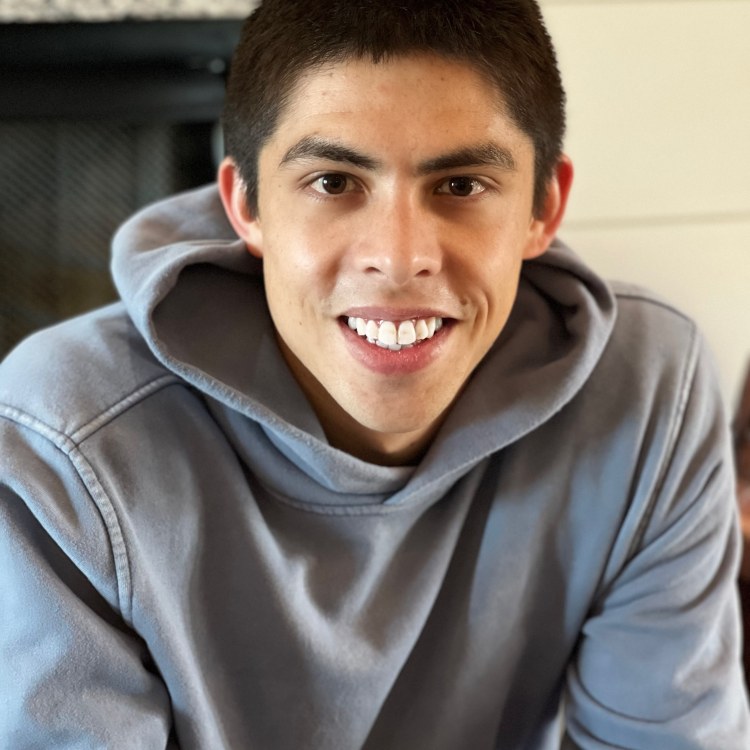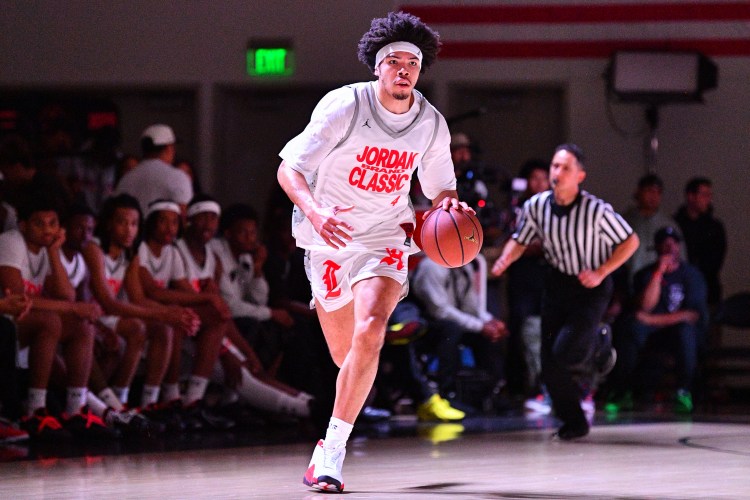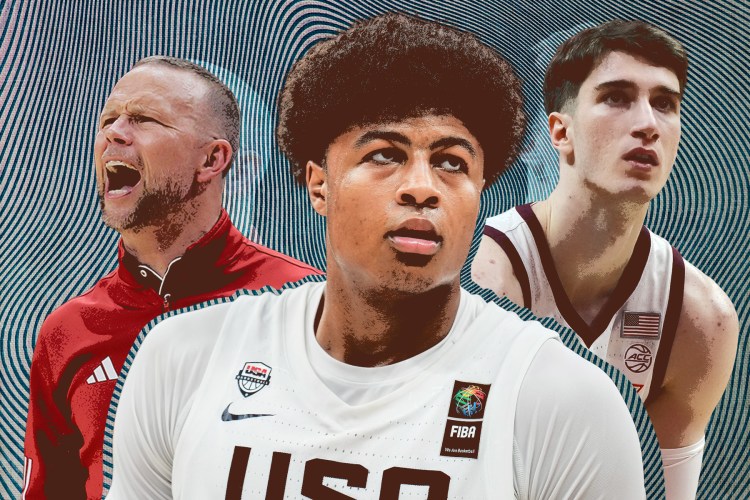

Two months ago at Hinkle Fieldhouse, Dylan Darling found himself stuck on the St. John’s bench. During a game against Butler on Jan. 6, the 6-foot-1 junior guard didn’t receive a second of playing time from coach Rick Pitino.
Darling, a transfer from Idaho State who was named 2024-25 Big Sky Player of the Year, had been struggling immensely. In the game prior — at home against Providence — he had logged 20 minutes but attempted just one shot, finishing with 1 point, 1 rebound and 1 assist.
What bothered Pitino the most about Darling’s rough start to the 2025-26 season was that the 23-year-old was playing timidly, seemingly afraid to fail. He was doubting himself and counting his misses. He admitted to Pitino that he was in his own head and overthinking while on the floor. “I didn’t like any of those phrases,” Pitino tells Hoops HQ. “Our culture is confidence bred on hard work, and we don’t think that way around here.”
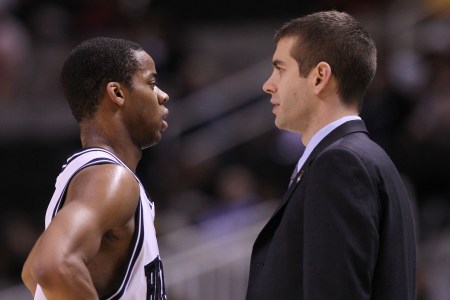
So, following the Butler game, Pitino sat down with Darling for a brutally honest conversation. “You’re different from what I expected,” Pitino told him. “You got more excuses and more signs of weakness than anybody I’ve coached. You know that excuses are a sign of weakness? When you say, ‘It’s in my head’ and this and that, those are excuses. That’s weakness. And you can’t show weakness to be a great player.”
Darling had chosen to come to St. John’s for moments like this. “I wanted to go somewhere where I was going to be challenged,” he tells Hoops HQ. “Somewhere where I was going to get better. And I felt like there was no better option than Coach P.”
The message was received. In the very next game, Darling posted 11 points on 4-of-7 shooting off the bench as St. John’s cruised to a 90-73 win over Creighton. Since then, he has gone from timid to unflappable, filling what was once an alarming void at point guard and building a reputation as one of the nation’s most clutch performers. In league play, he averaged 8.9 points, 2.6 rebounds, 2.4 assists and 1.3 steals while shooting 47.7 percent from the field and 39.3 percent from deep.
After Darling knocked down the go-ahead three-pointer in a thrilling 88-83 win over Xavier on Jan. 24, Pitino said that the veteran has “balls the size of church bells.” The coaches now hand out a “Big Bells” award to the player who contributes the most to a victory.

My Day With Rick Pitino: Get Up, Show Up, Try to Keep Up
The Hall of Fame coach, now 72 and in his second season at St. John’s, hasn’t slowed one bit
With the Big East Tournament tipping off Wednesday and the NCAA Tournament around the corner, Darling has emerged as the Red Storm’s greatest X-factor. He is built for the bright lights of March, when solid guard play — and church bells — become even more essential. How well the Johnnies fare in the postseason will depend heavily on the once-overlooked mid-major transfer. “He’s the type of guy who can take over a game,” says Jake O’Neil, Darling’s former backcourt mate at Idaho State. “All the eyes on March Madness are going to love him. If they’re making a run, there’s no way he’s not impacting the game in a huge way.”
Asked whether the team will lean on Darling more over the next month, Pitino chuckled. “We’re relying very strongly on him now,” he said. “I don’t think there’s a whole lot of room for relying on him more.”
Of course, it took time for Darling to fully earn that trust. After a year in the Big Sky, readjusting to the size and athleticism of the high-major level proved challenging. Plus, Darling’s shot just wasn’t falling. Through his first eight outings in a St. John’s uniform, he averaged 4.3 points and shot a dismal 1 of 15 from behind the arc. The team stumbled as well, plummeting from No. 5 in the preseason AP poll to unranked by Dec. 22, due in large part to the absence of a reliable point guard.
Around Christmas, Darling had a reassuring talk with his former Washington State teammate Jaylen Wells, who now plays for the Memphis Grizzlies. Wells had transferred to WSU from Division II Sonoma State and initially struggled before refocusing and establishing himself as an NBA prospect. “He reminded me of his story,” Darling says. “And that gave me a sense of confidence. I just needed to take a deep breath, take a step back and relax.”
That chat, coupled with the one he shared with Pitino in January, helped Darling turn things around.
He stepped up during crunch time in narrow wins over Seton Hall (Jan. 20), Xavier (Jan. 24) and UConn (Feb. 6), hence the “Big Bells” nickname, and led the Red Storm in scoring against Providence (Feb. 14) and Creighton (Feb. 21). In addition to orchestrating the offense and scoring timely buckets, Darling has brought tremendous energy on defense, pestering opposing guards 94 feet from the basket.
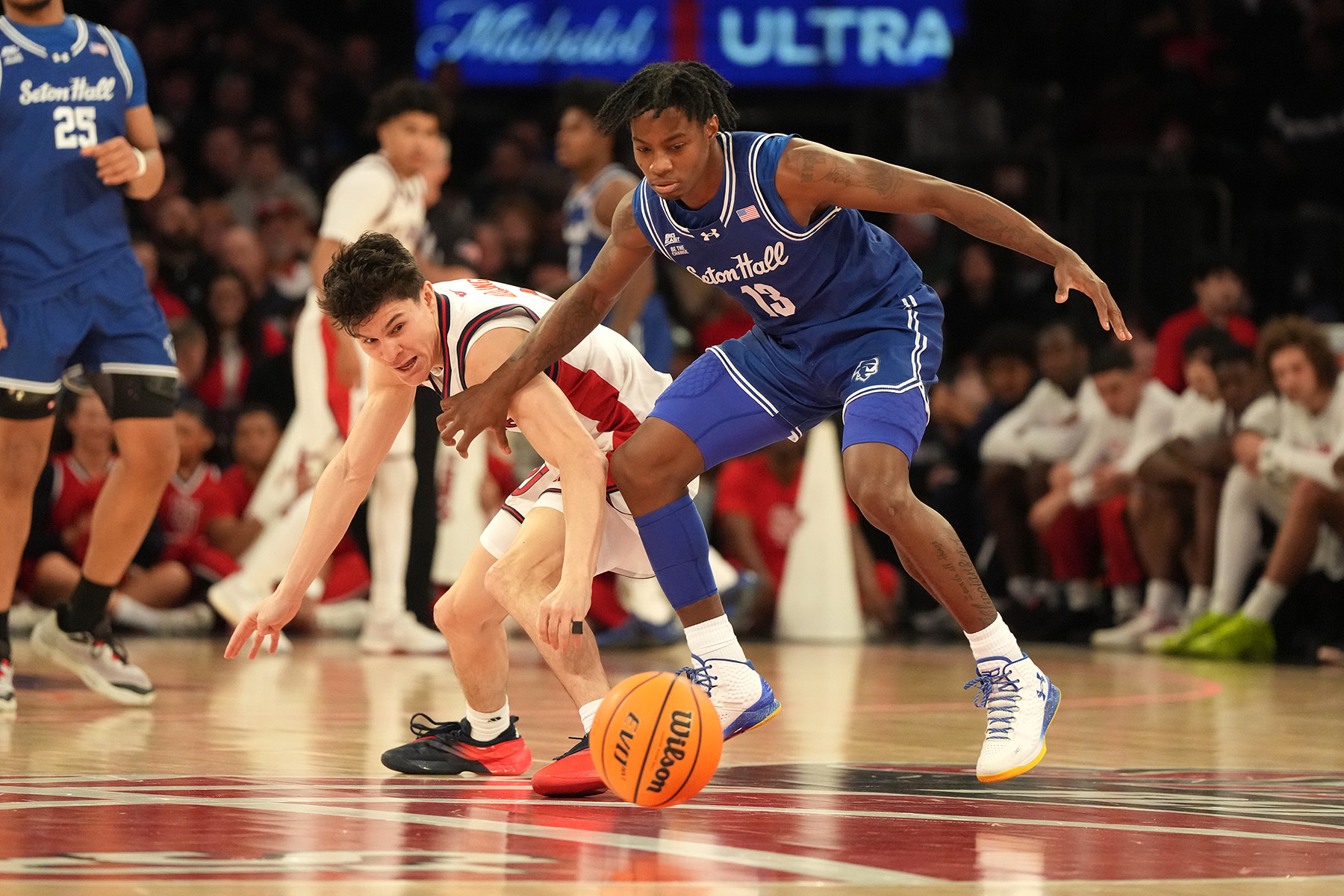
Not coincidentally, the Johnnies have thrived since Darling’s emergence. They won their second straight outright Big East regular-season title with an 18-2 league record. Through the first 14 games of the season, the team averaged 12.3 turnovers. That number dropped to 8.2 over the next 17 contests, with Darling playing an increased role.
Amid his rise, the junior has earned praise from coaches around the Big East.
“I give him a ton of credit. The narrative around them earlier in the year was that there was no point guard and the point guard play wasn’t good,” UConn coach Dan Hurley said. “That guy is tough as nails. Just a clutch performer.”
“There’s a confidence about him and a tenacity and toughness defensively,” said Creighton coach Greg McDermott. “In a lot of close games, he’s making huge plays on both ends of the floor.”
That tenacity and toughness can be attributed largely to Darling’s father, James, a former star football player. James was an All-American linebacker at Washington State before being drafted by the Philadelphia Eagles in 1997. He spent a decade in the NFL, also suiting up for the New York Jets and Arizona Cardinals.
Growing up in Spokane, Wash., Dylan played quarterback and linebacker until high school, when he decided to go all-in on hoops. James preached the importance of hard work and always competing with intensity. “He couldn’t stand me not playing hard,” Dylan says. “He didn’t really care how many points I scored. In AAU tournaments, if I was playing down to the competition or not playing hard defensively, I would kind of get a little bit of the wrath on the way home. That was something that he instilled in me and that became a standard for me, just playing hard and being a pest.”
As a senior at Central Valley High School, Darling was named Washington 4A Player of the Year, averaging 33.2 points, 8.5 rebounds, 5.8 assists and 4.4 steals. He broke the Greater Spokane League scoring record previously held by Adam Morrison and registered the most points in a single game in league history with 58 against North Central. He began hearing from more Division I schools, but not as many as one might presume given his historic numbers. “There have always been questions about my size and frame, so it wasn’t like I was surprised,” Darling says. “Some people don’t trust their eyes. I felt like once I got a chance at that level, I was going to be able to prove people wrong.”
After initially committing to Idaho State in January, Darling changed courses two months later when his dream school, Washington State, reached out. Both of his parents are WSU alums and the campus is less than a two-hour drive from Spokane.
In his first year in Pullman, Darling concedes that he wasn’t focused enough on basketball and allowed his work habits to decline. He averaged just 1.7 points and 1.7 rebounds in 12 minutes off the bench. Determined to right the ship, he adjusted his approach going into his sophomore campaign. But in the Cougars’ opening game of the preseason, he tore a muscle in his back. After trying to fight through the injury, Darling had to shut it down in mid-November. The setback was devastating, especially given the buzz around that year’s WSU team, which went on to earn a No. 7 seed in the NCAA Tournament.
That offseason, coach Kyle Smith moved on to Stanford, and Darling opted to enter the portal. He landed at Idaho State, having already built a strong relationship with coach Ryan Looney. As the Bengals’ starting point guard in 2024-25, Darling blossomed into a star. Playing with a broken left pinky finger, he was one of just three players in Division I to rank in the top 30 in points per game (19.8) and assists per game (5.7).
“He’s really the most competitive dude I’ve ever met,” says former Idaho State guard Jake O’Neil about Darling. “He almost blacks out in a lot of ways when he’s playing. He wants to win so bad. It doesn’t really matter to him how many points he scores or how many assists he has. He really just wants to win.”
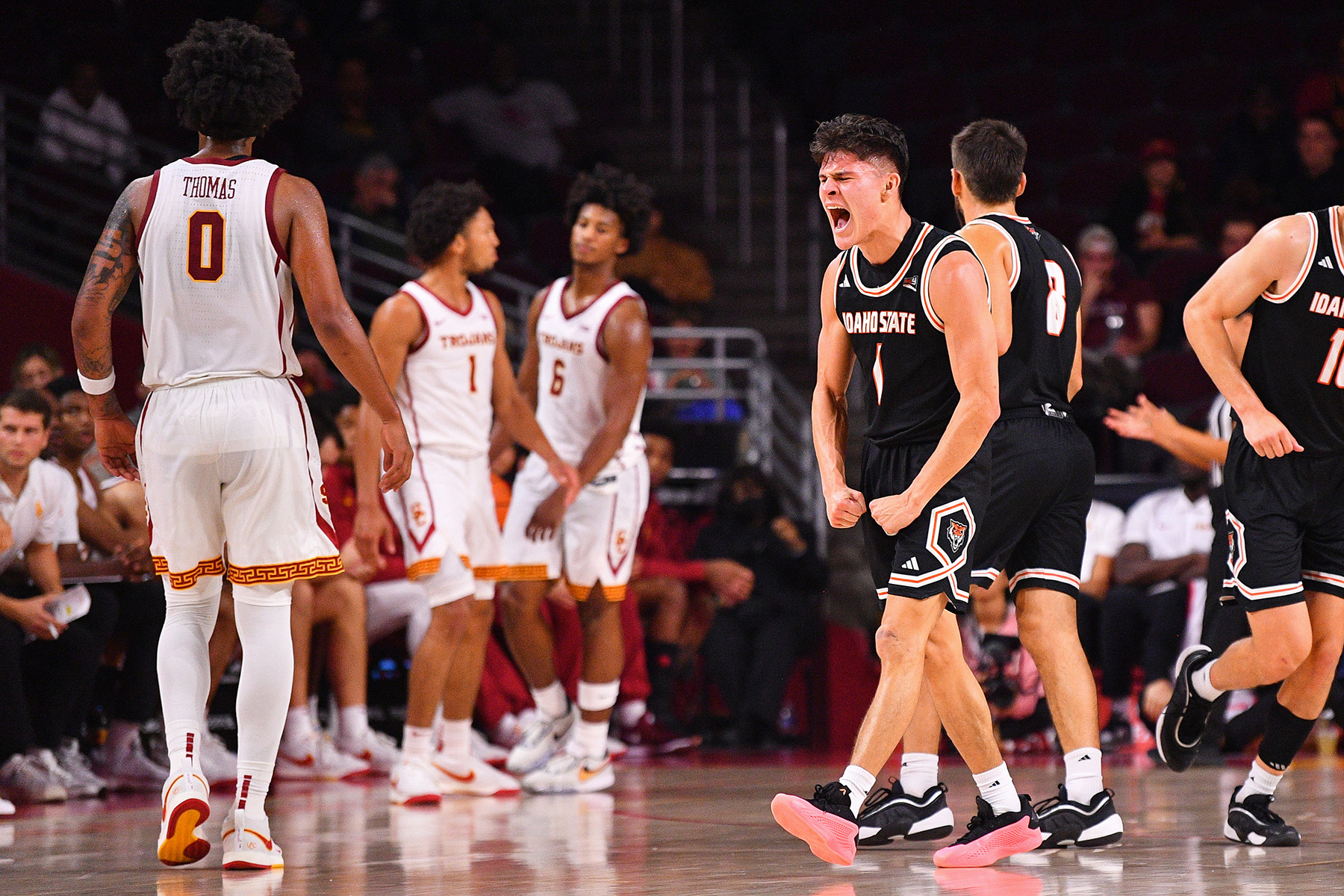
With Darling and O’Neil leading the way, Idaho State won 10 games in the Big Sky, its highest total since the 2015-16 campaign. Darling cherished his year with the program. Leaving was difficult, but it was the right move for his career. He threw his name in the portal in early April and heard from St. John’s soon after.
Pitino’s staff was on the hunt for another guard to complement the slew of talented scorers who had already committed. After talking with Darling’s former coaches (assistant Bob Walsh is close with Smith) and bringing him in for a workout, it was clear to everyone that the kid was an ideal fit. He embodied the program’s mantra: PHD, or Passionate, Hungry and Driven.
His signing was met with little fanfare, but Darling has become a fan favorite in New York. In games where he’s played more than 20 minutes, St. John’s has gone 12-1, with its sole loss coming to national championship contender Iowa State by one point.
The Johnnies will enter the Big East Tournament as the No. 1 overall seed and are currently projected to be a No. 5 in the Big Dance by Hoops HQ bracketologist Brad Wachtel. Most of the college basketball world expected them to be in this position. Few expected Darling to be one of the major reasons why.
It took a couple of months for Big Bells to emerge, but there’s no question about his importance heading into March Madness.
“He’s doing such a good job now,” Pitino says. “He’s exactly where we want him.”
Meet your guide