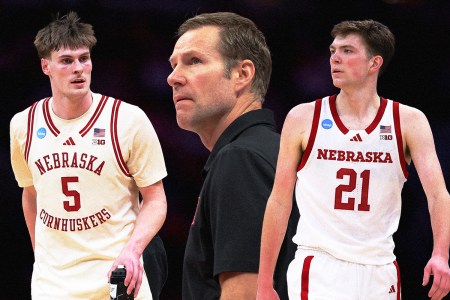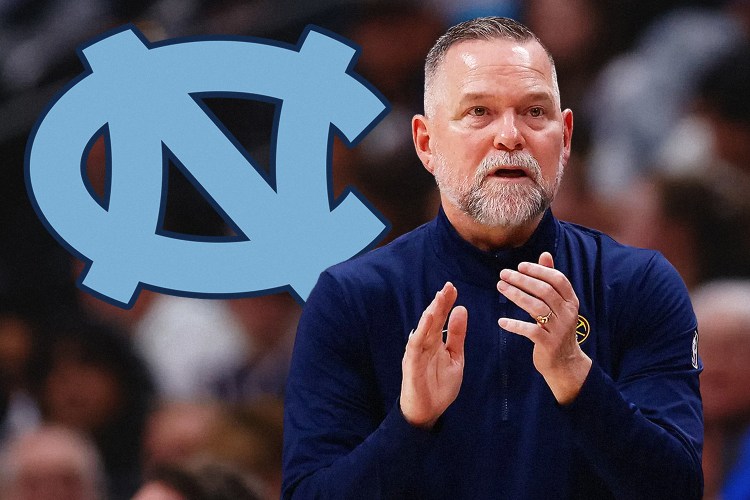

Through the first three months of the 2025-26 campaign, the Michigan Wolverines have looked nearly invincible. They are 20-1 (10-1 in the Big Ten) and ranked No. 1 on KenPom with a +36.38 net rating. Since suffering their first and only loss of the season to Wisconsin on Jan. 10, the Wolverines have won six straight league games, including back-to-back over top 10 opponents (No. 5 Nebraska and No. 7 Michigan State).
Fresh off his team’s 83-71 victory over the Spartans last weekend, Michigan coach Dusty May sat down with our Seth Davis and Andy Katz on The Hoops HQ Show video podcast to discuss the success of his program, working with Big Ten Player of the Year contender Yaxel Lendeborg, building a juggernaut at Florida Atlantic and more.
SETH DAVIS: What’s the most important thing you learned about your team from the win over Michigan State?
DUSTY MAY: Well, we stayed extremely poised. Typically when you blow the lead like we did, they make a run and they’re able to get over the hump. Usually you’re not able to respond or at least it seems that way. And our guys just continued to play. Obviously we need to be much better after halftime. We made some uncharacteristic errors that gave them momentum and got the crowd into it. (But) just our guys’ ability to stay the course and not get rattled — we’ve got some pretty even-keeled guys, so that’s what they did.
ANDY KATZ: You’re two-for-two in two years at Michigan in terms of blending. Pulling in Aday Mara, Morez Johnson Jr., Yaxel Lendeborg, Elliot Cadeau, Roddy Gayle Jr. — all these great pieces. How did you know they would fit?
May: Because they’re all good. I think when you have really talented players that are also smart and competitive, then you can figure out ways to win. Our game is so complex now. There are so many different styles of play offensively and defensively, so many different ways to do it that there is a format that can be done in any way that you want to do it. It’s been done before. It’s not like you’re reinventing anything. It takes some time to do research and homework on it but we just thought those guys were all incredibly skilled and talented.
We competed against Yax. We’re friends with those guys at UAB with Coach Kennedy, so we knew that you could put him all over the court and use him as a wing or a big. The only thing that makes it truly unique is I think that all three of those guys played the five at their last school, but it shows that they’ve worked really hard to expand their games and add more versatility. Aday is an elite passer. Morez Johnson continues to improve in all facets, but he’s a junkyard dog. And Yax is a connector and superstar who’s incredibly unselfish. They all have these unique qualities that just mix well together. And then Cadeau is a table-setter. He’s a true point guard. And like Morez, he’s a psycho competitor. So I think those things are probably as important as anything.
Davis: I want to follow up on that because it’s really important that you keep saying ‘This guy’s a psycho competitor.’ What kind of homework are you doing to decide that? How can you be sure that a guy is going to be a psycho competitor after you give him, hypothetically, two million dollars?
May: Well, you’re never sure. With all those guys, we were leaning on their former staffs. We were leaning on their high school coaches and prep school coaches. You’re trying to get as much information in a short period of time as you can. Fortunately, we see these guys play so much now with the leagues being so big, so you’ve seen them play five to 10 times each.
For example, I didn’t know anything about Morez Johnson as a person, but I’d watched him play. And unless he was the village idiot, we wanted him as soon as his name went in the portal because we knew how he played the game. After that, it’s just trying to figure out if he’s a good fit for your place culturally.
We’re also very flexible with how we do things. We spend a lot of time in the summer getting to know our guys. We’re competing every day. So we see the levels that they can compete with and do every day. And then also some guys who aren’t that, that are more skilled and maybe have flaws, we don’t expect them to be something they’re not. We try to make sure we bring in guys who can accentuate their gifts and their talents.

Katz: To this point, you’ve had such a fascinating season. At the beginning of the year, you survived against Wake Forest and TCU. Then you go through a stretch where you are UNLV from 1991 and no one’s within 30 points of you. Then it settles down again. You’re still winning, but you’re in close games. How did you ride that wave from close to blowing everyone out to back to close again?
May: Well, because of preseason injuries, we didn’t have our group together all fall. We believed that Morez and Aday and Yax could play together, (but) we really hadn’t seen it. In the summer they were going against each other because we’re trying to get better and improve and compete, and then once we get into fall we start working more with lineups and things like that. One of them was injured and then as soon as he came back the other one was injured, so they never really played together. It was clunky at first but we knew that it’s a long season and it wasn’t like one loss was going to keep us from achieving any of our goals.
We were still observing, still tinkering, and then once you have a little bit of experience you can start trying to plug some holes and figure out how it’s going to work. Keep in mind, Wake Forest was playing really well. I think they’re a talented basketball team. I don’t know what’s happened recently. They almost beat Texas Tech the following week. And then anytime you go play at TCU against a Jamie Dixon-coached team, you know it’s going to be difficult. They have a good roster. They’ve had some really, really good moments as well. So we weren’t nearly as down on ourselves as everyone else was because we thought it would take some time and because we respect those two programs.
Then in Vegas, we started making shots and we were able to increase our defensive intensity and energy so much. A couple of those guys, they weren’t defending up to that point at the level we needed them to. And it was like the lights were switched on and they just really started covering for each other on both sides of the ball.
Davis: Yaxel was amazing in that win over Michigan State, really attacking the rim on the road — 13 of 15 from the foul line, 26 points, 12 rebounds. Early in the season, he was so gangbusters and really in the conversation for National Player of the Year. It seemed like there was a little bit of a lull with him. We had heard that maybe he had a calf strain and some of it was physical. I don’t know how much of it is his personality and whether he gets a little passive. What’s it been like coaching him? Do you feel like maybe he gets a little too passive at times?
May: Yeah, we would love for him to be even more aggressive… But we should have just rested him and had him come back at full strength. His poor performances were immediately following his injuries. He hasn’t had a bad game since he’s been healthy or even before.
Katz: We love to romanticize when the one-bid league or mid-major team gets to the Final Four. When you got there with Florida Atlantic, your roster was littered with professional basketball players. Maybe we didn’t appreciate that then, but all those guys went on to a higher level. What did you see in those guys that not everyone else saw when you got them at Florida Atlantic?
May: First of all, I wish we had more money in year one at Michigan — I would have brought a lot of those guys with us. But finances and salary cap are the biggest constraints on recruiting who you want to recruit and who you choose to spend your money on. So we were looking at the best value at that point.
But yeah, when you have the depth and the talent that we had, it fosters such a competitive environment every day in practice. We played so much and those guys were obsessed with working on their games and they were in the gym 24/7. They loved lifting weights. They loved any competitive advantage they could find.
We knew it early on. The year before the Final Four, we felt like we had a 25 to 30-win team. We had a variety of injuries. We went 1-11 in games decided by four points or less. And two of our injuries were to point guards. Nick Boyd missed the entire season, and hence now he’s able to play this year. And even then, Nick was cleared early in the season and he came into my office and said, ‘Coach, I don’t know what to do. I don’t feel right. I’m not 100 percent, but I know the team needs me. What do you think I should do? I feel like everyone’s down on me.’ I said, ‘Nick, do you want me to answer as a coach or a father? Because as a coach, man, we need you bad. But as a dad, if you don’t feel right, I wouldn’t be mad at you at all if you sat out the year because NIL is coming and you’re going to be able to capitalize on this extra year.’ And I haven’t seen his W2s, but I think it’s worked out well for him individually. He played in the Final Four and he has me in his corner for life. Other than running our undefeated season, he holds a very special place in our family’s hearts.
We knew those guys were all really good and that they were sacrificing. The year everyone came back, we thought it was a calculated risk. It was probably selfish on my part because it was such a great story. In reality, a couple of those guys probably should have gone because they were too good to be backups or to sit out again.
Davis: Let’s have a little fun. Name your all-time Michigan starting five.
May: Jamal Crawford played here, so you have to throw him in with some of those Fab Five guys. I’m going Jamal. I’m going Chris Webber, obviously. Jalen Rose. Those are three automatics. Glen Rice — how do you not go with him? That’s four. Our gym is nicknamed “The House That Cazzie Built,” so even though I didn’t see Cazzie, I’m going to go with Cazzie Russell.
Davis: So you’re bringing Juwan Howard off the bench? I’m sure he’d be thrilled playing spot minutes for you (laughs).
May: There are a lot of great players. It’s Juwan or Glen Rice at that power forward spot. With the modern basketball movement, we’re going to go with Glen at the four.
Davis: I think even Andy Katz could coach that team to a couple of wins.
🏀 SUBSCRIBE TO THE HOOPS HQ SHOW ON YOUTUBE.
Meet your guides