CHAPEL HILL, N.C. – Florida State’s Sam Cassell was so unimpressed by the atmosphere at North Carolina’s Dean E. Smith Center upon the Seminoles’ first visit there in 1991 that he coined a phrase to describe it.
He called it a “wine and cheese crowd.”
It wasn’t an insult so much as an accurate description of an arena whose loudest fans were stashed away in the rafters while the best seats in the house, those closest to the court, were reserved for high rollers more interested in being seen than heard. The label became outdated years ago when students were granted several sections in the lower bowl, but a new divide has emerged that has sparked controversy, and a hint of fratricide, within the North Carolina basketball family. The source is a proposal to replace the venerated 40-year-old arena known as the Dean Dome with a state-of-the-art facility located two miles from the university’s main campus.
While school officials view a new arena as the centerpiece of a comprehensive development plan that would also include undergraduate housing and research buildings, along with a “Battery” style retail and entertainment venue, a large segment of students, fans and alumni are vehemently opposed to the idea. They prefer a renovation plan that would allow the Tar Heels to remain in their current home.
The effort to save Smith Center from the wrecking ball has taken on a heightened urgency in recent days with no less than Roy Williams stepping forward to become the face and voice of the concerned opposition. The Hall of Fame coach, who led UNC to three national championships before retiring in 2021 and whose name is on the Smith Center court, released a video on social media last week expressing his support for renovation rather than replacement.
“There’s a line being drawn in the sand and I’m definitely on one side of it,” Williams told Hoops HQ.
Williams made that clear in the video he posted on social media on Jan. 19. “I was Coach Smith’s assistant for ten years. We had many discussions about basketball, about life, about the golf course, everything,” he said. “But I do know, during the conversation about what to get out of this building, the Smith Center, that Coach Smith wanted this place on campus. That was his wish. There was no question. … He even told me one day that after he was dead and gone, it was up to me to fight to keep it on campus.”
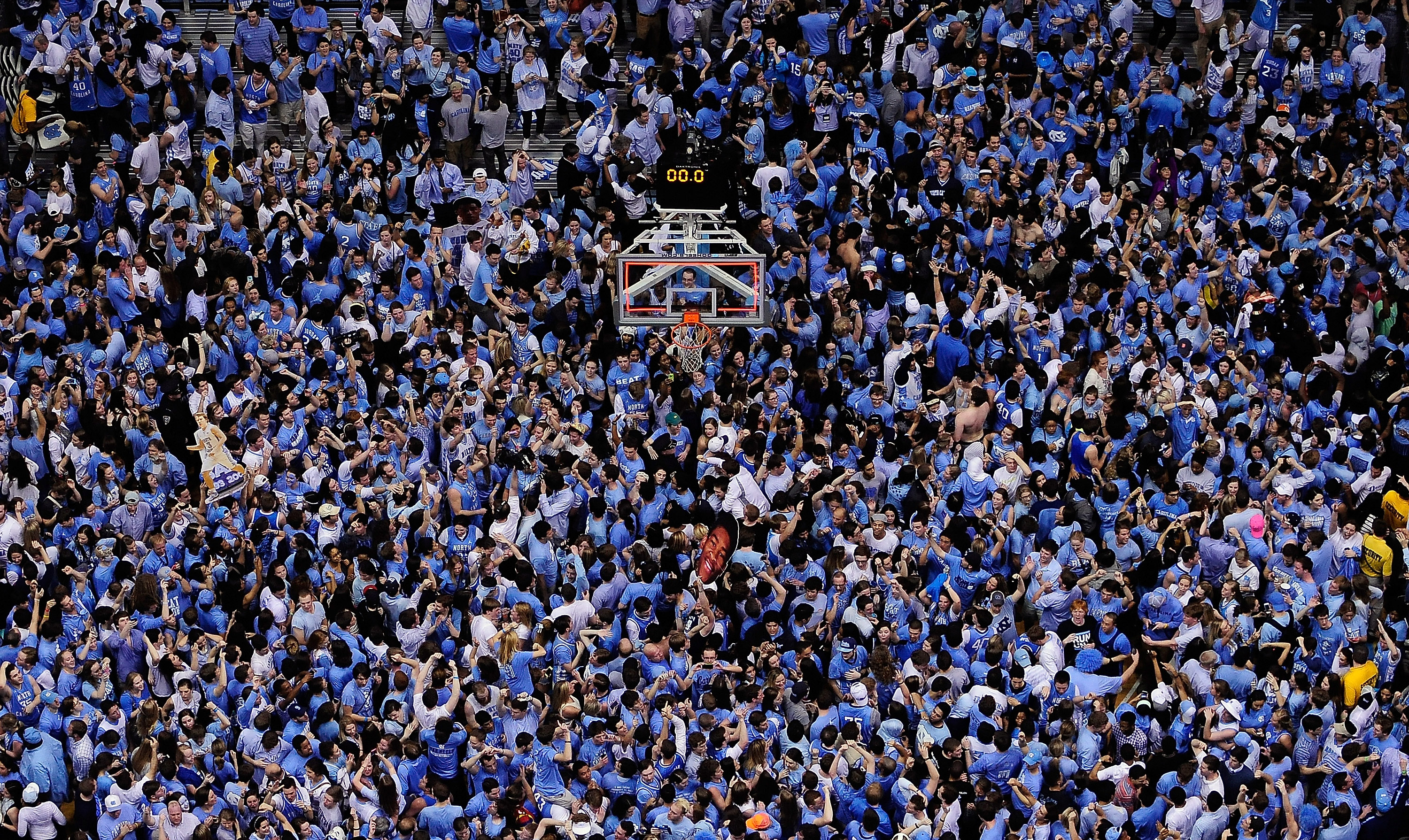
Former National Player of the Year Tyler Hansbrough, the ACC’s all-time leading scorer, also recorded a video in support of renovation, while a group calling itself “Tar Heels Concerned for the Future of the Dean E. Smith Center and Carolina Basketball” submitted an open letter to chancellor Lee Roberts urging the university to reconsider any plan that would move the arena off campus. It was signed by 91 supporters, including former members of UNC’s Board of Trustees and players dating back as far as the 1960s.
The school’s current student body has also joined the fight. Not only did their newspaper, The Daily Tar Heel, run a full-page ad featuring Smith, Williams and the message “Keep Dean’s Legacy on Campus,” but copies were handed out to each student attending last Saturday’s game against Notre Dame. They were then encouraged to hold them up any time ESPN’s television cameras were on them and chant “Renovate, Renovate, Renovate” during TV timeouts.
“When you’re going through major decisions, you have to weigh in what the students think,” junior John Harrison Kiger, one of the movement’s organizers, told the DTH. “Because if the University isn’t here for us, then who’s it for?”
As loud as the voices have become, there is a sense among those in favor of renovation – especially those closest to the basketball program – that their opinions don’t matter. “We feel like we were left out of the process for a while,” Hansbrough told Hoops HQ. ”When we found out about plans for a new arena, it was already way down the road. We should have been having these conversations six months or a year ago. At minimum, Coach Williams should be involved in the discussions heavily. He was close to Coach Smith and has done a lot of the program. If this was the right move, Coach Williams would support it. But he’s not.”
For those who bleed Carolina blue, Smith Center is more than just an arena. It’s part of their university’s identity. It’s a place current Tar Heels coach Hubert Davis called “home plate for me and for so many other former players.” And its name is more than just a tribute to the Tar Heel legend who retired in 1997 as the winningest coach in college basketball history. The building was designed in his image and built to his specifications – understated and functional. It was financed by boosters (rewarded with those front row seats) and featured little to no advertising to detract from the players and the games.
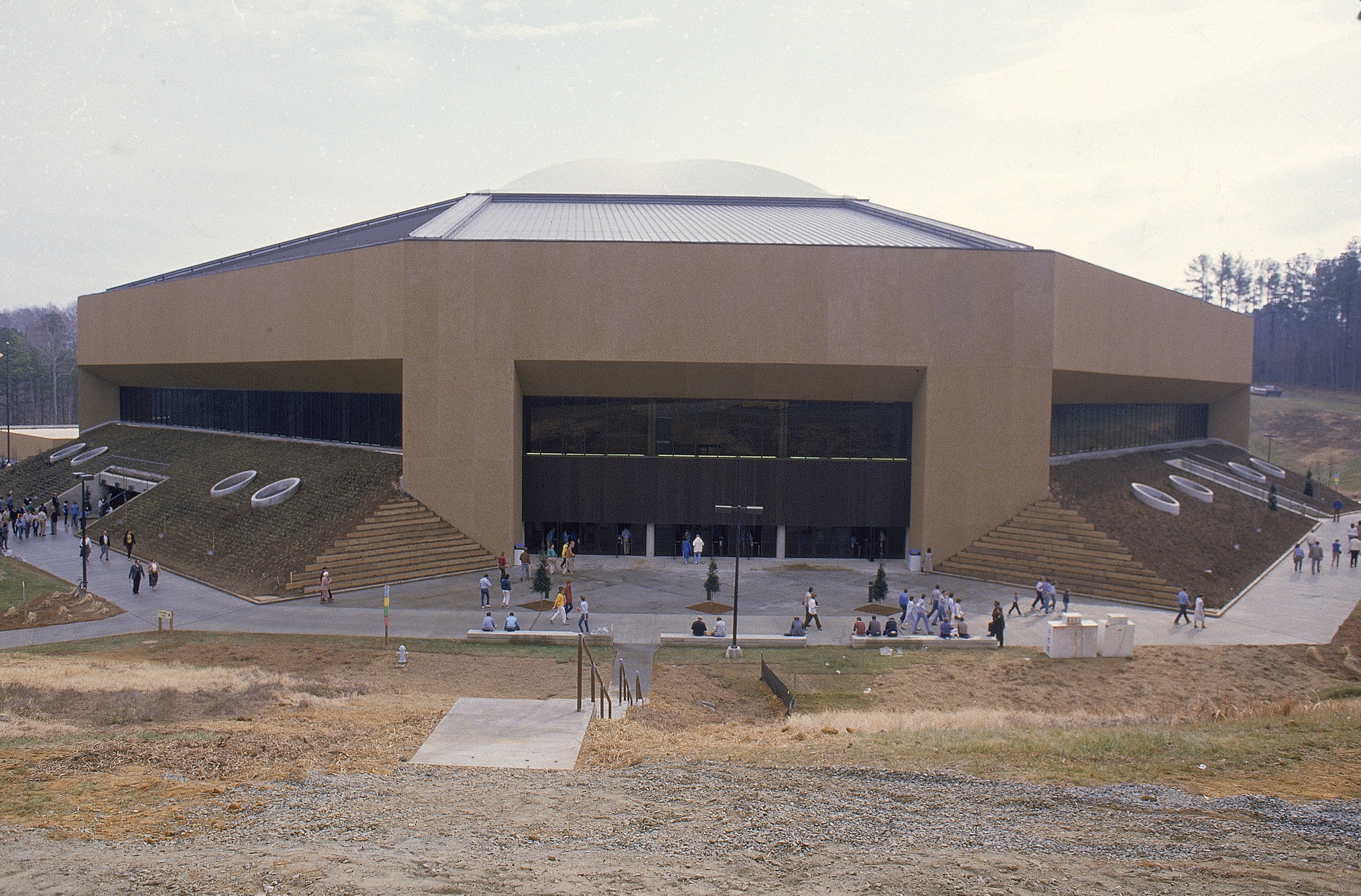
But those attributes have become a thing of the past. Functionality has since given way to fan experience and modern conveniences. Even the most ardent supporters of the building acknowledge that the current concourse is too narrow, the 21,000-seat capacity is too large, and the lack of luxury boxes prevents UNC from taking advantage of a revenue stream most of its rivals enjoy.
While renovation proponents have suggested a project similar to the one Georgia Tech undertook in 2011-12, in which a new facility was completely rebuilt inside the structure of the old building, even that wouldn’t solve all of Smith Center’s shortcomings because its location does not allow much room for expansion.
Then there’s the cost.
A university study estimates that the cost of replacing the existing roof alone would run upwards of $80 million. That’s why Chancellor Roberts and other leaders prefer to start over from scratch with a smaller, more efficient, and more profitable venue as part of the 250-acre Carolina North development located about two miles from UNC’s main campus on the site of the former Horace Williams Airport. Moving the arena off campus would also create a site where the old arena stood to be used for medical school expansion and new housing to accommodate anticipated undergraduate population growth.
Roberts said at a media availability last week that the financial considerations of the renovation vs. relocation debate go hand-in-hand. “First and by far the most important (consideration) is how do we win as many basketball games as possible at a time when that’s become more expensive for everybody,” Roberts said. “We can all think of examples of universities that have tremendous history and tradition, many of them play in fantastic arenas, but are no longer considered elite because they didn’t keep pace, they didn’t continue to innovate.”
Roberts acknowledged the passion of UNC fans lobbying to save Smith Center, saying that he’d be “much more worried if people didn’t care,” and said that the opinions of program icons such as Williams and Hansbrough “deserve lots of weight; more than most.” At the same time, there is an ominous feeling among members of that group that they’re fighting a losing battle. An announcement is expected within the next few weeks, if not sooner, which explains the recently heightened sense of urgency on the part of renovation proponents.
“That building has meant so much to so many people,” Hansbrough said. “It’s filled with so many memories and tradition, and it’s right there on campus. It’s a building Coach Smith helped design and loved. You don’t just tear down a place like that.”
🏀 GET IN THE GAME! A 1-year subscription to HOOPS HQ is now 66% off. 🏀
Meet your guide