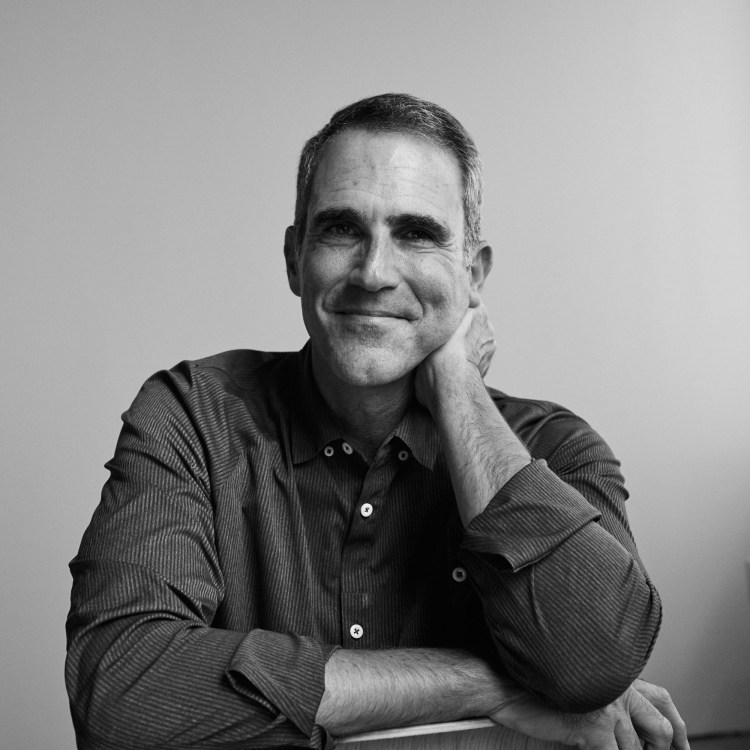

Boston College basketball has been conspicuously lacking in star power the last 20 years, but that could change this winter. The upgrade won’t be noticeable so much on the court, where the Eagles haven’t qualified for the NCAA Tournament since 2009, but in the stands at Conte Forum, where Bill Murray, the iconic actor and comedian, will be a regular fixture. Murray is well-known for being a huge sports fan (especially for his native Chicago teams), but in this case his presence is a family affair. His son, Luke, was hired as the Eagles’ head coach last March.
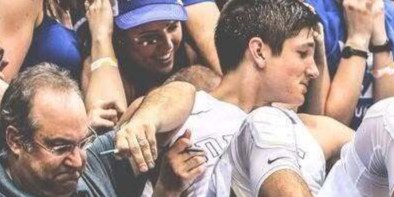
Luke, 41, has spent 18 years as a Division I assistant, including the last five at UConn, but this is his first head coaching gig. His dad has long been a fixture at Luke’s games and attracted the attention of TV cameras. People love gawking at movie stars, but Luke is happy just to have his dad around. “I definitely think we’ll get him to some games,” he told Hoops HQ. “I’m sure any kid feels this way about their dad. It’s awesome when you feel like you can make them proud. Especially when the bar is set so high, it feels like it’s sort of unattainable to match it.”
The father-son angle is a nice story, but it’s only a subplot to the larger intrigue at BC, where basketball seasons have felt a little too much like “Groundhog Day.” The program has a rich distant history (Bob Cousy, Chuck Daly and Gary Williams all coached there) and was a member of the original Big East when it was formed in 1979. BC was considered prestigious enough that it was invited to move to the ACC in 2005, but after firing coach Al Skinner two years later, the Eagles moved into the basement of the league and stayed there. Three head coaches have come and gone since then, most recently Earl Grant, who was fired after going 31-67 in the ACC over five seasons.
The current pay-for-play landscape of college basketball has proved to be unfavorable for Boston College. It’s a small private school located in a major metropolitan area, and its football program has also been a perennial doormat in the ACC. It would be difficult for anyone, much less a rookie head coach, to flip this script, but Murray believes he has what it takes to turn Boston College basketball into the ultimate Cinderella story.
That starts with what he hopes will be a renewed commitment to putting the program on a more competitive financial footing. “The one question I had (during the interview process) was, why over the course of 15 or 20 years has it been so hard to win games?” Murray says. “Ultimately, I felt comfortable with the answers that there was going to be a real energy behind trying to make this next hire a successful one. There are several Fortune 500 CEOs who graduated from BC. There’s a pretty substantial group of supporters that are excited about the idea of Boston College basketball being a factor again.”
It’s a steep challenge, to be sure, but it’s one Murray has been preparing for all his life. Even before he was a teenager, he developed an obsession with the sport, and especially recruiting. During the summers, he asked his parents to drop him off at recruiting showcases like the ABCD Camp in Teaneck, N.J., where he got his first glimpses of future stars like Kobe Bryant, Stephon Marbury and Tracy McGrady. Murray played basketball and football at St. Luke’s High School, a boarding school in New Canaan, Conn., and received some interest from Division II and III schools as a football player. He turned them down to attend Fairfield University, where he spent much of his free time not in bars or at fraternity parties, but working as a coach with the New York Gauchos, a prominent AAU club in The Bronx, N.Y. “It just kind of became a way of life,” he said.
The connections Murray made in the AAU world came in handy when he began his coaching climb. A year after graduation, he landed a position as a graduate assistant on Sean Miller’s staff at Arizona. The next year, his name was passed along to Dan Hurley, who had just gotten hired as the head coach at Wagner. Hurley invited Murray to interview and was impressed enough to bring him on as an assistant. “He had an encyclopedic knowledge of recruiting. You could tell the guy obsessed over basketball,” Hurley told Hoops HQ. “Then I bonded with him over the fact that we both have famous fathers, although his is obviously more famous.”
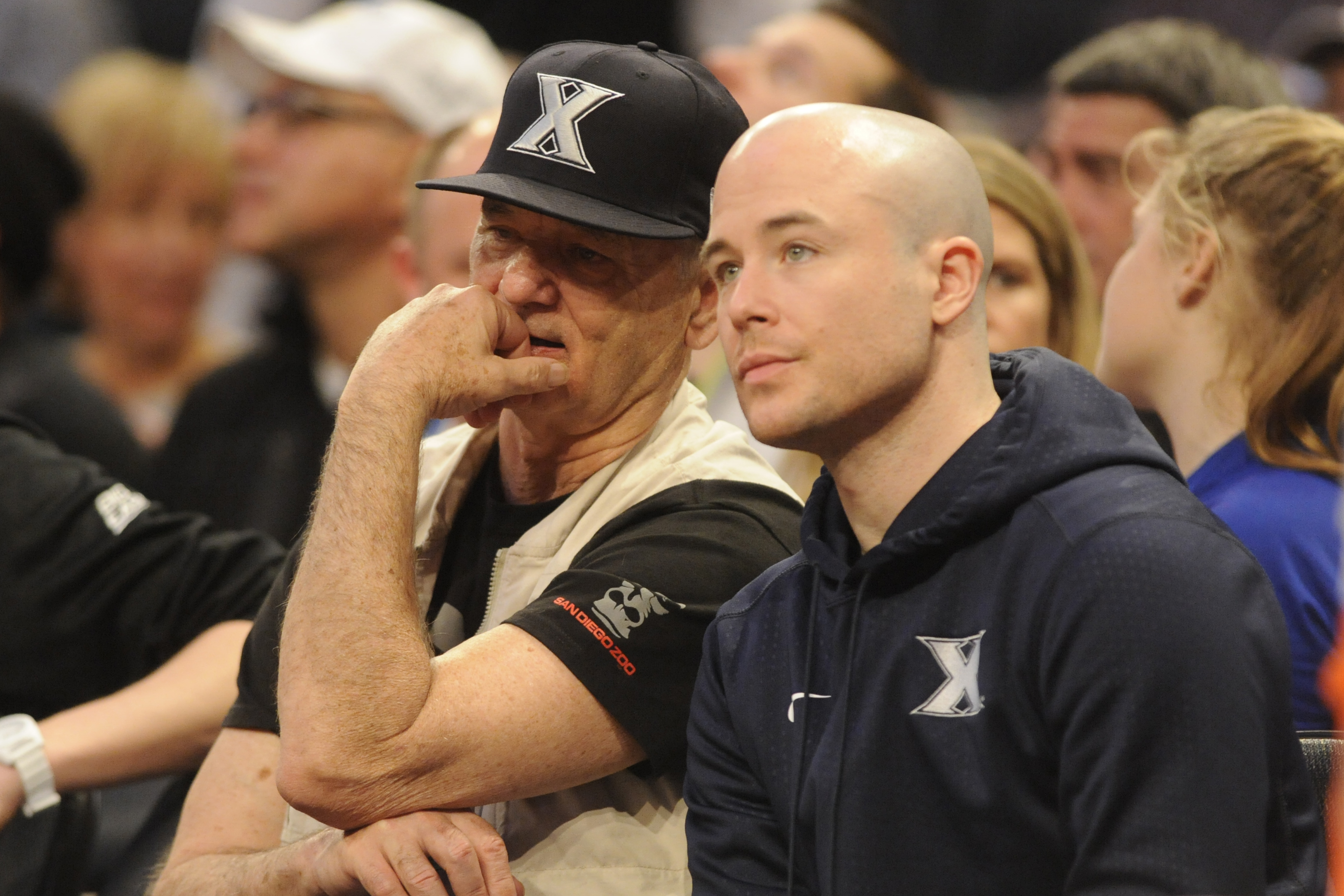
Over the next eight years, Murray hopscotched through gigs at Wagner, Towson, Rhode Island (where Hurley had become head coach), Xavier and Louisville. Wherever he went, people knew who his father was, but it wasn’t something Luke pushed out. “I never wanted to be characterized as his son or have anyone feel that I was being given opportunities as a result of that,” he says.
That persepective was rooted in the way Luke and his six brothers were raised. Bill strongly encouraged all of his sons to steer clear of show business, where he knew they would always toil in their father’s prodigious shadow. “He presented that to my brothers and me as something that would be disgraceful,” Luke says. “He wanted us to run our own race. He liked to say, ‘Every surfer carries his own board.’ ”
Luke has memories of visiting his father on movie sets when he was young. He was bored most of the time, with the notable exception being when he hobknobbed with NBA stars like Michael Jordan on the set of “Space Jam.” Luke also encountered MJ often while hanging out at the house of Ahmad Rashad, who is Luke’s godfather. “I remember thinking, this is the greatest human being to walk on the earth, and I am in his presence,” Luke says.
Aside from that, Luke and his brothers were raised far from the Hollywood culture. His father preferred to load everyone up in a van and drive them to random spots like Richmond, Virginia, and Flagstaff, Arizona. “I think we got an understanding that there was a bigger world outside of the tri-state area and Little League baseball. I think I’m able to deal with players better because I have an understanding that’s a little more global,” Luke says. “My dad doesn’t really operate in the celebrity world. He likes to play golf and be with his family. He lives more of a quiet, reserved life. He actually gets along better with athletes.”
Murray spent six years as an assistant under Chris Mack at Xavier and Louisville, but in 2021 the two had a falling out, and Mack fired him. It was an unsettling time for Murray, who had gotten married six years before and was starting a young family, but he wasn’t out of work long. Hurley had just completed his third season at UConn, and he invited Murray to reunite him in Storrs. Together, they built a modern-day dynasty, winning back-to-back national championships in 2003-04.
“Danny pretty much saved me in the profession,” Murray says. “He prepared me for this job as well as anybody could, just in terms of the standard that he sets and meets every single day. There wasn’t a single day where he had anything less than his best. It was the experience of a lifetime.”
It’s not easy for anyone to match Hurley’s intensity and acumen for the game, but Murray came awfully close. “He’s just a real talent in terms of his ability to see the game, understand the game, his love for tactics,” Hurley says. “What separated us was our relentlessness. Luke is relentless about the way he approached his job as a coach every day. He never gets tired of it.”
UConn’s massive success led to some interest in Murray for head jobs, but it wasn’t until Boston College came calling last spring that an opportunity truly interested him. Hurley encouraged Murray to pursue the position, not despite the program’s recent past but because of it. “I thought that made the job more appealing,” Hurley says. “When he becomes successful, it’s going to be more rewarding. When it’s that bad, you get to start fresh and develop a team in the identiy that you want to build.”
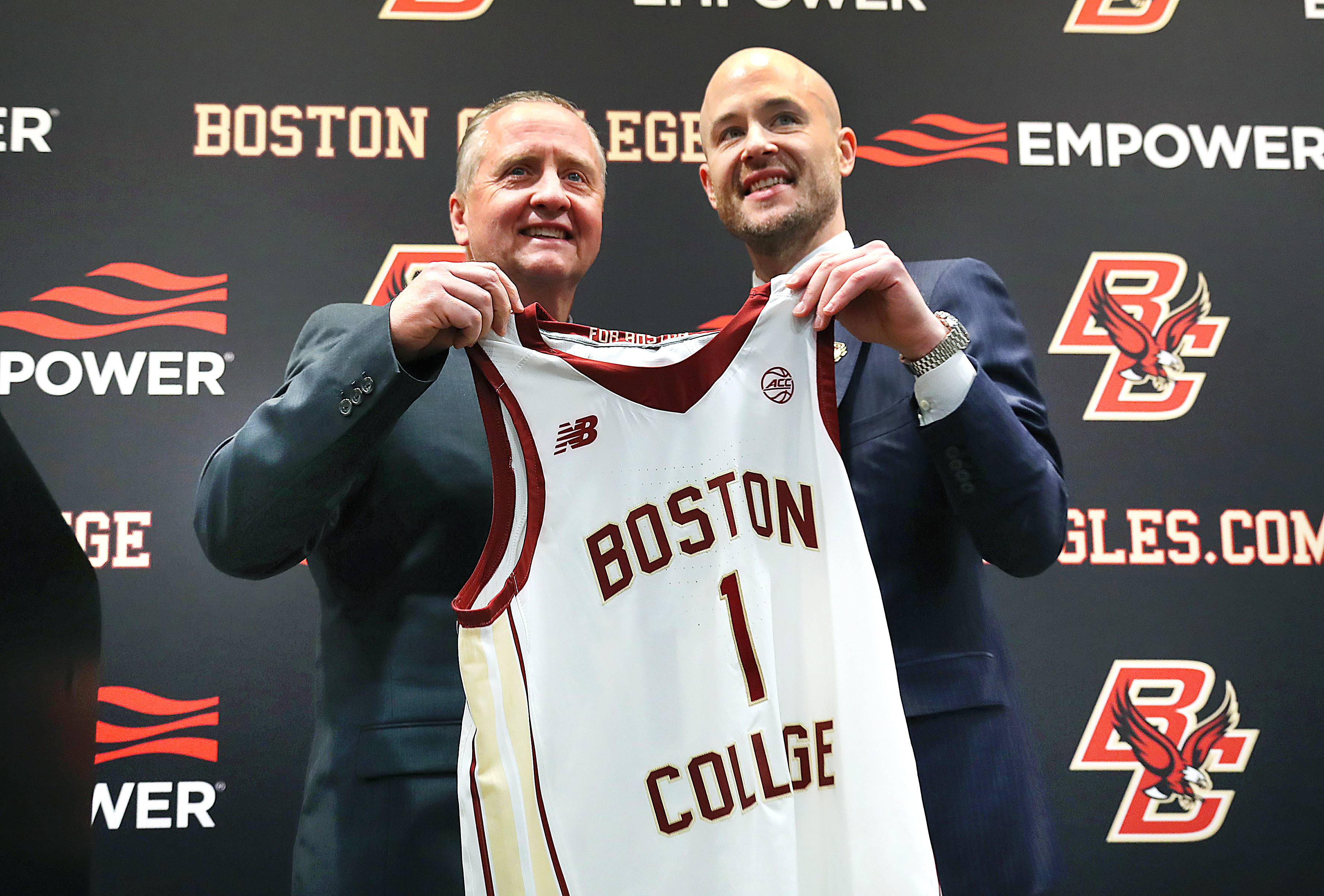
BC first contacted Murray while the Huskies were playing in the Big East tournament. Murray agreed to engage them on the understanding that he would not leave UConn until its season was over. BC announced on March 26 that it had hired Murray as head coach. He drove up to Boston for a press conference the next day — “I had to miss a day of practice, which crushed me,” he says — and then headed back to Storrs. He spent some time over the next few days getting a head start on assembling a staff, but mostly his focus was on helping the Huskies’ advance in the NCAA Tournament, when ended on April 6 with a 69-63 loss to Michigan in the championship game.
The next day, Murray was in Boston trying to figure out who was going to play for him. The transfer portal had opened at midnight, and most every BC player was in it. Murray had already hired two assistants, and together they huddled with an analytics consultant to formulate their portal strategy. The prospect of having to build an entire roster from scratch was daunting, but Murray found it energizing. “Bill Parcells used to say that if you want me to make the dinner, you gotta let me buy the groceries,” Murray says. “It’s kind of fun to have to piece this together and know that you have certain salary cap restraints, which you’re managing as you’re thinking about how to built your team out stylistically.”
It became evident early on that the top big men were in such high demand that they were going to be out of reach financially. So Murray focused on recruting players with positional size and elite skill. His 10-player transfer haul included 6-foot-4 senior guard Money Williams, a two-time All-Big Sky selection at Montana who averaged 20.6 points and 4.7 assists last season; 6-foot-5 sophomore guard Ernest Shelton, who made 99 three-pointers on 34.6 percent shooting at Merrimack; and Jacob Furphy, a 6-foot-6 Aussie who saw limited minutes as a freshman at UConn.
Once the roster building was complete, Murray was able to help his wife Kara resettle in Boston with their four young children. He has been working out with his incoming players and preparing for the summer recruiting season, which heats up this month. Moving forward, Murray hopes to build his rosters through the more traditional recruiting and developing process, but time will tell how soon that will happen, if at all.
Murray enters this next chapter like he has all the ones that came before, with an appreciation for the opportunity and an understanding of how hard he’ll have to work to capitalize on it. It will be nice to have the support of his celebrity father on game nights, and while Murray understands it takes time to help a program like BC rise from the ashes, he is eager to get started. “One of my dad’s favorite things to say is, ‘Life is not a dress rehearsal. This is your one shot at it.’ That’s been a guiding level of advice for me,” Murray says. “I’m not satisfied or feeling like I’ve done much yet. It’s nice to feel like there’s certain checkpoints you’ve been able to get to, but my intention is to do some big-time stuff here.”
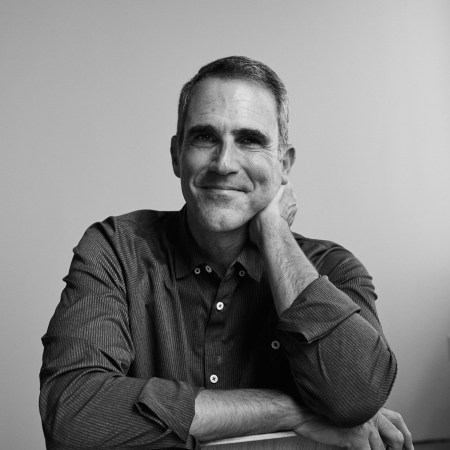
Meet your guide