
I’m often asked if I have a favorite player from all my years covering college basketball. The answer is yes, and it might surprise you.
It’s Maryland guard Juan Dixon.
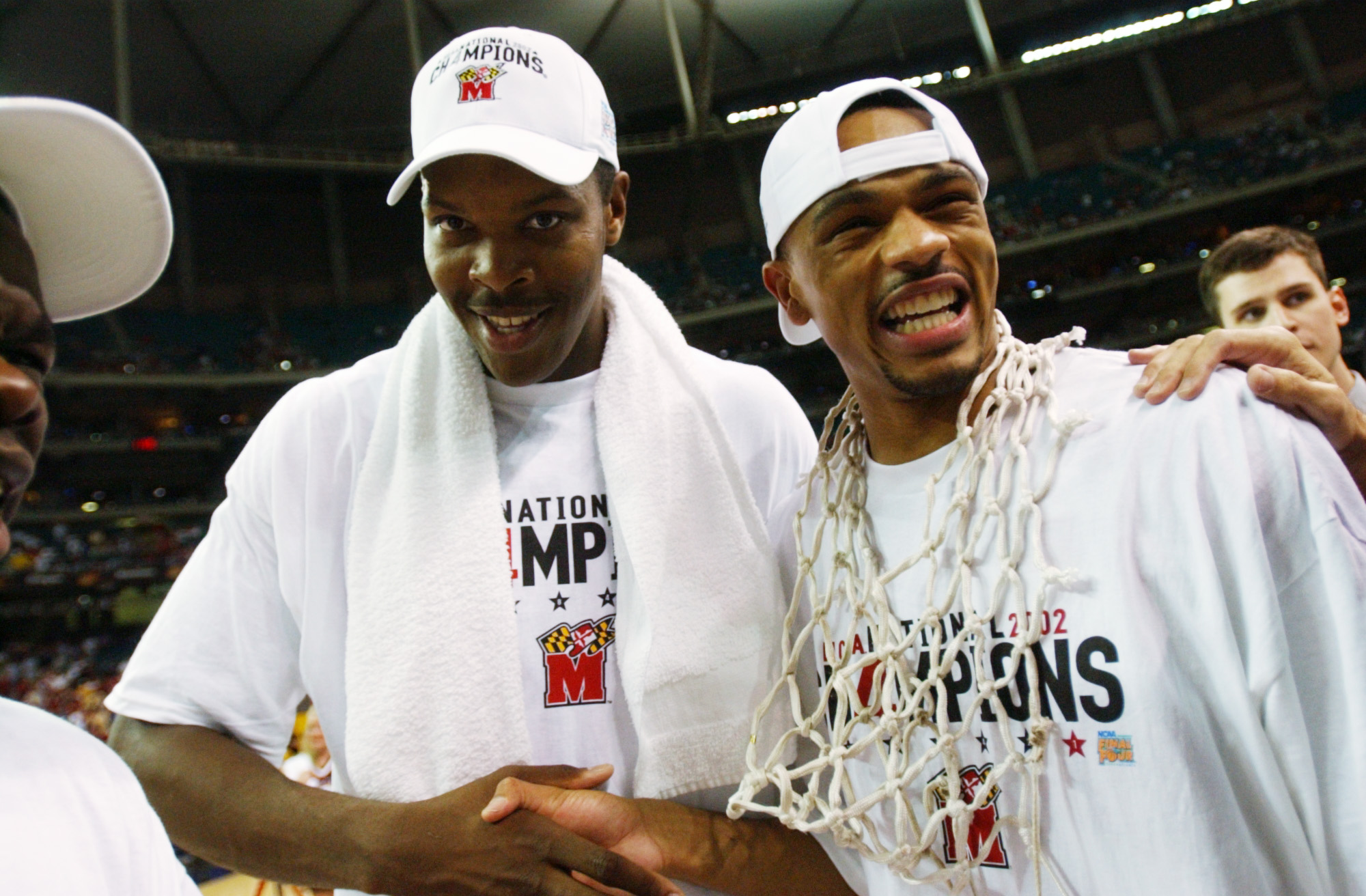
Dixon was the Most Outstanding Player at the 2002 Final Four as he led the Terps to the national championship. It was a destination that few envisioned for him when he was a spindly 6-foot-2 150-pound guard coming out of inner city Baltimore.
Heading into his senior season of high school, Dixon was considered a mid-major recruit at best. He was 6-foot-1 and weighed 150 pounds soaking wet. Maryland coach Gary Williams discovered him by accident. Williams was evaluating some of Dixon’s AAU teammates during a tournament in Georgia. It was late into the evening, the gym was mostly empty, and the game was inconsequential. During the final minutes, Dixon dove into the bleachers in an effort to save the ball from going out of bounds. That struck a nerve with Williams. He figured the kid was worth watching. Eventually, Williams offered Dixon a scholarship.
It makes sense that that play resonated with Williams, who was the ultimate chip-on-his-shoulder coach. Williams was a Maryland alum who had come back to his alma mater three years after the death of Len Bias. His job was to rescue the program from the depths of controversy and ineptitude. Williams was scrappy and cranky, forever irritated and motivated by all the slights, real and perceived, that Maryland suffered at the hands of those evil bluebloods on Tobacco Road. He put his shoulder to the wheel and infused Maryland with that ethos. When the talent finally flowed, Maryland became a powerhouse that was able to threaten the hegemony that Duke, North Carolina and other powerhouse brands had over the sport.
Dixon arrived in College Park following a traumatic childhood. He grew up in inner city Baltimore. His parents were both heroin addicts who died of AIDS while Dixon was a teenager, although it would later turn out the man who initially raised Dixon was not his biological father. Dixon was raised by his grandparents and became a standout player at Calvert Hall High School in Towson, Md. Basketball was Dixon’s salvation, and he poured everything he had into it.
Though Dixon worked hard to add strength after arriving in college, he was always too skinny to be really good — or so the experts believed. He compensated by working hard to develop his skills, and he was absolutely fearless in the clutch. As a result, he became one of the nation’s top guards and led Maryland to the 2001 Final Four, where the Terps blew a 22-point first-half lead to Duke and lost in the semifinals.
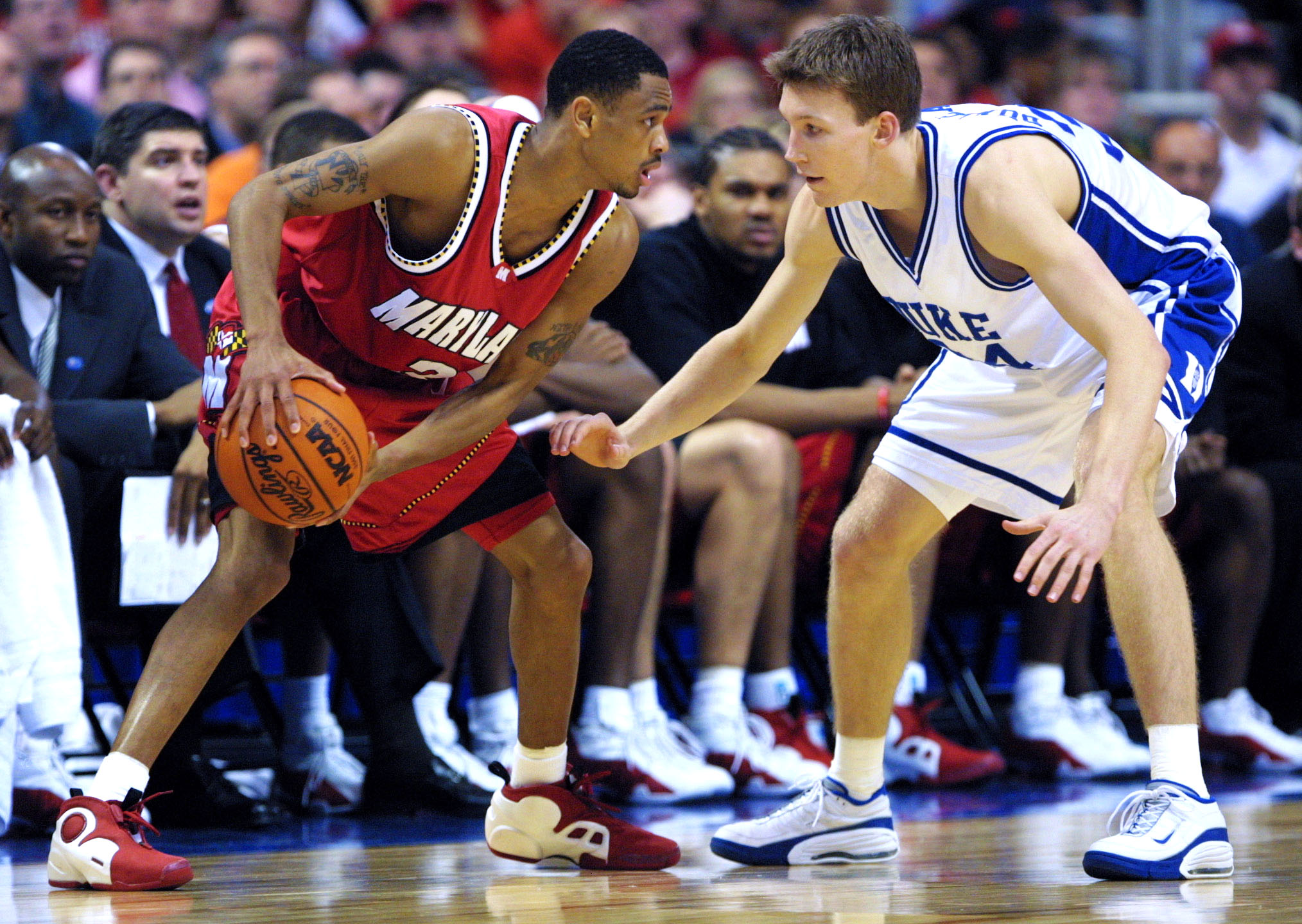
Dixon returned for his senior year determined to write a happier ending. He became a consensus first team All-American as well as Maryland’s all-time scoring leader. He was a great player but far from a media darling. He had nothing against sportswriters, he just had more important priorities.
I first encountered Dixon while working the college hoops beat for Sports Illustrated. I tried to get an exclusive interview with him for the magazine, but at Juan’s direction I was repeatedly rebuffed by the school’s sports information director. I finally made my pitch to Juan face-to-face in the Maryland locker room.
He brushed me off at first. So I channeled my inner Jerry Maguire and gave him my best help-me-help-you pitch. “Look, I think you’re an NBA player,” I said. “Most people don’t. This story will explain why they’re wrong.”
That got his attention. “Let’s do it,” he said.
The next day, I interviewed Juan for an hour. He was smart, insightful, and revealing. I was amazed (but not surprised) to hear how hard he worked at his craft. His improvement as a player was no accident.
We bonded during the interview, but once it was over, I didn’t see Juan much. I’d be in reporter’s scrums sometimes, but nothing one-on-one. If I asked him a question, he answered it politely, but he gave no indication that he remembered our conversation. As far as I could tell, I was just another scribe who was infringing on his time that could be better spent in a gym somewhere, grinding.
I chronicled Maryland’s run through the 2002 NCAA Tournament, culminating in the Final Four in Atlanta. I did some writing for SI.com, but my main job at the Final Four was to collect reporting for my colleague Grant Wahl, who was assigned to write the main game story. That included an exclusive interview with Williams in a hotel lobby on Friday, which Williams was kind enough to do even though our magazine had called him the most “overrated coach in the country” two years before. (I told him it was Grant who wrote that.)
Dixon was magnificent at the Final Four, just as he had been all season. Of all the players I’ve ever watched, I’m not sure of a better example of a guy who wanted the ball so badly in the moments that mattered the most, and knew exactly what to do with it. Juan had 18 points, 5 rebounds, 5 steals and 3 assists in Maryland’s 64-52 win, making him the easy choice for MOP honors.
After the game was over, I went to a small room where the NCAA was conducting on-camera interviews for the video it produced each year commemorating the tournament and champion. The folks who did those interviews usually allowed a reporter from SI into the room so we could get some exclusive quotes for our story. I sat against a wall in the room as Williams and several other players came in and answered the questions. They were all perfectly pleasant and polite.
Juan came in last. His interview took about ten minutes, same as the others. When it was over, he unhooked his microphone. Then he leaned forward in his chair and extended his hand to the producer who had been interviewing him. As they shook hands, Juan said, “Thanks.”
Juan stood up and extended his hand to the sound technician who had sat nearby. “Thanks,” he said, as they shook hands. There were about a dozen personnel who were also working on the shoot. Juan walked around the room, shook everyone’s hand, and repeated his one-word greeting. “Thanks … thanks … thanks …”
He came to me last. “Seth,” he said. I remember this because as far as I could tell, it was the first time he had used my name. Up until that point, I wasn’t sure he knew it. “I really appreciate all you did for me, man.”
“Juan,” I replied, “it was an honor watching you play.”
After all he had been through and what he had just done, Juan could have been forgiven if he puffed out his chest and indulged in some self-satisfaction. Yet as he left that room, I realized why Maryland had won the championship. The best player on the court was also the most grateful person in the stadium.
Juan Dixon’s college career was a testament to the power of resilience and determination, but ultimately, the most important lesson he taught me was about the power of gratitude. I’m not sure I’ve ever had a chance to say this to him, so I’ll say it now.
Thanks.
Meet your guide