
NORTH AUGUSTA, SC — It is 4:30 p.m. on day three of the Nike EYBL Peach Jam, and a highly anticipated matchup between Vegas Elite and Jet Academy is about to tip off on Court 2 at the Riverview Park Activities Center. College coaches are still squeezing into the packed gym, only to find that all of the reserved NCAA seats are already taken.
Alabama’s Nate Oats, Providence’s Bryan Hodgson and South Carolina’s Lamont Paris are forced to stand by the entrance. Utah State’s Ben Jacobson, Ohio State’s Jake Diebler and assistants for Arkansas and Michigan State find space under one of the baskets. Among those who arrived early enough to secure chairs on the sideline are Duke’s Jon Scheyer, North Carolina’s Michael Malone, Arizona’s Tommy Lloyd, Purdue’s Matt Painter, Auburn’s Steven Pearl, Georgia’s Mike White and more.
They are in the building to see a few prize recruits in the Class of 2027, including 6-foot-5 guard Adan Diggs and 6-foot-7 forward Demarcus Henry, the No. 3 and No. 4-ranked players, respectively, per the 247Sports Composite. Most coaches have been here all day, bouncing from court to court (there are six in total) to get eyes on dozens of elite prospects. The spectacle is much the same about a two-hour drive north in Rock Hill, South Carolina, where Adidas is hosting its marquee AAU event, the Palmetto Road Championship.
Contrary to popular belief, the high school recruiting scene is alive and well. As the crowded halls of these sneaker circuit events indicate, it remains a critical piece of the college basketball ecosystem, shaping which programs will thrive in the near future. The building of a championship contender could very well start here, in one of these overstuffed gyms during the height of summer.
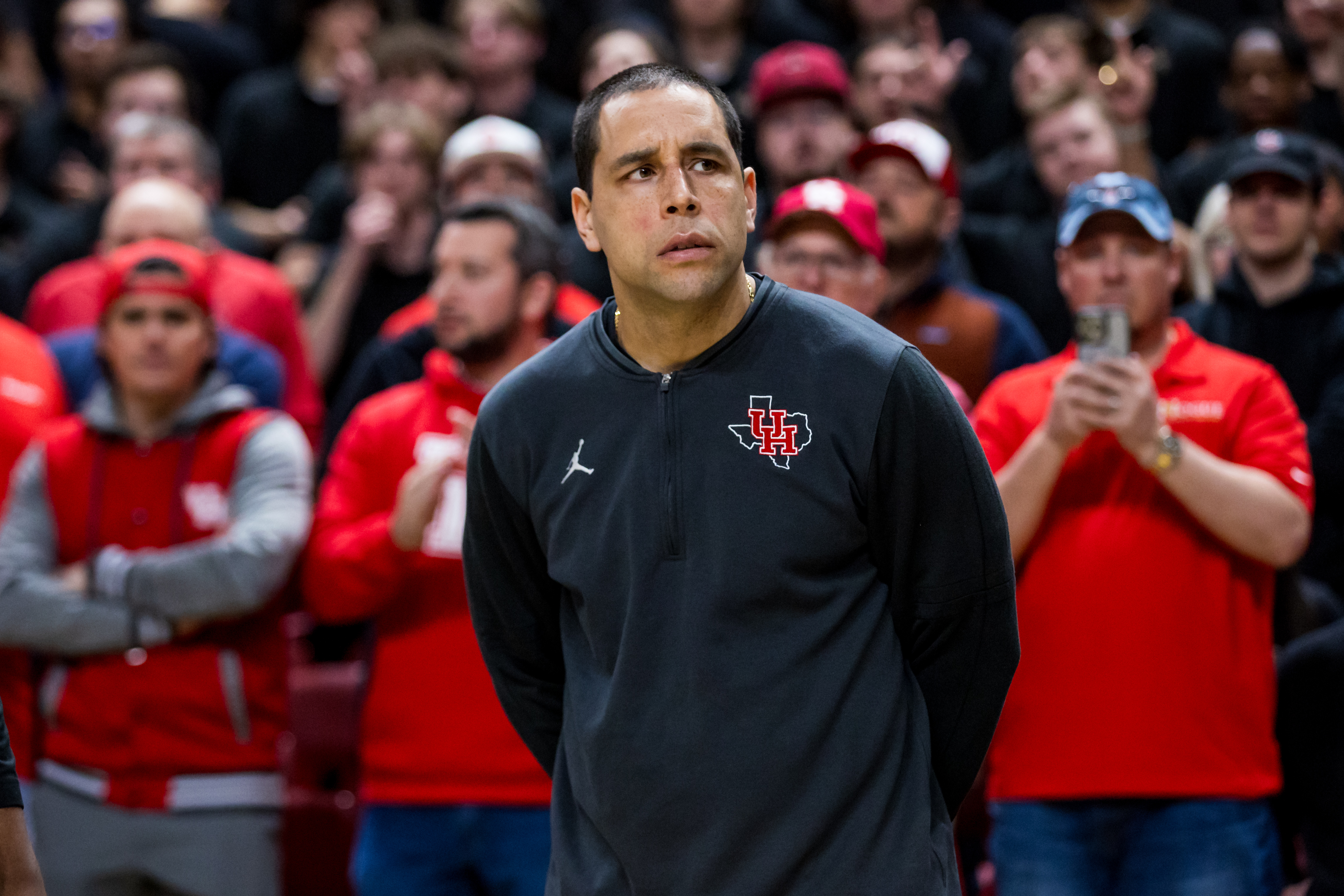
“There is no cleaner and easier way to build a program than getting your high school recruiting right,” Houston assistant coach Kellen Sampson tells Hoops HQ in between Peach Jam games. “You can build a great team with the portal, but if you’re tasked with building a great program, it starts and ends with your ability to evaluate and recruit high school.”
The recruiting world may not be dead, but it has changed immensely in an era defined by NIL, the transfer portal and, now, the groundbreaking five-for-five rule, which will go into effect at the start of the 2026-27 campaign and allow athletes up to five years of eligibility in a five-year window. As a result, there will be a historically low number of players leaving college basketball next spring and fewer spots available for incoming freshmen. Most teams are likely to prioritize transfers over high school kids when filling those spots, especially since the 2027 class isn’t regarded as highly as previous classes.
“It’s easier to evaluate a kid who’s played at the level,” Illinois associate head coach Orlando Antigua tells Hoops HQ. “They understand competing at the college level compared to you’re not sure how quickly a freshman is going to adjust to the physicality, the mental approach, the strenuous [demands] of practice, and getting acclimated to the culture and those kinds of things. Those are all variables that get worked out once you get there.”
That Time When I First Watched LeBron James Play
It was a year later than it could have been, but when I first watched LeBron play, I knew I was seeing greatness in action
The changes brought on by five-for-five shouldn’t impact the premier prospects in the class. Those ranked in the top 50 or so are still being aggressively pursued by the sport’s heavyweights. Beyond that, however, it can get a bit dicey. “If you’re not a top-50 kid, it’s just tough for you right now,” says Dave McDaniel III, head coach of the EYBL team Nightrydas. “I think the biggest thing is guys have to be more ready than ever to go play at the college level.”
Consider Terence Jones, a four-star prospect out of St. Frances Academy ranked No. 85 in the 247Sports Composite. As the point guard of Team Melo, Jones has been sensational on the EYBL circuit, averaging 17.1 points, 4.7 assists and 1.5 steals while shooting 38.8 percent from deep. But the 6-foot-1 floor general admits that his recruitment has been “a little sluggish” of late. “I’ve been hearing from a couple of coaches but for the most part it’s been slow,” he tells Hoops HQ. “It’s a little bit of a surprise. I expected more, but I have to keep working and stay in the gym. They’re going to come.” Jones has offers from Mississippi State, Virginia Tech, West Virginia, Providence and Georgetown, but his list hasn’t ballooned despite an impressive AAU season.
Most players are well aware of how the landscape is shifting thanks to their agents and often discuss it amongst each other. “At first, it affected me mentally,” says four-star guard Jamaal McKnight Jr., the No. 123-ranked prospect. “I’m like, are college coaches even looking at me? But now I just play my game and let God do the rest.” McKnight has taken care of business on the court, averaging 14.7 points, 4.9 assists, 4.1 rebounds and 1.6 steals for Team Durant. He has been hearing a lot from Butler, USF, Seton Hall and East Carolina.
The prevailing view is that many of the recruits who would have typically landed at high-major powerhouses will end up at less illustrious programs or the mid-major level, where they will assume bigger roles and have a chance to hone their skills before working the portal. Under new five-for-five guidelines, the traditional concept of redshirting has been eliminated, as the eligibility clock is always running. Thus, it makes sense for kids to go somewhere they can play right away and then explore transferring up. Both Peach Jam and the Palmetto Road Championship were flooded with mid-major coaches hoping to gain traction with prospects they may not have had a crack at in the past.
The reality is, for players dreaming of pro careers, the optimal path might not be the most glamorous one. “Some guys have to understand that the route to their goal is different these days,” says former NBA champion Matt Barnes, who coaches his twin sons, Isaiah (three-star) and Carter (unranked), on the 17U EYBL team PG Elite. “It doesn’t have to be a power five to get there, with the ability to go somewhere where they’re going to continue to nourish you as a man and a player and give you an opportunity to show your skill set. When you’re done there, jump to a bigger school.”
If the bigger schools are, in fact, determined to get older, why are their coaches still bothering to attend recruiting events in the middle of July while their teams are on campus without them?
First and foremost, the powerhouses are still in pursuit of the blue-chip talent in the class. Of the prospects ranked 1-50 on the 247Sports Composite, only 12 have committed thus far. Though the group hasn’t generated a ton of buzz, it still has plenty of potential stars and hidden gems who could contribute as freshmen.
“In a broad scope where I think it’s going is if you think that a freshman can be impactful the day he gets there — meaning as good as any five-year guy — you’re going to take him,” Tennessee assistant coach Gregg Polinsky tells Hoops HQ. “The other part is, if you think a guy can fight for minutes and get some court time but he’s going to have to develop and be there with you hopefully for two, three, four years, there’s a major advantage in that as well.”
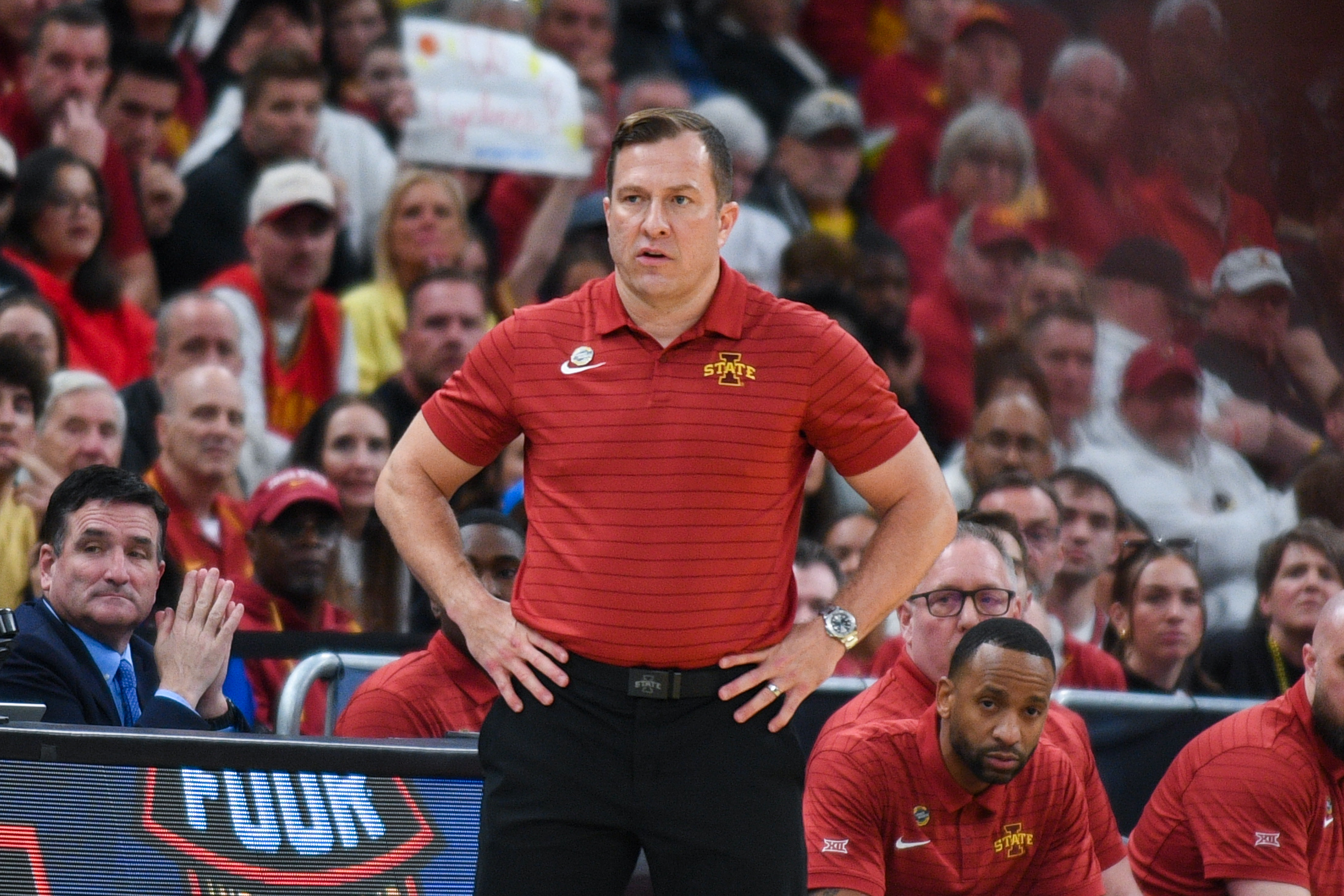
For some schools, assembling a strong high school class is even more appealing in the five-for-five era given that you could have a kid for longer if he doesn’t turn pro or decide to transfer out. Iowa State, a program known for its retention rate under coach TJ Otzelberger, has already received commitments from three four-stars in the 2027 class: wing Josiah Harrington (No. 48), big man Donovan Davis (No. 50) and forward Jack Kohnen (No. 89).
High-majors have also hit the recruiting trail hoping to improve their rosters for the upcoming season, as NIL and five-for-five have made reclassifying up a more enticing possibility. Multiple five-stars have gone that route this month, including consensus top-three prospect Marcus Spears Jr., a 6-foot-9 forward who will suit up for Sean Miller at Texas.
But coaches aren’t just thinking about their rosters for 2026-27 and 2027-28 as they follow sneaker circuits across the country. They also view high school recruiting as an opportunity to build rapport with players who might be attractive options in future transfer portals. Teams struggle to get to know transfers during the chaotic portal period, which has often been compared to speed dating. That is, unless the two sides have a solid pre-existing relationship.
This offseason, Missouri signed the No. 14 transfer class in the country, per 247Sports’ rankings. Coach Dennis Gates already had strong ties to several of the program’s additions, having recruited and offered them scholarships back when they were in high school. “My first year as a head coach was the first year that the transfer portal existed, and I knew that a majority of the kids that I signed at Cleveland State were kids that I had to have a pre-existing relationship with (from my time) as an assistant at Florida State,” Gates told Hoops HQ in May. “So now if I’m forecasting what this profession will be and I’m able to build the first touch point in high school recruiting, that gives me an opportunity to rekindle, not introduce myself.”
In the eyes of many, success in the portal is directly correlated to work in the high school recruiting field. Scouting at lower levels also enables coaches to better track how players have developed. “We’ll watch guys who may not be ready right now, and they may want to go somewhere where they can play right away and build a resume,” Polinsky says. “We want to have some kind of a relationship or have evaluated them to have a baseline to see where they’ve improved.”
With the final live period of the summer drawing to a close, a wave of commitments are expected in the coming weeks, as prospects look to secure their precious spots. Others will play a waiting game to see how rosters are shaping up before making their decisions, lest they wind up buried on a depth chart somewhere. In a time of so much uncertainty, it remains unclear which approach is more prudent.
Overall, the high school recruiting landscape has undergone another tectonic shift, but it hasn’t — and won’t — disappear. Change is inevitable, but so is a buzzing scene on the AAU circuit every July.
Meet your guide