Five years should be the new eligibility model.
But it should go into effect in 2027-28, as all schools and sports would need time to adjust their rosters to adapt to this new normal.
The NCAA membership should get out of the waiver business. Trying to decipher why a player in any sport should get a waiver is always a tenuous situation. And it simply opens up for lawsuits and time/money wasted for everyone involved.
Having five years to play and do what you want during that time makes the most sense. If you, as a player, want to play all five, then fine.
If you need a redshirt year to get stronger or be in a better position for playing time, that would be your decision in concert with your sport staff.
But waivers should be taken out of the equation. Of course, there will be exceptions for military service, missionary work and potentially extenuating medical conditions.
This could also be an incentive to improve graduation rates for players and students. Trying to graduate in four years isn’t easy, especially from a state school. Having the added year to do so will help. This could also open up the ability to get a master’s degree in that fifth year if needed, which will help these players in life going forward.
To push it for the class of 2026 wouldn’t be fair to college football players, who just went through the NFL Draft and may not have done so had this been in place. The same could be said for other fall sports.
Coaches in men’s and women’s basketball would be in quite a quandary if they suddenly had the ability to get back a senior in June that would not only need a scholarship, but also likely money that may already be allocated.
This is the end of the first year of Division I men’s basketball programs being able to offer 15 scholarships equal to D-I women’s basketball. And while a number of coaches have told me they aren’t filling all 15 scholarships, they are running out of their player funds or at least getting close.
Having a five-year clock after the end of high school will continue the trend of teams being older, more mature and physically ready to play at a high level. Older teams will help the game continue to improve and ultimately would help the NBA with a more mature player ready to contribute.
And, let’s be honest, legislation doesn’t move quickly through the NCAA legislative process. So to fast track a five-year plan this spring would be against precedent. But to set this up for players who are on rosters in 2026-27 in all sports makes the most sense and gives schools time to adjust in all aspects.
Five-in-Five Eligibility Is A Terrible Idea
They’re called “four-year colleges” for a reason. Why does the NCAA insist on granting athletes a fifth year?
Unbelievable class
The NBA Draft early-entry deadline passed this past week and it should give us a chance to pause and appreciate this freshmen class.
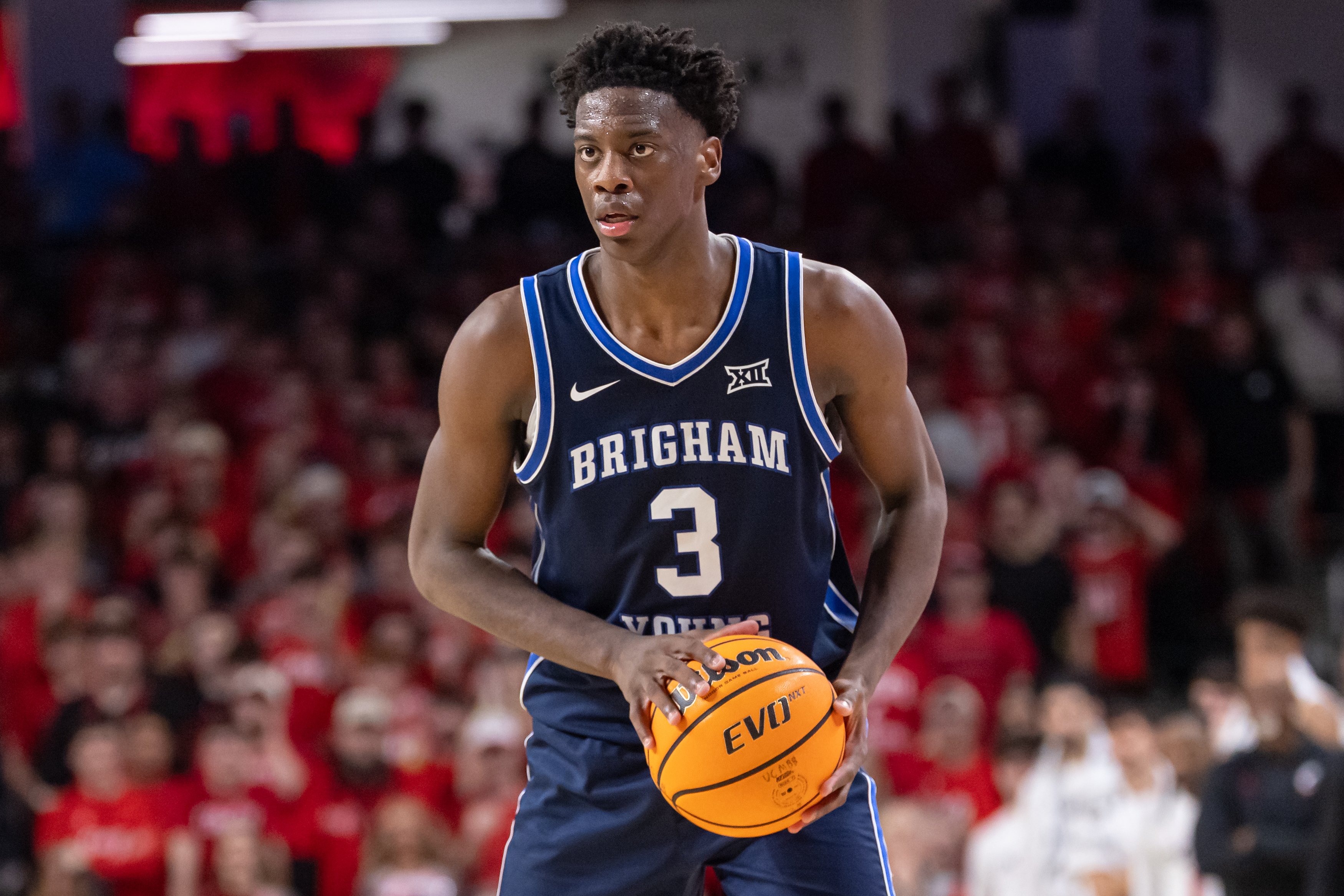
AJ Dybantsa (BYU), Darryn Peterson (Kansas), Cameron Boozer (Duke), Caleb Wilson (North Carolina), Darius Acuff Jr. (Arkansas), Kingston Flemings (Houston), Keaton Wagler (Illinois), Mikel Brown Jr., (Louisville), Nate Ament (Tennessee), Koa Peat (Arizona), Brayden Burries (Arizona), Hannes Steinbach (Washington) and Chris Cenac Jr., (Houston) will go down as one of the best freshman classes in the modern era.
What you can’t do is compare these freshmen to players in the 1980s and 1990s who stayed more than one season. These freshmen contributed at such a high level for their respective teams that they had an impact on every program, conference, the NCAA Tournament and, soon, the first round of the NBA Draft.
Returning
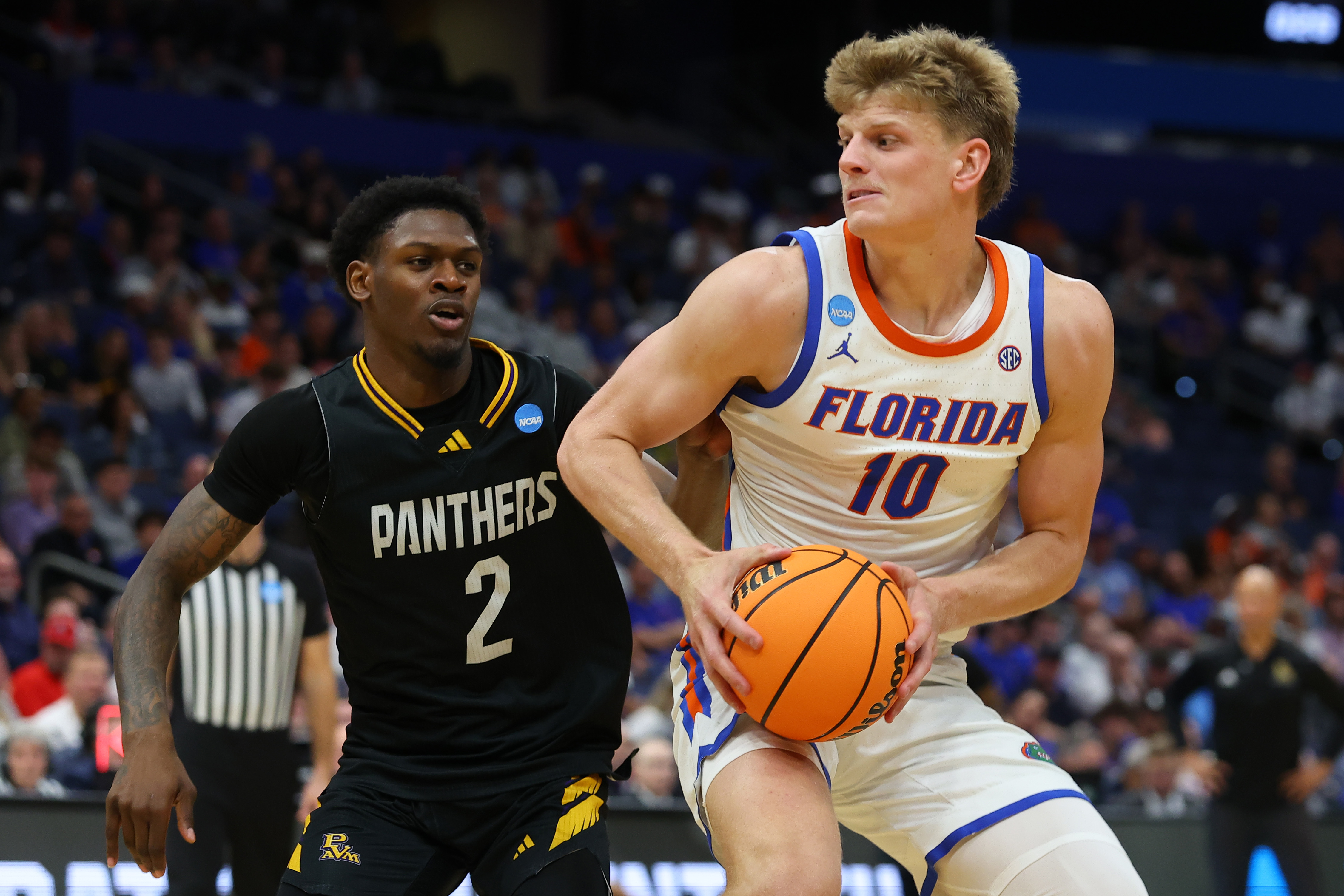
The decisions of Thomas Haugh and Alex Condon of Florida, Braylon Mullins of UConn, Dame Sarr and Patrick Ngonbga of Duke and Motiejus Krivas of Arizona are a direct result of the revenue-share/NIL era.
Toss in Pryce Sandfort (Nebraska), Joseph Tugler (Houston), Donnie Freeman (Syracuse to St. John’s) and Flory Bidunga (Kansas to Louisville) and it is clear — since we have actual names and data to show — that the revenue share/NIL era has helped strengthen the game.
Having these players return will make the game even more talented next season.
Vanderbilt’s Tyler Tanner declared but is expected to return, making him a potential SEC Player of the Year.
Rueben Chinyelu did the same for Florida, and if he were to return would be the favorite to win Defensive Player of the Year again.
Morez Johnson and Elliot Cadeau have declared but could definitely be back at Michigan to give the Wolverines a chance to repeat as champs.
If this were five years ago, maybe even two, the odds of these aforementioned talented players returning would have been unlikely. But players can now command more money by returning to school, certainly in year one, and maybe more than the first two years of an NBA rookie contract.
Preseason No. 1
The return of Haugh certainly puts Florida atop the list — possibly. But let’s not anoint any team until rosters are set after the NBA Draft withdrawal date.
What we do know is that Florida, Duke, Michigan and Illinois should be all contenders for preseason No. 1.
The addition of Wisconsin’s John Blackwell and the return of Sarr and Ngongba shoot the Blue Devils to either 1 or 1A, depending on what happens with Chinyelu and maybe the waiver filed for Denzel Aberdeen (coming back to Florida from Kentucky).
The Blue Devils will be loaded on the perimeter and could have their star be a transfer in Blackwell, not a freshman for the first time in three years under Jon Scheyer. Duke didn’t have a transfer lead them in scoring, either, in Scheyer’s first two seasons. Returning player Kyle Filipowski was the leading scorer for Duke in 2022-23 and 2023-24.
Hook ‘em
Sean Miller 2.0 was doing well at Xavier, but he finally may have found his ultimate spot at Texas. The Longhorns job has always been one of the best in the country with unlimited resources and talent in the area, but having full alignment again — like Rick Barnes had for a number of years — is going to benefit Miller.
His portal haul is going to go down as one of the most impressive, with Isaiah Johnson (16.9 points per game at Colorado), David Punch (14 points per game at TCU), Mikey Lewis (13 points per game at Saint Mary’s) and solid rotation players in guard Amari Evans (Tennessee) and Elyjah Freeman (Auburn).
Add in returning star Matas Vokietaitis and the Longhorns will be in the thick of the SEC race.
Meet your guide