
North Carolina woke up, again, without a basketball coach Sunday morning, four years after it celebrated one of the great wins in the entire history of the program, mired deeply in an existential crisis.
From the dragged-out firing of Hubert Davis two weeks ago to Tommy Lloyd being the latest coach to leverage Tar Heel interest into forever money on Friday, one of the sport’s proudest programs is in unprecedented disarray, unable to lure a new coach, let alone pluck one from the now-empty branches of Dean Smith’s coaching tree.
When Davis led UNC to wins over Duke in Mike Krzyzewski’s Cameron farewell and the long-awaited, long-feared meeting of the rivals in the Final Four in 2022, the state of UNC basketball was as strong as ever. A successful leadership transition is the mark of a true hegemon, and North Carolina had pulled it off, it seemed.
UNC MAKES A HIRE
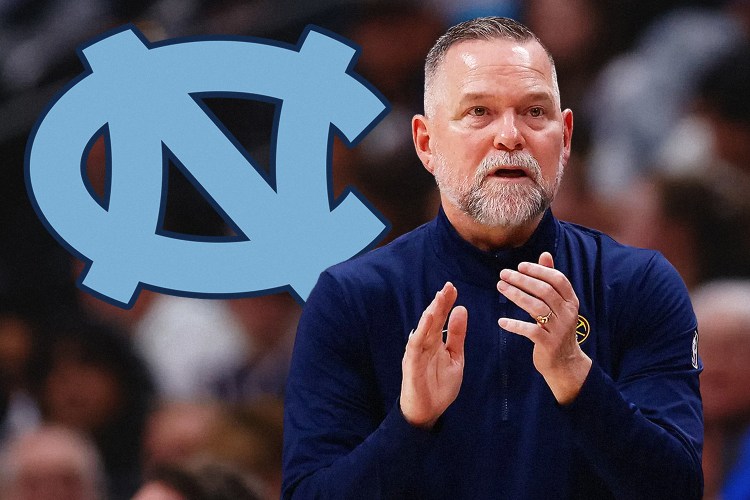
North Carolina Tar Heels to Hire Michael Malone as Head Coach
Malone spent 10 seasons as the head coach of the Denver Nuggets, winning an NBA championship in 2023
Now, the program is rudderless, the famous Carolina Family is splintering, a series of university decisions have left the future hazy and the inability to smoothly hire a replacement for Davis is starting to raise questions whether Carolina’s blood is still even blue.
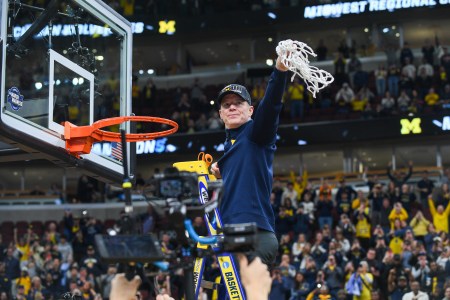
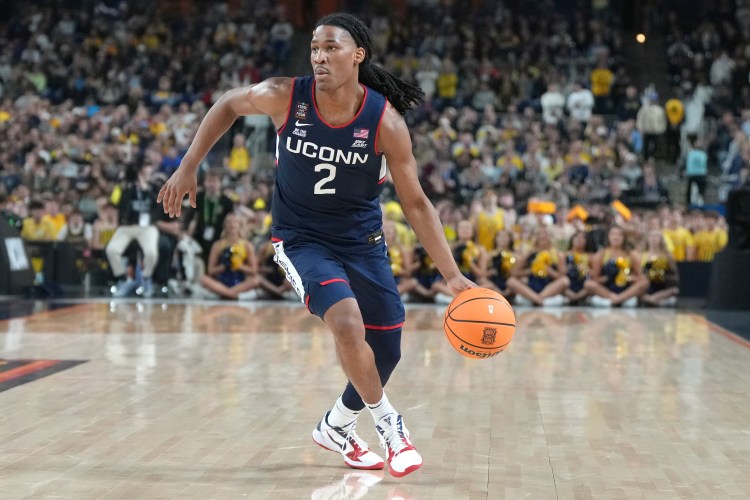
It doesn’t help that Elliot Cadeau, who spent the previous two years at North Carolina, will play for Michigan in the national title game Monday night, and while his three-point shooting has been erratic, he didn’t miss when he took a shot at his previous school during the Big Ten Tournament.
“I feel like the past probably two years of my life I haven’t been wired like that, but thanks to my coaching staff, I’m now wired like that,” Cadeau said when asked about reloading to make a critical shot against Wisconsin right after a miss. “I was wired like that in high school.”
That was before Davis was even fired. (Cadeau had no comment after he was.) It’s not like things have gotten better for UNC since.
DYNASTY
I covered North Carolina for almost 20 years, the last college basketball columnist standing in a state that once grew them like it grew tobacco. There were certain rituals to follow during the Roy Williams Era almost out of habit. On the night North Carolina and Duke played at the Final Four in New Orleans, I was posted up in the giant circular hallway under the stands, waiting for Williams to make his way to his seat on Legends Row alongside Jim Boeheim and Tubby Smith. I had to ask him the same question I (and others) always had to ask Roy in New Orleans or St. Louis or Memphis: Did he spit in the Mississippi for luck? It was as much a part of his ethos as any of what my old colleague Andrew Carter labeled his “Roycabulary,” all the Roy-isms that peppered his speech. (“Tough little nut,” to describe the scrappy guards he loved, was a personal favorite.)
“Lukey-boy!” Roy said as I approached. I asked him the question. “What do you think?” Roy said, a giant smile on his face, as he kept walking. Everyone was in a good mood, and things only got better that night for the Tar Heels. By the time Caleb Love’s pivotal three-pointer cleared Mark Williams’ fingertips, the Democratic governor and Republican house speaker — mortal political enemies — were dancing and hugging and jumping like schoolkids.
Turns out, the blown lead against Kansas two nights later was more a sign of things to come than anything else that happened in New Orleans.
Williams had pushed hard for Davis to succeed him, even if Davis’ resume didn’t exactly suggest him as a top candidate. He spent a good chunk of his post-NBA career as a popular ESPN commentator and his only head-coaching experience was with UNC’s fabled junior-varsity team, a beloved anachronism. But he had been a Williams assistant coach for two Final Fours and one national title, and most important, he was part of the Family.
Duke has its Brotherhood now, but Carolina’s Family goes back six decades, to when Smith was promoted to replace Frank McGuire in 1961. Every single decision the program has made since has been rooted in the precepts Smith built the program around. That DNA bonds former players, coaches and managers together across generations. Every head coach since has either worked or played for Smith. At North Carolina, lineage still matters more than anywhere else in the sport.
That’s what made WIlliams’ decision to stay at Kansas when Bill Guthridge retired in 2000 such a transgression; it’s also what made Williams finally return in 2003 after Matt Doherty made a hash of things, and it’s what made Davis a candidate for the job when Williams retired in 2021.
While fans were willing to go outside the family for a Brad Stevens or Jay Wright type, Williams and his brethren wanted Davis to continue the tradition. And so, as the weird COVID Final Four wrapped up here in Indianapolis, North Carolina finalized a deal with Davis to become the head coach. Baylor won the title Monday night. Davis was introduced on the floor of the Smith Center on Tuesday.

Hoops HQ Is a Webby Award Nominee. Please Vote for Us!
We are thrilled to announce that we’ve received a Webby nomination for Best Independent Publisher. We need your help to win the People’s Choice vote.
DANGER
The way his first season ended blurred some of the rough edges of how the Tar Heels got there. They were on the wrong side of the NCAA Tournament bubble until a late-season run, with a key transfer quitting the team in midseason being an unexpected boon because it forced Davis to rely more heavily on Brady Manek, who emerged as a star. Ruining Krzyzewski’s Cameron farewell with a late comeback in front of dozens of former Duke players etched Davis into UNC history no matter what happened next. After upsetting top-seeded Baylor in the second round, they were the prime beneficiary of St. Peter’s run, easily dispatching the Peacocks in the regional final in Philadelphia less than 24 hours after Duke had sealed its own Final Four appearance on the opposite coast.
The Tar Heels beat Duke (again) to send Krzyzewski into retirement, blew a 15-point halftime lead against Kansas in the title game and went into the next season the preseason No. 1 team after bringing back almost the entire roster, including postseason stars like Armando Bacot, R.J. Davis and Love. They never recaptured the magic. A frustrating, underachieveing season ended with an ACC Tournament loss to Virginia and the school declined to play in the NIT.
And that’s the way it went for Davis’ entire tenure. He tried to do things the way Williams did, right down to the plaid sportcoats, continuing to recruit blue-chip freshmen like Cadeau, Ian Jackson, Drake Powell and Caleb Wilson while dipping heavily into the transfer portal, and even earned a No. 1 seed in 2024 before crashing out of the Sweet Sixteen against Alabama. They made it to Dayton as the last team in the field in 2025 before losing in the first round, and then they squandered a 19-point lead against VCU as a No. 6 seed last month.
If UNC loses that game after a back-and-forth battle, then Davis is still coaching and Lloyd isn’t looking to buy a new boat. But the way it ended, with Davis vapor-locked on the bench as his team frittered away what should have been an unassailable lead, was too much in keeping with his tenure. He had some of the highest highs of any North Carolina coach, and some of the lowest lows. The standard in Chapel Hill was set long ago: top-four seeds and ACC championships and Final Fours. There were too many misses under Davis. And that wasn’t all. His final press conference, where he said, “What do you mean?” when asked what went wrong, was another link in the chain.
From the beginning, Davis seemed like a different person than he had on TV or as an assistant. He went from affable and relentlessly positive to brittle and erratic. The frantic, “It’s live action, Tracy!” interview went viral, but it was also bizarre. He would make incomprehensible declarations, like when he said that freshmen D’Marco Dunn and Dontrez Styles would have their names on banners in the Smith Center someday. (Both transferred after failing to make an impact; Styles was one of two Davis players to complete his career at rival NC State.) He was a former media member who had almost no relationship with anyone in the media. He was an island unto himself.
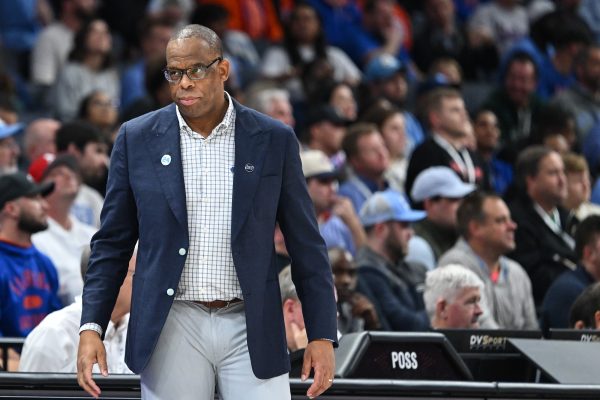
The first Black full-time head football or basketball coach at North Carolina, something that would have pleased Smith to no end, Davis didn’t follow a typical path to being the head coach of one of college basketball’s most historic and visible programs, and the pressure of upholding those standards and bearing the responsibility of safeguarding the basketball program he loved so deeply seemed to fry his brain a little. He never once tweaked his staff or looked to bring in new blood. He was essentially forced to hire a general manager last season to get his contract extended. In the end, Davis was a genuinely good human being and capable basketball coach who may just have buckled under the demands of the position.
Meanwhile, while Davis was foundering, the university around him was in complete upheaval. None of what was happening around the basketball court was happening in a vacuum.
DYSFUNCTION
The Tar Heels sneaking into the tournament in 2025 put an end to any speculation about Davis’ job status for the time being — the miss in 2023 was officially an aberration, and everyone could move on, provided the Tar Heels were, say, a top-four seed in 2026 — but there was also less focus on the basketball coach at UNC than there had ever been before. Starting in December 2024, basketball was no longer the priority on campus. A group of trustees thirsty for a move to the SEC and a chancellor who went to Duke spent millions of dollars to bring in Bill Belichick to replace Mack Brown, declaring that UNC football, the fabled sleeping giant, would no longer sit at the “kids’ table.”
Even if money wasn’t flat-out diverted from basketball to football, there was none available to get better as other programs invested. When Alabama came to town in December 2024, even longtime UNC staffers were shocked at how many assistants, video coaches and support staff the Tide had on the road. There were so many, they were working in a hallway outside the locker room like travelers stranded in an airport. It was a real wakeup call about what the resources it takes to contend in the modern era of college basketball. But no one would listen. Football was all that mattered in Chapel Hill, even after Belichick and his kids and cronies flamed out in hilarious fashion in Year 1, upstaged by his attention-hungry girlfriend in the media and embarrassed and outcoached in game after game on the field.
The same people who spearheaded the Belichick hire over athletic director Bubba Cunningham’s head were also busy mismanaging the future of the Smith Center. North Carolina had known for years that it desperately needed to upgrade the building, now 40 years old, for both competitive and financial reasons, but the combination of raising the money and dealing with the old-school Rams Club members who bought lifetime seating rights to fund it have proven insurmountable obstacles.
The new chancellor, Lee Roberts, was not only a Duke grad but came from the business world without any higher-ed experience. The university said it has spent $1.3 million studying Smith Center “evolution” options, including renovating, rebuilding on or near the current site or moving to a planned development called Carolina North at the site of Chapel Hill’s old airport as part of an arena and entertainment district. That’s the hot trend in sports facilities, even if Carolina North is about as far off campus as you can get and remain within the city limits. For years, UNC fans had mocked NC State for leaving Reynolds Coliseum and moving to an off-campus hockey arena that required students to be bused to games while UNC students could walk to the Dean Dome. Now UNC was contemplating making the same kind of move.
The Carolina Family openly revolted. Williams taped a video demanding the school reconsider options that included the Smith Center and its site. Fans wore shirts that read “Renovate don’t relocate” to the Duke game. The Duke game! Roberts, who has never demonstrated a grasp of the complicated dynamics of college athletics, let alone the deep, intricate lore of Carolina basketball, quickly backpedaled, but the damage was done. Combine that with the botched Davis firing — the university let him dangle for five days hoping he would agree to resign, before cutting him loose with no successor in place — and whatever bond of trust had existed between the larger basketball program, not just the team but fans and former players, and the university administration was gone. Two former Williams players who served on Davis’ staff, Marcus Paige and Sean May, both took jobs at Charlotte under Wes Miller, another former UNC player, without waiting around to see who got the UNC job.
Meanwhile, Cunningham, whose basketball credentials were strong and had served as chairman of the NCAA basketball committee last year when the Tar Heels were the last team in, is leaving. That’s been a given since May 2024, when the same trustees who pushed the ill-fated Belichick hire tried to launch a politically motivated “audit” of the athletic department. Roberts, then the interim chancellor, stepped in to stop the nonsense, to his credit. Cunningham will be replaced by Chapel Hill native Steve Newmark, a lawyer and former NASCAR team president with limited college athletics experience who served on the search committee that hired Belichick. (Newmark has deep UNC ties but went to William & Mary.) It’s not hard to understand why a basketball coach with a good job somewhere else, well funded and supported, might want to work for better bosses than that. Lloyd actually got to pick his boss as part of his new deal, thanks to UNC.
DISSENSION
As a player, Larry Brown was essentially present at the origin of modern Carolina basketball, a member of Smith’s first team. His wife went to North Carolina. His daughters went to North Carolina. His sons-in-law went to North Carolina. His grandchildren went to North Carolina, including one currently enrolled. He remains as deeply committed to the university as any former player, which makes everything that’s happening now all the more concerning to him.
“All these things happening all at once, the way Hubert was treated, it’s really, really troubling,” Brown told me.
Brown was on the Zoom call when Roberts presented Carolina North as a fait accompli, sparking the revolt. He believes there can be no compromising the standards of UNC basketball, no diluting the DNA that has distinguished it from every other program. But times are changing. North Carolina got rid of the JV program Smith founded this summer, citing the House settlement. Kentucky couldn’t lure a big name before landing on Mark Pope, and North Carolina might not be any different this time around.
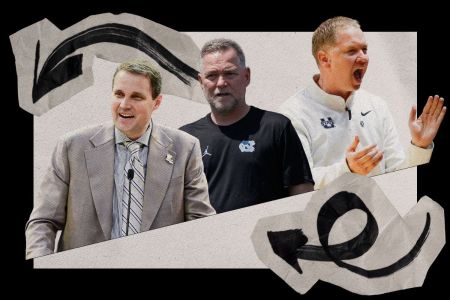
With Lloyd and T.J. Otzelberger and others passing, the pool of candidates continues to thin. Dusty May has no reason to leave Michigan, especially if he wouldn’t leave for his alma mater, Indiana, another program that has lost touch with its lineage. Billy Donovan is still a possibility, but he’s mourning the death of his father and has been 11 years removed from college basketball. Plus, if he really wanted the job, he could have had it by now. Ben McCollum is from Iowa and probably waiting on Bill Self. Mark Byington wouldn’t have signed an extension with a huge buyout at Vanderbilt if he was interested in UNC. Scott Drew would have made sense in 2021, but Baylor has looked more like UNC lately. Josh Schertz and Grant McCasland are both outstanding coaches who would probably win big at North Carolina, and the Tar Heels would be lucky to have either, but may not be cultural fits as the outsider to break the family chain. (Both might even be better off where they are, Schertz waiting on a Big Ten job, McCasland with Texas Tech’s unlimited wealth.)
This is what confronts the Carolina family now, options it would never have thought it would have to consider. Brown’s loyalty to UNC and its basketball program has not wavered, nor his commitment to what Smith built all those years ago. The same can’t be said about his confidence in the university, and its willingness to save something he thinks is worth saving.
“Whoever comes in, I’m going to be 100-percent behind them,” Brown said. “That’s how much the school means to me and what it’s done for my life and my family’s life. But I want it to continue. I want Jerry Stackhouse to be the coach. He wasn’t dealt a full hand at Vanderbilt.”
Brown paused. A great weight seemed to settle upon him.
“I don’t speak for all Carolina guys, but the ones I speak to, they don’t want to see it end.”
Meet your guide