
Strolling the University of Cincinnati campus today, Jerrod Calhoun often experiences flashbacks. An image will suddenly transport him to the early 2000s, when he was an undergraduate at UC and a student assistant for the men’s basketball program under Bob Huggins. “It’s a pretty crazy feeling,” Calhoun tells Hoops HQ. “As life goes on, you change, you get older, and you start to feel a little more appreciative of your opportunities.”
An unconventional journey that included stops at Walsh, West Virginia (alongside Huggins), Fairmont State, Youngstown State and Utah State has finally led Calhoun back to his alma mater, where he is now the Bearcats’ head coach. The athletic facilities look a lot different than they did two decades ago, but Calhoun has already made himself right at home amid Transfer Portal Madness. “I slept in the locker room four to five times,” he says, “sleeping three hours a night, watching tape, trying to get up to speed on certain guys.”
That is what the job — his dream job — demands. Calhoun, an Ohio native, didn’t return to Cincinnati solely because of his deep ties to the university; he wholeheartedly believes the program can be among the nation’s best in the modern landscape, even though it has fallen off the map in recent years. Cincinnati has not made the NCAA Tournament since 2018-19, Mick Cronin’s final season at the helm before moving to UCLA. Since joining the Big 12 in 2023, the Bearcats are 23-33 in league games and have not placed higher than seventh.
UC is one of the most decorated programs in college basketball history, with six Final Four appearances and two NCAA titles. But it hasn’t advanced past the Sweet Sixteen since 1996, during a stretch when it earned 14 straight tournament bids under Huggins.
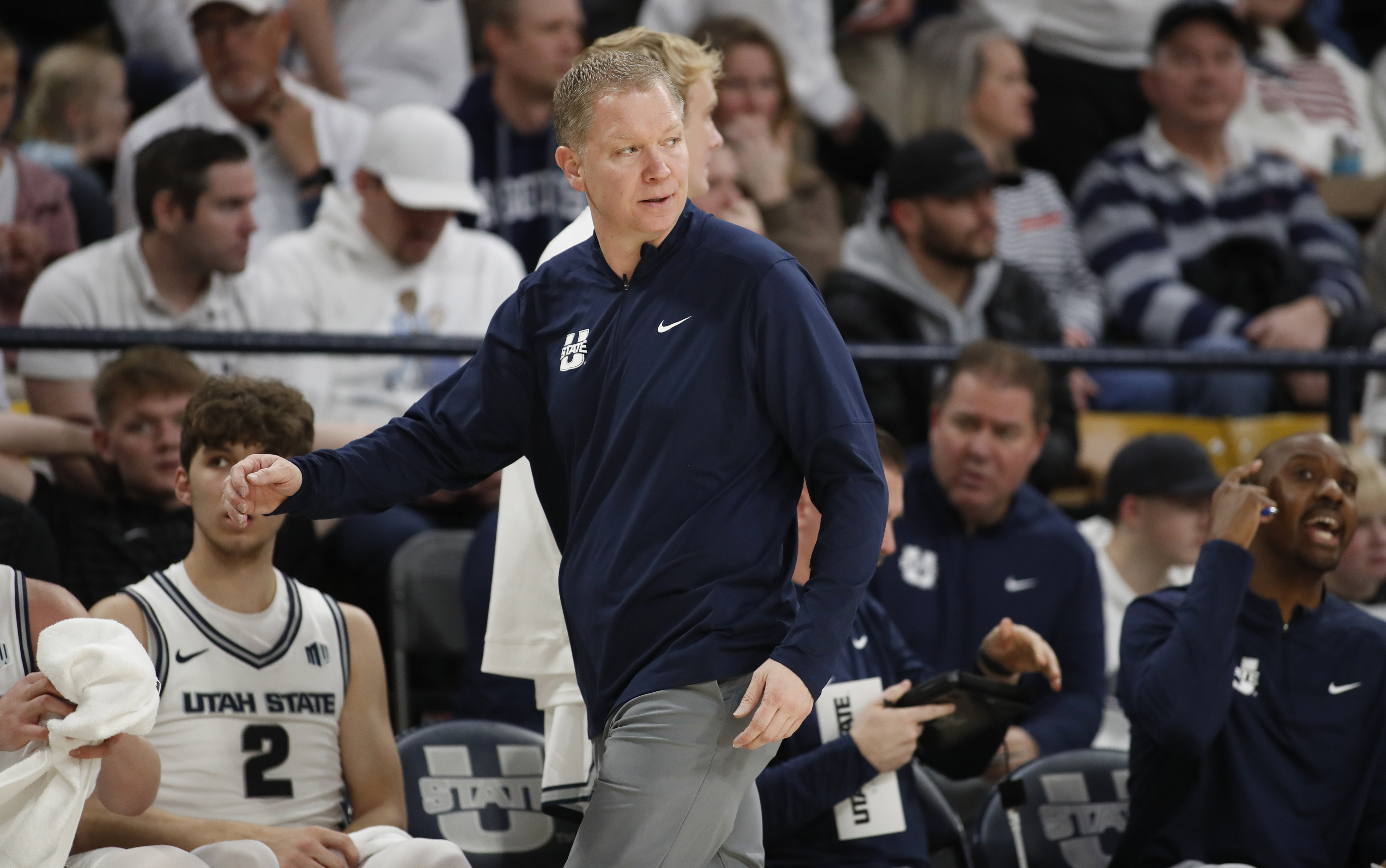
The man tasked with turning around the program was there for part of that epic run. With Calhoun assuming control, there is a strong sense that Cincinnati’s fortunes are about to change. Over the past 14 years, Calhoun has won conference championships in three different leagues and accumulated a staggering 297-159 record. He went 55-10 with a pair of March Madness appearances in his two seasons at Utah State prior to getting the UC job. Other prominent schools expressed interest in hiring him this spring, including Kansas State. But “all roads led to Cincinnati,” Calhoun says, as he is extremely confident in both the foundation and potential of the program. “Not every program can win a national championship, whether it’s the fan base, resources, facilities,” he adds. “I felt like at the University of Cincinnati, you really can win a national championship.”
Reaching the holy grail may take time, but Calhoun has put together a team that has a legitimate chance to make a splash in 2026-27. Upon taking over in late March, Calhoun’s roster was completely decimated. Cincinnati is returning zero players from Wes Miller’s last team, which went 18-15 and landed on the wrong side of the bubble. In a four-week span consisting of little sleep and lots of film, the Bearcats earned commitments from a whopping 11 transfers. With eight four-star signees, their portal class is ranked No. 2 in the Big 12 and No. 20 overall by 247Sports. “I feel like we’re going to be a typical Coach Calhoun team. A team that is a team,” Calhoun says. “We’ve got a lot of good players. I’m really happy with where we’re at.”
Six members of Calhoun’s staff from Utah State have joined him at Cincinnati, several of whom have been with him since the Youngstown State days (2017-24). They have a precise formula for recruiting, one that prioritizes character over talent and is broken down by position to find the best possible fits for their system. In 2024-25, the formula helped them make the Big Dance despite having a measly $800,000 NIL budget.
That Time When I First Watched LeBron James Play
It was a year later than it could have been, but when I first watched LeBron play, I knew I was seeing greatness in action
Calhoun’s preferred style of play pairs an efficient, five-out offense with a disruptive defense. Both of his Utah State teams ranked in the top 25 nationally in offensive efficiency, per KenPom, and each of his last four teams has averaged at least 79 points per game. One of Calhoun’s assistants during his stint at Division II Fairmont State was current Boston Celtics head coach Joe Mazzulla, and the two share a similar offensive philosophy: Push the pace, maximize spacing and create advantages with ball screens.
When constructing his rosters, Calhoun pursues consummate floor generals, versatile wings who can operate out of pick-and-rolls, and highly skilled bigs. With a larger pool of resources to work with at Cincinnati, he has managed to hit on those targets effectively.
Three of his Utah State players followed him to the Bearcats: 6-foot-9 freshman forward Adlan Elamin (6.7 points per game), 6-foot-2 freshman guard Elijah Perryman (4.4 points per game) and 6-foot-10 freshman center David Iweze (redshirt). In total, eight of Cincinnati’s transfers are from the mid-major level, but a majority of them were key contributors on successful teams. “We recruit a lot of guys who come from winning programs,” Calhoun says. “That’s part of the vetting process when we look for players. I would put this group up against anybody in the country as far as they know what winning looks like.”
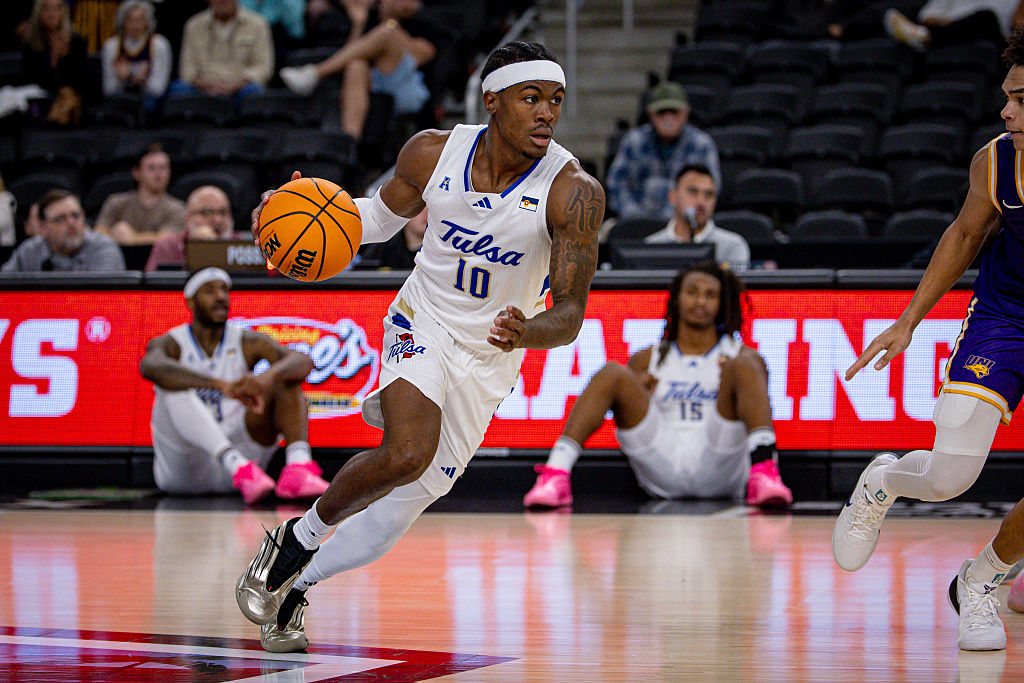
Tylen Riley, a crafty 6-foot-3 junior point guard, helped lead Tulsa to a 30-win campaign with averages of 15.0 points, 4.4 assists and 3.9 rebounds. Across his last two seasons at Towson, 6-foot-8 junior wing Tyler Tejada has averaged 17.3 points and 4.7 rebounds and guided the Tigers to a 41-26 record. As the man in the middle at George Mason, 6-foot-11 junior center Riley Allenspach was part of a 23-win team that toppled VCU and Saint Louis in conference play, posting 13.6 points and 6.1 rebounds per contest.
In addition to the trio of former Aggies, 6-foot-6 freshman guard Eric Mahaffey from Akron and 6-foot-3 freshman guard Trevian Carson from North Dakota State both played — and shined — in the 2026 NCAA Tournament.
Perhaps the most familiar name on the Bearcats’ new roster is 6-foot-5 junior guard Myles Colvin, who averaged 11.6 points and 4.4 rebounds at Wake Forest in 2025-26. Colvin, an elite athlete with three-level scoring ability, was on the 2023-24 Purdue team that reached the national championship game. Cincinnati landed two more high-major transfers in 6-foot-4 freshman guard Akai Flemings from Georgia Tech (10.4 points per game) and 6-foot-9 sophomore forward Jayden Hastings from Boston College (6.7 points and 5.6 rebounds per game).
Overall, the group boasts tremendous positional size and length. It has the athleticism, versatility and playmaking to fit Calhoun’s style. With zero continuity, much of its success will depend on how well the pieces mesh. Calhoun has several tactics to accelerate that process, inspired by the great Rollie Massimino, his old coach when he was a player at Cleveland State from 2001-03. To foster a family atmosphere, Cincinnati will have a leadership team that meets with Calhoun every Monday, a mentorship program composed of former players and close friends of the university, and a character class that has various guest speakers each week.
As he scrambled to assemble his first roster, Calhoun practically lived at the facility, stealing a few hours of shuteye amid a nonstop flurry of phone calls, meetings and film sessions. His focus is shifting as portal chaos quiets down and summer sessions approach, but the work is just beginning. After all, few people understand the expectations — and possibilities — at Cincinnati better than Calhoun.
“Every coach gets into coaching to try to win a national championship,” Calhoun says. “Throughout the whole (interview) process, that was on my mind. I didn’t want to be a guy to keep bouncing around. I wanted to go somewhere where you can win a national championship, and I think we can do that here.”
Meet your guide