
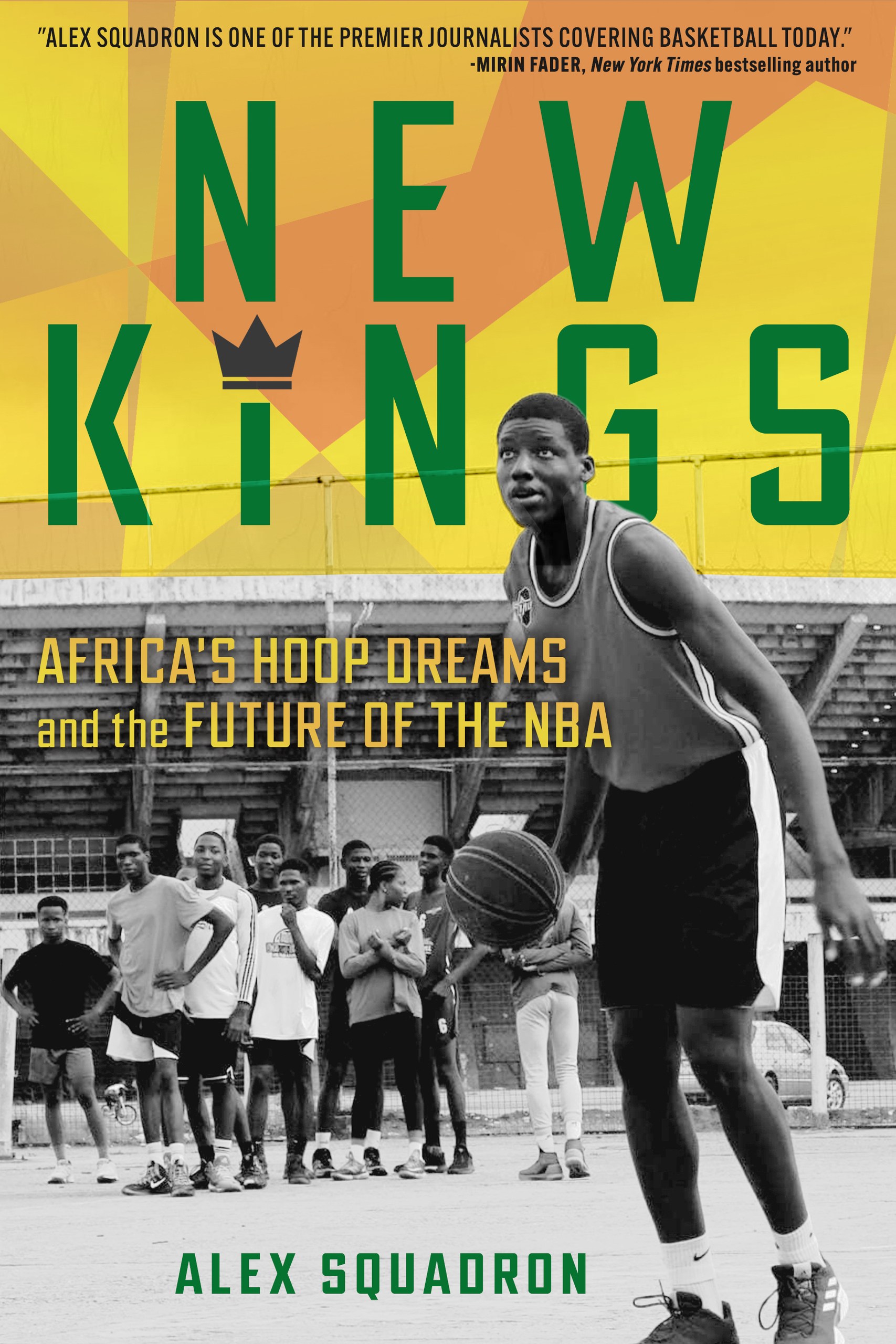
The following excerpt from New Kings: Africa’s Hoop Dreams and the Future of the NBA by Alex Squadron is reprinted with the permission of Triumph Books. For more information and to order a copy, please visit www.triumphbooks.com/NewKings.
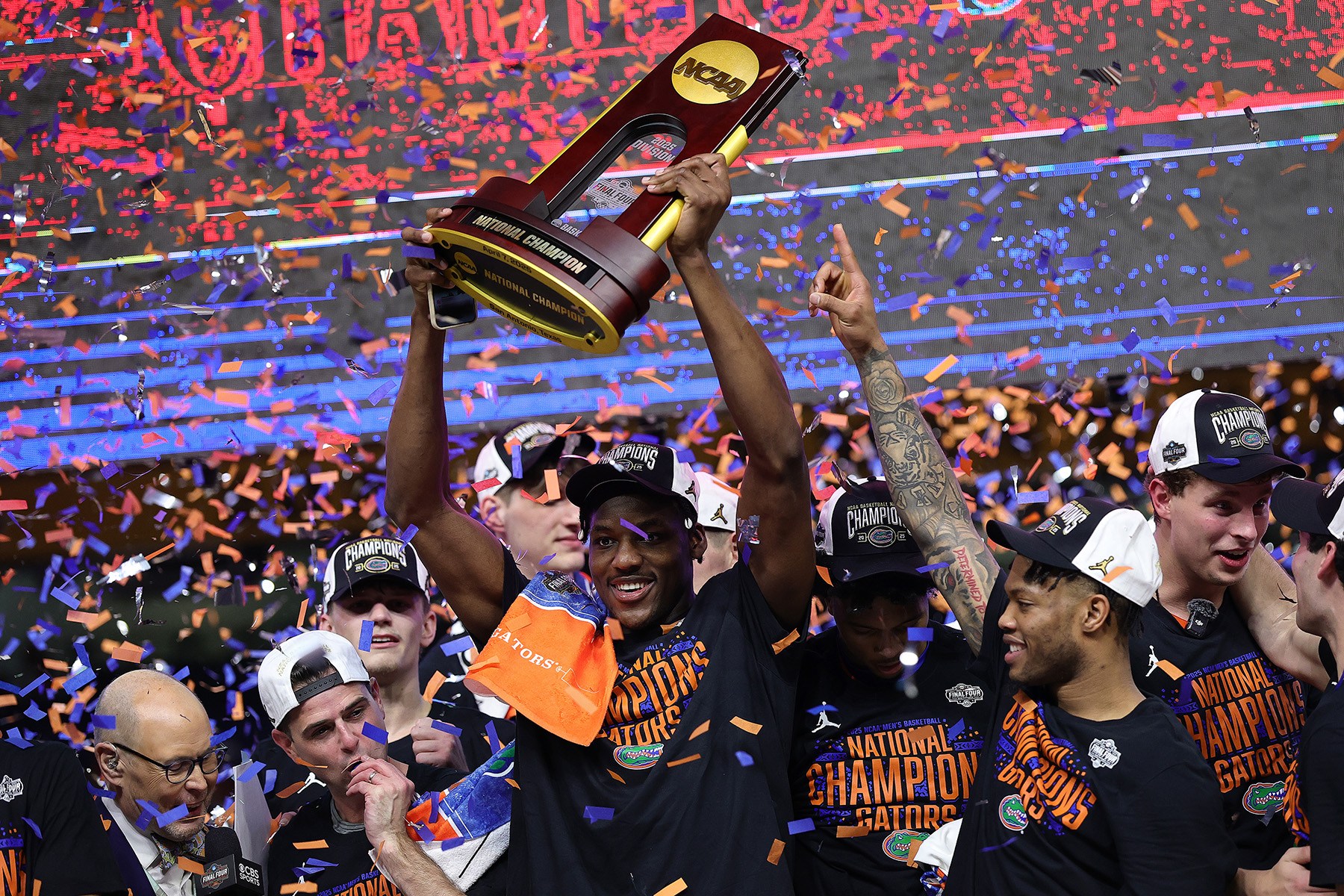
New Kings chronicles the rise of basketball in Africa through the journeys of four players from the continent: Rueben Chinyelu (Nigeria), Khaman Maluach (South Sudan), Samson Johnson (Togo) and Ulrich Chomche (Cameroon). This excerpt focuses on Chinyelu, who’s currently a 6-foot-10 senior center at Florida and one of college basketball’s biggest stars. Chinyelu spent two years developing at NBA Academy Africa in Senegal — an elite basketball training center for the top high school-age prospects on the continent — before moving to the United States.
Located on the second floor of a tan, three-story building, the dorms at NBA Academy Africa were modest. Not the quality of a fancy American university, but not stuffy, either. While the veterans occasionally got singles, most of the rooms were shared. Each student had a twin-sized bed—many of them couldn’t fit without contorting their bodies—and a small closet.
The program’s strict schedule was packed with six hours of school and at least four to five hours of practice. Players reported to the gym before classes began in the morning and after they concluded in the afternoon. Training was advanced and individualized, informed by experts from various fields. The Academy even employed a performance scientist, Jordan Stewart-Mackie, to collect data and help create more effective development plans. “The way I like to think about it is helping to streamline the process,” explains Stewart-Mackie, who has also worked with soccer teams in the AFC Champions League and the Premier League. “It’s just knowing that if you want to choose this intervention or this approach, you’re going to get this outcome.”
Prior to awarding scholarships, technical director Roland Houston told every prospective student the same thing: “If you don’t want to work hard, don’t come here.” The result was a student body that was, for the most part, passionate and dedicated. “In full transparency, you do have one or two kids where he’s good, but he doesn’t want to be that good,” Houston says. “We’ve had a couple of those. Because what happens is, we’ve reached a program to the point where you will be outed. When you come here and it’s new, you have to adjust to us.”
That was the case for 95 percent of the students.
It was not the case for Rueben Chinyelu.
In some ways, the Academy had to adjust to Chinyelu. He was arguably the most disciplined and intense student in the program’s history. The staff didn’t need to apply pressure to him; he put more than enough on himself.
Chinyelu took school just as seriously as he did basketball. Yes, he had dreams of making it to the NBA, but he also had dreams of studying medicine, graduating from college, and becoming a doctor. He was one of the strongest students at the Academy, breezing through Apex, the program’s online academic platform. He handled 12th-grade English without issue, while other kids often struggled on the 10th- or 11th-grade levels. “He’s really determined, a really strong spirit,” says Michael Abbott, head of educational programming at the Academy. “He’s very self-aware, self-contained. He’d be on time. I didn’t need to do anything. I can’t remember doing too much support with him, just, ‘Hey, good morning,’ and he was off and running.”
For better or worse, Chinyelu was a perfectionist. He received all As except for one B+ during his time at the Academy. Well, it was originally a B+, but it was eventually bumped up to an A after Chinyelu pleaded with the faculty to have it changed. He had to have straight As.
Victor Ezeh, another Nigerian student, remembers Chinyelu spiraling one day because he didn’t get a 100 on an assignment. “Bro, it’s okay,” Ezeh told him. “You’ll do better next time.” Ezeh snuck a peek at Chinyelu’s grade, and it was in the high 90s. “He was almost crashing out about it,” says Ezeh. “He didn’t want to leave any room for mistakes.”
Chinyelu would grumble to Adama Ba, one of the Academy’s tutors, whenever his grades weren’t perfect. “You can’t get 100 every time,” Adama would say. “Even I can’t get 100 on Apex every time.”
“Do you think I should text the teacher and see if I can take the quiz again?” Chinyelu would ask.
“You need to learn that sometimes it’s okay to miss something. You can’t blame yourself.”
Chinyelu was the same way on the basketball court, competing with such fire that he sometimes teetered on the edge of “crash out.” Houston was much more likely to tell him to “calm down” and “just breathe” than “step it up.”
“Rueben is relentless in his day-to-day operation,” Houston describes. “He’s the type that you have to turn down. But I’d rather have to turn you down than turn you up.”

Inevitably, there were times when Chinyelu got into screaming matches with coaches or had to be kicked off the court, but that was a fine price to pay for the passion he exhibited. “I’ve never seen a guy like Rueben,” says Joe Touomou, former associate technical director of the Academy. Touomou would request that Chinyelu bring towels to the gym so that the staff could dry up the pools—yes, pools—of sweat that the big man left on the floor. Chinyelu would have to change shirts multiple times every practice. He never cheated drills or took possessions off. If they were running suicides, he touched the line. If they were told to make 50 free throws before leaving, he didn’t stop at 40 or 45.
“I’ve never seen a player be able to sustain that level of intensity for such a long period of time,” adds Zay West, the Academy’s athletic performance coach. “And I don’t just mean one session. This is Rueben every single day.”
Unlike most players, Chinyelu entered the Academy already strong as an ox. His early training focused more on coordination and mobility than heavy weightlifting, much of it taking place on the soccer field. That changed after the guys returned from Mexico in late September 2021. West’s team decided to test Chinyelu’s limits, putting him through a rigorous monthlong regimen that few others would have been able to endure. “Through that process, we found where his limitations were,” West explains, “and we were able to keep him close to us by giving him things to chase by saying, ‘Hey, when we tested this, you’re still weak here, so you’ve got to find a way to attack that.’”
Attack he did.
Chinyelu’s relentless approach wasn’t always constructive. He could be too rigid, stirring concern among coaches about how he might react in an environment that was less controlled. They tried to prepare him and the other students for the eventual day when there would be no handholding and around-the-clock supervision. For example, West encouraged the players to exercise freedom in the weight room, rather than marrying each to a strict routine. That was not Chinyelu’s style. He would pepper West with questions like a kid on the first day of school. What should I do next? And what should I do after that? And what about after that? And how much weight should I use? Is that enough weight? Too much? Too little?
When West would push back, urging Chinyelu to take ownership of his workout, Chinyelu sometimes reacted poorly. He might storm out or decide that he wasn’t going to speak with West for a while.
Those responses reflected a side of Chinyelu that sporadically emerged. There was the fun, charismatic Chinyelu who cracked jokes and lit up rooms with his exuberance. Then there was the stoic, moody Chinyelu who could go days hardly uttering a word. It wasn’t always obvious what triggered the latter, but it was obvious that Chinyelu carried a lot on his shoulders. The burden of perfection was heavy and fragile; one perceived setback, however miniscule, could prompt a disproportionate level of frustration. “I was really hard on myself, because I just wanted to be better,” Chinyelu says. “I wanted to be great. I aspire to be great. I wanted to do things differently. I was always talking to myself, like, ‘What could you do better? How can you improve from that?’”
Chinyelu’s social media accounts looked exactly as one would imagine, packed with inspirational quotes and profound musings. On December 24, 2021, he tweeted: “YESTERDAY—EXPERIENCE. TODAY—EXPERIMENT. TOMORROW— EXPECTATIONS. USE YOUR EXPERIENCE IN YOUR EXPERIMENT TO ACHIEVE YOUR EXPECTATIONS.”
And on February 2, 2022: “The biggest asset in the World is your Mindset, keep it Sharp and Strong.”
His serious nature didn’t endear him to all his teammates, but it did rub off on many of them. He started reporting to the gym at 5:30 am every morning to work out with new Academy head coach Alfred Aboya, who had arrived in November 2021. The ritual, which teammates later joined, became known as “Vitamin Hour” or “The Breakfast Club.”
“He would bug you to work him out,” Aboya says of Chinyelu. “That kid reminds me of myself because I was that type of dedicated worker.”
Aboya, a native of Cameroon, played at UCLA from 2005–09 and enjoyed a six-year professional career overseas and in the NBA G League. He landed in America in 2003 by sheer luck. After sending a cold email to high school coaches throughout the U.S., he received a response from Scott Willard, who had recently taken over at Tilton School in New Hampshire. Tilton just so happened to be looking to expand its international student population. Willard was intrigued by one black-and-white photo in Aboya’s email: on an outdoor court, Aboya was rising for a dunk, mouth agape, ball cocked behind his head.
“He saw that and said, ‘I need to get this guy,’” Aboya remembers with a smile. “Just from that photo.” Willard had never seen Aboya play when he offered the kid a scholarship to Tilton.
Aboya’s journey gave him a rare understanding of how much basketball had evolved in Africa. He had relied on a stroke of good fortune to make it; now he was at the helm of a program specifically designed to help others do the same. That was not a responsibility he took lightly, hence the “Vitamin Hour.”
Among the players whom Chinyelu inspired to join the morning tradition were Khaman Maluach and Ulrich Chomche. “He was the guy who actually helped Khaman and Ulrich a lot,” Touomou says about Chinyelu. “He inspired the guys because he worked so hard every day. I think that had a huge impact on Khaman and Ulrich because they said, Well, shoot, if this guy’s going to work like that, we have to match that.”
Meet your guide